

Marquetry Glass Cabinet
A marquetry glass cabinet brings patterned wood veneers and glazed display space together, offering a traditional home for collection pieces.
Marquetry Glass Cabinet
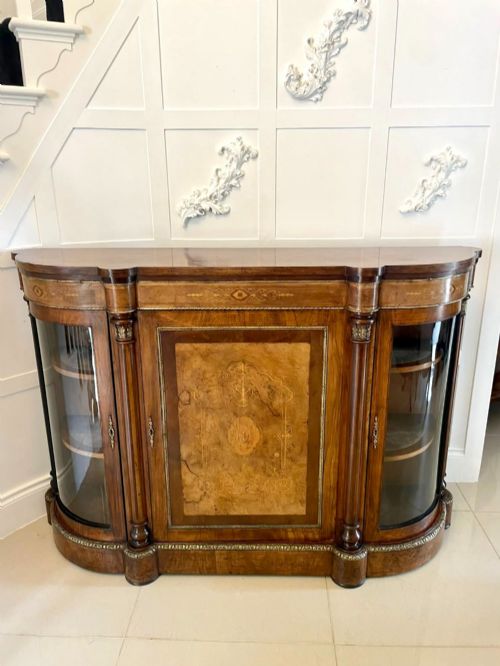
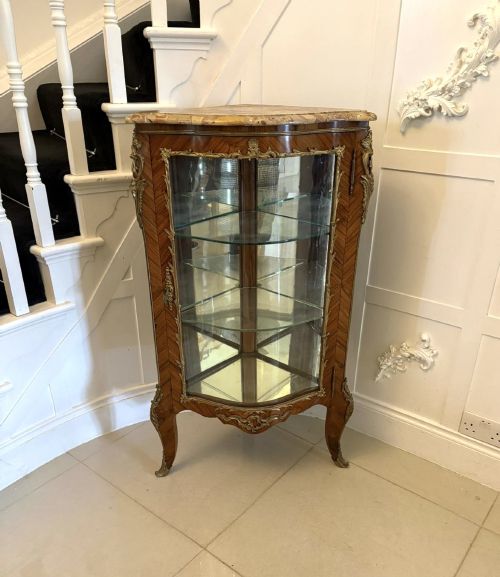
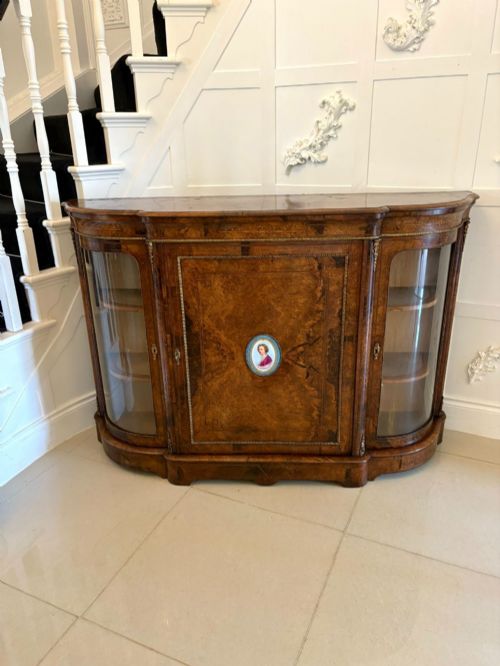
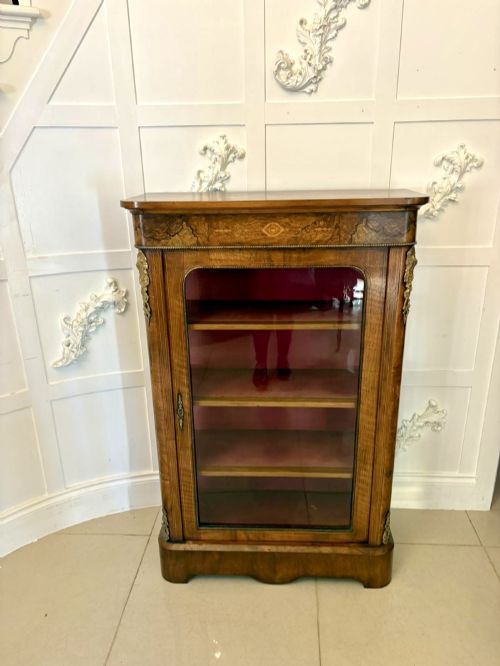
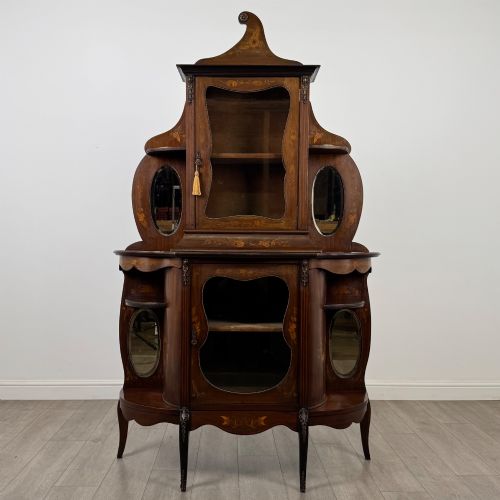
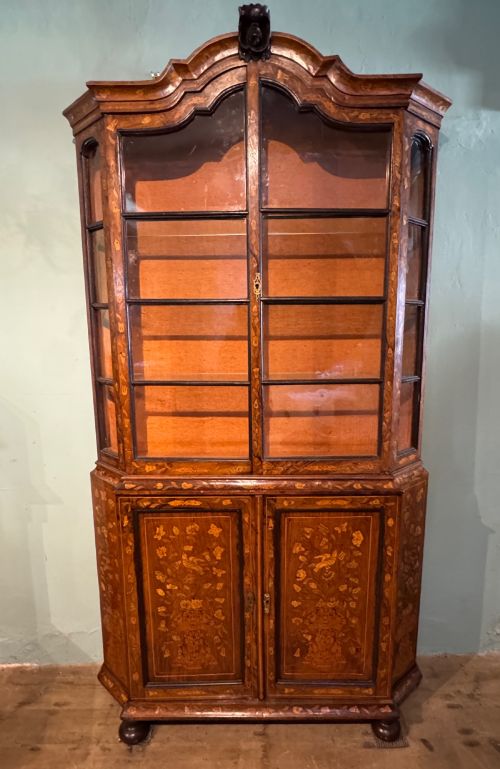
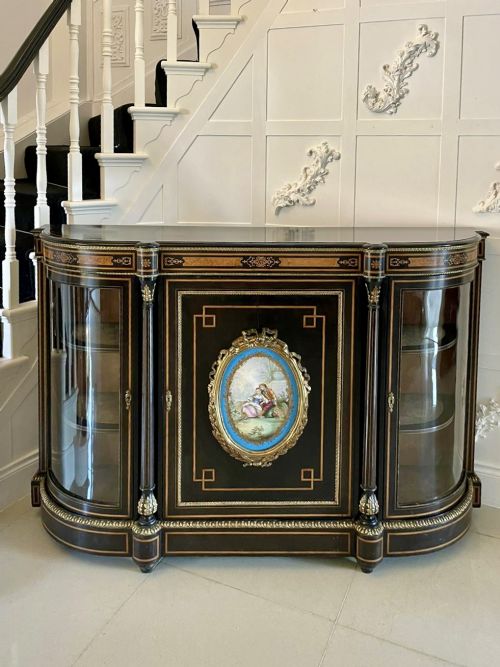
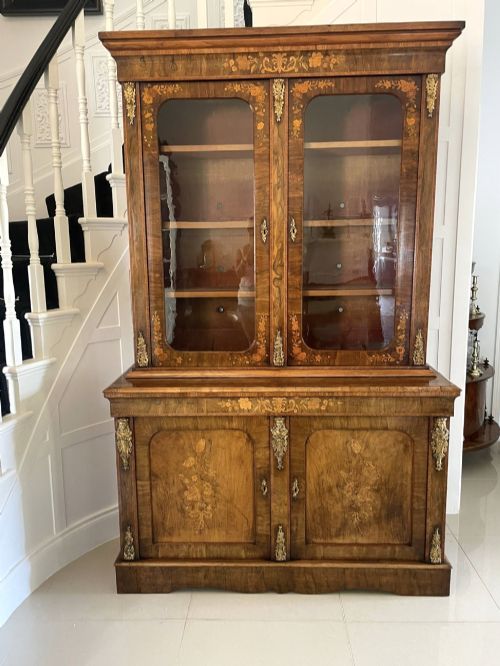
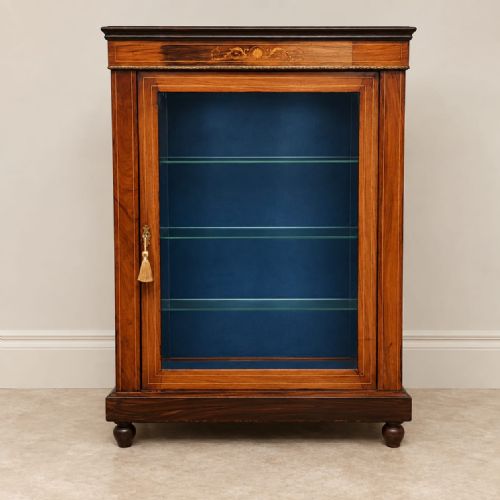
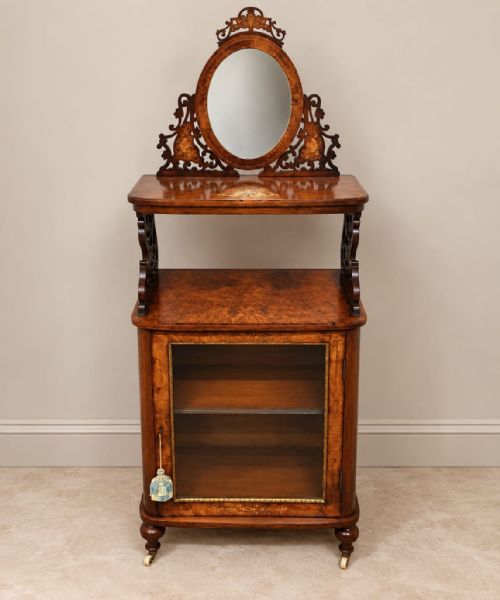
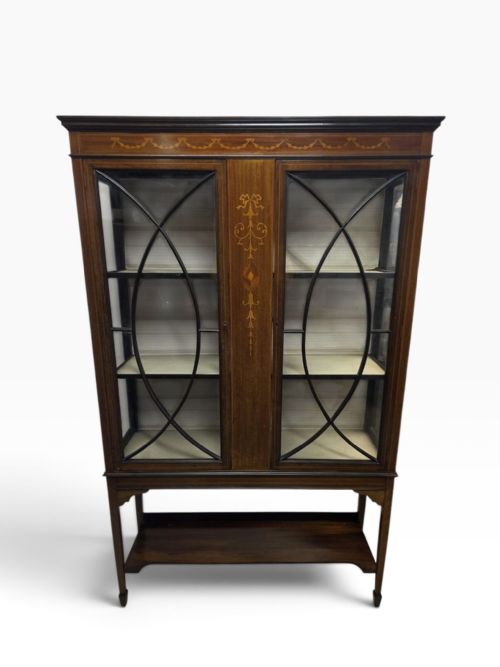
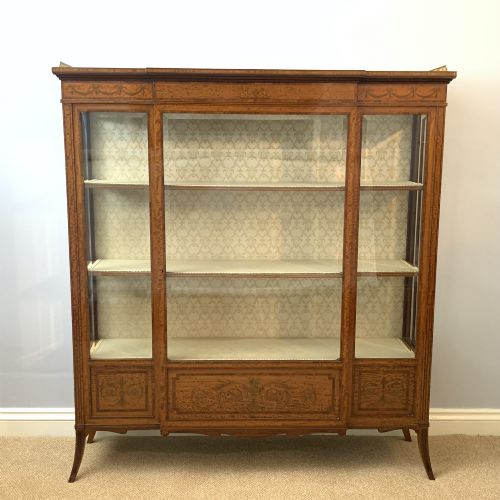
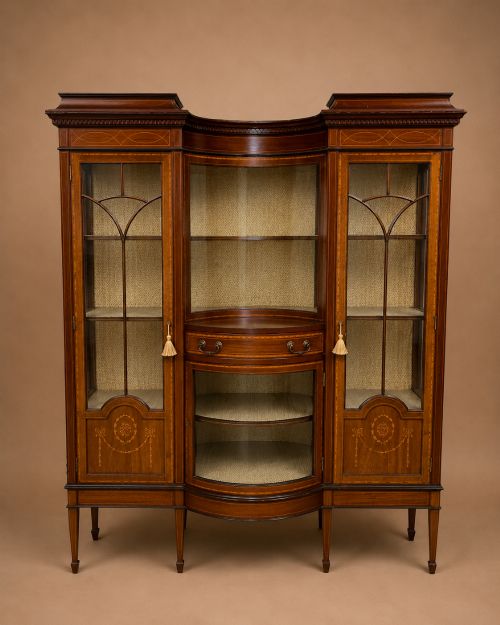
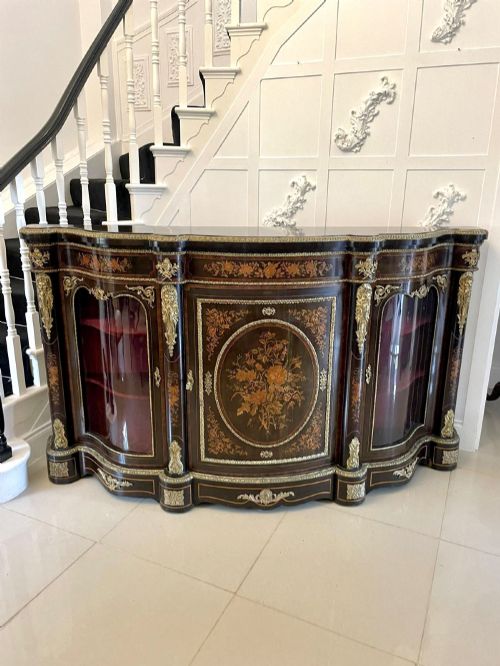
A marquetry glass cabinet combines patterned timber veneers with glazed sections to display porcelain, silver, or glassware. The pieces seen here date primarily from the nineteenth century, spanning Victorian, Edwardian, and earlier revival periods.
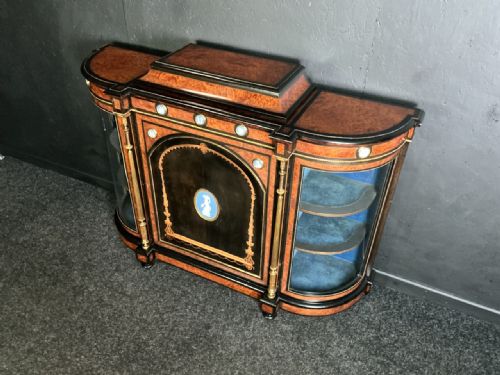
The format takes multiple shapes including slender pier cabinets, serpentine credenzas, side cabinets, and taller bookcase cabinets. Most examples rely on walnut, mahogany, or satinwood as a carcase material.
Makers and retailers such as Edwards & Roberts, Maple & Co., François Linke, and Maison Gagneau appear across the inventory. Their work illustrates both English production and continental French or Dutch influence.
Materials and construction
Cabinetmakers utilised dense timbers like burr walnut, mahogany, and satinwood for the primary structure and drawer fronts. These woods provided stable grounds for decorative veneers and floral inlay work.
Craftsmen applied brass or ormolu mounts to frame doors, cornices, and feet, adding metallic contrast to the timber surfaces. Glazing techniques secured panels of glass within wooden frames to protect interior contents.
Marquetry panels incorporated contrasting woods such as ebony and rosewood cut into intricate floral or geometric patterns. These decorative elements were glued to the carcase and polished to a smooth finish.
Marquetry Glass Cabinet Retail Price Guide 2026
Typical asking prices for marquetry glass cabinet among the pieces listed under this phrase on Sellingantiques today, from the lower quarter to the upper quarter. They describe what is for sale here now, not the wider market.
Materials span mahogany, burr walnut, satinwood, and kingwood, accented with brass, ormolu, and velvet linings.
Judging execution
The precision of the marquetry cutting distinguishes standard production from superior examples. Tighter joints between veneer segments and sharper botanical details elevate a piece.
Metal mountings differ in weight and crispness of cast detail. Heavier ormolu mounts with clean chasing indicate higher workshop standards than light, plain brass alternatives.
Timber selection governs the visual depth of the furniture. Figured burr walnut or satinwood with strong natural grain patterns commands greater visual presence than plain flat planks.
Edwards & Roberts·François Linke·Maple & Co.·Maison Gagneau
The Marquetry Glass Cabinet Glossary
- Marquetry
- The practice of arranging thin slices of coloured wood, ivory, or shell onto a carcase to form decorative pictures or patterns. It requires precise hand-cutting to ensure each piece fits snugly.
- Ormolu
- Gilt bronze ornamentation applied to furniture, popular in French and English revival pieces. The finish involves mercury gilding or modern electroplating over a brass base.
- Pier cabinet
- A narrow display cabinet designed to fit against the wall space between windows. These upright pieces typically feature a single glazed door and velvet-lined interior shelves.
- Credenza
- A low sideboard or cabinet often fitted with glazed side cupboards and a central door. Originating in Italy, the form evolved in the nineteenth century to incorporate elaborate marquetry and mounts.
- Vitrine
- A glass-fronted display cabinet used specifically for showing porcelain and small ornaments. The French term denotes a piece built primarily for visibility from multiple angles.
- Tantalus
- A locking wooden frame holding decanters visible behind bars. While technically a beverage case rather than a display cabinet, these items share nineteenth-century cabinetmaking methods.
Marquetry Glass Cabinet: Frequently Asked Questions
What is a marquetry glass cabinet?
A marquetry glass cabinet is a piece of antique display furniture featuring glazed doors or panels alongside decorative wood veneer inlay. These cabinets were designed to hold and exhibit porcelain, books, and decorative objects in nineteenth-century drawing rooms.
Craftsmen built them using timber frames veneered with walnut, mahogany, or satinwood, often embellishing the exterior with brass or ormolu mounts. The inclusion of glass allowed light to reach the interior shelves while keeping dust away from fragile collections.
Where should I place a pier cabinet?
A pier cabinet fits best against narrow wall spaces, specifically the masonry pier between two windows. Because these cabinets are relatively shallow, they occupy minimal floor area while providing vertical storage.
Keeping them away from direct sunlight and strong heat sources protects the timber veneers and prevents the wood from drying out or splitting over time.
How do I care for antique veneer?
Maintaining antique veneer involves keeping the wood nourished and avoiding excess moisture or humidity fluctuations. Dust the surface regularly with a soft cloth and apply traditional beeswax periodically to preserve the sheen of the timber.
Avoid using modern silicone polishes, as these build up on the finish and can penetrate hairline cracks in the old polish. Professional restoration is best left to specialists if any lifting veneer appears.
How do I tell Victorian from Edwardian cabinets?
Victorian cabinets, particularly those from the mid-nineteenth century, tend to feature dark timbers like burr walnut, heavy ormolu mounts, and elaborate serpentine shapes. Aesthetic Movement and Louis XV revival influences appear frequently in this era.
Edwardian cabinets often showcase lighter satinwood or mahogany with refined floral marquetry and simpler lines, reflecting a shift towards neoclassical Sheraton Revival styles around nineteen hundred.