




Antique Glass Compote
An antique glass compote serves fruit and sweets upon a pedestal, bringing height and brilliance to a table.
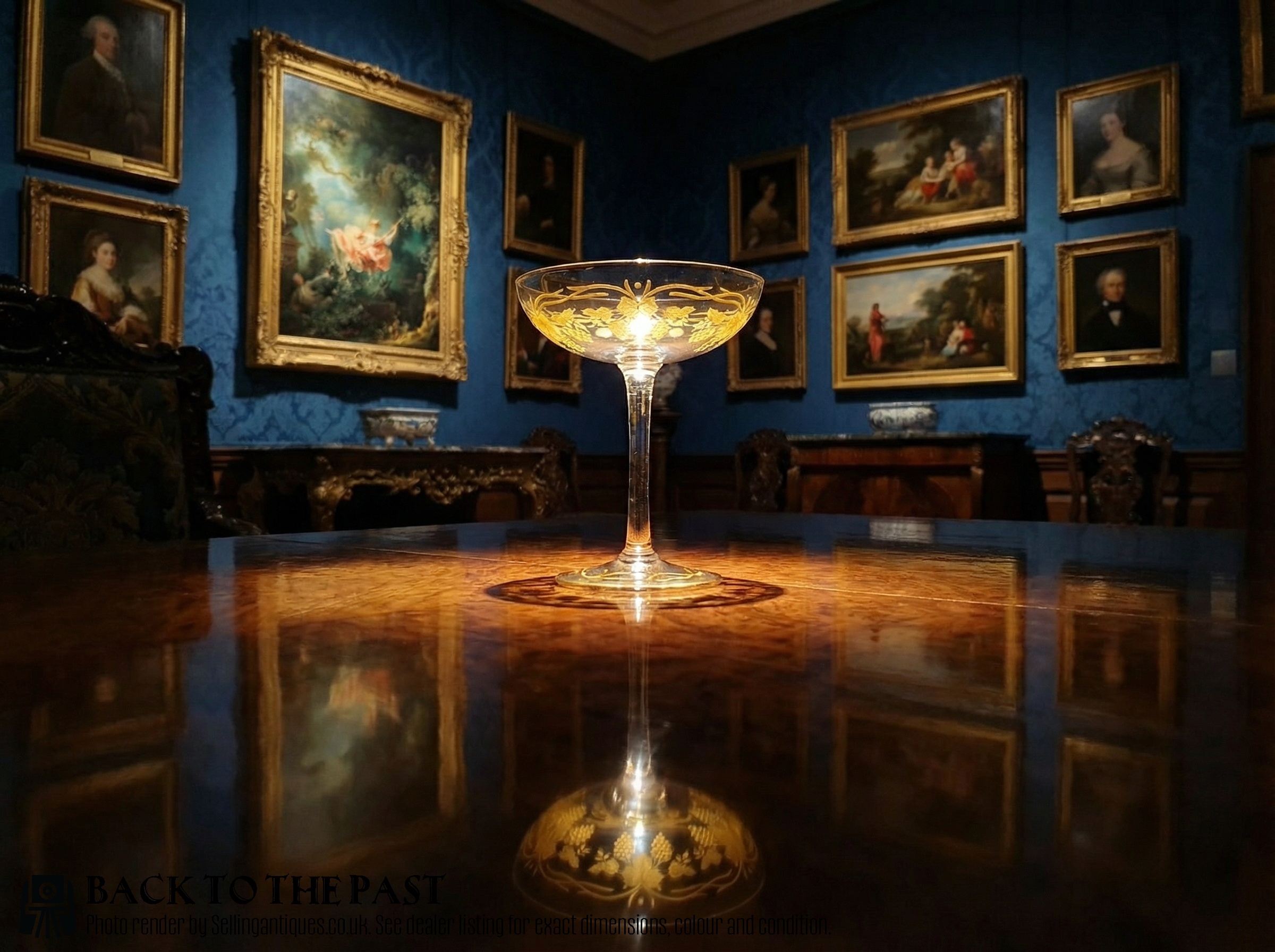
Antique Glass Compote
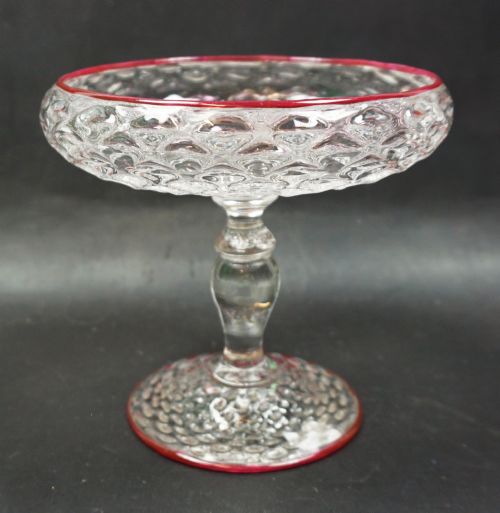
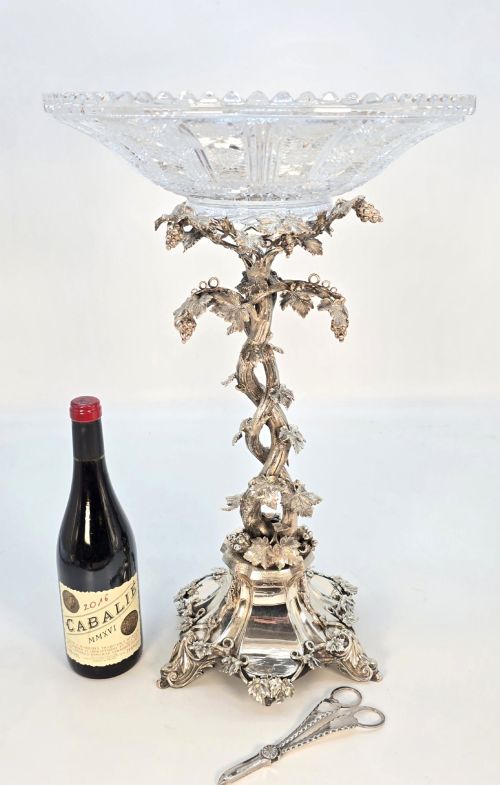
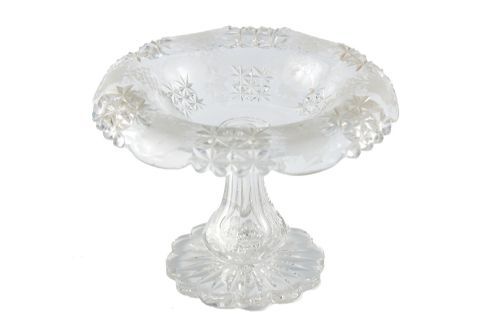
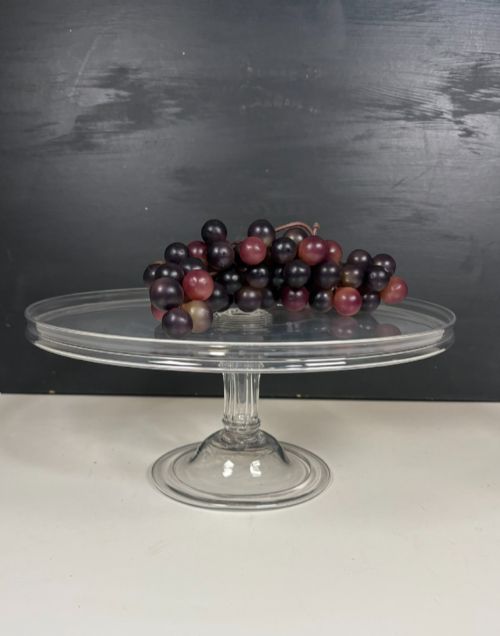
An antique glass compote, often found as a tazza, centrepiece, or pedestal bowl, elevates fruit and confectionery above the dining surface. The pieces listed here span the Georgian, Victorian, and Edwardian eras through to Art Deco, showing forms used for display and service.
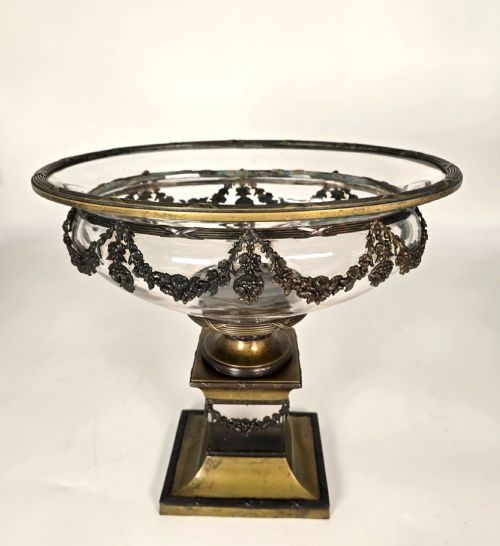
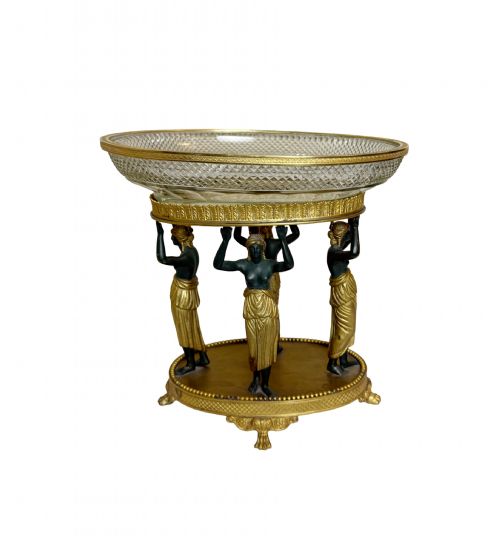
Most examples meet you on this page in cut glass, lead crystal, or coloured glass, frequently mounted on silver plate, gilt bronze, or pewter. You will see English, Irish, French, and Bohemian works shaped as large footed bowls and shallow dishes.
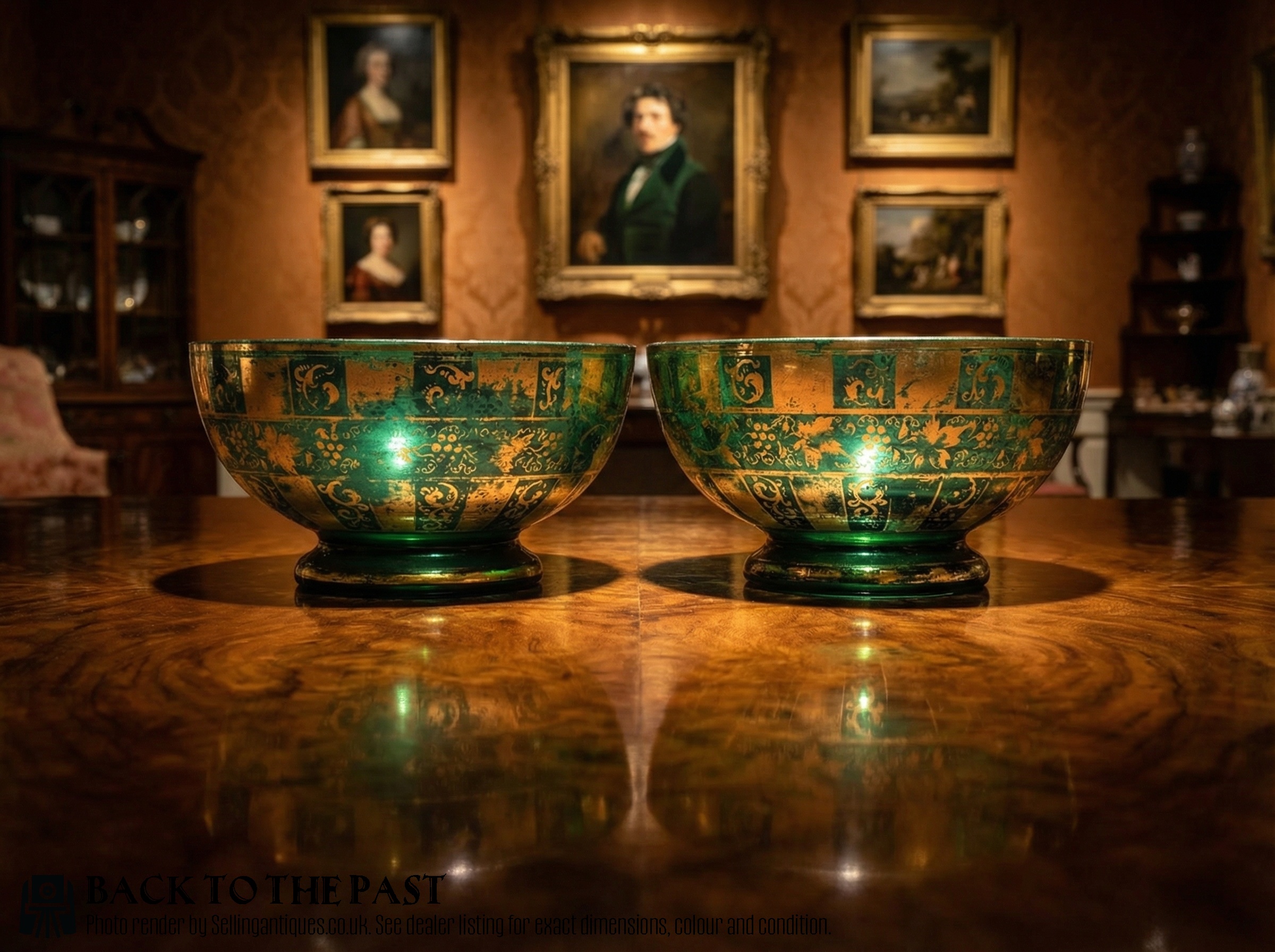
How they were made
Makers shaped these vessels through hand blowing and mould pressing, then applied wheel cutting, hobnail patterning, and etching to the glass surface. Molten metal was gathered, blown into iron or wooden moulds, and hand-finished by skilled cutters.
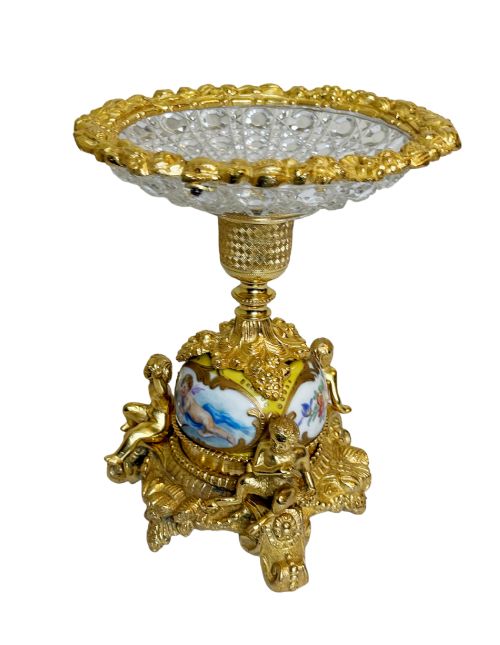
Metal mounts in silver plate, gilt bronze, and ormolu were cast and chased separately, then secured to the pedestals with screws or pins. Coloured glass varieties utilised layered minerals or casing techniques, such as ruby, cranberry, yellow, and green overlays.
Antique Glass Compote Retail Price Guide 2026
Typical asking prices for glass compote among the pieces listed under this phrase on Sellingantiques today, from the lower quarter to the upper quarter. They describe what is for sale here now, not the wider market.
Listings feature lead crystal, cut glass, and coloured glass alongside silver plate and gilt bronze mounts from the Victorian and Edwardian periods.
What varies in quality
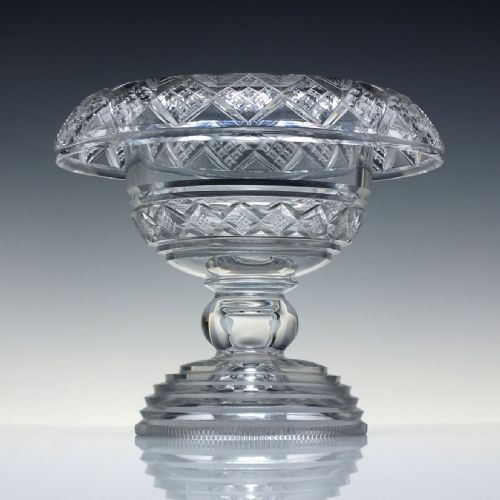
The clarity of the crystal and the crispness of the wheel cutting separate ordinary vessels from exceptional ones. Sharp, deep facets catch the light cleanly, whereas softer mouldings lack definition.
The weight of the lead glass and the integration of bronze or silver-plated mounts dictate the calibre of the piece. Heavier metalwork with detailed figural chasing, such as cherubs or mermen, indicates superior craftsmanship.
Elizabeth Graydon Stannus·Wedgwood·W M F·Orivit·Christofle et Cie·Waterford
The Antique Glass Compote Glossary
- Compote
- A stemmed vessel with a bowl used for serving fruit or preserves at table. It is also known as a comport.
- Tazza
- A shallow bowl or dish mounted upon a stem and foot, originating from Renaissance plate. These pieces function as centrepieces for formal dining.
- Hobnail
- A decorative pattern of raised points cut into glass resembling the hobnails on stout boots. It creates a textured, light-catching surface.
- Ormolu
- Gilded bronze used for mounts and decorative detailing on nineteenth-century pieces. The technique involves applying a mercury-gold amalgam to cast bronze.
- Lead crystal
- Glass containing lead oxide which increases brilliance, weight, and workability for cutting. It produces a clear ring when struck.
Antique Glass Compote: Frequently Asked Questions
What is an antique glass compote?
An antique glass compote is a raised bowl on a pedestal, designed for serving fruit, nuts, or sweetmeats during dessert courses.
These vessels bring height to table settings, combining blown or cut glass with mounts of silver plate or bronze.
How do I date an antique glass compote?
Dating relies on the cutting style, the composition of the glass, and the metal mounts if present. Georgian and Victorian pieces show deep hand-cutting and pontil marks on the base.
Later Edwardian and Art Deco examples introduce coloured glass, simplified pedestal forms, and distinct maker signatures.
How were compotes used historically?
Compotes formed part of nineteenth-century table centrepiece arrangements, holding seasonal fruits or confections for guests to share.
They stood centrally on the dining table, often paired with matching dishes or flanked by smaller tazze.