


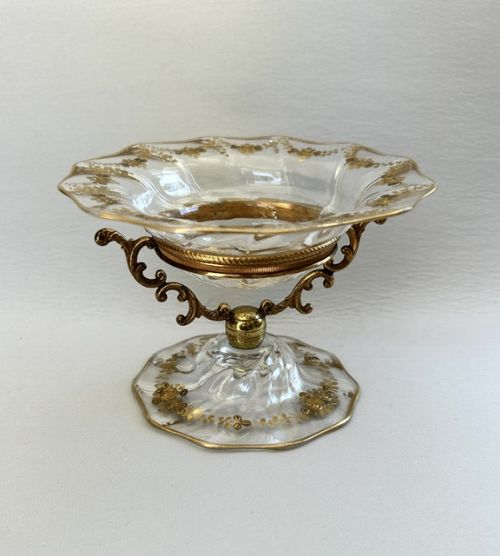
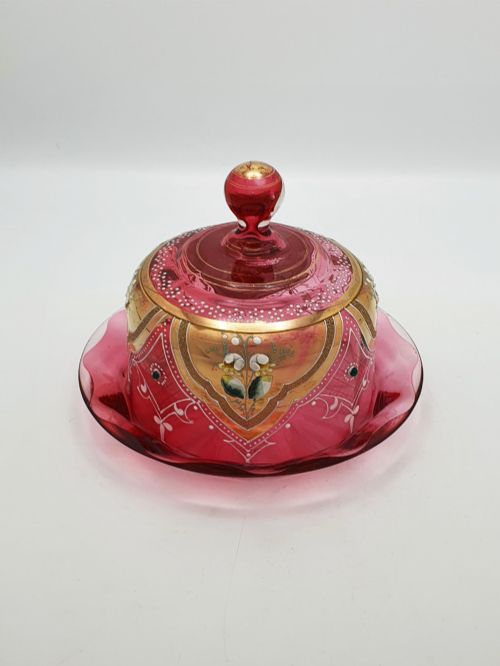


Gilded Glass Dish
A gilded glass dish brings warmth to a room, catching light through crystal, cranberry glass and gold leaf.
Gilded Glass Dish
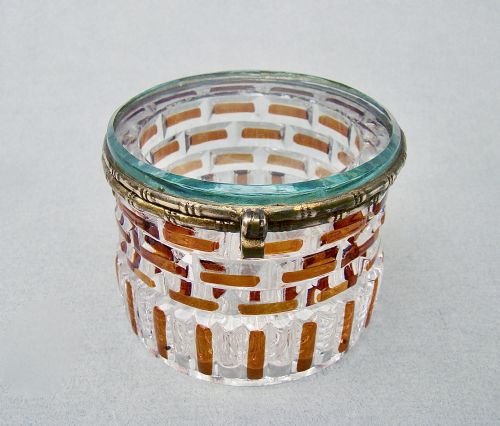
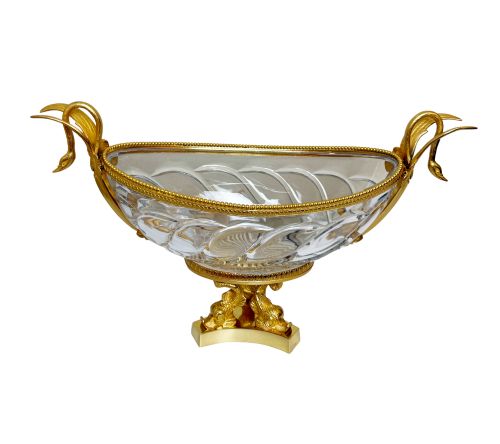
A gilded glass dish combines glass vessels with metallic gilding, often mounted in gilt bronze, brass, or ormolu. Buyers searching for a gilded glass dish encounter diverse forms ranging from tazzas and berry dishes to trinket boxes and large centrepieces.
The pieces span the nineteenth century through the Edwardian era and 1930, with strong representation from French and Bohemian workshops. Victorian and Art Nouveau styles dominate the selection, alongside Empire and Belle Epoque designs.
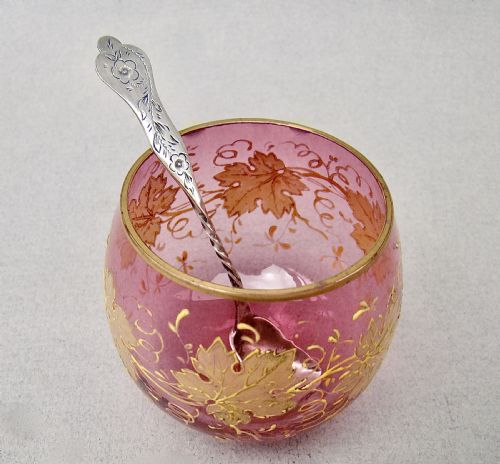
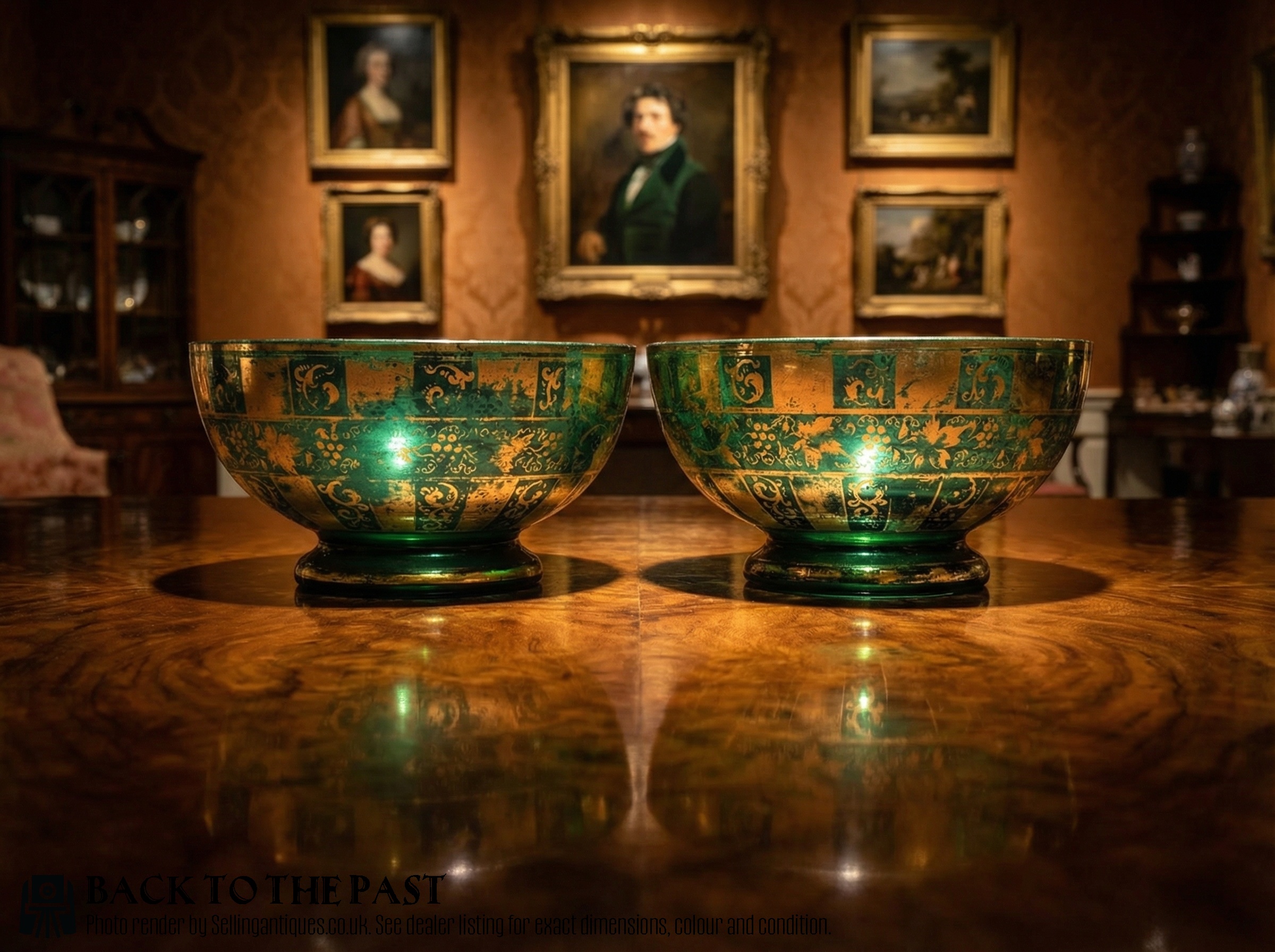
Vessels appear in clear crystal, cranberry glass, ruby glass, green opaline, and amber glass. Many incorporate decorative motifs such as grapevine patterns, poppy flowers, cherubs, and mermen.
How they were made
Maker utilise traditional glassblowing and cutting techniques to shape crystal, cranberry glass, and opaline vessels. Artisans apply paste gilt, gold leaf, or gold enamel directly onto the glass surface, frequently fixing the metallic decoration through heat.
Metal mounts in gilt bronze, ormolu, brass, and pewter provide structural frames and stands for the glass bowls. Casters shape these metal elements through foundry work before assembling them with the glass components.
Gilded Glass Dish Retail Price Guide 2026
Typical asking prices for gilded glass dish among the pieces listed under this phrase on Sellingantiques today, from the lower quarter to the upper quarter. They describe what is for sale here now, not the wider market.
Listings feature glass vessels from the nineteenth century, Edwardian period, and 1930, incorporating materials such as crystal, cranberry glass, gilt bronze, and brass.
What varies in quality
Quality rests upon the crispness of the glass cutting and the weight of the crystal or coloured glass body. Finer examples display hand-painted or enamelled gilding with intricate detailing, such as botanical motifs or figural scenes.
The integration between the glass vessel and its metal mount indicates standard. Substantial ormolu and gilt bronze frames with refined chasing distinguish superior centrepieces and dishes from simpler brass or pewter mountings.
Baccarat·Moser·St Louis glassworks·George Fox·François-Eugène Rousseau·Orivit
The Gilded Glass Dish Glossary
- Ormolu
- A gilded bronze application used for furniture mounts and decorative frames on glass objects. This technique creates a rich gold appearance on bronze metalwork.
- Tazza
- A shallow ornamental bowl raised on a stem and foot. Makers often utilise cut crystal and gilt decoration for these display pieces.
- Opaline glass
- An opaque or translucent glass in pastel shades, often moulded into shell shapes with gilt edges. It gained popularity in France during the nineteenth century.
Gilded Glass Dish: Frequently Asked Questions
How do I clean a gilded glass dish?
Clean the glass gently using a soft cloth and lukewarm water, avoiding harsh abrasives that might damage the gold leaf or paste gilt.
Keep moisture away from any metal mounts and ormolu frames to prevent tarnishing or corrosion over time.
Are these dishes safe for food?
Many antique dishes feature delicate paste gilt or enamel decorations that can wear away with regular culinary use. These pieces function best as decorative bowls, trinket boxes, or display tazzas rather than everyday tableware.
How do I identify Art Nouveau pieces?
Art Nouveau items display organic forms inspired by nature, featuring fluid lines, floral motifs, and sinuous pewter or bronze mounts. Look for subjects like poppy flowers and leaves executed around the turn of the twentieth century.
What is the difference between ormolu and gilt bronze?
Ormolu refers specifically to high-quality gilded bronze mounts created through a mercury amalgam process, popular in French decorative arts. Gilt bronze encompasses a broader range of bronze objects finished with gold leaf or gilding.