




Victorian Glass Tazza
These Victorian glass tazza pieces combine raised pedestals with broad bowls to anchor a table with height and colour.
Victorian Glass Tazza
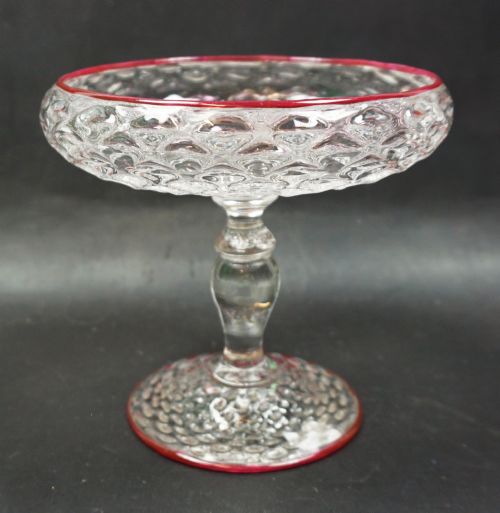
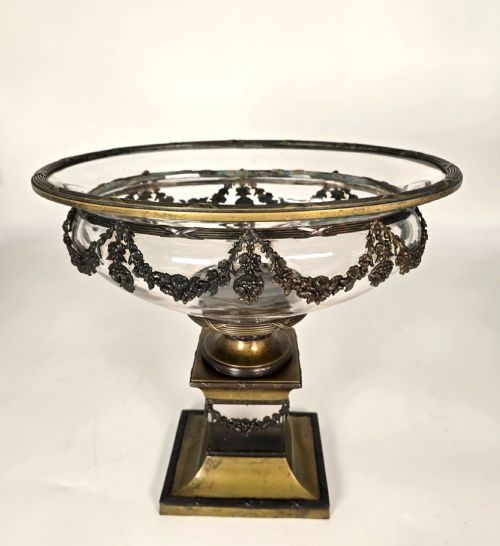
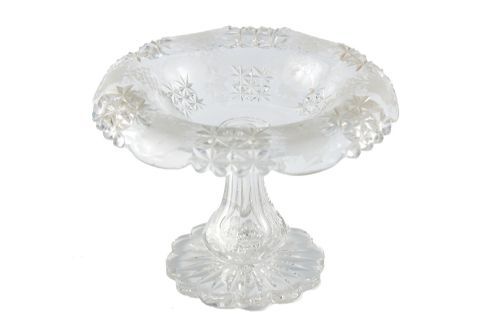
A Victorian glass tazza sits on a raised pedestal, forming an elevated dish or footed plate designed for display and service. The evidence shows these pieces functioning as centrepieces, decorative bowls, and cake stands.
Most examples on this page date from the nineteenth century, including specific decades like the eighteen-eighties and eighteen-nineties, alongside broader Victorian and Edwardian periods.
Makers and designers used styles ranging from French Rococo Revival and Second Empire to Victorian Black Forest, with forms spanning simple clear glass to elaborate honeycombe moulded and etched vessels.
What varies in quality
The distinction between standard domestic wares and finer items lies in the crispness of the cutting, the depth of the etching, and the weight of the crystal. Elaborate moulding and complex coloured glass layers, such as yellow over crystal, demand greater skill from the glasshouse.
The integration of metal mounts, including gilt bronze and silver plate, affects the overall balance and material richness of the centrepiece.
Victorian Glass Tazza Retail Price Guide 2026
Typical asking prices for victorian glass tazza among the pieces listed under this phrase on Sellingantiques today, from the lower quarter to the upper quarter. They describe what is for sale here now, not the wider market.
Among the elegant crystal bowls and silver stands, an unexpected Victorian Black Forest bear keeps watch over the glass.
Davidson
The Victorian Glass Tazza Glossary
- Tazza
- A shallow bowl or plate mounted on a pedestal stem, used historically for serving food or displaying fruit. These elevated vessels create vertical interest on a dining table.
- Comport
- A large footed dish or bowl very similar in function and form to a tazza. The terms often describe the same pedestal serveware in nineteenth-century inventories.
- Pearline
- A pressed glass technique patented by Davidson in the nineteenth century that produces translucent opalescent shades. Pieces in blue pearline show characteristic shaded colouration.
- Honeycombe moulded
- A decorative pattern of hexagonal indentations pressed into the body of the glass. This texture catches light across the surface of the bowl.
- Gilt bronze
- Bronze metal treated with a gold wash or mercury gilding to produce a rich metallic finish. It frequently appears as mounts or stands supporting heavy crystal bowls.
Victorian Glass Tazza: Frequently Asked Questions
What was a tazza used for?
A tazza served as an elevated dish for presenting fruit, sweetmeats, or cakes during formal meals. Their height brought visual drama to the centre of the dining table.
Over time, many of these pieces transitioned from functional serveware to purely decorative centrepieces and display bowls within the home.
How do I style a glass tazza?
Place a single tazza in the centre of a dining table or sideboard to let the coloured glass catch the light. They work well empty to display the cut crystal or patterned surface.
Alternatively, fill the shallow bowl with seasonal fruit, glass ornaments, or floral arrangements to echo historic display traditions.
How can I tell the period?
Nineteenth-century pieces often show hand-cut facets, heavier lead crystal weights, or specific nineteenth-century colour palettes like cranberry and ruby. Moulded registry marks or specific maker attributions also help date the glass.
Later Edwardian examples tend to feature lighter proportions and distinct decorative motifs compared to mid-Victorian heavy cut glass.
Are these pieces fragile?
Most items are made from heavy lead crystal or thick pressed glass, making them sturdier than thin modern glassware. However, the pedestal joints and decorative metal mounts require careful handling during cleaning.
Hand washing in lukewarm water with mild soap protects both the glass surface and any gilt bronze or silver plate components.