
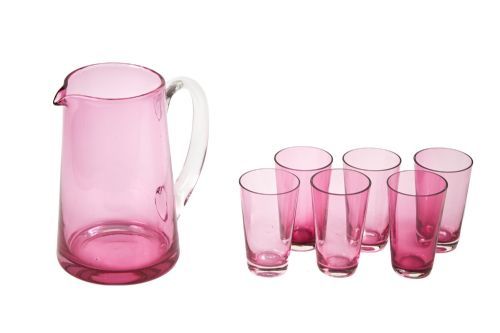


Victorian Ruby Glassware
Victorian ruby glassware brings rich crimson and cranberry tones to the table, formed from hand-blown glass that catches the light through decanters, wine glasses and vases.
Victorian Ruby Glassware
Victorian ruby glassware covers everything from sets of wine glasses and decanters to vases, jugs and lidded jars. These items emerge from nineteenth-century English and Bohemian workshops, spanning periods from the eighteen-sixties through to the Edwardian era.
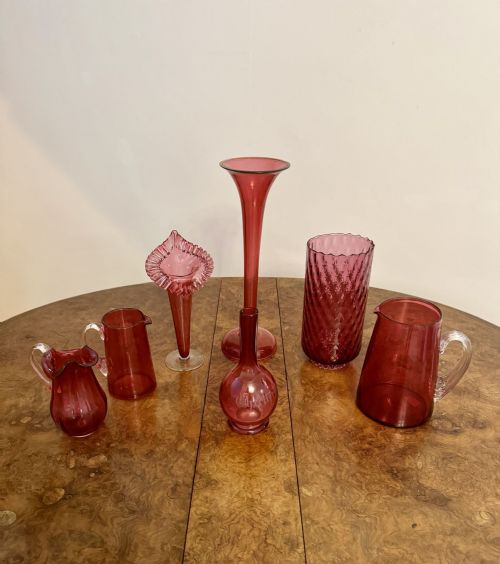
The most common forms on this page are matched wine glass sets, table decanters with clear stoppers, and decorative vases. Tableware such as preserve bowls, jugs and bells also appear frequently, often shaped with hand-blown techniques.
Pieces range from simple cranberry glass jugs to layered over-crystal carafes and heavily gilded tazzas. English and Bohemian makers dominate the selection, utilising rich colour shades from deep ruby to translucent cranberry.
Production materials and techniques
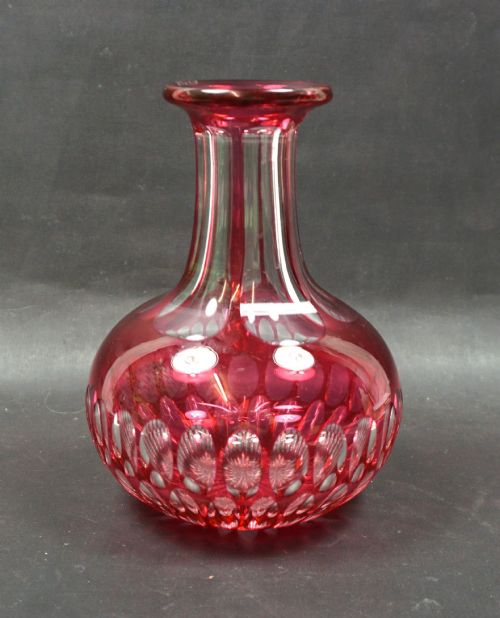
Makers achieved the distinct red coloration by adding gold or copper oxide to the molten batch during glassblowing. Many items combine this ruby or cranberry glass with clear glass layers, creating a contrasting cased or flashed effect where outer colour is cut away to reveal clear crystal beneath.
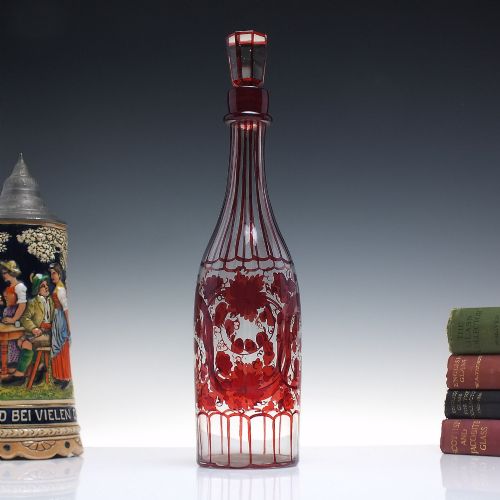
Decoration often involved hand-painting, enamel work, and gold leaf gilding applied to the surface. Engravers also cut geometric or botanical motifs such as fruiting vines directly into the ruby overlay using wheel-cutting techniques.
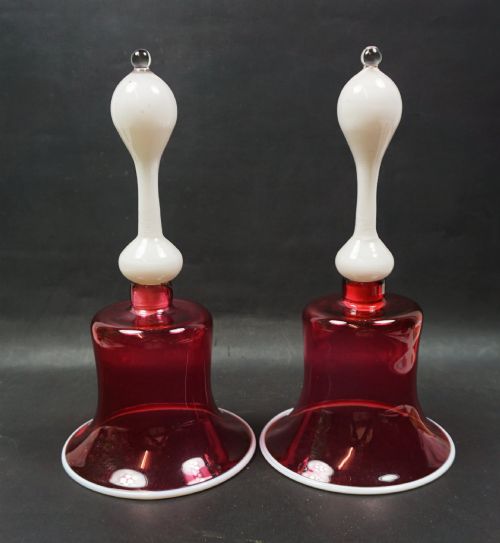
Handbells ring out in ruby glass with clear handles, ready to summon tea or test the resonance of nineteenth-century crystal.
Distinctions in craftsmanship and finish
Quality rests upon the depth and evenness of the colour within the glass wall, alongside the crispness of any cut overlay. Fine examples show precise wheel-engraving and carefully applied hand-gilding that has survived intact without rubbing.
The finesse of the hand-blown form itself separates standard production from superior pieces. Thinner, well-balanced stems on wine glasses and cleanly struck handles on jugs and bells indicate higher workshop standards.
The Victorian Ruby Glassware Glossary
- Cranberry Glass
- A transparent pinkish-red glass coloured with gold chloride. It is widely seen in Victorian tableware and decorative items.
- Ruby Flash Glass
- Clear glass coated with a thin layer of ruby glass on the exterior. The outer layer is often cut away to create contrasting patterns.
- Mary Gregory
- A style of decorative glassware featuring white enamel silhouettes of children amidst foliage. Pieces usually depict figures in Victorian dress.
- Tazza
- A shallow ornamental cup or bowl raised on a stem and foot. They appear in gilded ruby glass for display on the table.
- Epergne
- A large table centrepiece featuring multiple branching holders for fruit or flowers. Cranberry examples combine bowls, trumpets and vases into one structure.
Victorian Ruby Glassware: Frequently Asked Questions
What is cranberry glass?
Cranberry glass is a specific type of transparent red glass produced by adding gold to the molten mixture. It ranges from a pale pinkish tone to a deep crimson.
This material became immensely popular during the nineteenth century for tableware, drinking sets and decorative ornaments.
How do I date Victorian ruby glass?
Dating relies on stylistic clues, pontil marks on the base, and manufacturing methods. Mid-century pieces often feature heavier gilding and cased overlays.
Later Victorian and Edwardian examples shift toward simpler blown forms or specific decorative treatments like Mary Gregory enamel painting.
Can I use these wine glasses?
Many antique wine glasses and decanters remain structurally sound for gentle use. Hand-washing in lukewarm water is essential to protect delicate gilding and enamelling.
Avoid thermal shock by keeping hot liquids away from these nineteenth-century vessels.
What is Bohemian ruby glass?
Bohemian ruby glass originates from Central European workshops renowned for advanced cutting and overlay techniques. These items often feature heavy crystal cased in ruby.
Engraved floral motifs and deep panel cuts characterise the regional output found in nineteenth-century collections.