





Clear Crystal Tazza
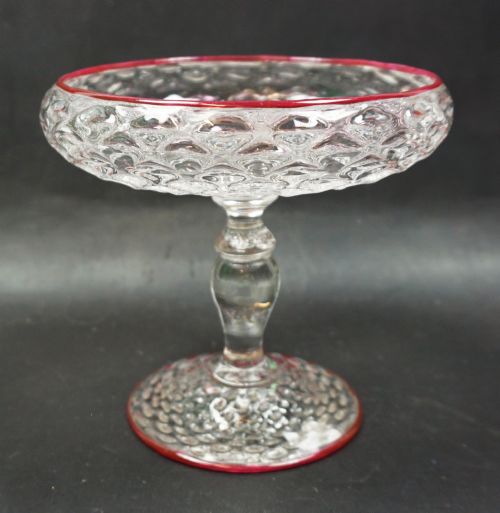
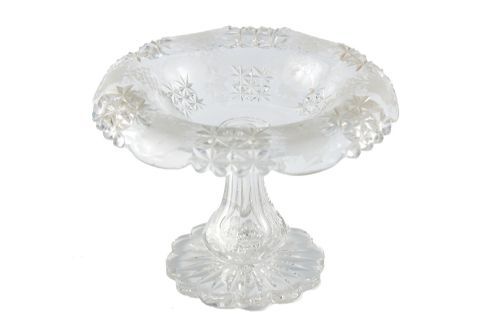
These clear crystal tazza pieces are elevated serving dishes and stands rooted in centuries of English glassmaking, combining utilitarian form with brilliant optical effects.
Clear Crystal Tazza
A clear crystal tazza functions as a raised centrepiece or pedestal dish designed for display and serving, appearing in forms ranging from early Georgian miniature patch stands to large Victorian pedestal bowls. The pieces on this page span the 1700s to the early 20th century, encompassing styles from Early Georgian and Georgian to Victorian, Edwardian, and Belle Epoque.
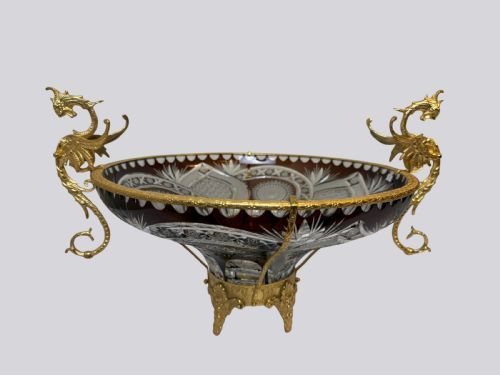
Buyers encounter diverse object types grouped under this search phrase, including traditional tazzas and salvers, centrepiece bowls, sweet dishes, and patch stands. Materials stretch from basic clear glass and lead glass to cut glass, lead crystal, cased glass, and combinations with gilt bronze.
How they were made
Maker techniques rely heavily on lead glass and crystal glass formulations, shaped into pedestal forms with spreading folded feet, triple-knop stems, and terraced feet. Workers executed honeycomb mouldings, red cane decoration, and over-crystal layering to achieve coloured effects.
Surface ornamentation involves wheel-cutting and etching, complemented by structural additions such as gilt bronze mounts and silver fittings found on specific sweet dishes and centrepieces.
Clear Crystal Tazza Retail Price Guide 2026
Typical asking prices for clear crystal tazza among the pieces listed under this phrase on Sellingantiques today, from the lower quarter to the upper quarter. They describe what is for sale here now, not the wider market.
Listings span from the early 18th century through the Georgian and Victorian eras into the early 20th century, utilising cut glass, lead crystal, and gilt bronze.
What varies in quality
Quality separates through the purity and weight of the lead crystal, the crispness of wheel-cut facets, and the architectural balance of stems like the triple-knop. Early examples show distinct characteristics in their spreading folded feet and hand-formed proportions.
The sophistication of secondary materials, such as finely chased gilt bronze mounts or complex cased glass overlays with red cane and yellow over crystal, dictates the upper tier of execution.
The Clear Crystal Tazza Glossary
- Tazza
- A shallow bowl or dish mounted on a stem and foot, used historically for serving food or displaying items. This form acts as the primary focal point of the search.
- Lead glass
- Glass containing lead oxide that increases brilliance, weight, and workability for cutting. It forms the heavy, clear body typical of better Georgian and Victorian pieces.
- Patch stand
- A small pedestal dish originally used to hold cosmetic beauty patches. Miniature versions appear in early eighteenth-century pieces with triple-knop stems.
- Folded foot
- A glass base where the outer rim is turned under to create a thicker, more stable edge. This technique is characteristic of early pieces.
- Cased glass
- Glass made of two or more distinct layers of different colours or clarity, fused together while hot. Artisans then cut through the outer layer to reveal the contrasting glass beneath.
Clear Crystal Tazza: Frequently Asked Questions
What is a clear crystal tazza used for?
These elevated dishes served historically for presenting sweetmeats, fruit, or small decorative items on formal dining tables. Today they function primarily as decorative centrepieces or display vessels.
Their raised pedestal design draws the eye upward, making them effective focal points on sideboards, tables, or mantelpieces.
How do I date an antique glass tazza?
Dating relies on examining the weight and composition of the glass, the form of the stem, and the construction of the foot. Early eighteenth-century examples often feature heavy lead glass with folded feet and triple-knop stems.
Later Victorian and Edwardian pieces frequently display machine-moulded bodies, intricate wheel-cutting, or combinations with metals like gilt bronze.
Are patch stands the same as tazzas?
Patch stands are miniature versions of pedestal dishes, specifically scaled down to hold small decorative cosmetic patches worn in the eighteenth century. While they share the raised stem and foot anatomy of a tazza, their diminutive size sets them apart.
They represent a specialised form collected for their early date and intricate knop stems.
What does cased glass mean?
Cased glass involves fusing two or more layers of coloured or clear glass together during the blowing process. Makers then cut away parts of the outer layer to expose the contrasting glass underneath.
This technique creates striking two-tone visual effects seen in coloured and yellow over crystal pieces from the nineteenth century.