


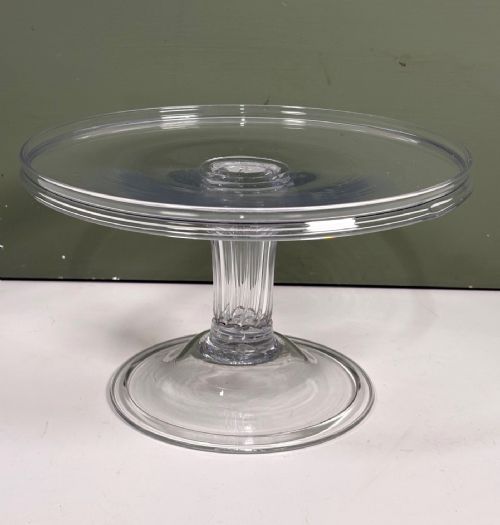


Antique Footed Glass Dish
An antique footed glass dish elevates a table, bringing weight and clarity to period serveware.
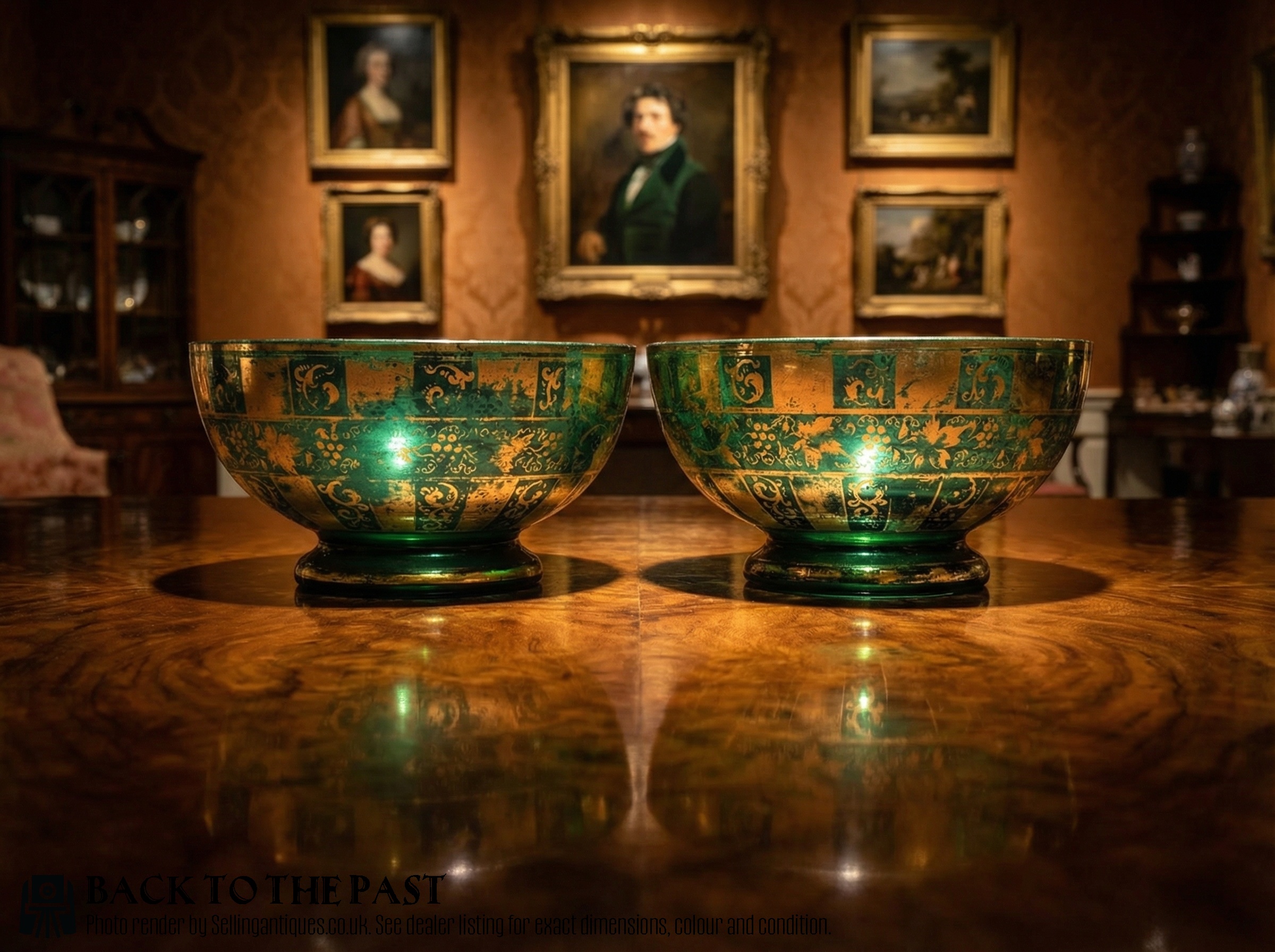
Antique Footed Glass Dish
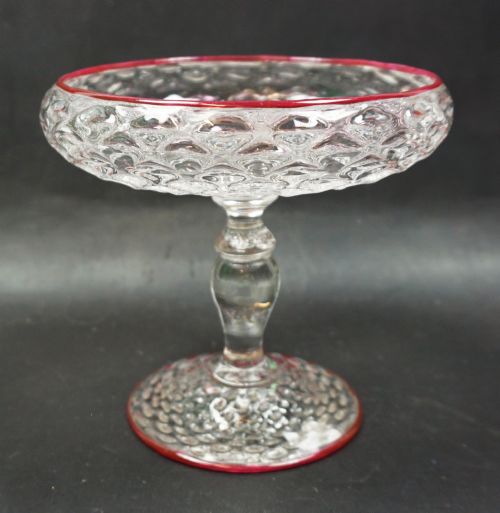
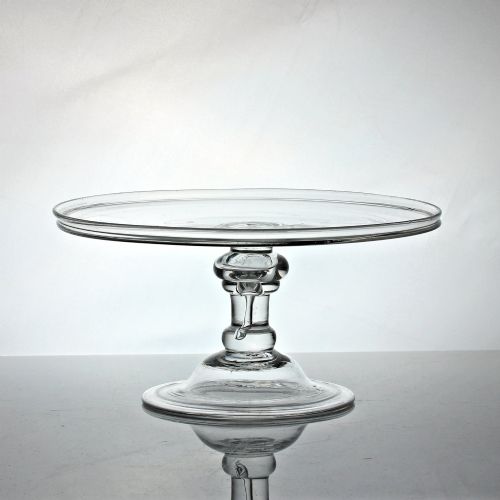
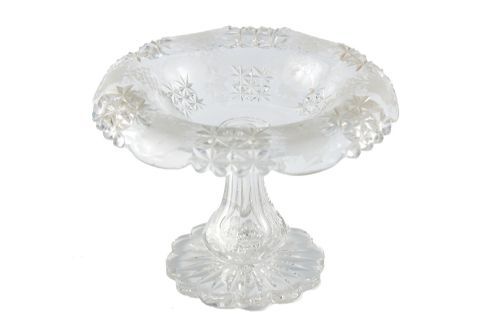
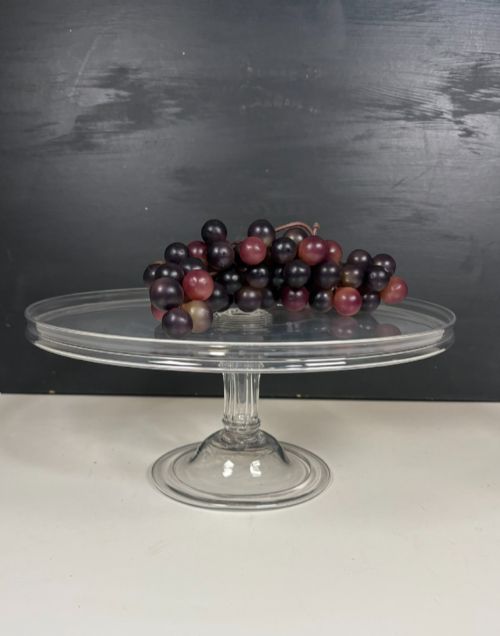
An antique footed glass dish combines raised presentation with practical utility, appearing as tazzas, centrepiece bowls, fruit bowls, and salt cellars. These elevated vessels serve desserts, sweets, and fruits, anchoring a dining table with substantial presence.
The pieces on this page span the eighteenth, nineteenth, and early twentieth centuries, covering Georgian, Victorian, Edwardian, Art Nouveau, and Art Deco styles. Collectors encounter clear lead crystal, coloured glass, and combinations featuring sterling silver or silver plating.
Tazzas and pedestal sweetmeat glasses dominate the older periods, while later decades bring pressed, cut, and iridescent bowls on ball or pedestalled feet. Each form reflects the changing dining and display customs of its era.
How they were made
Glastonbury and continental houses shaped these pieces using lead glass, clear crystal, and coloured glass such as ruby, cranberry, blue rim, and amber. Master glassmakers blew molten metal into moulds or free-hand, applying decorative techniques like honeycomb moulding, cutting, and etching.
Some items feature applied colour, red cane decoration, gold enamel, or gilding fired onto the surface. Makers also mounted glass bowls into sterling silver or silver-plated frames, including pierced baskets and ball feet.
Sweetmeat glasses stand ready for the day sugar was a luxury so prized it required its own pedestalled architecture.
What varies in quality
Clarity of the metal, depth of the cutting, and crispness of moulded patterns define the upper tier of these pieces. Heavier lead crystal and well-balanced baluster stems indicate superior material and skilled craftsmanship.
The precision of enamelling, gilding, and the integration of metal mounts with the glass vessel separate standard production from exceptional studio output.
St Louis glassworks·Loetz·Rene Lalique·Baccarat·Waterford
The Antique Footed Glass Dish Glossary
- Tazza
- A shallow bowl or plate mounted on a stem and foot, used for serving fruit or confections. It provides height and decorative focus on a dining table.
- Baluster stem
- A thick, architectural stem with characteristic knops or swellings, common on eighteenth-century drinking vessels and sweetmeat glasses. This form adds stability and visual weight.
- Lead crystal
- Glass containing lead oxide, which increases brilliance, weight, and the refractive index. It allows for deep, sharp wheel-cutting.
- Sweetmeat glass
- A small, stemmed glass vessel designed for preserved fruits, nuts, or sweetmeats during formal Georgian dining. They often feature elaborate knopped stems and terraced feet.
- Centrepiece bowl
- A large, prominent vessel placed in the middle of a table for decoration or serving. These pieces often incorporate heavy cut glass or precious metal mountings.
Antique Footed Glass Dish: Frequently Asked Questions
What is a tazza used for?
A tazza serves as an elevated presentation dish for fruit, cakes, and sweetmeats during formal dining. Its raised foot lifts the contents above the table surface for better visibility.
In modern settings, collectors utilise them as decorative centerpieces or display items rather than daily tableware.
How do I date an eighteenth-century glass?
Dating relies on characteristics like pontil marks, metal composition, stem formation, and foot style. Baluster stems and folded feet point firmly to the Georgian era.
Weight, wear patterns on the base, and the tint of the metal provide further clues for precise attribution.
What is lead crystal?
Lead crystal is glass manufactured with the addition of lead oxide, which increases the density and refractive index. This produces a clear, heavy material that rings when struck.
The added weight allows artisans to execute deep, sharp cuts without compromising the structure.
Can I use antique glass dishes daily?
Most antique glass handles light daily use if treated with care, though delicate pieces warrant hand washing. Sudden temperature changes can crack old glass, so dishwasher use is strictly avoided.
Salt cellars and fruit bowls adapt well to modern dining when handled gently.
What is a sweetmeat glass?
A sweetmeat glass is a small, pedestal-mounted bowl designed for serving rich, sugary confections after a meal. They feature sturdy stems and feet to withstand frequent handling.
These vessels often showcase intricate knops and moulded patterns typical of eighteenth-century glasshouses.