

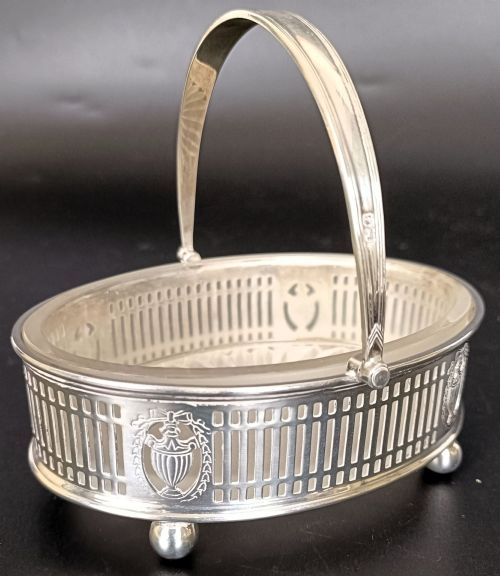
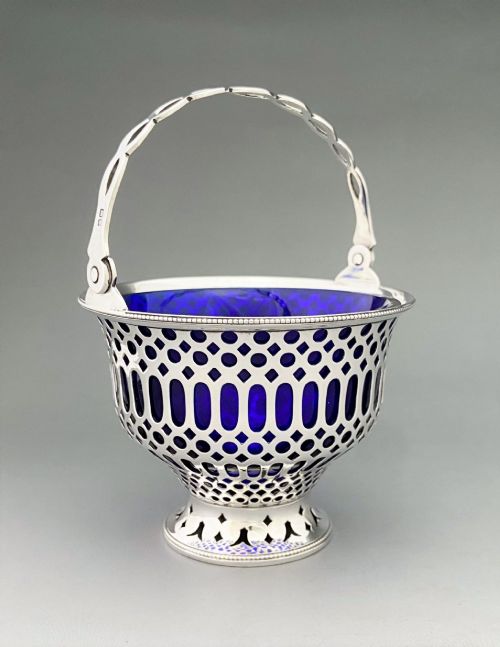


Antique Glass Bonbon Dish
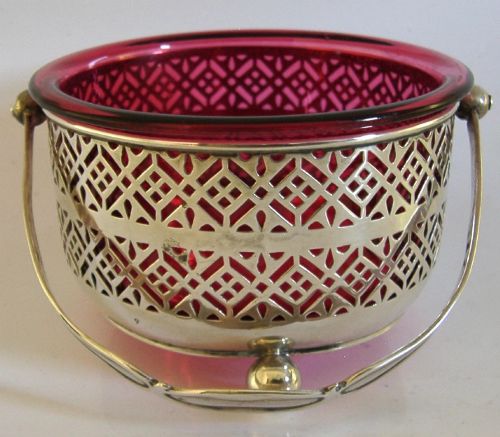
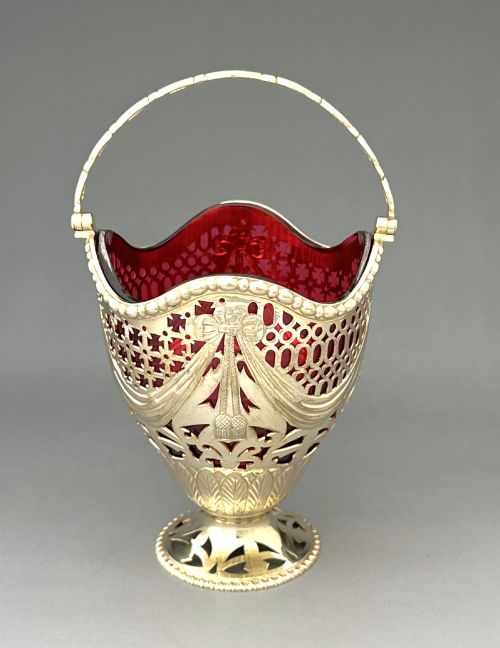
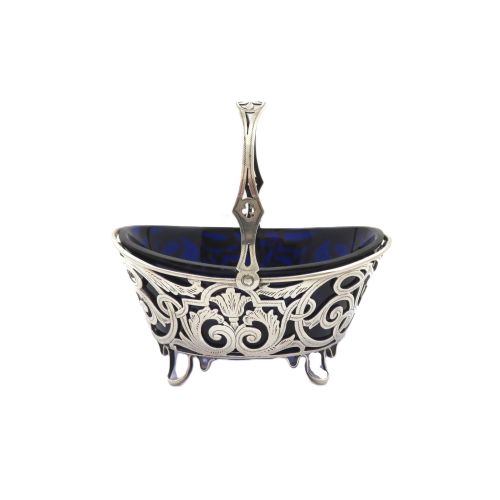
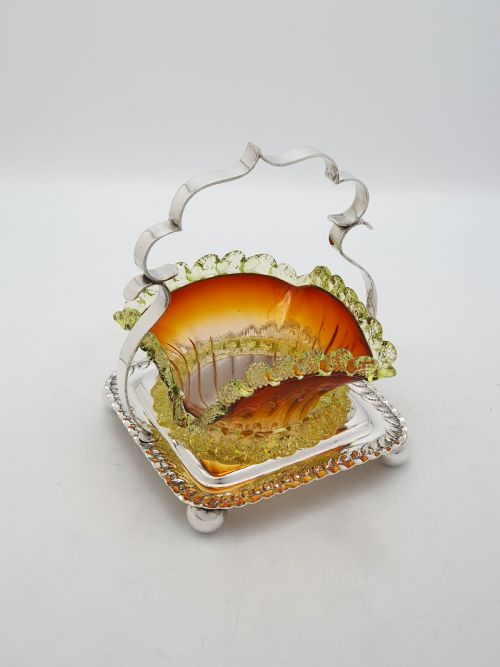
An antique glass bonbon dish brings colourful pressed or blown glass together with intricate silver or silver plated metalwork for the table.
Antique Glass Bonbon Dish
An antique glass bonbon dish serves sweet confections and small treats, appearing frequently on this page as an open basket, preserve dish, or bowl with a contrasting glass liner.
The objects span from the eighteenth century through the Victorian and Edwardian eras into the Art Deco period, capturing changing domestic dining habits.
Makers paired removable coloured glass vessels with metal mountings, including swing handles and pierced stands, creating functional tableware for formal serving.
How they were made
Craftspeople shaped glass through blowing and cutting to produce rich hues of cranberry, ruby, cobalt, and amber, alongside clear cut glass and pink opaque varieties.
Metalworkers formed the supporting stands and baskets using sterling silver, silver plate, and silver gilt, often employing piercing techniques and cast floral handles.
Listings on this site feature glass bonbon dishes and baskets spanning the eighteenth century, Victorian era, Edwardian period, and Art Deco years.
What varies in quality
The weight and depth of the metal mounting determine the standard of the piece, with substantial sterling silver frames and detailed piercing sitting above simpler silver plated versions.
The clarity and saturation of the glass liner elevate the object, particularly where deep cranberry or vaseline tones complement the accompanying metalwork.
William Comyns·George Fox·W M F·Viners
The Antique Glass Bonbon Dish Glossary
- Cranberry glass
- A rich pinkish-red glass coloured with gold chloride, popular in Victorian tableware. It appears frequently in liners and baskets on this page.
- Swing handle
- A movable arched metal handle attached to the sides of a basket or dish. This feature allows easy transport and access to the contents.
- Silver gilt
- Silver covered with a thin layer of gold, providing a warm golden sheen over the metal surface. It adds a decorative contrast to coloured glass liners.
- Pierced work
- Metal perforated with decorative patterns to create openwork designs in baskets and stands. This technique lightened the weight while adding visual detail.
Antique Glass Bonbon Dish: Frequently Asked Questions
What is an antique glass bonbon dish?
An antique glass bonbon dish is a small tabletop vessel designed for serving sweets, sugar, or preserves. It typically combines a colourful glass insert with a decorative metal holder or basket.
These pieces reflect the craftsmanship of the Victorian, Edwardian, and later periods, serving both practical and decorative functions in domestic dining.
How do I identify an Edwardian piece?
Edwardian items often display lighter metalwork, delicate pierced silver, and vibrant coloured glass inserts like vaseline or cranberry. Makers from this era embraced floral motifs and refined handles.
Examining the hallmarks on the silver components provides specific date letters and maker marks to confirm the exact period of manufacture.
Were these dishes used for sugar?
Many objects listed as bonbon dishes share forms with sugar baskets and preserve dishes. They held loose lumps or crystals during formal tea services and dining.
The inclusion of a swing handle allowed guests or hosts to pass the container easily across the table.
What glass colours are typical?
Cranberry glass, ruby glass, cobalt blue, and amber are the most common hues found in these table items. Opaque pink and clear cut glass also appear across different decades.
These colours were achieved by adding specific metallic oxides and minerals to the molten glass during production.