

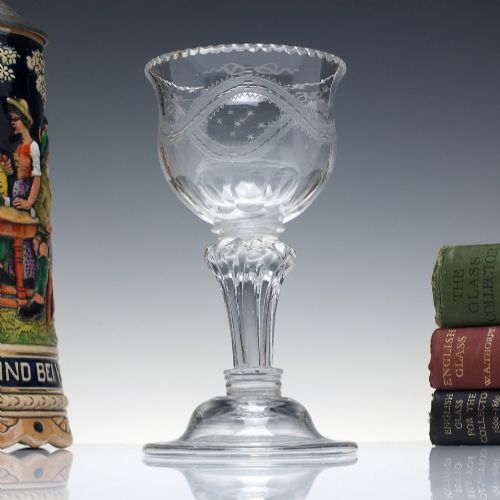
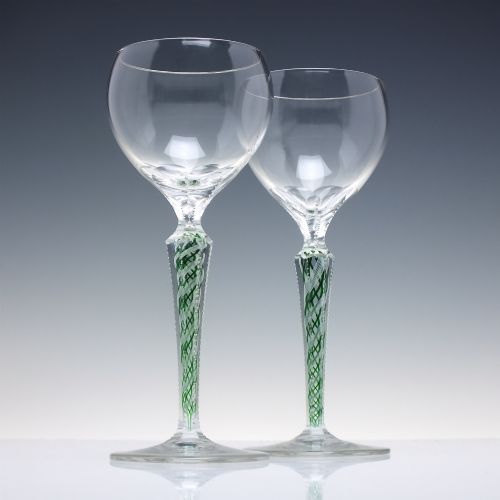
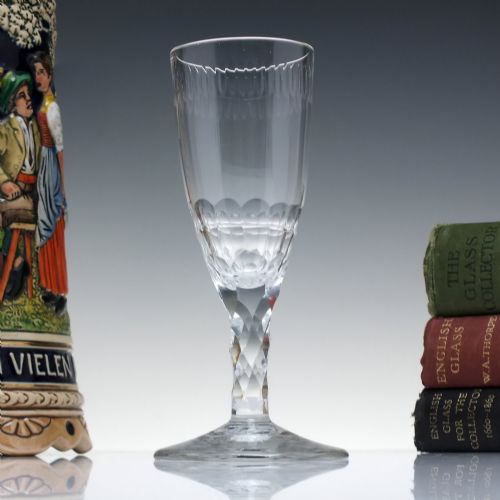
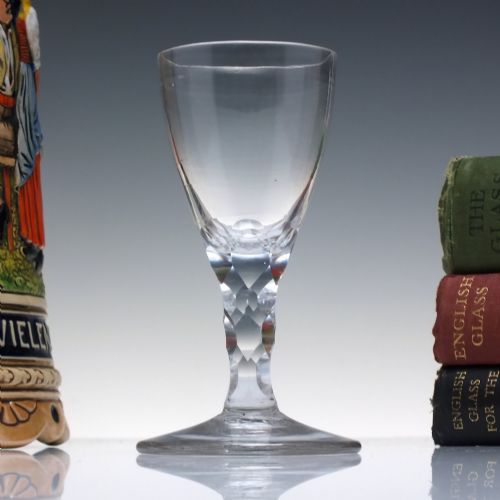
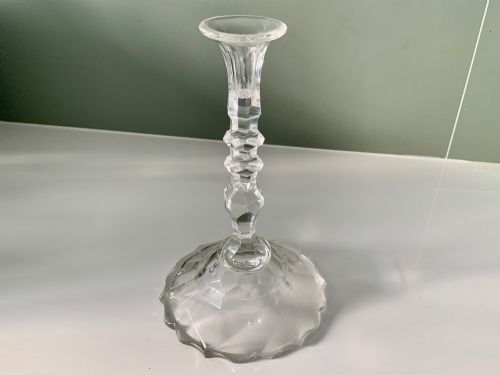
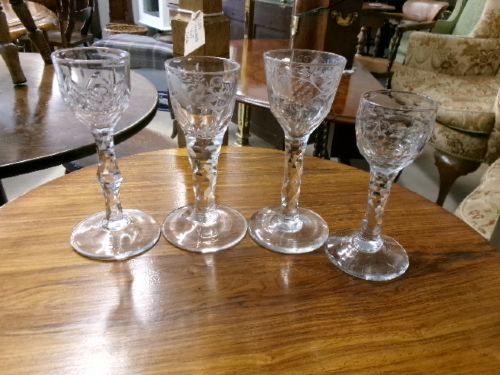
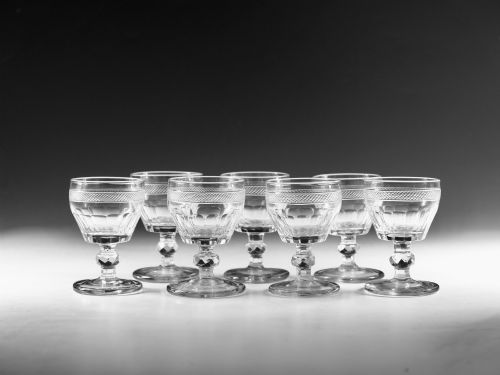


Georgian Faceted Stem Glass
These Georgian faceted stem glass pieces offer drinkers and collectors lead crystal drinking vessels shaped by 18th Century and Regency craft.
Georgian Faceted Stem Glass
When you search for georgian faceted stem glass, you encounter drinking vessels designed for wine, ale, port, and cordials. These pieces date from the 18th Century through to the Regency period and include specific forms like ale flutes, rummers, and goblets.
The most common examples on this page are wine glasses and drinking glasses featuring cut stems. Many incorporate wide foot bases, decorated bowls, or engraved motifs such as hop and barley designs or Jacobite symbols.
English production dominates the selection, alongside Irish port glasses. These vessels reflect the table customs of the Georgian era, combining clear lead glass with geometric stem cutting.
How they were made
The makers relied primarily on lead crystal, lead glass, and clear glass to achieve brilliance and clarity in each vessel. Workers shaped the metal while hot before applying cut glass techniques to the stem.
Faceting the stem created geometric planes that caught the light, contrasting with the smooth or engraved bowls. Selected examples, such as those associated with James Giles, feature additional gilding with gold leaf applied to the surface.
Georgian Faceted Stem Glass Retail Price Guide 2026
Typical asking prices for georgian faceted stem glass among the pieces listed under this phrase on Sellingantiques today, from the lower quarter to the upper quarter. They describe what is for sale here now, not the wider market.
Some glasses bear secret Jacobite symbols, allowing drinkers to toast exiled kings without speaking treason aloud.
What varies in quality
Quality rests in the precision of the facet cutting along the stem and the crispness of any engraving upon the bowl. Sharp, well-defined cuts demonstrate superior handiwork compared to softer or shallower facets.
The clarity and weight of the lead crystal also distinguish finer examples, alongside the balance between the wide foot base, the faceted stem, and the bowl above.
James Giles
The Georgian Faceted Stem Glass Glossary
- Facet cut
- A technique where flat planes are ground and polished onto the glass surface, particularly on the stem, to refract light. This method defines the primary visual characteristic of these drinking vessels.
- Lead crystal
- A heavy, clear glass containing lead oxide that increases refractive index and workability. Makers utilised this material to achieve the sharp facets characteristic of the period.
- Ale flute
- A tall, narrow drinking glass designed for serving ale or beer. These vessels often feature engraved hop and barley motifs upon the bowl.
- Rummer
- A large, wide-bowled drinking glass used for stronger liquors or punch during the Georgian period. They possess substantial capacities compared to standard wine glasses.
- Jacobite engraving
- Decorative motifs applied to glasses, including specific flowers and portraits, expressing clandestine support for the exiled Stuart kings. These symbols hold considerable historical interest for collectors.
Georgian Faceted Stem Glass: Frequently Asked Questions
What are georgian faceted stem glass pieces?
These are drinking vessels featuring cut stems produced primarily during the 18th Century and Regency periods. They encompass wine glasses, ale flutes, cordials, and rummers formed from lead crystal.
The category highlights the cutting techniques and engraving styles of English and Irish glasshouses of the era.
How were these glasses used?
People utilised them at the dining table for serving wine, ale, port, and spirits during Georgian meals and gatherings. Different bowl shapes suited specific drinks.
Some specialised glasses carried political sentiments, such as Jacobite sympathy engravings used during toasts.
How do you date a faceted stem glass?
Dating relies on the form of the bowl, the style of the stem faceting, and the type of metal used. Eighteenth-century examples often display distinct cutting patterns and metal characteristics compared to early 19th century Regency pieces.
Engraving styles and foot shapes also provide clues to the period of manufacture.
Are all facet cut glasses English?
The evidence on this page points largely to English production, alongside Irish port glasses from around eighteen-twenty. English glasshouses led much of the lead crystal development in this era.
Similar cutting traditions existed elsewhere, but the pieces recorded here centre on English and Irish workshops.