


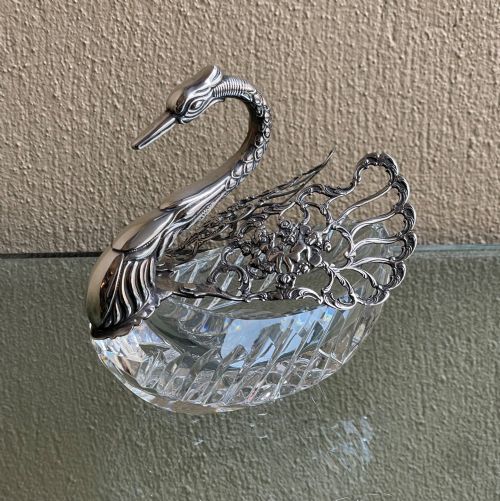


Silver Plated Glass Bowl
A silver plated glass bowl combines lustrous metalwork with coloured or clear vessels, offering a functional centrepiece for the dining table.
Silver Plated Glass Bowl
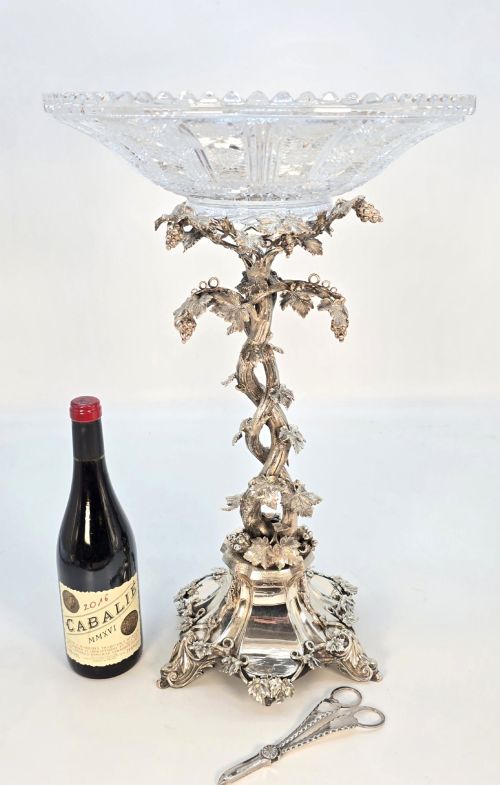
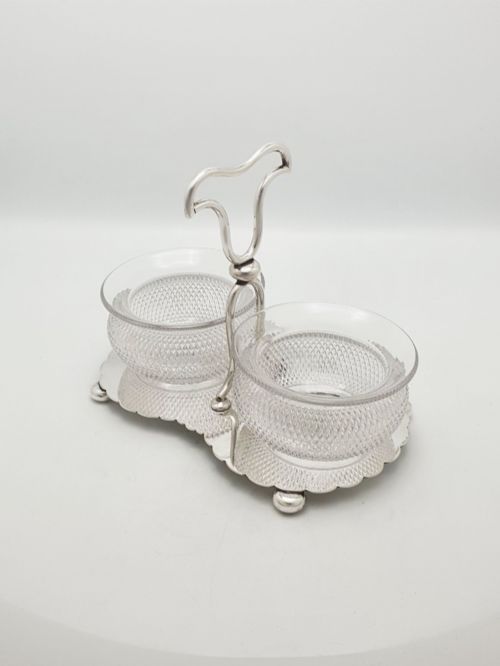
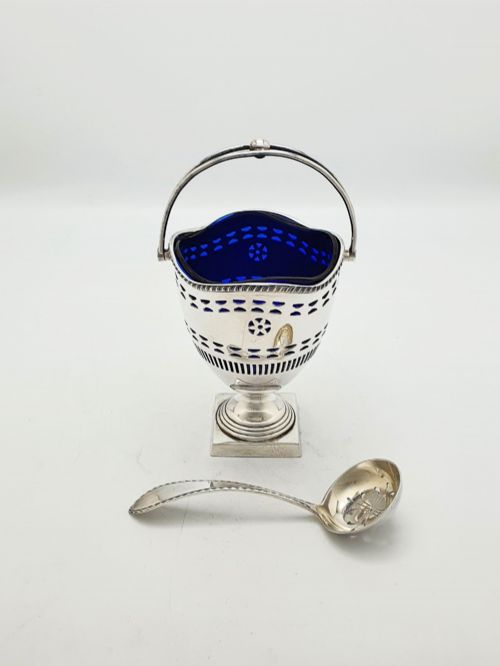
A silver plated glass bowl spans domestic and decorative forms, ranging from fruit bowls and salad servers to bonbon dishes, jam pots, and grand table centrepieces. These items typically feature a removable glass insert held within an ornate metal stand or basket.
The objects frequently appear in Victorian and Edwardian incarnations, alongside distinct Art Nouveau designs featuring sinuous metal mounts. Smaller preserve dishes and baskets are common, while larger épergnes and pedestal bowls serve as dramatic table ornaments.
How they were made
Makers fused silver onto base metals using early plating techniques or Old Sheffield methods, creating durable metallic housings. Glass inserts were fashioned through methods like mould-blowing, deep cutting, and etching.
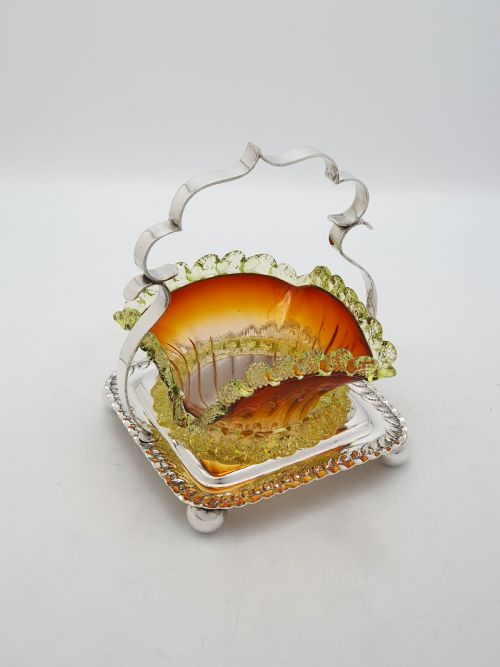
Coloured glass elements, including cranberry, vaseline, and ruby variants, achieved their vibrant hues through specific mineral additions during the glass-melting process. Metal mounts often incorporated piercing, casting, or swing-handle mechanisms to support the heavy glass vessels.
The documented forms range from small jam dishes and sugar bowls to expansive table centrepieces, épergnes, and nautical-themed display pieces.
What varies in quality
Quality rests upon the crispness of the metal casting and the depth of the glass cutting, where sharper facets catch the light more effectively. Maker attribution also plays a role, as specialised metalwork studios produced heavier mounts with more complex figurative details.
The thickness and colour saturation of the glass liner distinguish standard domestic wares from superior examples. Intricate pierced metalwork and well-balanced proportions separate standard production items from ambitious sculptural centrepieces.
WMF·Walker & Hall·James Dixon·Christofle et Cie·Elkington & Co
The Silver Plated Glass Bowl Glossary
- Silver Plate
- A thin layer of silver bonded to a base metal such as copper or Britannia metal. This process allowed makers to produce domestic wares that resembled solid silver at a lower cost.
- Cranberry Glass
- A transparent pink-red glass produced by adding gold chloride to the molten batch. It gained immense popularity during the Victorian era for decorative tableware.
- Vaseline Glass
- A yellowish-green glass containing uranium dioxide that glows under ultraviolet light. It was frequently utilised by continental and British makers for decorative bowls.
- Épergne
- A large table centrepiece featuring a central bowl with branching arms and smaller hanging baskets. They were designed to hold fruit, sweetmeats, or floral displays.
- Pierced Work
- A decorative technique where metal is cut through to create openwork patterns. This method lightened the appearance of heavy silver plated baskets and stands.
Silver Plated Glass Bowl: Frequently Asked Questions
How do I clean the silver plating safely?
Use a soft cloth and a gentle silver polish formulated to protect plated surfaces from excessive abrasion. Avoid harsh chemical dips that strip the underlying metal.
Wash the removable glass bowl separately in warm soapy water. Dry both components thoroughly before reassembling the piece.
Can I use these bowls for serving food?
Many of these vessels were originally designed for jams, fruits, condiments, or sugar, making them suitable for similar modern table use. Check the glass liner for any secure fit within the metal frame.
Avoid putting antique silver plate in the dishwasher, as high heat and harsh detergents will damage the finish. Hand washing preserves the integrity of both the metal and the glass.
How do I tell Victorian from Art Nouveau bowls?
Victorian examples frequently rely on symmetrical forms, rich cranberry or cut crystal glass, and dense floral or revivalist metal mounts. They project a formal, ornate aesthetic.
Art Nouveau pieces embrace asymmetrical floral lines, whiplash curves, and stylised natural motifs, often paired with green vaseline or opaline glass inserts.