
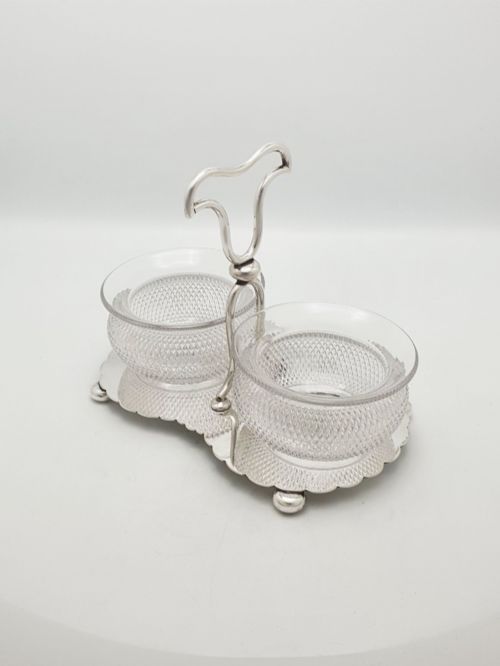


Antique Glass Preserve Dish
These antique glass preserve dish examples bring sparkle to the table, combining cut crystal or rich cranberry hues with gleaming silver mounts for a proper tea service.
Antique Glass Preserve Dish
An antique glass preserve dish is a table vessel designed to hold jam, marmalade, or butter, frequently paired with a matching spoon or a decorative frame. These vessels appear in forms ranging from simple bowls to lidded pots and elaborate condiment stands with twin containers.
The pieces on this page span the Georgian, Victorian, and Edwardian eras, stretching through the Art Deco period and into the mid-twentieth century. Cranberry glass bowls and cut glass designs mounted in silver plate or sterling silver dominate the selection.
Makers utilised clear glass, lead crystal, and vaseline glass alongside silver plate, silver gilt, and sterling silver to create both everyday dining accessories and formal centrepiece items. Functionally, these dishes served the dining table during breakfast and afternoon tea.
How they were made
Glass bodies were formed by blowing molten metal or pressing it into moulds, followed by wheel-cutting to achieve deep geometric facets that catch the light. Cranberry glass achieved its distinctive pinkish-red tone through the addition of gold chloride to the molten batch.
Metal mounts and stands relied on silver plating over base metals or fabrication from solid sterling silver, often shaped using piercing, casting, and repoussé techniques. Fitted spoons and hinged lids required precise metalwork to complement the contours of the glass containers.
Some preserve pots take the literal form of a glossy red apple complete with a silver stem.
What varies in quality
Quality rests in the weight and clarity of the glass, where deep hand-cutting and crisp faceting distinguish finer lead crystal from simpler pressed wares. The presence of matching original spoons, intact silver gilt, and sturdy hallmarks adds significantly to a piece's standing.
The complexity of the metal mount also dictates the grade of the item, separating basic plated frames from pierced baskets or figural designs such as apple-shaped pots. Integration between the glass bowl and its metal stand demonstrates the care taken by the maker.
Hukin and Heath·Adie Brothers
The Antique Glass Preserve Dish Glossary
- Cranberry Glass
- A type of transparent glass coloured with gold oxide, producing shades from pale pink to deep ruby red. It became especially popular during the Victorian era for decorative tableware.
- Silver Plate
- A manufacturing process where a thin layer of silver is bonded to a base metal core, such as copper or nickel brass. This technique allowed makers to offer affordable tableware with the appearance of solid silver.
- Silver Gilt
- Silver that has been coated with a thin layer of gold on its surface, often applied to the interior of bowls or spoons. This finish protected the silver from tarnishing when in contact with acidic jams and preserves.
- Vaseline Glass
- A transparent yellow-green glass containing uranium dioxide that glows brightly under ultraviolet light. It appears frequently in nineteenth and early twentieth century decorative vessels.
- Lead Crystal
- Glass containing a high proportion of lead oxide, which increases the weight, refractive index, and ringing sound of the material. It allows for deeper and sharper cutting than standard soda-lime glass.
Antique Glass Preserve Dish: Frequently Asked Questions
What is an antique glass preserve dish used for?
These dishes served jams, jellies, marmalades, and butter at the Victorian and Edwardian dining table, often placed centrally for family service.
Many examples include fitted spoons and stands designed to keep sticky condiments contained while adding elegance to breakfast and afternoon tea.
How do I clean cranberry glass?
Wash the glass by hand in warm soapy water using a soft cloth, avoiding harsh scouring pads that might scratch the surface. Dry with a lint-free cloth to maintain the clarity and shine of the material.
Take care with silver plated or silver gilt mounts, keeping abrasive polishes away from the glass edges.
How can I date an antique preserve dish?
Examine the style of the glass cutting, the colour choices, and any accompanying metal stands to narrow down the period. Victorian pieces often feature rich cranberry tones and pierced silver gilt, while Art Deco items lean towards geometric shapes and streamlined plating.
Silver hallmarks on the metal mounts provide the most precise date through official assay office stamps and maker's marks.
Are original spoons usually included?
Some pieces retain their matching original spoons, whether in silver plate, silver gilt, or sterling silver, while others have been matched with replacements over time. The listing descriptions note whether a spoon accompanies the dish.
Finding a complete set with its original serving implement adds considerable interest for collectors.