
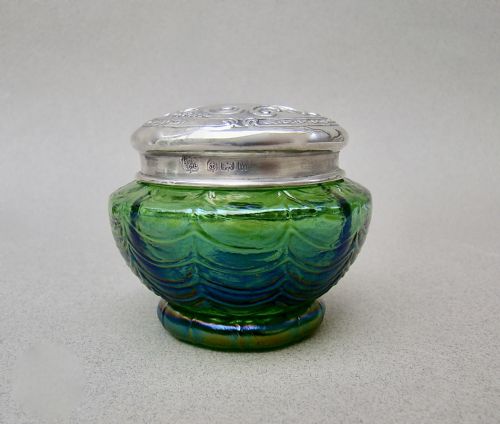


Silver Top Glass Dish
A silver top glass dish brings together heavy cut crystal or glass and gleaming metal lids, offering a practical yet decorative vessel for the dressing table or living room.
Silver Top Glass Dish
A silver top glass dish combines glass vessels with fitted metal covers, appearing frequently as trinket boxes, lidded bowls, and vanity jars across this selection. Pieces from the Victorian, Edwardian, and Art Deco periods dominate the current offerings, alongside early twentieth-century examples.
The glassware ranges from heavy cut crystal to coloured cranberry glass and Kralik glass, often paired with sterling silver or silver plate. Forms vary from heart-shaped boxes and sweet bowls to swinging handle potpourri baskets and serving dishes.
Buyers encounter items originating from English assay offices such as Birmingham and Sheffield, alongside continental Dutch silver mounts and Scottish designs. These domestic and vanity containers serve both decorative display and practical storage.
Assessing quality in silver top glass dishes
Quality rests upon the depth and crispness of the glass cutting, the weight of the metal used for the lid, and the precision of the fit between glass and mount. Thicker crystal bases and heavy sterling silver mounts elevate a piece above simpler plated alternatives.
The presence of detailed ornamentation, such as applied enamel panels or fully marked hallmarks confirming Birmingham or Sheffield assay origins, distinguishes finer workshop production from standard domestic wares.
Listings feature items spanning the Victorian era through the mid-twentieth century, incorporating sterling silver, silver plate, cut crystal, and coloured glass.
A. J. Pepper & Co·William Comyns
The Silver Top Glass Dish Glossary
- Sterling silver
- A silver alloy containing 92.5 percent pure silver by mass, standard for quality British plate and mounts. It carries assay office hallmarks.
- Cut crystal
- High-clarity glass containing lead oxide, cut with deep facets that refract light sharply. This material provides substantial weight to bowls and boxes.
- Cranberry glass
- Transparent red-pink glass created by adding gold chloride to the molten batch. It appears frequently in Victorian and Edwardian vanity items.
- Trinket box
- A small lidded container designed for storing jewellery or small personal accessories on a dressing table. They frequently feature hinged or lift-off silver tops.
- Vanity jar
- A container made for holding cosmetics, soaps, or powder, typically featuring a wide glass body and a flat metal lid.
Silver Top Glass Dish: Frequently Asked Questions
What were silver top glass dishes used for?
These vessels served primarily on dressing tables and sideboards to hold small personal items, cosmetics, sweets, or potpourri. Their lidded designs kept contents dust-free while displaying the cut glass and metalwork.
Over time, they transitioned from functional dressing room accessories into decorative display pieces collected for their craftsmanship and varied glass forms.
How do I identify the date of a piece?
Dating relies heavily on hallmarks stamped onto the silver mounts, which indicate the assay office and year of production. Stylistic markers such as Edwardian cut patterns, Victorian proportions, or geometric Art Deco enamel also help place a piece in its era.
Comparing the depth of the glass cutting and the thickness of the metal helps separate nineteenth-century examples from later twentieth-century production.
Are the lids removable?
Most lids either lift off directly via a fitted rim or operate on a small hinge attached to the silver collar. The metal mount is secured to the glass lip with specialist adhesives or a tight mechanical friction fit.
Care should be taken when handling pieces with lift-off lids to prevent accidental separation of the glass base from the metal top.
How should I clean the glass and silver?
Silver components require gentle polishing with a non-abrasive cloth to avoid touching any glass surfaces or delicate enamel work. The glass body can be washed in warm, soapy water and dried thoroughly.
Harsh chemical dips should be avoided, particularly on items featuring coloured cranberry glass, enamel panels, or fitted adhesive mounts.