


Cut Glass Serving Dish
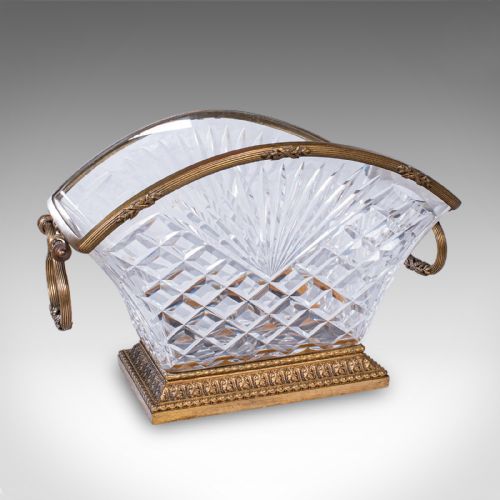
A cut glass serving dish brings heavy sparkle to a table, combining clear crystal with silver plate, ormolu, and bronze mounts.
Cut Glass Serving Dish
When you search for a cut glass serving dish, you encounter table vessels designed to hold fruit, sweets, or side dishes. The forms range from simple bowls and sweet dishes to lidded containers, double heart shapes, and boat hulls set within frames.
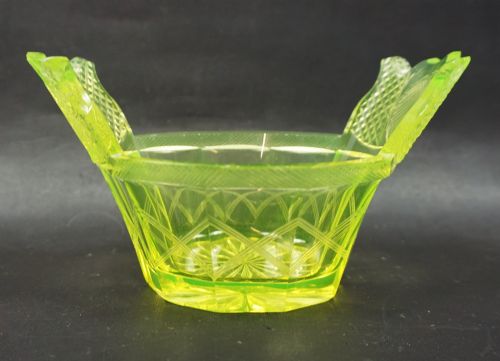
The versions you are most likely to meet on this page hail from the Victorian and Edwardian eras, alongside earlier Bohemian pieces and later items from the 1920s. They appear in lead crystal, uranium glass, cobalt glass, and standard cut glass, often paired with metal mounts.
Makers and designers from Britain, France, Bohemia, and Scotland produced these objects across different styles, including French Empire taste, Art Deco, and Bohemian Biedermeier. They function as both practical tableware and decorative centrepieces.
How they were made
Glassmakers utilised heavy lead crystal and standard glass, applying wheel-cutting techniques to create deep facets, starburst patterns, and geometric designs that catch the light. Certain pieces involved coloured glass, such as cobalt blue and uranium glass, which required specific mineral additions during the melting process.
Metalworkers combined silver plate, ormolu, and bronze to construct frames, handles, and trays that cradled the glass vessels securely. These metal components frequently featured cast details like ropes or decorative rims to complement the brilliance of the cut glass.
Listings feature cut glass serving dishes across Victorian, Edwardian, and 1920s periods, incorporating silver plate, ormolu, and cobalt glass.
What varies in quality
The clarity and weight of the glass set the foundation for quality, with heavy lead crystal offering sharper facets and deeper resonance than ordinary glass. Precision in the wheel-cutting determines how crisply the geometric patterns and starburst motifs catch the light.
The integration between the glass and its mountings dictates the overall standard of the piece. Superior examples show careful assembly in silver plate, ormolu, or bronze, ensuring the metal frame fits the glass vessel without movement.
The Cut Glass Serving Dish Glossary
- Cut glass
- Glass decorated by grinding designs into the surface using rotating wheels. This technique creates sharp facets and brilliant light reflection.
- Lead crystal
- A type of glass containing lead oxide, which increases weight, clarity, and brilliance. It is particularly suited for deep cutting.
- Ormolu
- Gilded bronze applied as a decorative mount or stand. It provides a rich gold-coloured metal contrast to clear or coloured glass.
- Silver plate
- A base metal coated with a thin layer of silver. It frequently forms the frames, handles, and trays associated with glass serving vessels.
- Uranium glass
- Glass containing small amounts of uranium, which glows green under ultraviolet light. It appears in early pieces from regions like Bohemia.
Cut Glass Serving Dish: Frequently Asked Questions
What is a cut glass serving dish?
A cut glass serving dish is a table vessel featuring faceted glass patterns designed for serving fruit, sweets, or side dishes.
These pieces often incorporate metal mounts like silver plate or ormolu to enhance their presentation on the dining table.
How do I clean antique cut glass?
Clean antique cut glass using lukewarm water and a mild detergent with a soft cloth. Avoid harsh scrubbing on any attached silver plate or ormolu mounts.
Dry the pieces thoroughly with a lint-free cloth to maintain the brilliance of the cut facets.
Are these dishes safe for food?
Most antique serving dishes can hold dry or fresh foods safely for presentation. However, historical pieces from certain periods may contain lead or other trace elements.
Examine the specific glass type, such as standard crystal or uranium glass, before deciding on frequent culinary use.
How do I date these serving dishes?
Dating relies on observing stylistic markers, manufacturing techniques, and the combination of materials like cobalt glass, ormolu, or silver plate. Victorian and Edwardian examples often feature distinct cut patterns and metal framing styles.
Comparing the object type against known production periods helps narrow down the decade of origin.