

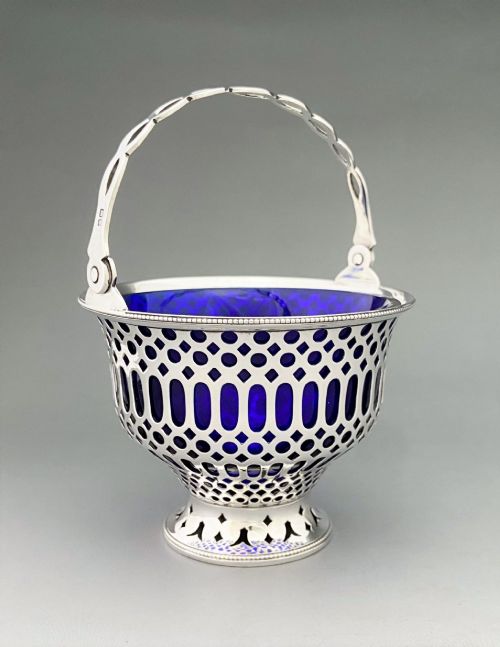


Edwardian Glass Basket Dish
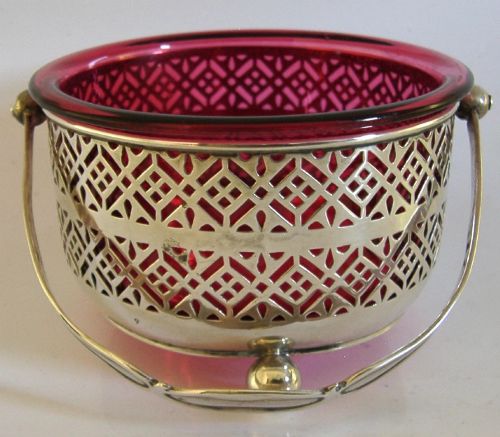
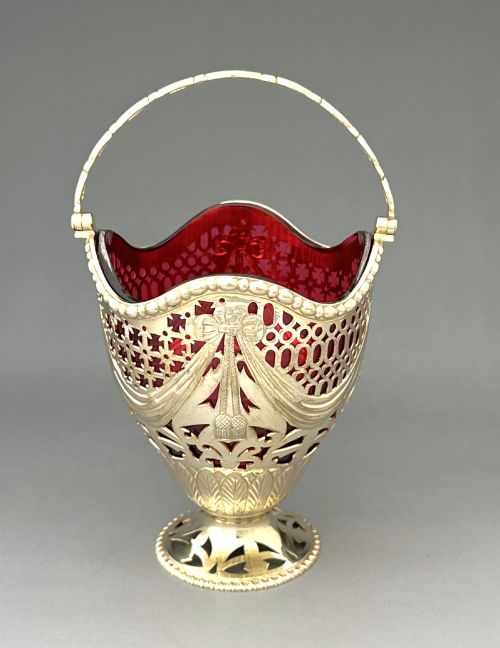
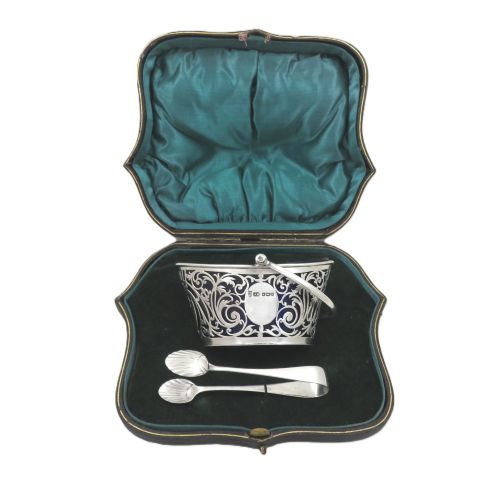
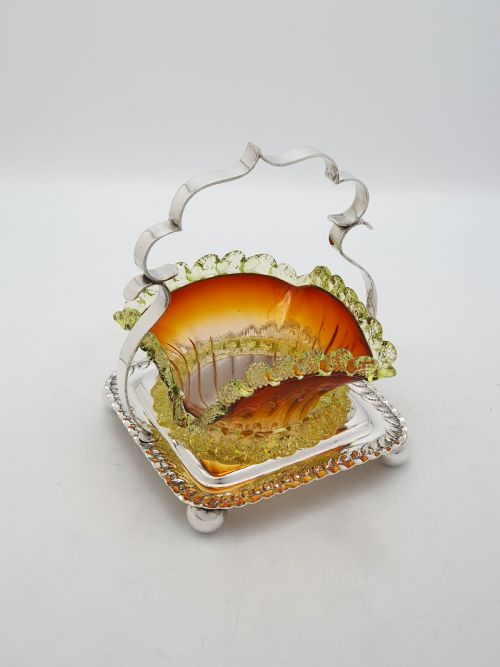
These edwardian glass basket dish examples combine bright coloured glass with pierced metalwork, offering a charming centrepiece for a table or sideboard.
Edwardian Glass Basket Dish
An edwardian glass basket dish typically takes the form of a decorative bowl or sugar basket fitted with a swing handle. These table pieces date primarily from the early twentieth century, spanning periods from 1880 through the Edwardian era up to 1910.
The objects serve various domestic functions, appearing as sugar baskets, bonbon dishes, potpourri baskets, and general serveware. Buyers encounter both smaller sweetmeat dishes and larger handled bowls designed for display or holding preserves.
How they were made
Makers combined blown or cut glass liners with metal frames, utilising sterling silver, silver plate, pewter, and silver-gilt. Metalwork frames often feature pierced decoration to lighten the appearance of the stand.
Glass liners rely on distinct colouring techniques and types, showcasing cranberry glass, amber glass, vaseline glass, ruby glass, and rock crystal glass. Metal mounts and swing handles secure these removable glass bowls within footed or resting bases.
Listings feature periods spanning from 1880 through the Victorian and Edwardian eras to 1910, encompassing Art Nouveau and Victorian Aesthetic Movement styles.
What varies in quality
Quality rests upon the weight and clarity of the glass liner, alongside the crispness of any cut crystal facets or pierced metalwork. Heavier silver mounts and substantial glass thickness elevate the distinction of a piece.
The sophistication of the metal framework, whether cast, pierced, or silver-gilt, dictates the overall refinement. Fitted cases and identified maker contributions also separate standard production wares from more ambitious examples.
William Comyns·WMF
The Edwardian Glass Basket Dish Glossary
- Cranberry glass
- A rich pinkish-red glass produced by adding gold chloride to the molten batch. It appears frequently in Edwardian sugar baskets and preserve dishes.
- Vaseline glass
- A transparent yellow-green glass containing uranium dioxide, which glows under ultraviolet light. It provides a distinctive hue for Edwardian bowls and dishes.
- Swing handle
- A movable arched metal handle attached to the rim of a basket or dish by pivots. This feature allows easier lifting and passing at the table.
- Pierced basket
- A metal frame perforated with decorative cut-out patterns. This technique reduces the weight of the silver or silver plate while revealing the coloured glass liner within.
- Silver-gilt
- Silver that has been coated with a thin layer of gold on its surface. This treatment provides a warm golden sheen to the metal mount.
Edwardian Glass Basket Dish: Frequently Asked Questions
What were glass basket dishes used for?
These vessels served functional roles on the dining table for holding sugar, preserves, bonbons, or potpourri. Their open forms and coloured liners allowed hosts to present sweet treats during formal meals.
Over time, many transitioned into purely decorative display items for sideboards and cabinets. Their removable glass liners made them practical for serving and easy to clean after use.
How do I tell Edwardian pieces from Victorian ones?
Edwardian examples generally date from 1901 to 1910, often displaying lighter, more restrained motifs influenced by Art Nouveau or classical revival styles. Pieces bearing dates from the 1880s or 1890s typically belong to the Victorian era and the Victorian Aesthetic Movement.
Assay office marks and date letters stamped on the silver components provide the most precise method for dating a piece. Makers' marks and style details further clarify whether a dish originates from the late nineteenth or early twentieth century.
Are the glass liners removable?
Most metal frames feature hinged or flexible swing handles that allow the glass bowl to lift out easily. This construction was essential for practical cleaning and replacement after holding sticky preserves or sugar.
Buyers should examine how the glass sits within the pierced metal basket to ensure a secure fit. Original liners match the contours of the metal stand precisely.
How do I care for silver and coloured glass?
Gentle washing with warm soapy water and a soft cloth keeps the glass liner bright without scratching the surface. Harsh abrasives should be avoided on both the glass and the delicate silver plate or sterling silver mounts.
Silver components require occasional polishing with a suitable cloth to prevent tarnishing. Storing the pieces away from direct sunlight helps preserve the rich tones of cranberry and vaseline glass.