






Antique Gilded Wall Clock
An antique gilded wall clock brings striking metallic lustre and precision timekeeping to a room, drawing the eye instantly with its ornate framing.
Antique Gilded Wall Clock
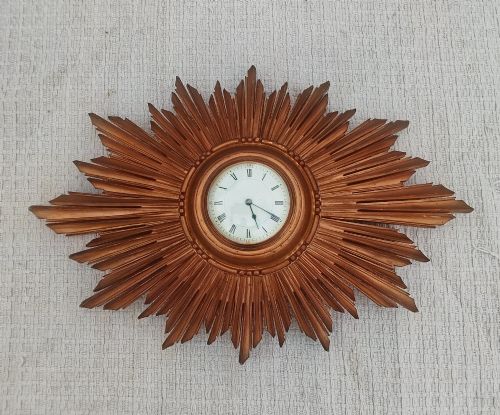
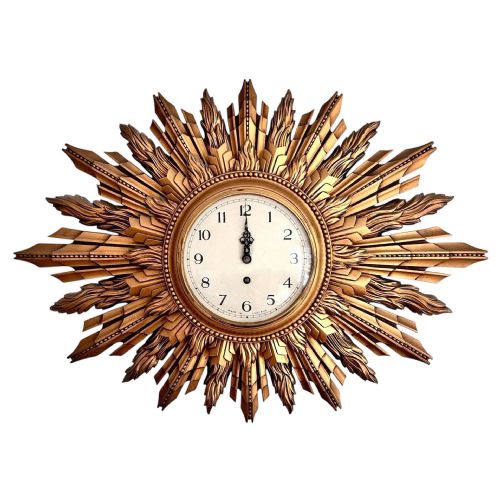
An antique gilded wall clock combines ornamental metalwork or carved wood with mechanical movement, designed to be mounted securely on a wall. When searching for an antique gilded wall clock, buyers encounter various historical interpretations ranging from French cartel designs to English bracket clocks and striking star burst wall clock configurations.
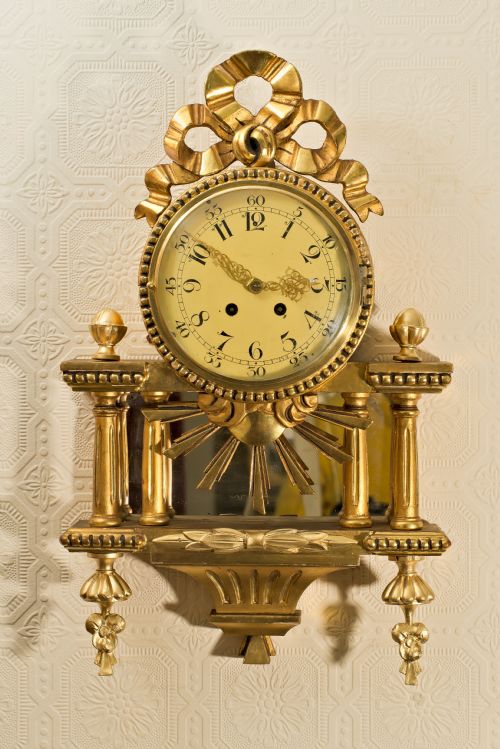
The selection spans multiple centuries, incorporating Victorian, Georgian, and 18th-century origins alongside later Art Deco examples. Forms include ornate Louis XVI style gilt bronze pieces, Swedish gilt and eglomise wall clocks, and traditional French Comtoise wall clock variations.
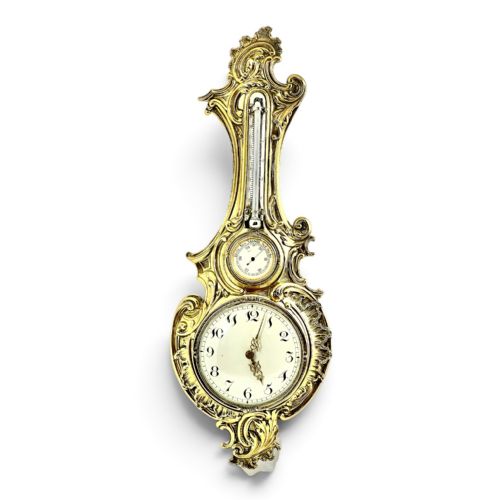
Materials such as giltwood, ormolu, and brass define the visual character of these pieces, often paired with enamel dials and protective glass faces. Buyers frequently find elaborate wall brackets, barometers, and picture clock combinations accompanying the primary timepieces.
How They Were Made
Maker workshops utilised traditional carving, casting, and gilding techniques to build these timepieces from materials like gilt bronze, ormolu, brass, and giltwood. Ormolu elements involved mercury gilding cast bronze, while carved timber frames received layers of gold leaf to achieve a brilliant metallic finish.
Enamel dials provided a durable, legible surface for painted numerals, protected behind fitted glass panes within heavy metal bezels. Structural supports often incorporated eglomise glass panels, decorative plaster mounts, and ebonised wood details to enhance the visual depth of the wall clock.
Clock movements relied on intricate brass gear trains and pendulum regulation housed behind the dial face, requiring skilled assembly to maintain accurate time. Cabinet makers and bronze founders collaborated to ensure the heavy ornamental cases could support the internal weights and springs safely.
Antique Gilded Wall Clock Retail Price Guide 2026
Typical asking prices for gilded wall clock among the pieces listed under this phrase on Sellingantiques today, from the lower quarter to the upper quarter. They describe what is for sale here now, not the wider market.
The available selection demonstrates diverse regional designs, incorporating French Rococo, Louis XVI, Gustavian Neoclassical, and Art Deco stylistic influences.
What Varies in Quality
The crispness of the cast bronze or carved giltwood decoration dictates the visual standard of the piece, with sharper chisel work and deeper relief separating superior examples from softer castings. Superior ormolu displays distinct burnished highlights against matte textured ground areas, demonstrating careful finishing by the artisan.
The integrity of the original mercury gilding or gold leaf surface alters the overall appearance, as worn or heavily restored metal coatings change the reflected light. Mechanical completeness and the presence of signed dial plates or movement backplates further distinguish works by notable makers from standard production pieces.
WETTERSTRANDS·Smiths·WILLIAM WEBSTER·Henri Dasson
The Antique Gilded Wall Clock Glossary
- Cartel clock
- A wall-mounted clock housed in an ornate frame made of gilt bronze, ormolu, or carved wood. These French-origin pieces often feature asymmetrical rococo scrolls or neoclassical architectural motifs.
- Ormolu
- Finely chased bronze that has been gilded with a mercury and gold amalgam, producing a rich golden lustre. It forms the decorative casework on many continental European clocks.
- Eglomise
- The technique of applying gold or silver leaf to glass and painting designs on the reverse side. This creates a reflective, mirrored panel often seen in the lower doors of regional clocks.
- Comtoise wall clock
- A pendulum clock originating from the Franche-Comte region of France, typically featuring a pressed brass dial surround and weight-driven movement. They are known for their generous proportions and regional styling.
- Star burst wall clock
- A mid-century or later modernist clock design featuring radiating wooden or metallic spikes resembling a stellar explosion. These pieces utilise bold geometry distinct from earlier traditional revival styles.
Antique Gilded Wall Clock: Frequently Asked Questions
What is the difference between Louis XV and Louis XVI styles?
Louis XV style clocks showcase French Rococo asymmetry, featuring flowing C-scrolls, naturalistic floral motifs, and organic, undulating bronze mounts. The lines are curved and dynamic.
Louis XVI style shifts towards neoclassical symmetry, displaying straight architectural lines, urns, ribbons, and geometric laurel wreaths. The overall silhouette becomes much more restrained and balanced.
How do I care for giltwood and ormolu?
Dust giltwood and ormolu surfaces gently using a soft, dry artist's brush or microfiber cloth to prevent abrasion to the delicate metallic leaf or gilding. Avoid chemical cleaners and commercial polishes completely.
Keep these timepieces away from direct sunlight and fluctuating heat sources to prevent the wood substrate from warping and the gilding from flaking over time.
Are Comtoise clocks English or French?
Comtoise clocks are distinctly French, originating from the Jura region and traditionally featuring large enamel chapter rings and pressed brass repousse front surrounds. They were widely used in farmhouses and provincial homes.
English wall clocks of a similar era generally follow bracket clock or dial clock formats with mahogany or oak cases, lacking the characteristic pressed brass aprons of French regional pieces.