




Antique Gateleg Tea Table
An antique gateleg tea table is a folding timber surface designed for taking tea, offering versatile charm for modern rooms.

Antique Gateleg Tea Table
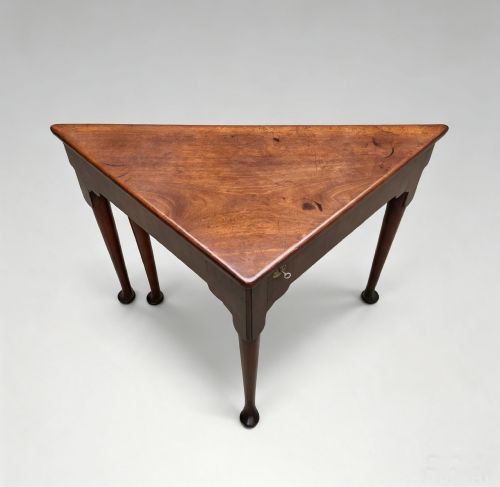
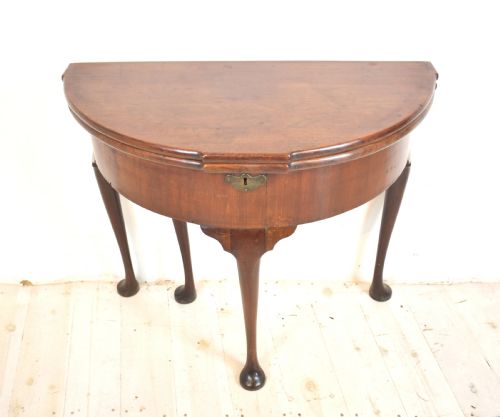
When you search for an antique gateleg tea table, you encounter a selection of drop-leaf and gateleg forms that serve as tea tables, occasional surfaces, and games tables. These items span periods from the eighteenth century through the Georgian, Victorian, and Edwardian eras.
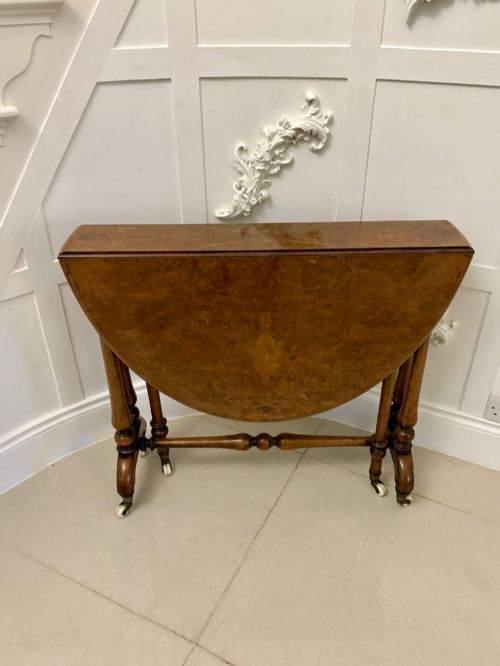
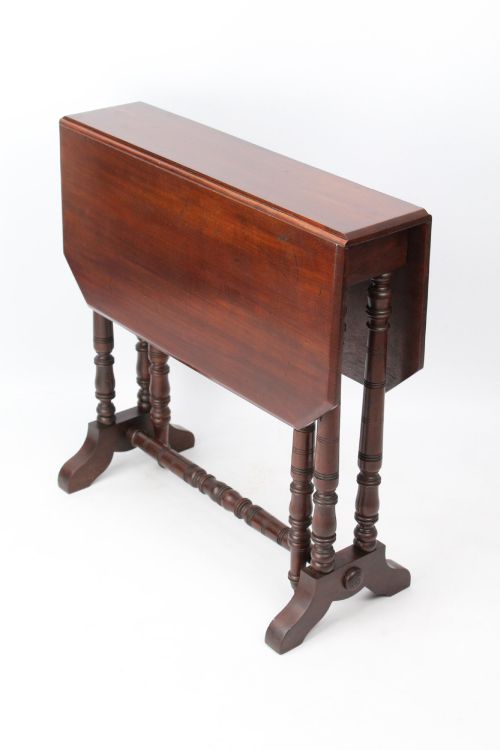
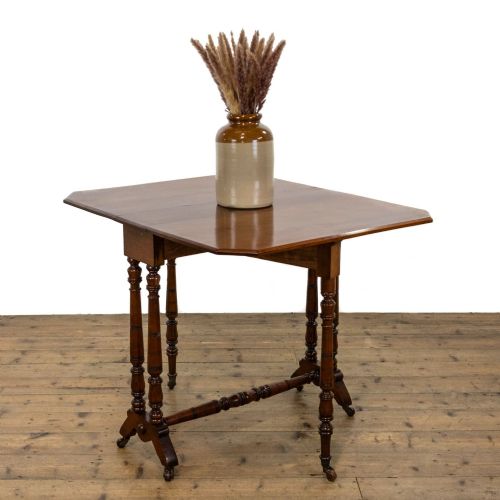
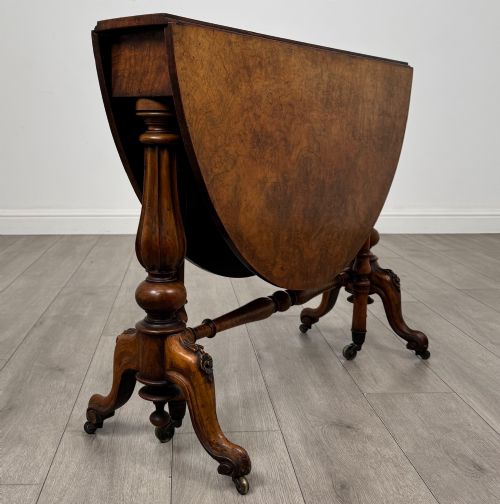
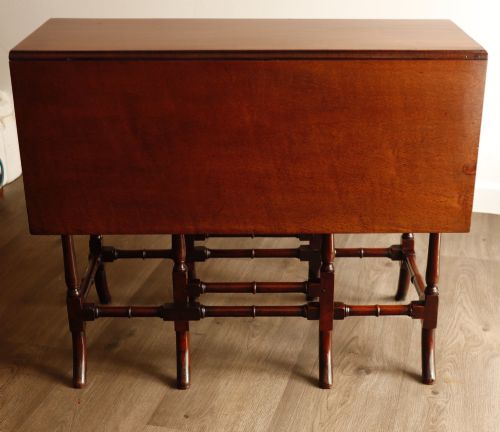
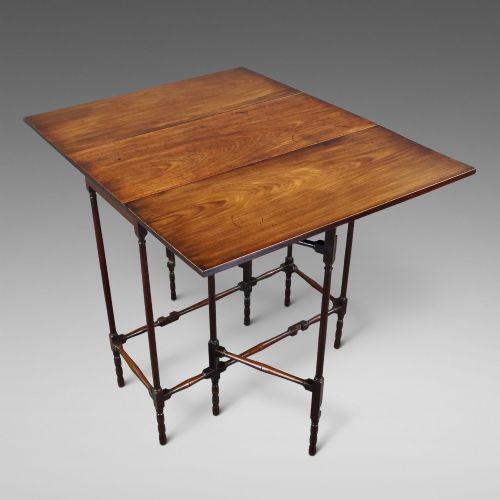
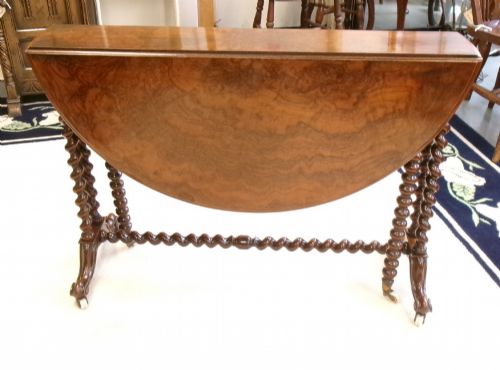
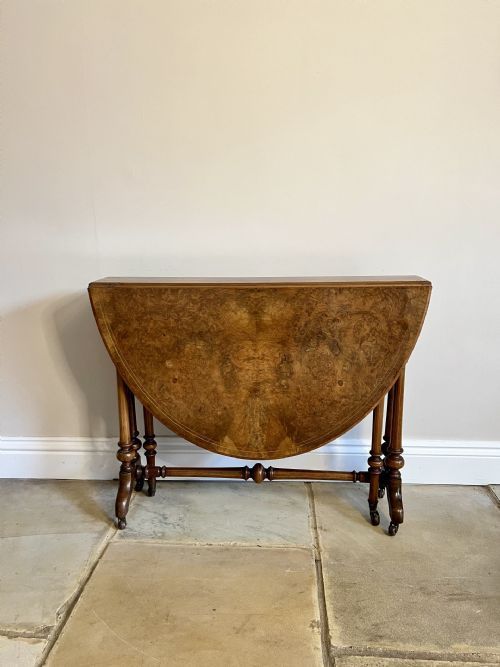
The version you are most likely to meet on this page is the Sutherland table, a slender form of gateleg table featuring exceptionally narrow legs and drop leaves that reach almost to the ground. These appear frequently in mahogany and burr walnut, alongside spider leg variants and fold-over tea tables.
Examples range from compact nineteenth-century occasional pieces to eighteenth-century specimens with delicate timber framing. Makers and makers' marks occasionally appear, such as Edwardian satinwood pieces bearing the stamp of Maple & Co.
Materials and construction methods
Cabinetmakers constructed these tables primarily in mahogany, walnut, and burr walnut, utilising the rich grain patterns of the timber for maximum visual impact on the top surfaces. Edwardian examples introduce satinwood inlay and ebonised finishes to create contrast.
The defining structural mechanism relies on hinged drop leaves supported by pivoting gatelegs, which swing outward to bear the weight of the extended surface. Spider leg variants employ remarkably thin turned wooden supports connected by low stretchers for stability.
Antique Gateleg Tea Table Retail Price Guide 2026
Typical asking prices for gateleg tea table among the pieces listed under this phrase on Sellingantiques today, from the lower quarter to the upper quarter. They describe what is for sale here now, not the wider market.
Some Edwardian tables fold down so slimly they could practically hide behind a Victorian umbrella stand.
Distinctions in quality and finish
Quality reveals itself in the choice of timber veneers, particularly the depth and symmetry of burr walnut figures or the warmth of polished mahogany. Superior pieces display crisp turning on the legs and tight joinery at the gateleg pivots.
Refinement in secondary details, such as delicate wood inlay, brass castor fittings, and well-proportioned drop leaves, separates standard utility items from finer parlour furniture.
Maple & Co
The Antique Gateleg Tea Table Glossary
- Sutherland table
- A narrow drop-leaf table with hinged leaves that fold down almost vertically and gatelegs that support them when raised. This form became particularly popular during the Victorian period.
- Spider leg table
- A small table characterised by exceptionally slender turned wooden legs connected by delicate stretchers. They provide lightweight support for eighteenth-century tea and occasional use.
- Gateleg table
- A table with hinged leaves supported by one or more legs that swing outward like a gate. This design allows the surface area to expand or contract easily.
- Burr walnut
- Timber taken from the warted growths of walnut trees, yielding intricate swirling grain patterns. Cabinetmakers utilised these veneers on top surfaces for decorative effect.
- Drop leaf
- A hinged section of a tabletop that can be lowered or raised as needed. It enables compact storage when space is limited.
Antique Gateleg Tea Table: Frequently Asked Questions
What is a Sutherland table?
A Sutherland table is a specific type of narrow drop-leaf table where the leaves fold down almost to the floor. They use pivoting gatelegs to support the extended leaves.
Cabinetmakers designed them as versatile tea and occasional tables that take up minimal space when folded.
How do you use a gateleg tea table today?
These tables function well as compact side tables, occasional coffee tables, or small dining surfaces. Dropping the leaves allows the table to sit flat against a wall.
Raising the leaves creates extra surface space when serving tea or entertaining guests in a reception room.
How do I tell Victorian from Georgian tables?
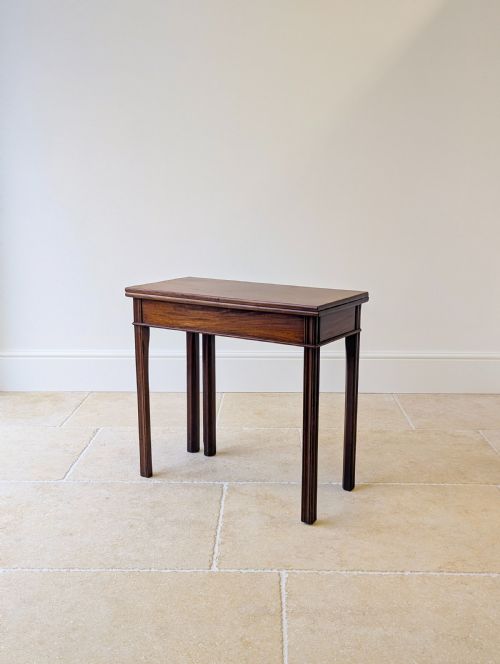
Georgian tables often feature simpler mahogany frames, spider legs, or fold-over tops designed for card games and tea. They typically date from the eighteenth century.
Victorian and Edwardian versions frequently showcase burr walnut veneers, inlaid satinwood details, and the distinctive slender proportions of the Sutherland form.
What woods were used for these tables?
Mahogany and walnut form the primary timber choices across the eighteenth, nineteenth, and early twentieth centuries. Burr walnut veneers provided decorative patterned surfaces for high-end Victorian pieces.
Edwardian makers occasionally added satinwood inlay and ebonised details to brighten the timber framework.