



Vintage Sutherland Side Table
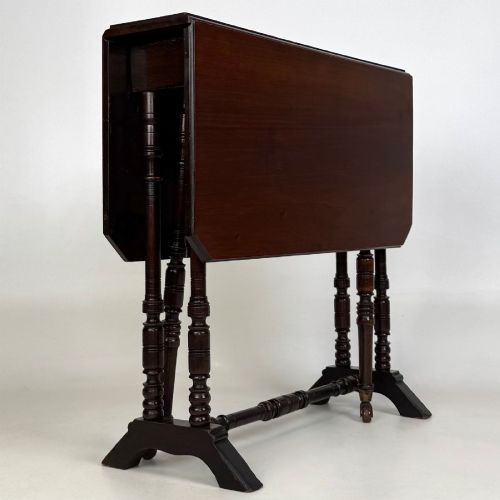
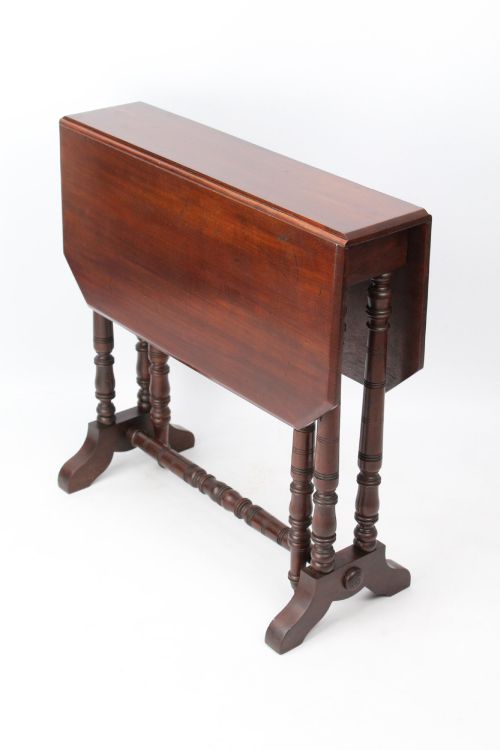
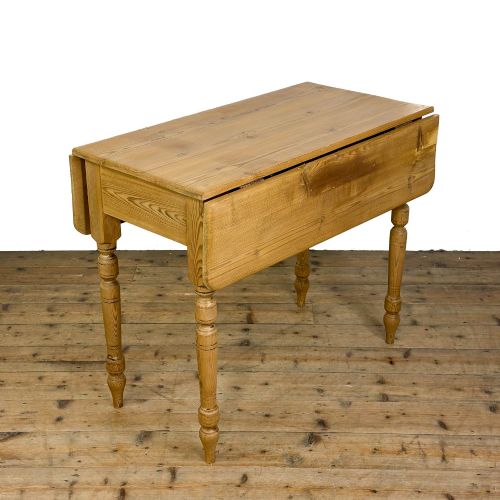
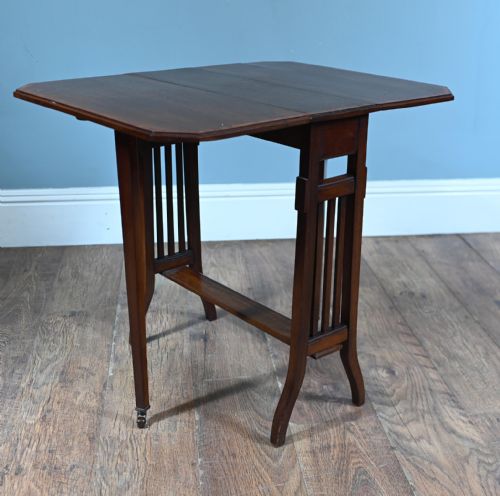
A vintage sutherland side table folds compactly when not in use, offering a practical folding drop leaf surface for tea or lamps.

Vintage Sutherland Side Table
These pieces are narrow gateleg drop leaf tables designed to occupy minimal space when folded down and expand quickly for serving tea or placing a lamp. Buyers searching for a vintage sutherland side table encounter diverse proportions, from standard occasional heights down to miniature and baby formats.
The selections span the Victorian, Edwardian and early twentieth century periods, with Edwardian mahogany and Victorian walnut examples forming the core of the available items. Makers such as Maple and Co and Morison of Edinburgh appear alongside unmarked pieces.
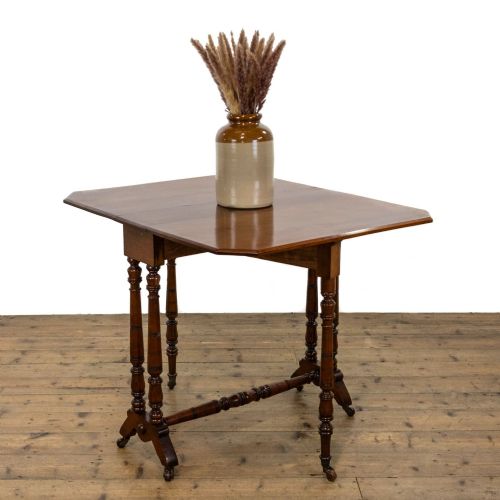
Forms include oval and butterfly shapes, alongside occasional tables adapted for modern coffee table heights. The construction relies on pivoting leg frames that support the hinged leaves on either side.
Materials and construction methods
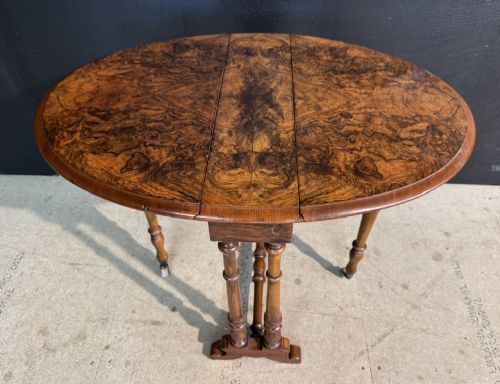
Cabinetmakers utilised solid timbers and veneers, predominantly mahogany and walnut, often selecting burr walnut for highly figured tabletops. Satinwood inlay, boxwood stringing, and brass hinges add decorative contrast and structural longevity.
The distinguishing structural feature is the narrow central underframe combined with swinging gate legs that pull outwards to support the drop leaves. Joinery techniques from the nineteenth and early twentieth centuries ensure the pivoting joints endure frequent folding.
Listings feature sutherland tables predominantly from the Edwardian era and the Victorian period, constructed in mahogany, walnut, and burr walnut.
Assessing quality in sutherland tables
Quality rests upon the selection of timber figures, such as rich burr walnut or finely grained mahogany, paired with crisp marquetry or satinwood inlay. Finer examples display precise joinery in the gateleg action and stable hinges that hold the leaves flat without sagging.
Proportion and scale also dictate distinction, particularly in smaller baby or miniature formats where balanced turning on the leg supports requires greater cabinetmaking skill. The crispness of carved details or the presence of maker stamps elevates certain pieces above standard production.
Maple and Co·Morison of Edinburgh
The Vintage Sutherland Side Table Glossary
- Sutherland table
- A narrow drop leaf table with hinged flaps supported by pivoting gate legs. It folds flat for storage against a wall.
- Gateleg
- A table leg attached to a hinged swing frame that pulls out to support an open leaf. This provides stability to the extended top.
- Burr walnut
- Wood taken from the growth excrescence of a walnut tree, yielding highly decorative swirling grain patterns. It is frequently used for tabletops.
- Satinwood inlay
- Contrasting light-coloured timber inserted into recesses on the table surface to create geometric or floral patterns. This decorative technique defines many Edwardian pieces.
- Drop leaf
- A tabletop with hinged flaps on one or both sides that lower when not in use. This mechanism allows the furniture footprint to shrink.
Vintage Sutherland Side Table: Frequently Asked Questions
How do you fold a sutherland table?
Lift each drop leaf slightly to release the tension on the support gate. Swing the wooden gate leg inward toward the centre of the table until it rests flush against the main fixed top.
Lower the leaf downward so it hangs vertically at the side. The table now occupies a very narrow footprint for storage against a wall.
What is a baby sutherland table?
A baby or miniature sutherland table is a scaled-down version of the standard occasional table. These pieces offer the same folding drop leaf mechanism in a much smaller surface area.
Cabinetmakers built them for compact rooms or specialised display uses. They retain full functionality despite their reduced dimensions.
How do I date a sutherland table?
Examine the timber, hardware, and stylistic details to determine the period. Victorian examples often feature solid walnut or burr walnut with heavier turnings, while Edwardian pieces frequently showcase inlaid mahogany and lighter proportions.
Maker stamps or labels underneath can also pinpoint the exact workshop or retailer. Construction marks and hinge types provide further clues to the manufacturing decade.
Can I use a sutherland table as a coffee table?
Many Edwardian and later examples are utilised as coffee tables due to their lower height and convenient surface area. The folding leaves allow you to adjust the width depending on the available space in a sitting room.
Ensure the gate leg mechanism operates smoothly if you plan to raise and lower the leaves frequently. Placing coasters on the polished wood protects the antique finish from moisture.