

Small Gateleg Side Table
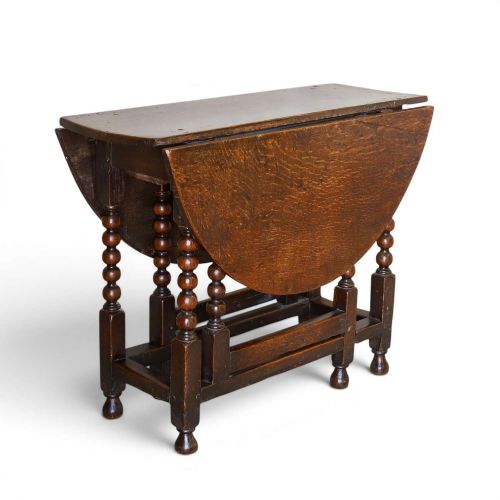
A small gateleg side table offers a space-saving drop-leaf surface rooted in centuries of vernacular British cabinetmaking.
Small Gateleg Side Table
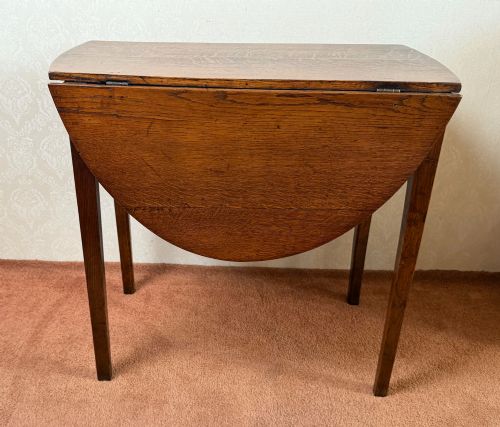
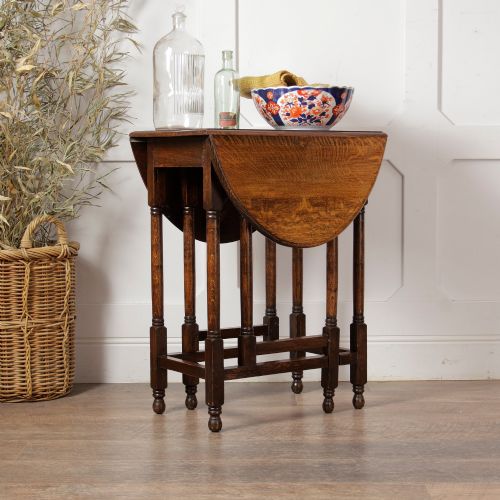
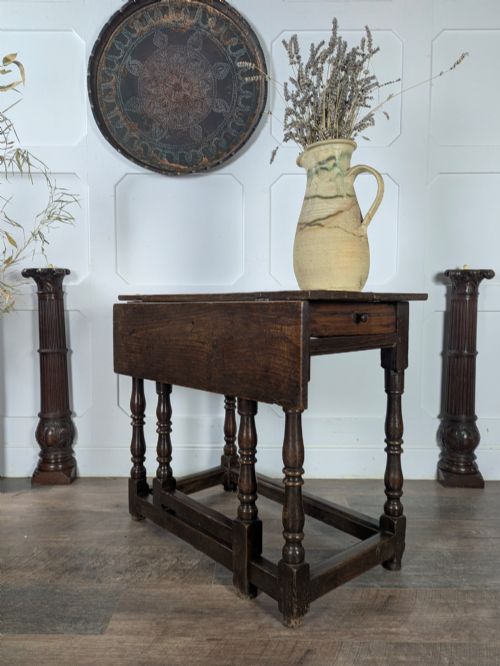
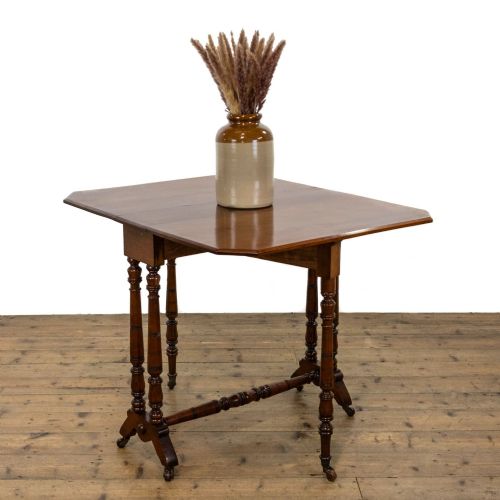
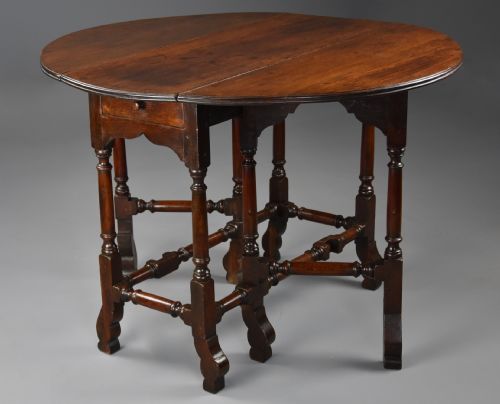
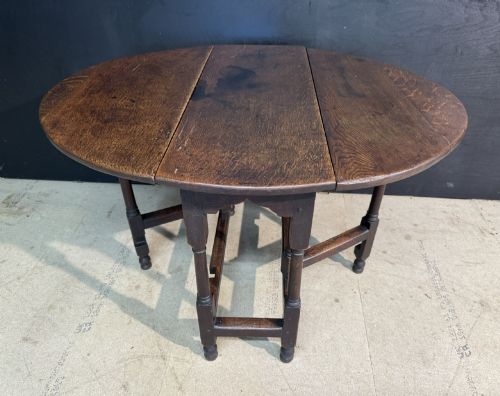
A small gateleg side table serves as a versatile space-saving surface, functioning as an occasional tea table or compact dining piece when its hinged leaves are raised. These tables appear across centuries of British design, spanning robust seventeenth-century country oak examples to refined Victorian and Edwardian walnut and mahogany iterations.
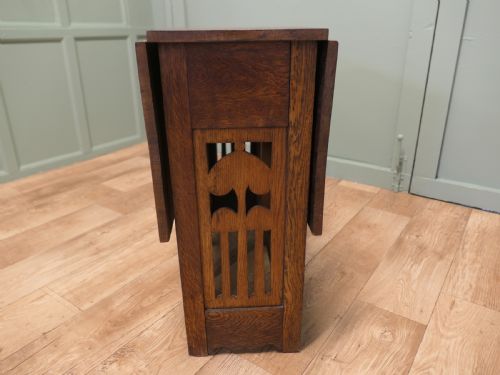
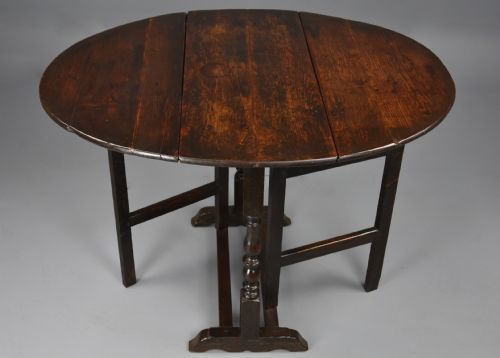
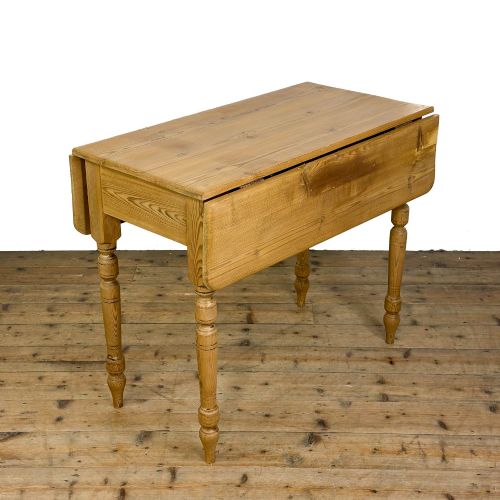
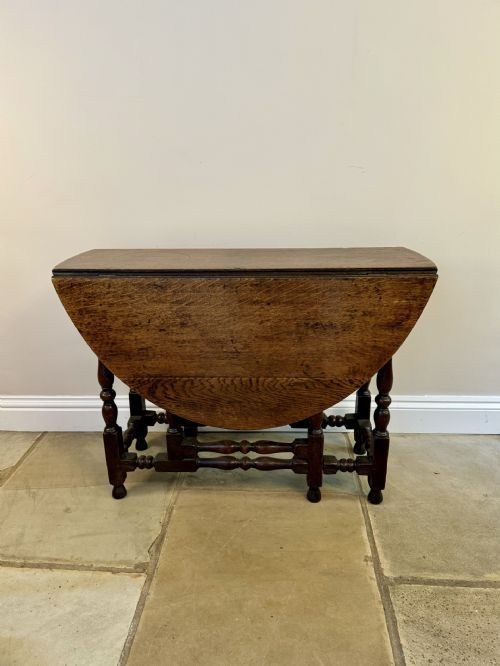
The format relies on hinged flaps supported by swing-out legs, allowing the piece to fold flat against a wall when not in use. On this page, buyers frequently encounter compact oak and walnut specimens featuring characteristic drop leaves and turned supports.
How they were made
Cabinetmakers constructed these tables primarily in solid oak during earlier centuries, later shifting to mahogany, walnut, and burr walnut veneers during the Victorian and Edwardian eras. Joinery depended on traditional pegged mortise and tenon joints to withstand the movement of folding leaves.
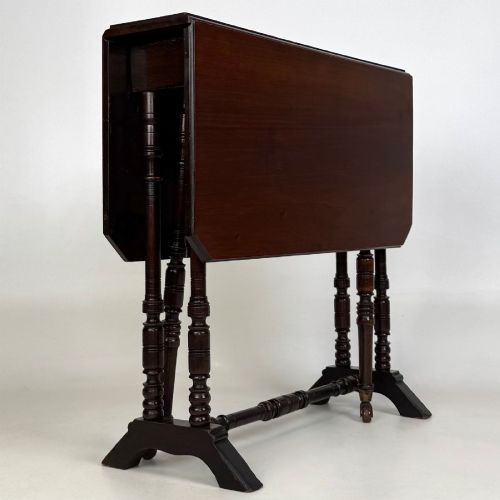
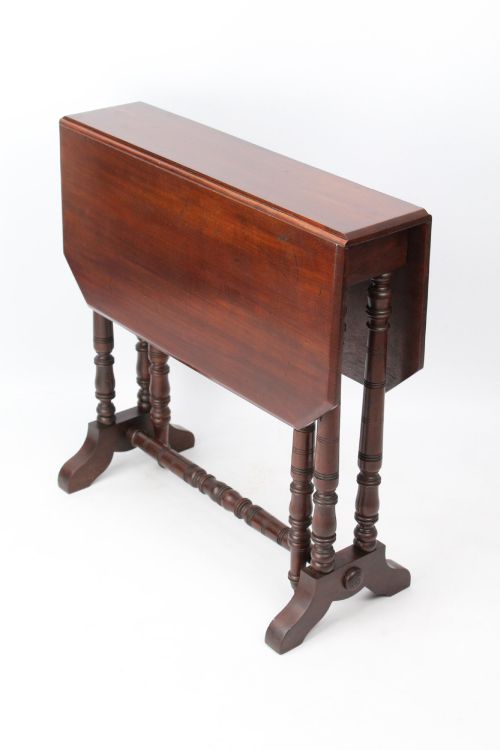
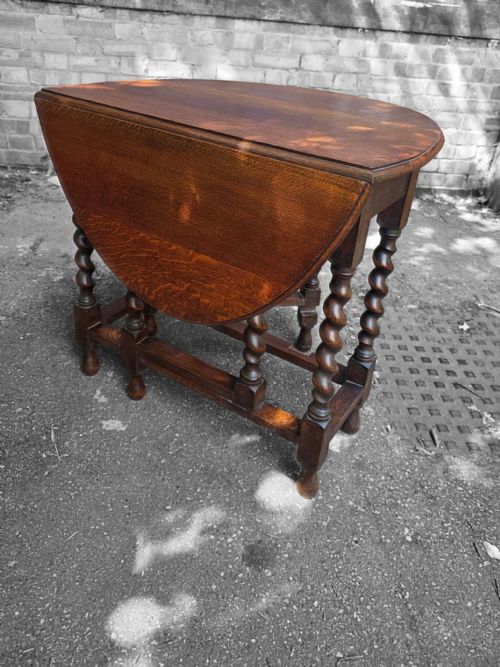
Turned elements define the structural uprights, utilising lathe work such as barley twist, bobbin, and baluster profiles. Brass hinges and fittings secure the drop leaves to the fixed central top, allowing the swing legs to pivot smoothly.
Some tiny seventeenth-century examples were built so small they likely served as miniature salesman samples or child-sized tavern pieces.
What varies in quality
Quality rests upon timber selection and the integrity of the original surface, distinguishing honest early country furniture from later revival pieces. Pieces retaining an untouched original patina and tight joints command greater appreciation among collectors.
Proportion and execution of the turning also dictate standard, where crisply carved balusters or uniform barley twists indicate superior craftsmanship. The smoothness of the gateleg action and the alignment of the leaves when opened reveal the precision of the original maker.
Maple and Co
The Small Gateleg Side Table Glossary
- Gateleg table
- A table with hinged leaves supported by one or more legs that swing outward like a gate. This design permits the surface area to expand or contract according to daily requirements.
- Sutherland table
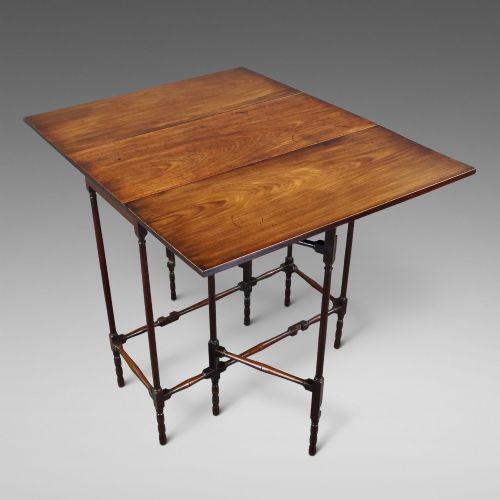
- A narrow-profile drop-leaf table featuring exceptionally slender leaves and a very thin central fixed top. Victorian makers often utilised this form in burr walnut or mahogany for drawing-room use.
- Barley twist
- A spiral turning resembling a twisted rope, carved into wooden furniture legs and uprights. This decorative technique appears frequently on seventeenth-century pieces and later revival furniture.
- Bobbin turning
- A series of rounded wooden spheres or discs carved along the length of a leg, resembling spools of thread. It serves as a distinct structural motif on seventeenth-century and nineteenth-century tables.
- Patina
- The deep surface sheen and mellow colour developed by aged wood through decades of handling and wax polishing. An authentic patina signals undisturbed age.
Small Gateleg Side Table: Frequently Asked Questions
How do I date a gateleg table?
Dating relies on timber choice, construction methods, and leg turning styles. Seventeenth-century examples typically employ solid oak with heavy baluster or bobbin turnings, whereas nineteenth-century pieces often feature mahogany or burr walnut with finer details.
Hardware provides another indicator, as hand-forged or early brass hinges differ significantly from later mass-produced ironmongery. Examining the underside and joint construction reveals whether the piece originates from the period it represents or a later revival.
Where should I place a small gateleg table?
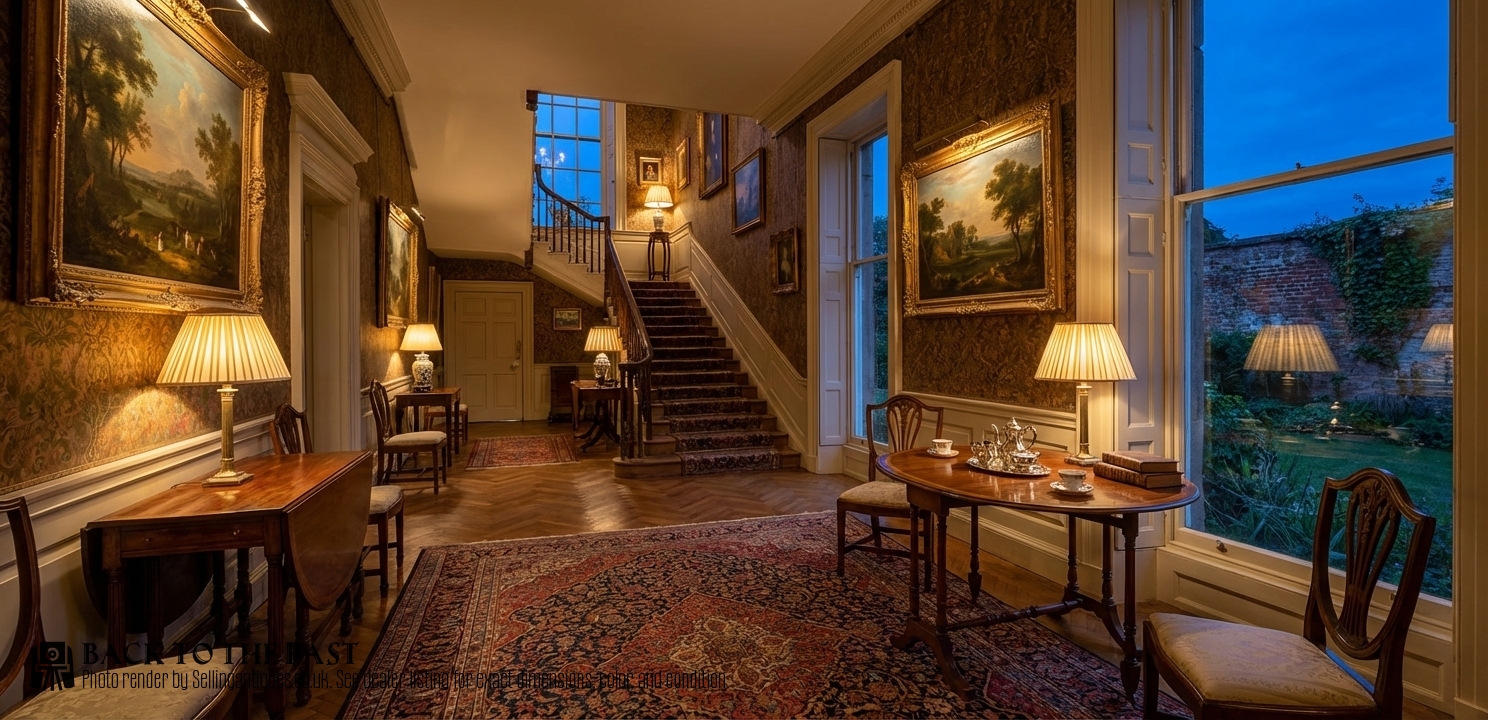
These compact tables fit well in hallways, living rooms, or tight dining spaces where floor area remains at a premium. Keeping one leaf dropped allows the table to sit flush against a wall as a console or side surface.
When guests arrive, pulling the table away from the wall and raising both leaves creates an instant dining or game surface. Their versatile footprint makes them adaptable to changing domestic needs throughout the home.
How do I care for an antique oak or walnut surface?
Maintenance requires regular dusting with a soft, dry cloth and occasional application of traditional beeswax to nourish the timber. Avoid placing these tables near direct heat sources or strong sunlight, which can dry out old wood and crack veneers.
Using coasters and placemats protects the polished surface from moisture and heat rings. Preserving the original finish ensures the wood retains its natural character over time.