




Oval Inlaid Drop Leaf Table
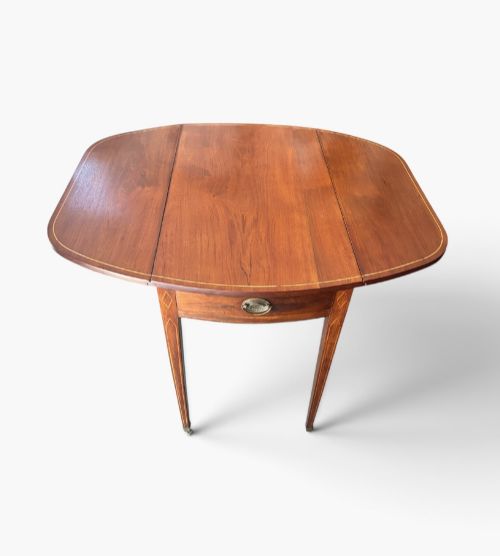
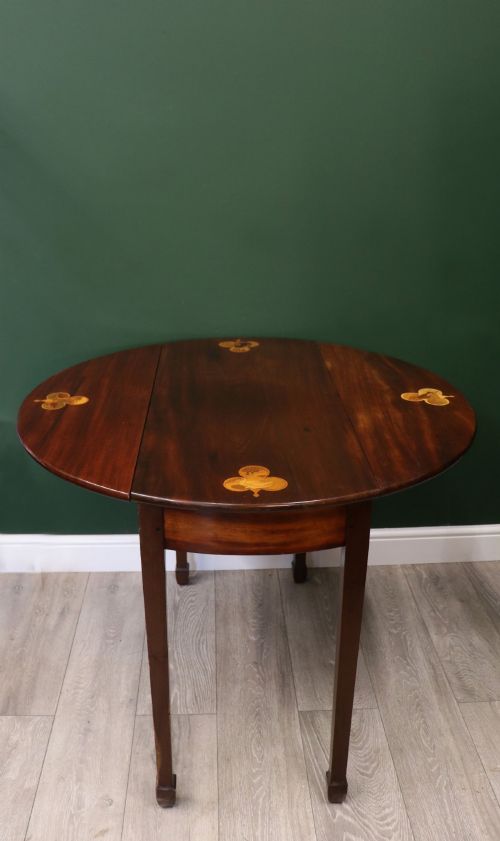
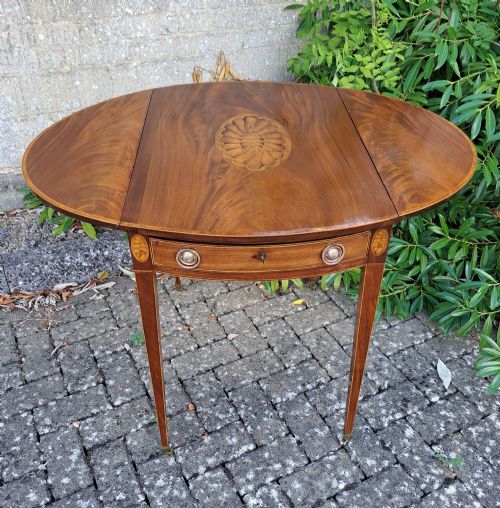
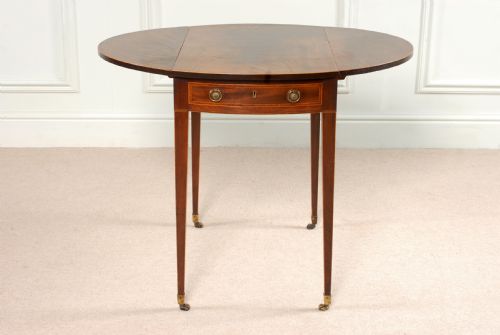
These oval inlaid drop leaf table pieces combine folding flaps with decorative banding, offering a compact surface that expands when required.
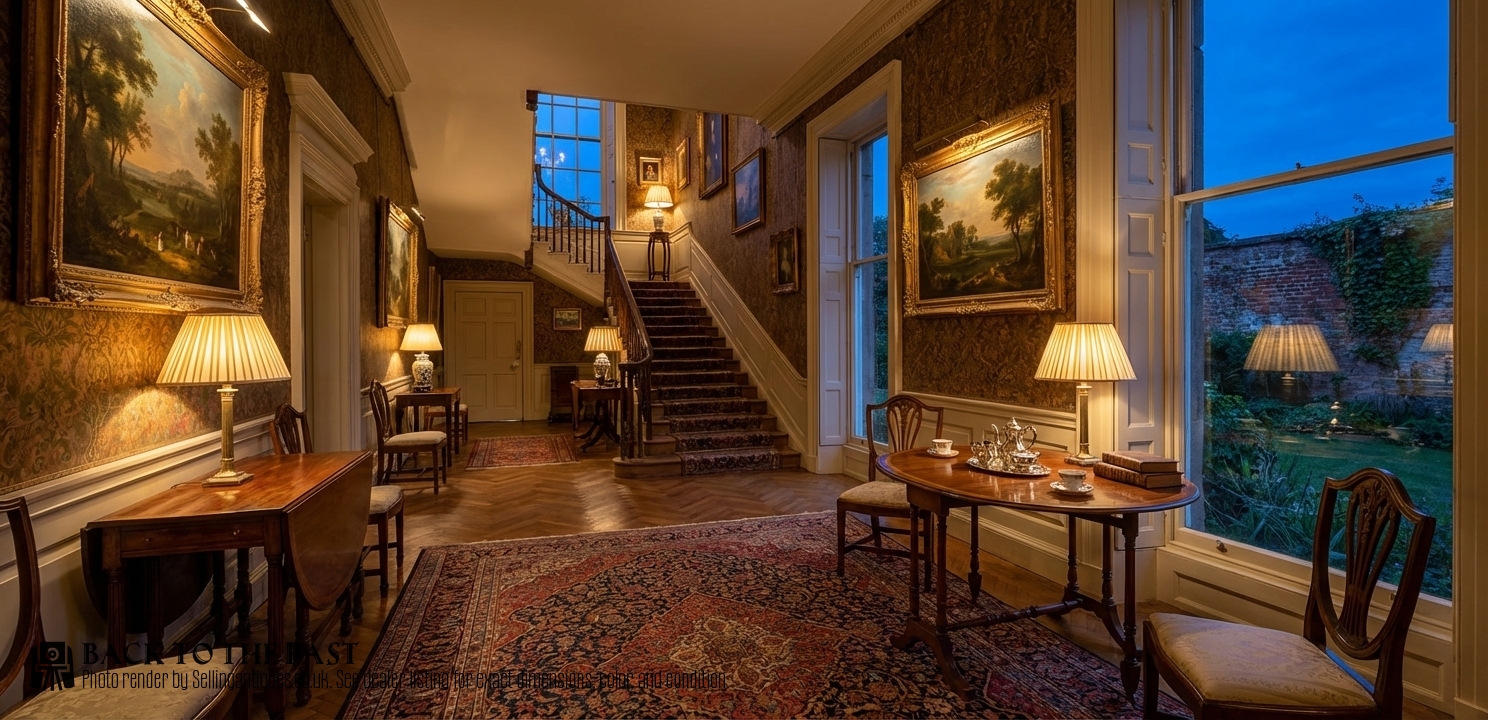
Oval Inlaid Drop Leaf Table
An oval inlaid drop leaf table spans several eras from the eighteenth century through to the Edwardian period, appearing primarily as Pembroke and Sutherland forms with hinged leaves. The search phrase covers occasional dining tables, sewing tables, and smaller coffee tables designed to save space in domestic interiors.
Mahogany remains the dominant timber across the inventory, frequently enhanced by satinwood, kingwood, and boxwood inlay or marquetry. Most examples feature an oval top supported on drop-leaf folding mechanisms, alongside pedestal bases or slender tapering legs.
Materials and construction
Cabinet makers utilised solid timbers and veneers of mahogany and walnut, applying contrasting bandings of satinwood, boxwood, and kingwood to define the borders of the leaves. Brass fittings appear on castors and handles where drawers or flaps require support.
Inlay and marquetry techniques involve precise cutting of botanical or geometric motifs into the timber surface. Drop-leaf mechanisms rely on hinged wooden flaps supported by swinging brackets or gate legs.
The inventory spans the eighteenth century, Georgian, Regency, Victorian, and Edwardian periods, including Sheraton and French Provincial styles.
Judging quality and finish
Finer examples display crispness in the floral marquetry and precision in the contrasting boxwood or satinwood stringing around the top. The grain alignment across the leaves demonstrates the skill of the original cabinet maker.
Structural integrity of the drop leaves and the smoothness of the folding action distinguish better pieces. Timber selection, such as burr walnut or figured mahogany, directly influences the visual depth of the surface.
The Oval Inlaid Drop Leaf Table Glossary
- Pembroke table
- A small occasional table featuring two hinged flaps dropping from the sides, often containing one or more small drawers.
- Sutherland table
- A narrow drop-leaf table where the flaps comprise the majority of the top surface, supported by swinging gate legs.
- Marquetry
- Decorative patterns formed by the insertion of different woods, veneers, or other materials into a solid wood background.
- Drop leaf
- A hinged table leaf that folds down when not in use to reduce the overall footprint of the furniture.
- Stringing
- Thin inlay lines of contrasting wood used to outline geometric shapes and panels on table tops and drawers.
Oval Inlaid Drop Leaf Table: Frequently Asked Questions
What is a Pembroke table?
A Pembroke table is a compact occasional table featuring folding leaves on opposite sides and usually a single drawer beneath the top.
These pieces were originally designed for breakfasting or writing in small spaces and can be easily moved around a room.
How do I identify a Sutherland table?
A Sutherland table is a narrow drop-leaf table where the leaves are particularly large and reach nearly to the floor when folded.
They stand on delicate gate legs that swing out to support the extended leaves, folding away flat for easy storage against a wall.
What woods were commonly used?
Mahogany serves as the primary timber across the majority of pieces, accompanied by walnut, burr walnut, and satinwood.
Cabinet makers also incorporated boxwood, kingwood, and rosewood for contrasting borders, stringing, and detailed marquetry panels.
How do I care for my table?
Keep the wood away from direct sunlight and heat sources to prevent the timber and delicate marquetry veneers from drying out.
Apply a traditional wax polish occasionally to nourish the surface and maintain the natural sheen of the wood.