



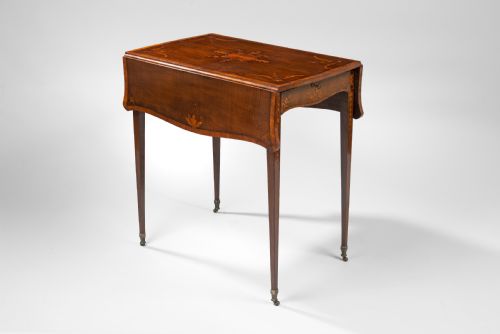
Edwardian Satinwood Occasional Table
An edwardian satinwood occasional table brings polished timber, delicate stringing and lightness of form to a room.
Edwardian Satinwood Occasional Table
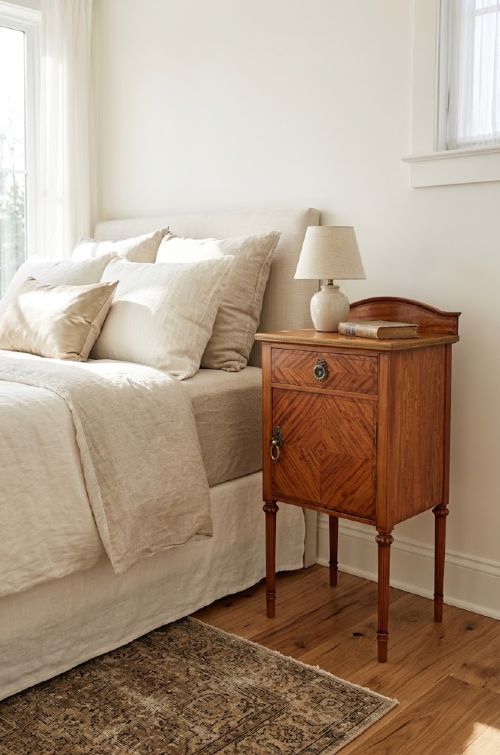
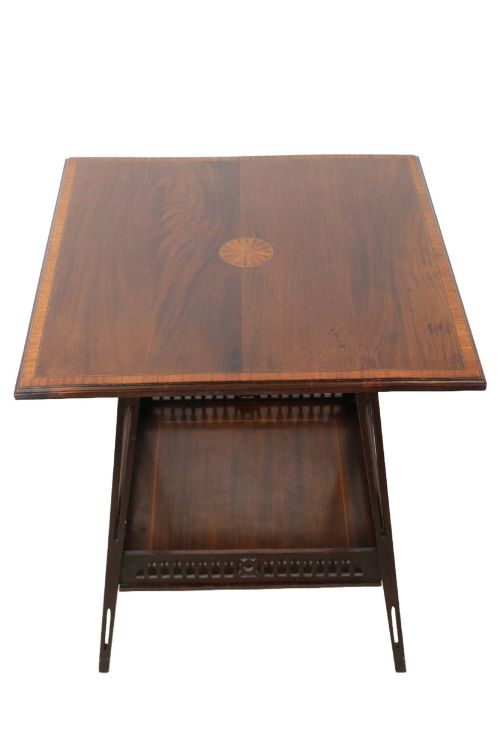
When you search for an edwardian satinwood occasional table, you encounter light, portable furniture made mostly around the turn of the twentieth century. These pieces served diverse domestic functions, moving easily beside chairs or against walls to hold lamps, books or tea.
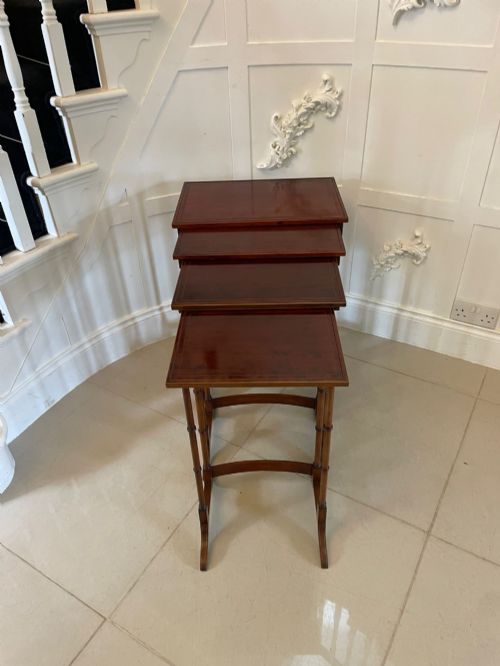
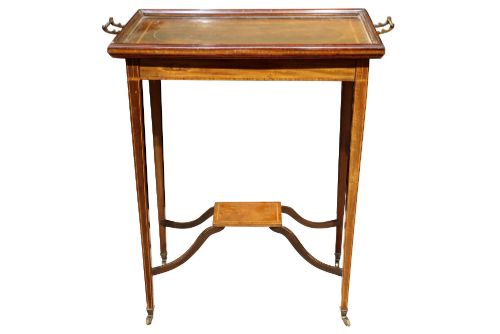
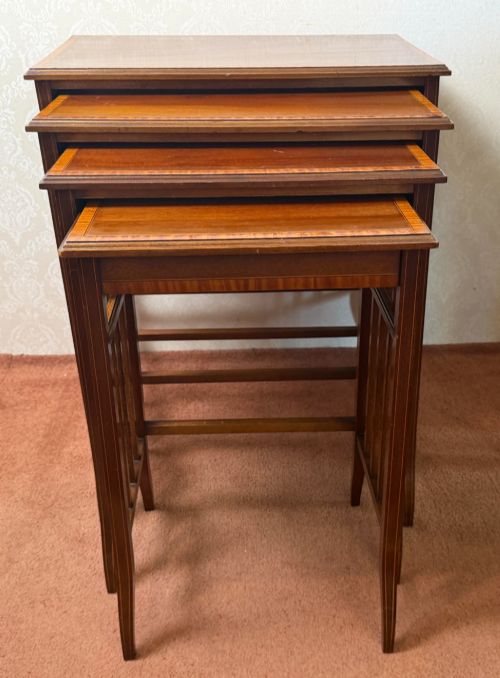
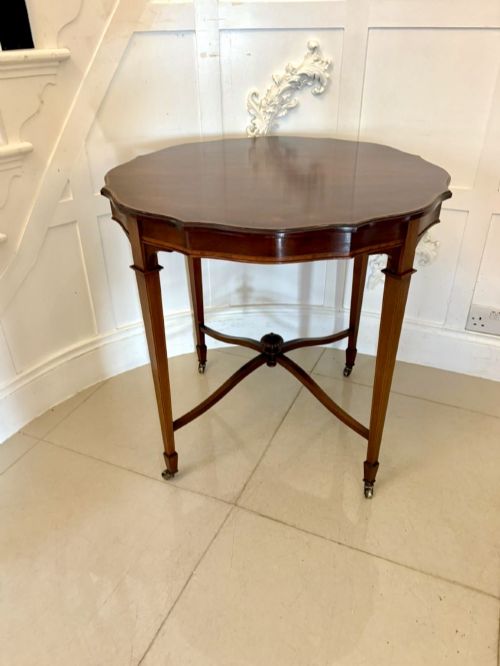
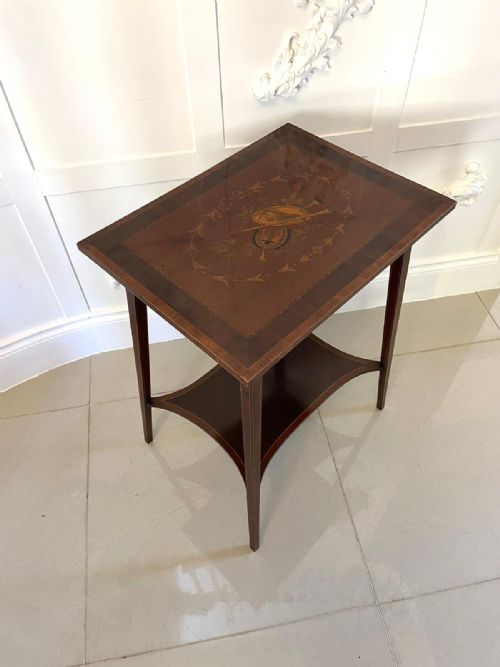
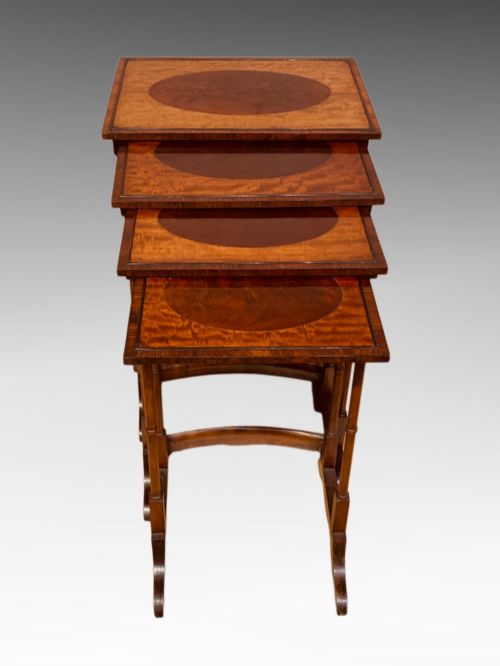
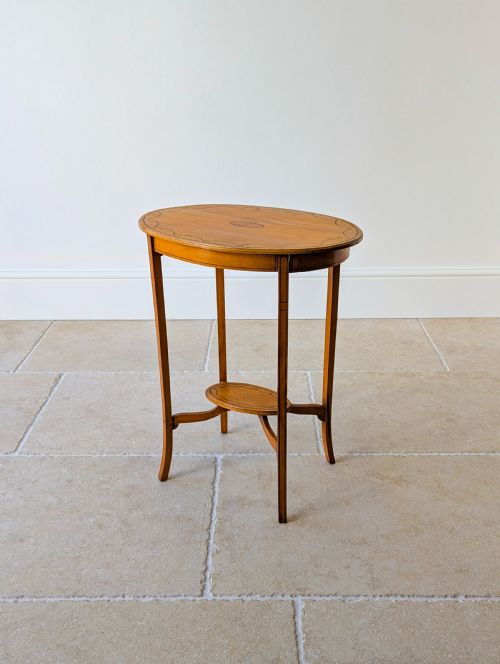
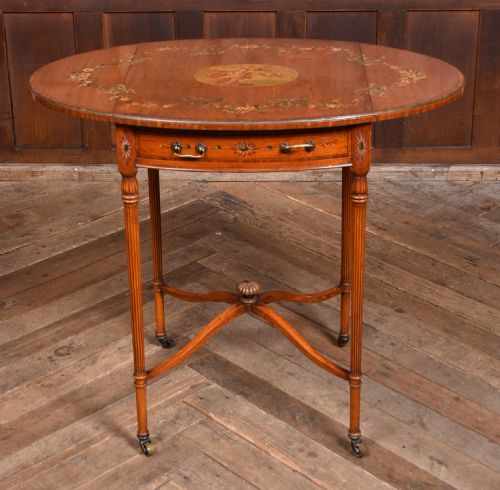
The prevailing style on this page draws heavily on Sheraton Revival aesthetics, adopting classical proportions, tapered legs and contrasting bandings. Forms range from simple circular and oval tops to nests of quartetto tables, drop-leaf surfaces and tray-top designs.
Most examples date from the Edwardian period or the late nineteenth century, though earlier Georgian and later Victorian interpretations occasionally appear. Makers utilised satinwood either as solid timber for high-end pieces or as fine veneers laid over sturdy mahogany carcases.
How they were made
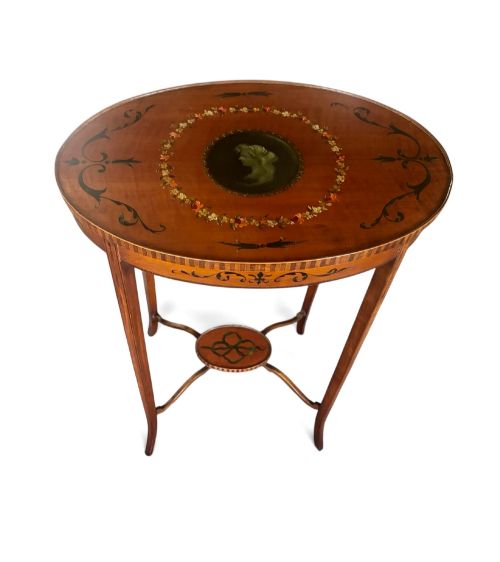
Makers constructed these tables using mahogany or satin walnut as a stable foundation, applying pale satinwood veneers across the surfaces to create a bright, shimmering grain. Artisans then utilised contrasting timbers like boxwood, ebony and rosewood for delicate stringing, geometric cross-banding and elaborate marquetry motifs.
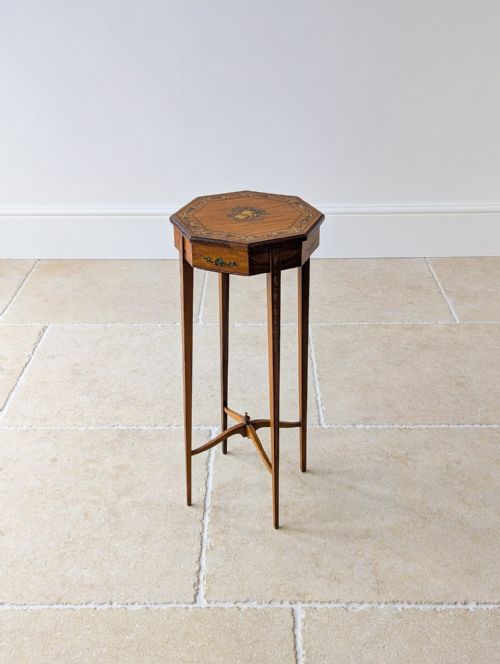
Many examples feature hand-painted floral swags, ribbons or classical figures directly onto the wood, often protected beneath a clear polish. Brass mountings, castors and ormolu details occasionally appear on refined specimens, adding functional accents to the lighter wooden frames.
Listings demonstrate that while Edwardian and 1900 are the dominant periods, pieces also trace back to Victorian and 18th-century Sheraton origins.
What varies in quality
The distinction between standard production and superior craftsmanship lies primarily in the selection of the veneers and the precision of the marquetry. Figured satinwood with a strong, chatoyant chatoyancy commands attention, whereas plain or heavily faded surfaces indicate simpler manufacture.
Structural harmony also dictates value, seen in the crispness of the tapered legs, the tightness of the joinery and the subtlety of the painted decoration. Hand-painted details executed with fine brushwork elevate a piece far above factory-stencilled alternatives.
Trevor Page & Co
The Edwardian Satinwood Occasional Table Glossary
- Satinwood
- A lustrous, hard timber native to Ceylon and the West Indies, prized for its golden, reflective sheen and smooth texture. It serves as the defining surface veneer on fine Edwardian and Sheraton Revival furniture.
- Stringing
- Very thin strips of contrasting wood inlaid into channels cut into the surface of a table. Makers utilised boxwood or ebony stringing to outline geometric panels and accentuate table edges.
- Quartetto
- A set of four graduating tables designed to nest neatly beneath one another when not in use. This clever space-saving form gained immense popularity during the late nineteenth and Edwardian periods.
- Marquetry
- The art of forming decorative patterns by fitting together small pieces of coloured veneers, shell or ivory. Artisans applied floral or neoclassical marquetry scenes directly to tabletops.
- Sheraton Revival
- A late nineteenth and early twentieth-century design movement that copied the lighter, neoclassical furniture forms of the eighteenth-century designer Thomas Sheraton. These pieces favour satinwood, painted details and tapered supports.
Edwardian Satinwood Occasional Table: Frequently Asked Questions
What is an edwardian satinwood occasional table?
An edwardian satinwood occasional table is a small, light movable piece of furniture produced around 1900, finished with pale satinwood veneers. These tables were designed for flexible use in drawing rooms and parlours.
They often feature delicate inlay, painted floral decorations and slender tapered legs characteristic of the Sheraton Revival style.
How were these tables used originally?
Households utilised these versatile tables to hold lamps, display decorative objects, serve tea or support needlework. Their light construction allowed servants or residents to reposition them easily around a room as needed.
Nesting versions provided extra surface space for guests without permanently crowding the floor plan.
How do I care for satinwood furniture?
Preserve satinwood surfaces by keeping them away from direct sunlight, which can fade and discolour the pale timber over time. Dust gently with a dry, soft cloth and avoid chemical polishes that might damage the historic finish.
Maintain a stable room humidity to prevent the underlying mahogany and veneer from warping or cracking.
How can I tell an original from a later copy?
Examine the construction methods, timber ageing and hand-applied details closely. Original Edwardian pieces display authentic material shrinkage, hand-cut joinery and period-appropriate wear beneath the polish.
Machine-cut veneers, modern synthetic adhesives and bright chemical finishes usually point towards later reproductions.