
Antique Fusee Table Clock
An antique fusee table clock brings precise mechanical movement and rich timber cabinetry into a room.
Antique Fusee Table Clock
An antique fusee table clock is a mechanical timepiece driven by a fusee movement, designed to sit upon a bracket, mantel, or table. These pieces span the Georgian, Regency, and Victorian periods, alongside Edwardian examples.
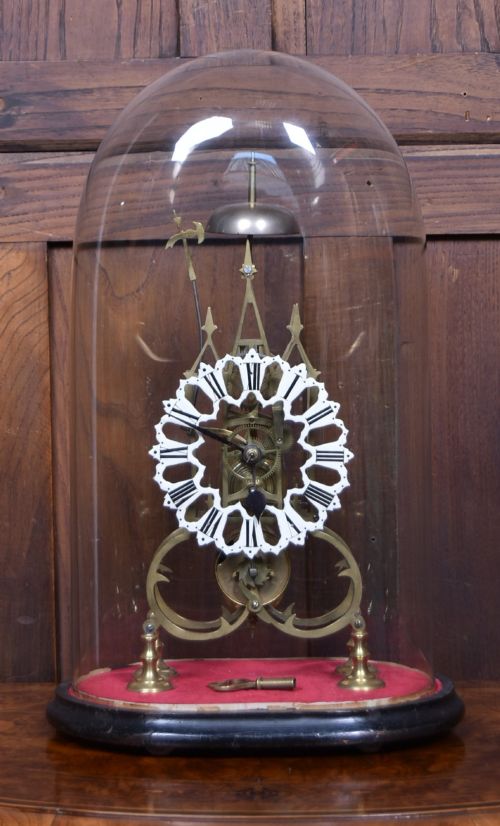
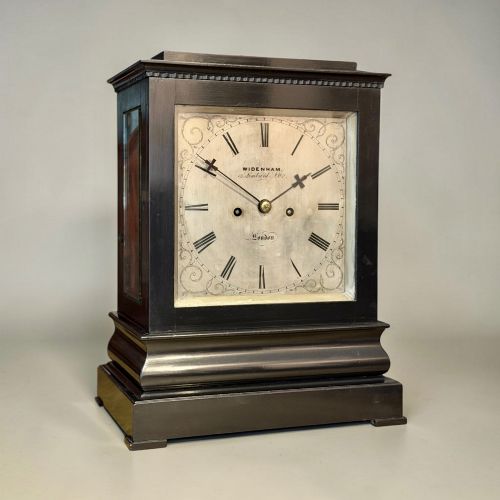
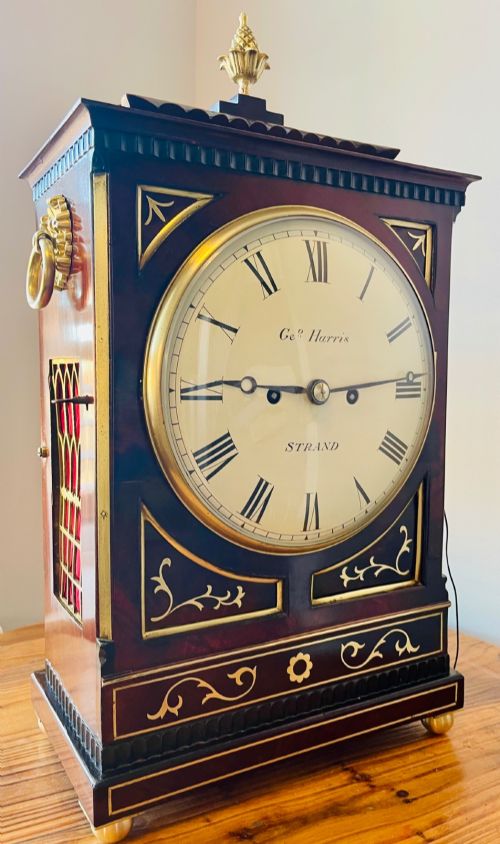
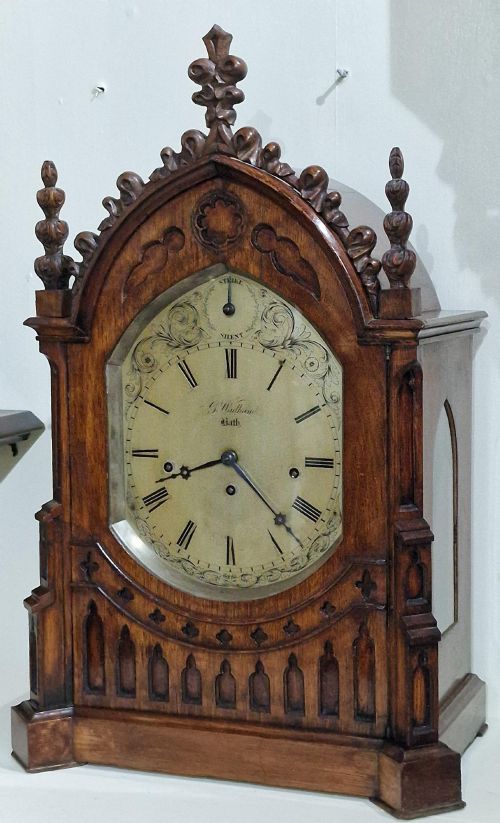
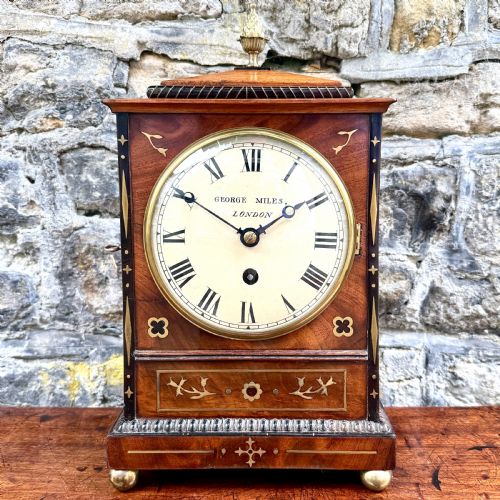
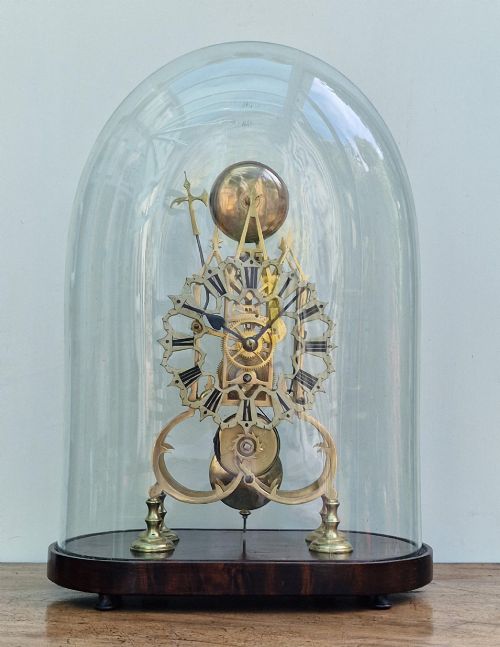
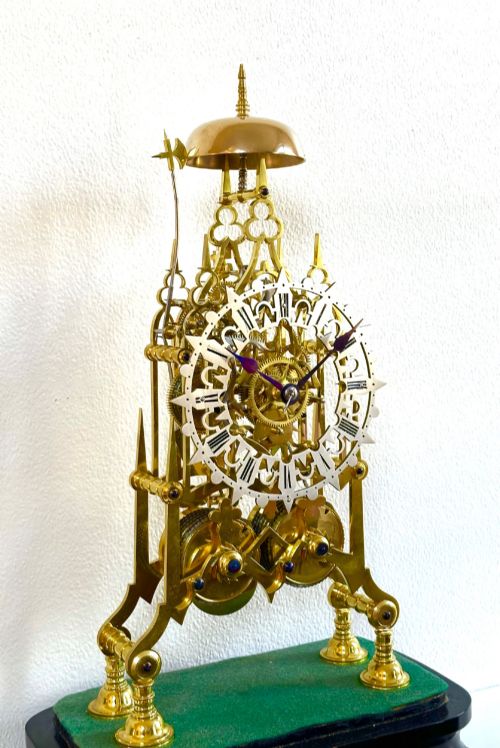
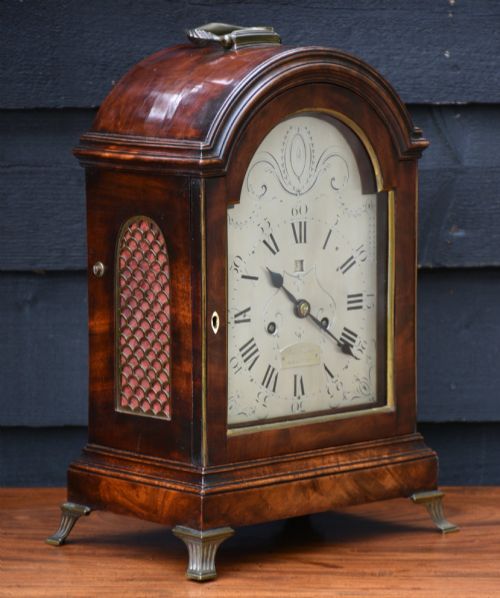
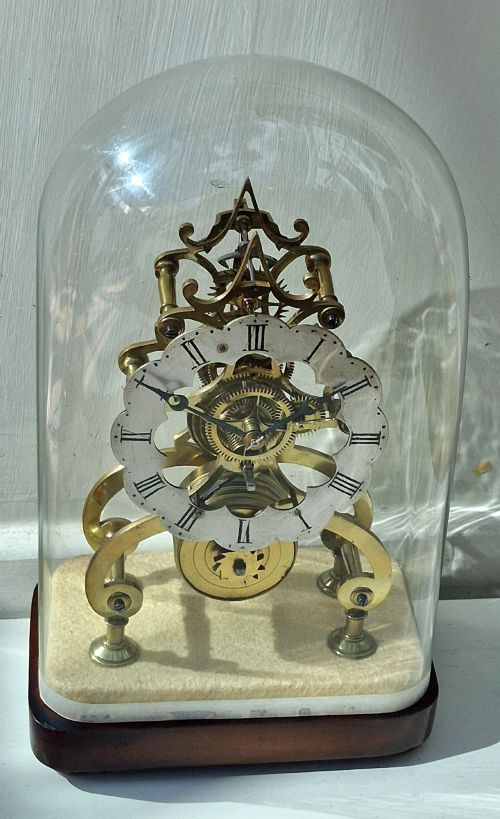
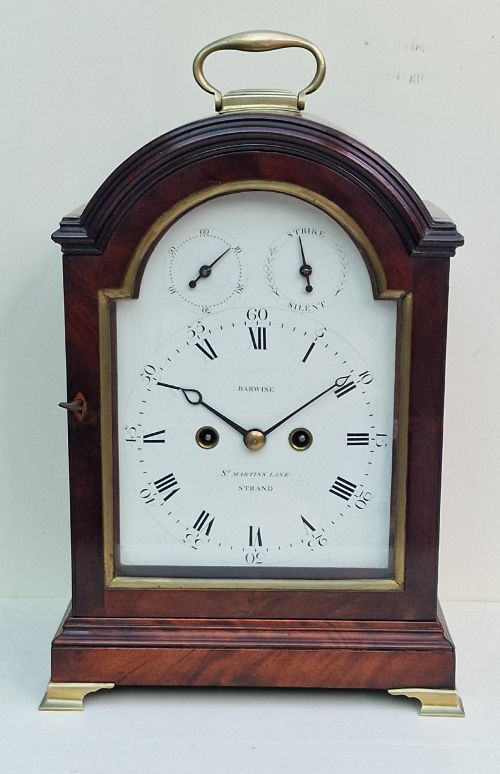
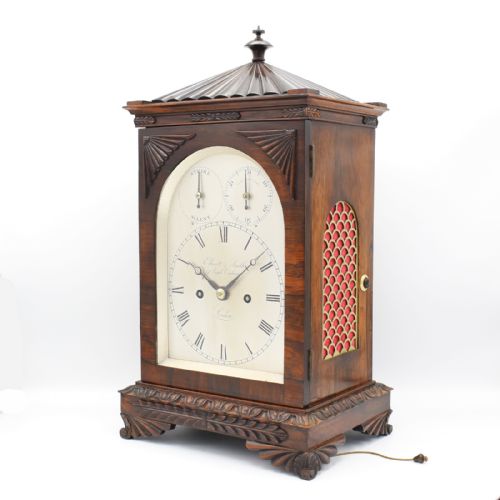
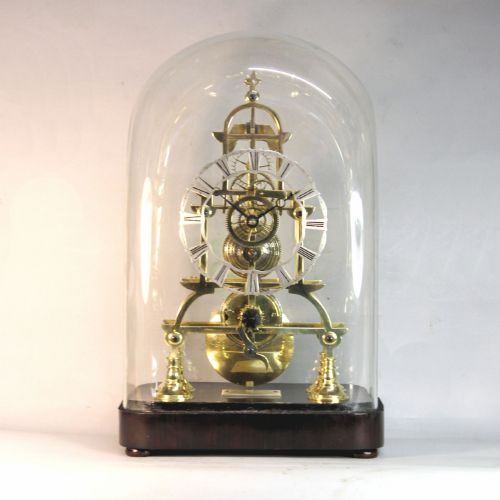
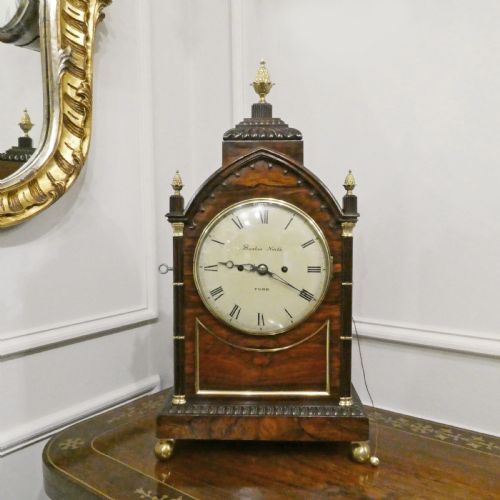
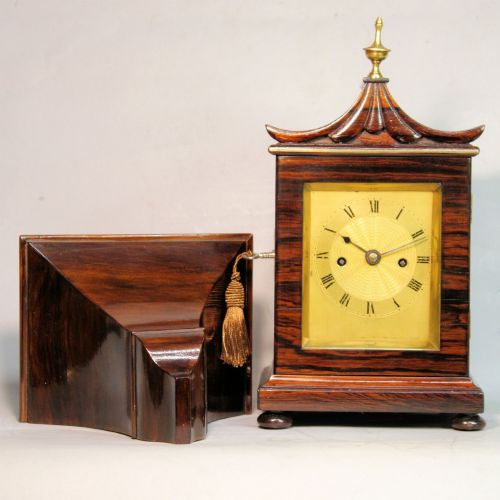
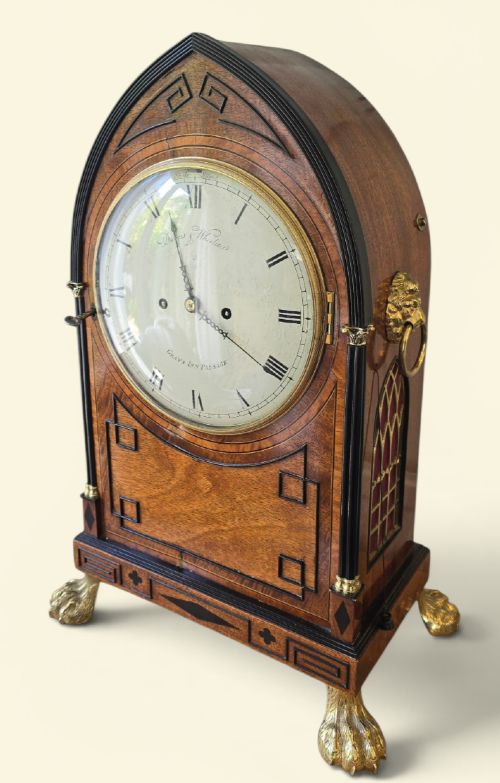
The most common formats met on this page are mahogany bracket clocks and library clocks housed in wood cases with glass panels. Skeleton clocks and architectural styles such as lancet-top or pagoda-top cases also appear frequently.
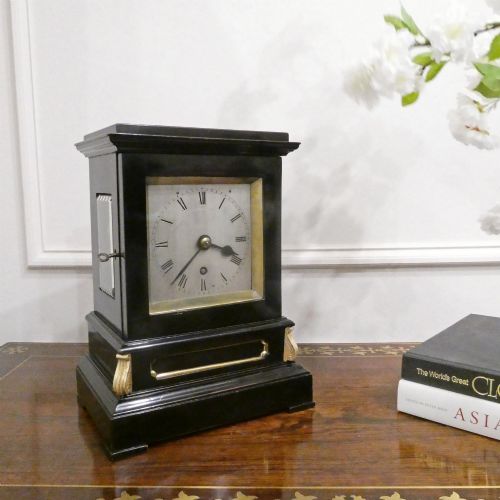
Makers housed these movements in sturdy timbers like mahogany, rosewood, and ebonised wood, often complemented by brass bezels and silvered metal dials. The variety ranges from strict geometric library timepieces to ornate Gothic revival bracket designs.
Materials and Construction
Clockmakers constructed the cases using dense hardwoods such as mahogany, walnut, rosewood, and oak, frequently adding brass inlay, feet, or carrying handles. Ebonised finishes and patinated bronze or ormolu provide contrast on select architectural and skeleton models.
The internal mechanics rely on steel and brass components powered by a fusee movement, which uses a cone-shaped pulley to equalise the mainspring's pull as it unwinds. Silvered metal or enamel dials display the hours, protected behind thick bevelled glass.
Antique Fusee Table Clock Retail Price Guide 2026
Typical asking prices for fusee table clock among the pieces listed under this phrase on Sellingantiques today, from the lower quarter to the upper quarter. They describe what is for sale here now, not the wider market.
The listings span the Georgian, Regency, Victorian, and Edwardian periods, utilising mahogany, rosewood, oak, and ebonised wood.
Distinctions in Quality
Quality rests in the crispness of the case carving, the choice of timber figuring, and the precision of the brass movement inside. Finer makers signed their silvered dials and backplates, reflecting a higher standard of workshop execution.
Proportion and material integrity define the better examples, where original glass, uncompromised wood cases, and signed movements remain intact. Simpler library timepieces contrast with complex triple-fusee bracket clocks featuring bell chimes.
Widenham of London·George Wadham·Barwise, London·Richard Winter·Barber & North·Desbois & Wheeler·Webster Cornhill London·Spurge Dunmow·Thwaites of London·Cording of London·William Payne·John Barwise·W. Burton·Phillips Brothers·Geo. Carter·Wilkinson Leicester·Barrett London·J Kingerley Manchester·George Blackie
The Antique Fusee Table Clock Glossary
- Fusee
- A conical pulley connected to the mainspring by a cord or chain that maintains even driving tension as the spring runs down. This mechanism ensures consistent timekeeping across the duration of the wind.
- Bracket Clock
- A portable clock originally designed to sit upon a matching wall bracket or table surface. They often feature robust carrying handles and striking mechanisms.
- Skeleton Clock
- A timepiece with an open brass frame that exposes the gear train and escapement to view. They sit beneath glass domes to protect the delicate exposed mechanism.
- Library Clock
- A compact table clock enclosed in glass on multiple sides, sometimes called a five-glass clock. These pieces allow light to pass through and illuminate the movement.
- Silvered Metal
- A brass or copper dial surface treated with a silver solution to create a bright, legible face for engraving. Black wax fills the engraved numerals for clarity.
Antique Fusee Table Clock: Frequently Asked Questions
What is a fusee movement?
A fusee is a conical drum that moderates the pull of the mainspring, ensuring the clock receives steady power as it unwinds.
This clever mechanical device separates better quality antique clocks from simpler spring-driven alternatives.
Where should I place a bracket clock?
These clocks suit sturdy tables, mantelpieces, or dedicated wall brackets where they remain level and secure.
Keeping them away from direct sunlight and drafts helps protect the antique timber and sensitive movement.
How do I identify the period?
Examine the case style, timber selection, dial layout, and any maker signatures engraved on the movement backplate.
Georgian and Regency pieces often show clean classical proportions, while Victorian examples introduce Gothic and skeleton designs.