




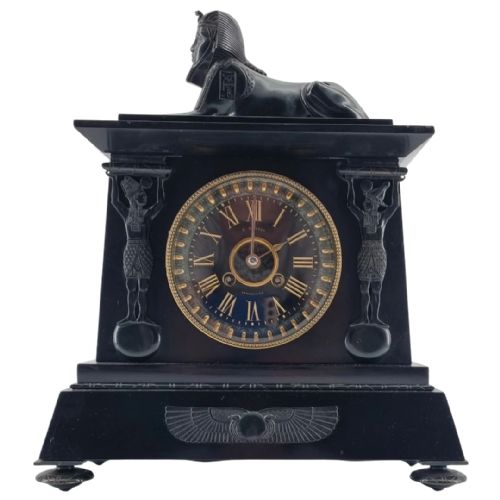


Engraved Dial Table Clock
An engraved dial table clock brings precise mechanical movement and refined metalwork into a room, offering both practical timekeeping and historic character.
Engraved Dial Table Clock
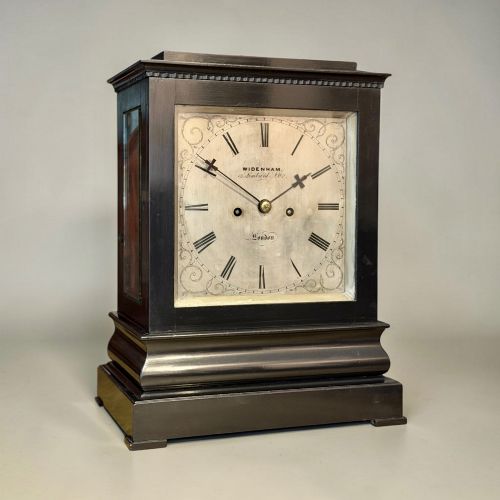
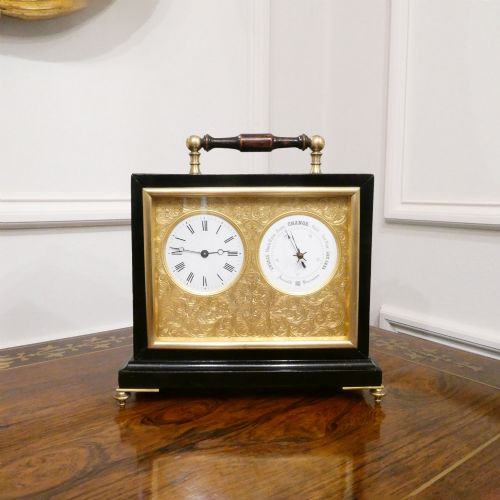
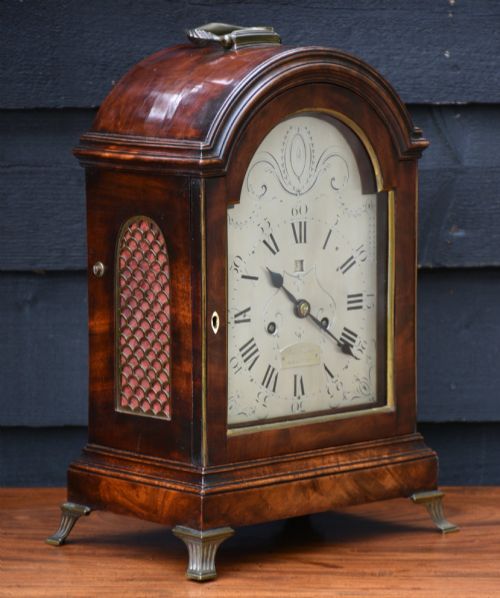
An engraved dial table clock encompasses mantel clocks, bracket clocks, library clocks, and carriage clocks produced across the Georgian, Victorian, and Edwardian periods. These timepieces range from imposing mahogany bracket clocks and five-glass library models to delicate gilt brass carriage clocks and miniature skeleton clocks.
The format covers English fusee designs housed in wood or brass alongside French brass carriage pieces and specialised strut or lantern clocks. Makers utilised glass, enamel, and silvered metal alongside rosewood and ebonised timber to construct functional pieces for desks, tables, and mantelpieces.
Buyers encountering this group will find examples reflecting diverse aesthetic movements including George II style, Egyptian Revival, Louis XIV style, and Grand Regency. Each piece combines mechanical complexity with decorative dial engraving typical of its specific decade of production.
Materials and construction methods
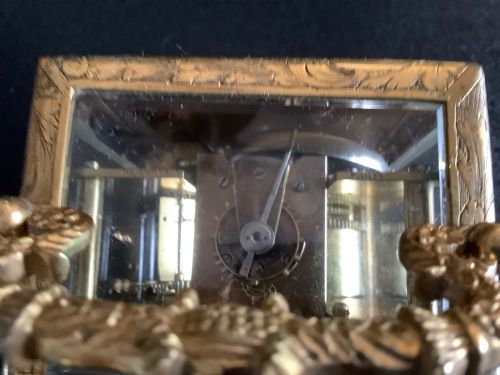
Metal components form the structural and decorative core of these timepieces, utilising brass, gilt brass, and silvered metal for dials, bezels, and movements. Glass panels frequently enclose library and carriage clocks to reveal the internal gear trains and escapements.
Cabinetmakers and clockmakers constructed outer cases using traditional hardwoods such as mahogany, rosewood, and ebonised wood. Dials received detailed hand-engraving directly onto the metal surface, often complemented by enamel chapters or subsidiary rings.
Materials span glass, brass, gilt brass, silvered metal, mahogany, rosewood, and ebonised wood.
Evaluating craftsmanship and execution
Quality manifests in the depth, crispness, and clarity of the dial engraving, where finer specimens display meticulously cut foliage, numerals, and maker signatures. The precision of the case joinery and the selection of timber grain similarly separate standard production from superior workshop output.
The sophistication of the internal movement dictates distinction, distinguishing standard timepieces from complex fusee, quarter striking, or year-going mechanisms. Heavy cast brass frames, multi-glass case construction, and original components throughout elevate the standing of any individual clock.
Widenham of London·Mappin & Webb·Dent·Thomas Cole·James Cole·Hunt And Roskell·Arnold and Frodsham·D. Munsey·Charles Frodsham·Holingue Freres·Tiffany·John Massey·L. Donne·Mathias Bauerle·Smiths Clocks·L Epee
The Engraved Dial Table Clock Glossary
- Bracket clock
- A portable spring-driven clock originally designed to sit on a wall bracket. These substantial pieces frequently feature wooden cases and precise fusee movements.
- Fusee
- A conical pulley connected to the mainspring by a chain or cord, designed to equalize the driving force as the spring unwinds. This mechanism ensures more consistent timekeeping throughout the power reserve.
- Carriage clock
- A small, spring-driven timekeeper developed for travel, typically encased in brass with glass panels. Many examples include repeating mechanisms and engraved dial masks.
- Library clock
- A heavy table or mantel clock, often featuring multiple glass panels that expose the internal mechanics. English library clocks commonly rely on single or twin fusee movements.
- Strut clock
- A timepiece supported by a hinged prop or leg attached to the back of the case for desk display. These pieces often incorporate decorative engraving across the dial and mask.
Engraved Dial Table Clock: Frequently Asked Questions
What is a fusee movement?
A fusee movement uses a conical pulley and chain to regulate the power delivered by the mainspring. This ingenious device ensures consistent force reaches the escapement as the clock runs down.
You will find this mechanism frequently in English bracket and library clocks from the Georgian and Victorian eras.
How do I care for a table clock?
Keep mechanical clocks away from direct sunlight, draughts, and sudden temperature fluctuations. Ensure the clock rests on a completely level surface to maintain the correct beat of the escapement.
Professional servicing every few years ensures the internal brass gears and pivots continue to operate without undue wear.
How are carriage clocks different?
Carriage clocks are self-contained spring-driven timepieces originally built for travel by coach. They feature sturdy brass frames, protective carrying handles, and glass panels on all sides.
Unlike large wooden mantel clocks, these pieces were designed to be portable while maintaining reliable mechanical performance.
What defines a library clock?
A library clock is a substantial table timepiece, often constructed with multiple glass panels that allow light to pass through the movement. These pieces typically feature robust brass or wooden frames suited for study or drawing room use.
Many examples rely on fusee movements and exhibit fine engraved dials behind protective bezels.
How do I identify the period?
Period identification relies on a combination of case materials, stylistic motifs, and maker signatures recorded on the dial or movement. Georgian pieces often show restrained mahogany styling, while Victorian and Edwardian examples incorporate diverse revivals and heavier brass casting.
Examining the engraving style and the construction of the backplate provides further confirmation of the manufacturing date.