


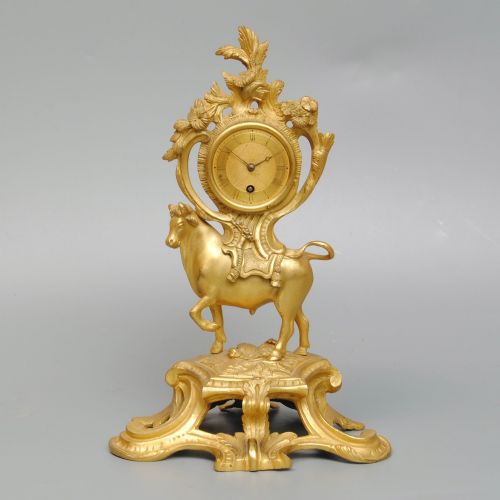


English Desk Timepiece
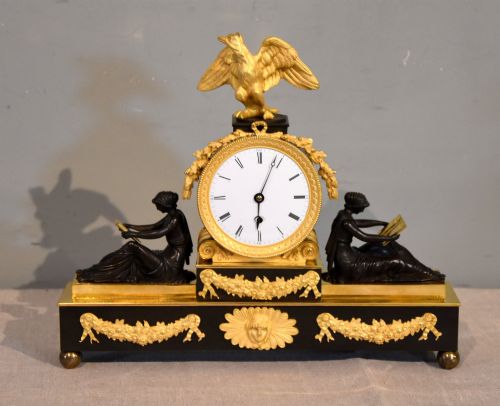
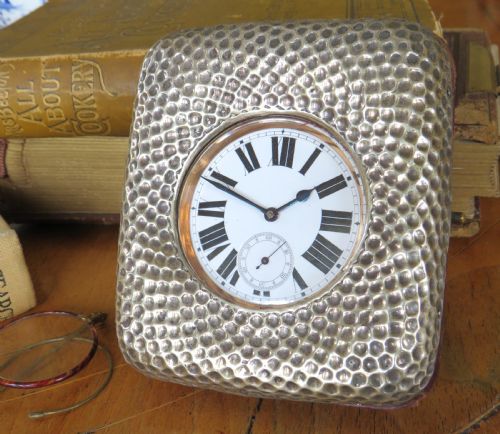
An English desk timepiece measures hours away from the wall, sitting upon a library table or mantelpiece in brass, mahogany, or gilt bronze.
English Desk Timepiece
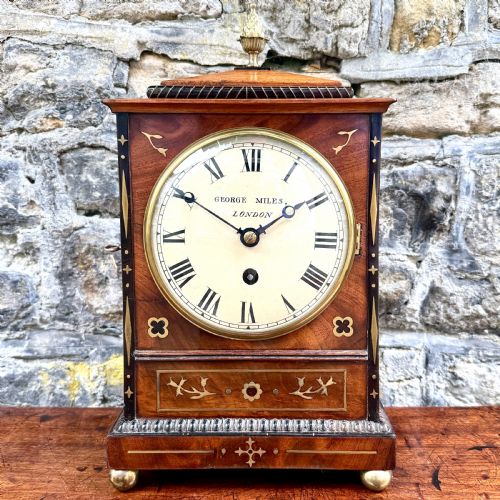
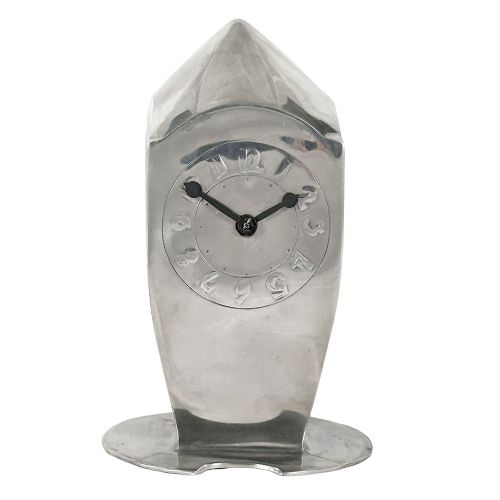
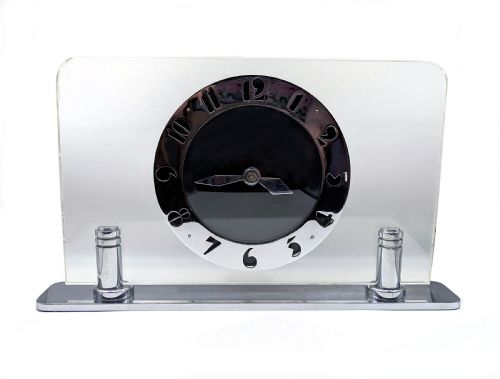
An English desk timepiece sits comfortably on a library table, bureau, or mantel, functioning as a portable indicator of hours rather than a wall-mounted fixture. You will encounter forms ranging from heavy mahogany library clocks and brass carriage clocks to streamlined Art Deco models in walnut, chrome, and blue glass.
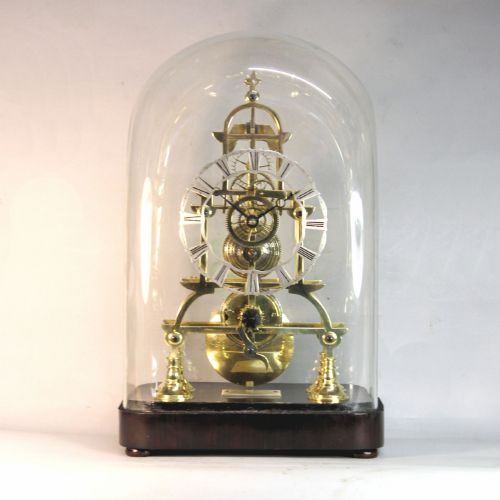
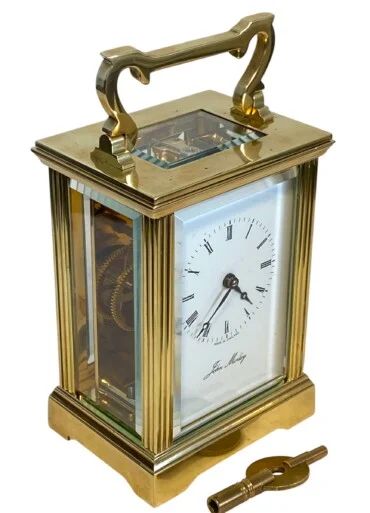
The selection spans centuries of British horology, incorporating Regency library pieces, Victorian Gothic skeleton clocks under glass domes, and 1930s mechanical wind-up models. Makers such as Smiths, Dent, and John Morley shaped these portable instruments for desks and tables across the land.
Mantle and desk clocks appear in diverse materials, uniting timber cases like rosewood and oak with metal mountings in ormolu, gilt bronze, and pewter. The defining characteristic remains the absence of a striking train in a true timepiece, focusing solely on the passage of hours and minutes.
Materials and Construction
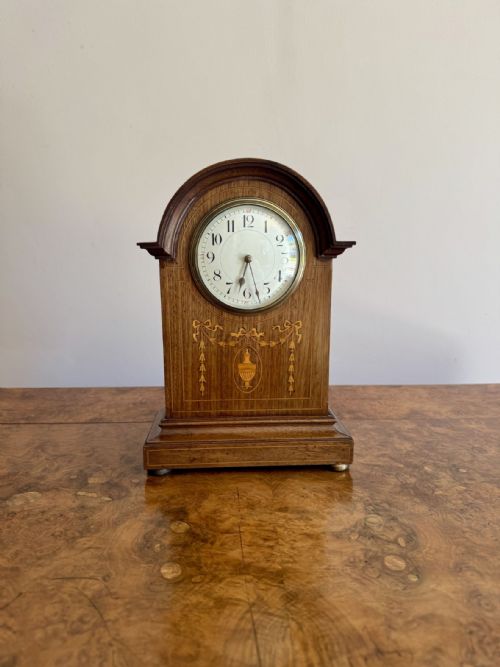
Cabinetmakers housed movements in dense timbers including mahogany, rosewood, and inlaid oak, often framing the dial with bevelled glass panes that expose the wheel work within. Metal casings relied on brass, gilt bronze, and chrome, sometimes finished with champlevé enamel or silver plating.
Movements depended upon mechanical fusee or spring-driven mechanisms, with platform escapements appearing in later carriage and library clock designs. Skeleton clocks discarded wooden or metal outer cases entirely, displaying brass gear trains and six-spoke wheel work openly beneath glass domes.
Listings feature brass, mahogany, gilt bronze, and chrome across Victorian, Regency, and Art Deco styles.
Determining Quality
The standard of an English desk timepiece rests upon the crispness of the movement's execution and the fidelity of its exterior case materials. Finely engraved backplates, signed dials from notable London makers, and substantial fusee or 8-day movements separate high-grade workshop productions from standard commercial output.
The integration of materials also dictates refinement, seen in the precise mitring of rosewood and mahogany veneer, the weight of cast gilt brass mounts, and the clarity of heavy bevelled glass panels. Original components, including matching domes and pendulum assemblies, preserve the integrity of the piece.
Archibald Knox for Liberty & Co·Smiths Clockmakers·Richard Winter of Chieveley·John Morley·J Batson & Son·John Bennett Cheapside London·FB Adams London·John Massey London
The English Desk Timepiece Glossary
- Timepiece
- A clock that measures and indicates the time without striking hours or quarters. This mechanism focuses purely on the visual transit of the hands.
- Fusee
- A conical pulley connected to the mainspring by a cord or chain, designed to equalise the declining power of the spring as it unwinds. It ensures even tension across the gear train.
- Carriage clock
- A small, portable spring-driven timepiece originally designed for travel, typically fitted with a carrying handle and a glass-panelled brass case. Many feature a platform escapement visible through the top or front.
- Skeleton clock
- A timepiece with an open framework that exposes the gear train and movement to view from all sides. These pieces are frequently protected by a blown glass dome resting on a wooden base.
- Library clock
- A substantial table timepiece housed in a wood case, often featuring bevelled glass panels that reveal the interior mechanics. They were designed for the desks and reading rooms of grand houses.
English Desk Timepiece: Frequently Asked Questions
What is a fusee movement?
A fusee movement uses a conical pulley and chain to equalise the force of the mainspring as it winds down. This mechanical arrangement maintains consistent power to the escapement for accurate timekeeping.
You will find this traditional system inside many 19th-century English library and bracket clocks, prized for its superior engineering.
How do I wind a mechanical desk clock?
Mechanical desk clocks require a matching key inserted into the dial to tension the mainspring barrel or fusee chain. Care must be taken not to overwind the mechanism when resistance is met.
Most traditional English examples run for eight days on a single wind, while Art Deco models often utilise modern spring assemblies.
What is a platform escapement?
A platform escapement is a self-contained regulating unit housing the balance wheel and hairspring, fitted directly to carriage and library clocks. It allows portable timepieces to keep accurate time while resting on various surfaces.
This innovation freed desk clocks from needing a stationary pendulum, enabling true portability.
Are skeleton clocks always under glass domes?
Many Victorian skeleton clocks retain their original blown glass domes to protect the exposed gear trains from dust and atmospheric moisture. However, surviving examples occasionally lose their domes over time.
The presence of the original resting plinth and dome adds significantly to the completeness of the timepiece.