
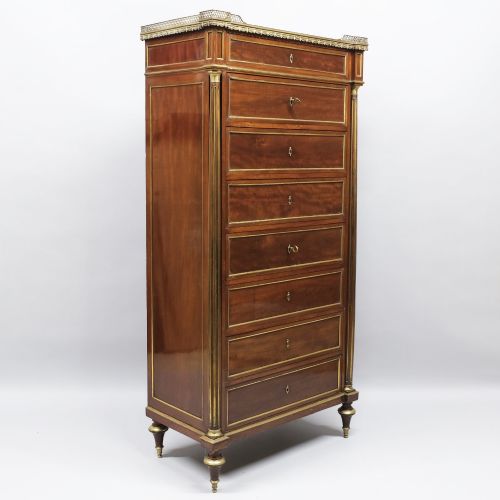

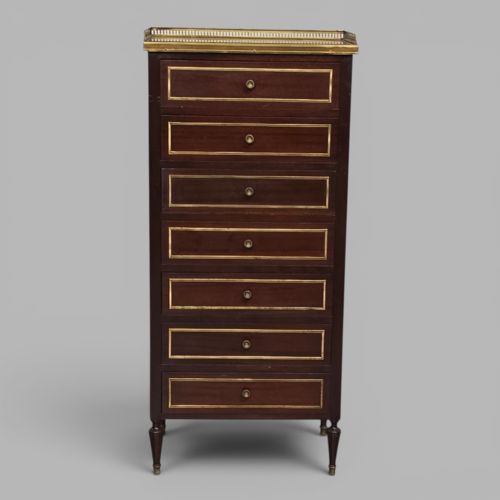
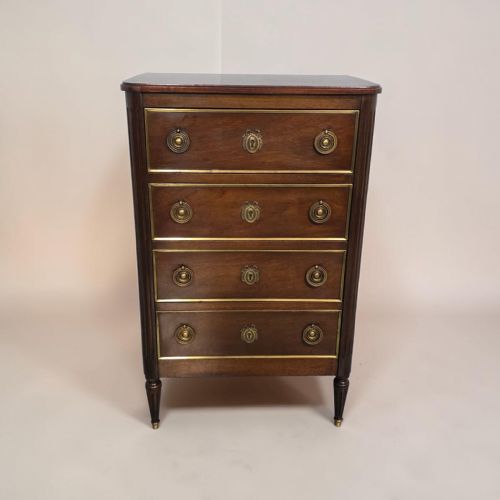


Antique French Semainier
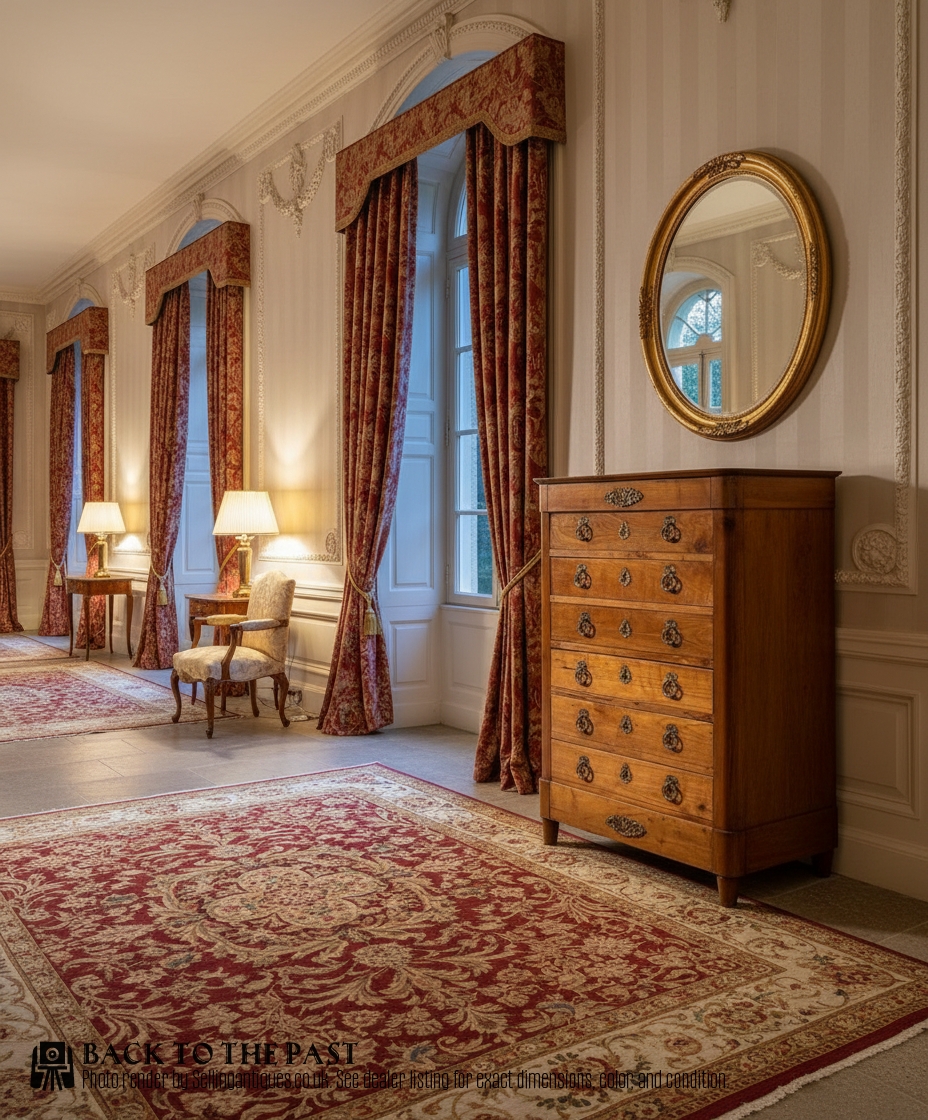
An antique French semainier offers seven deep drawers for the bedroom, combining practical storage with striking vertical proportions.
What an antique French semainier is
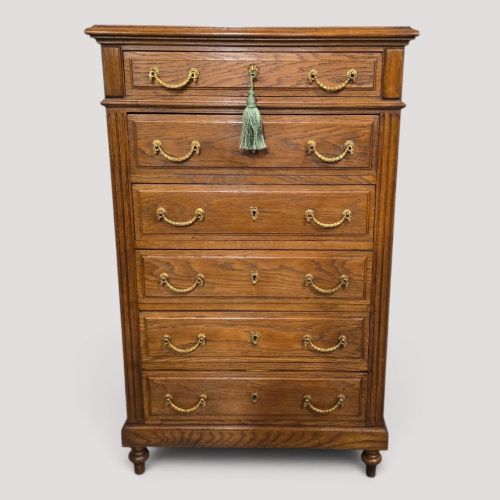
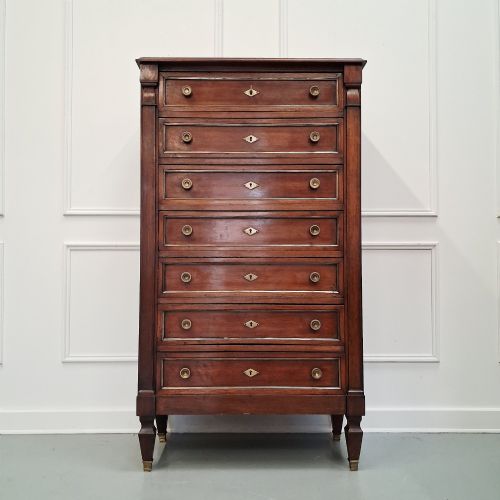
The antique French semainier is a tall, narrow chest of drawers designed traditionally with seven tiers, one for each day of the week. These pieces appear across various periods, including the eighteenth century, the nineteenth century, and around nineteen twenty, often taking the form of a chest of drawers or a tall cabinet.
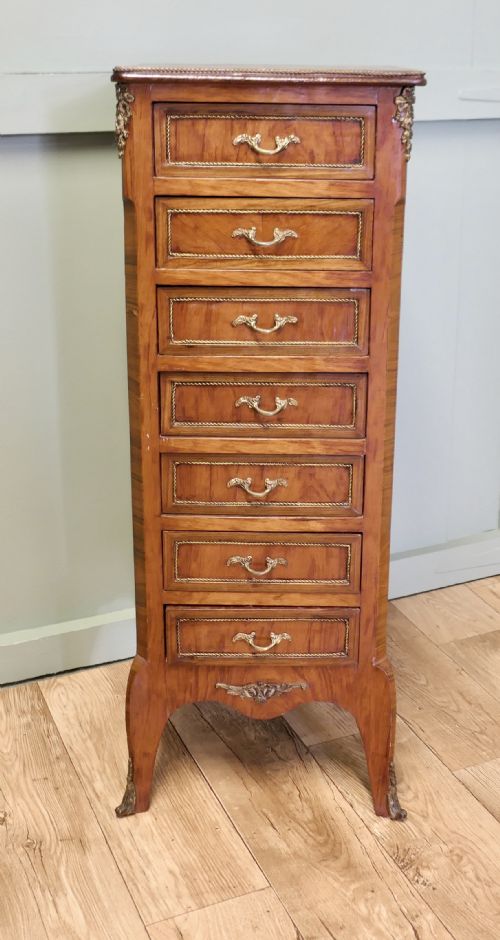
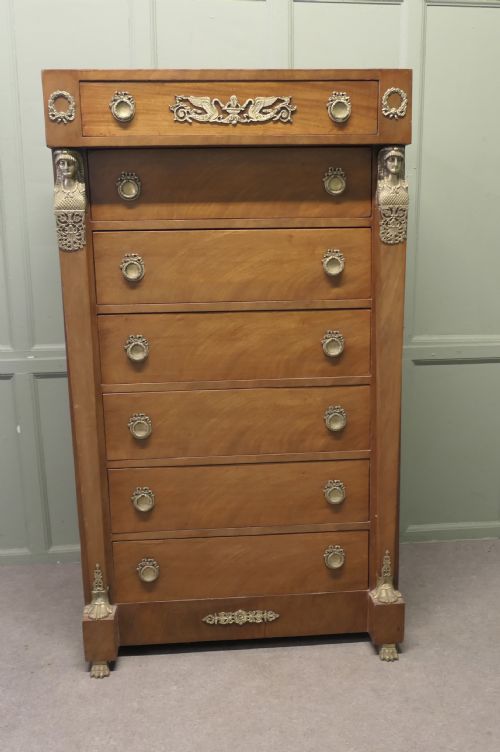
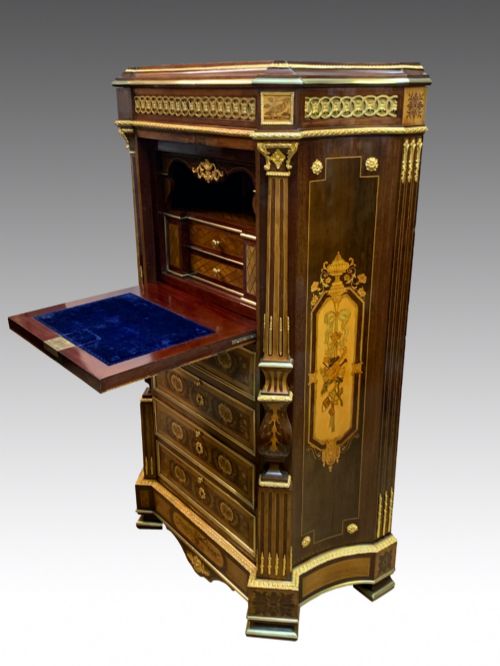
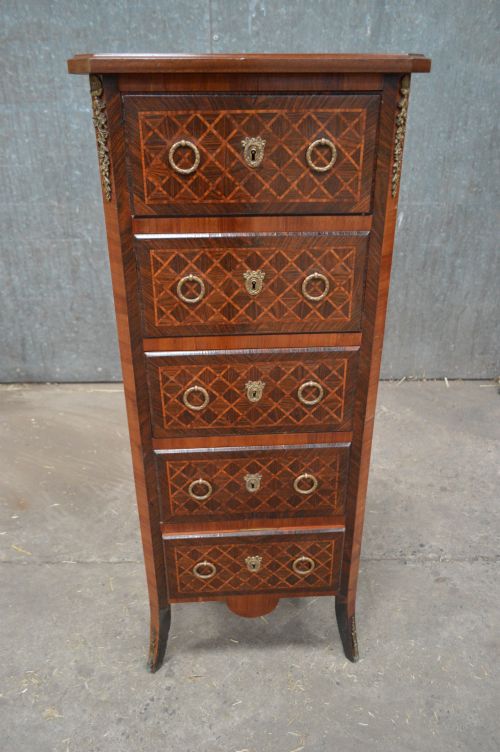
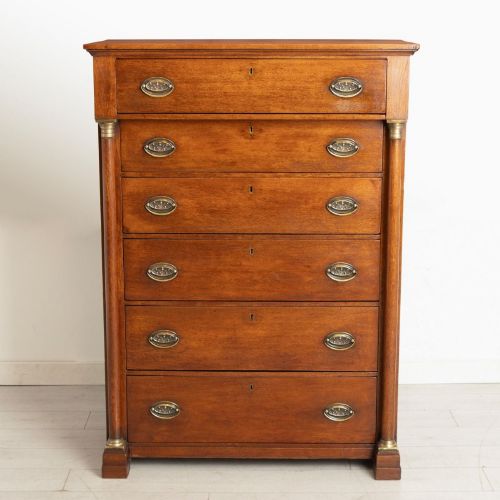
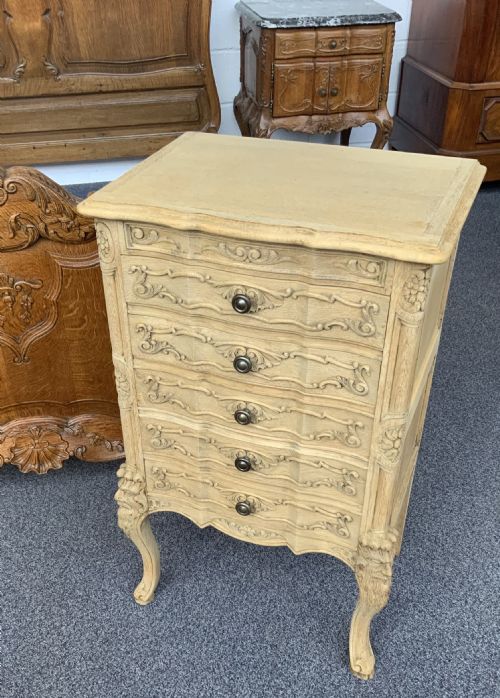
Buyers encounter distinct regional and stylistic variations on this page, ranging from restrained French provincial cherrywood examples to ornate French empire walnut pieces in the neoclassical style. Other forms incorporate marquetry decoration or feature integrated marble tops above the seven drawers.
Originating in France, these furniture items balance slender dimensions with substantial storage capacity, making them suitable for tighter spaces where standard wide chests fail to fit.
Materials and construction
Cabinetmakers constructed these pieces using dense hardwoods such as walnut, mahogany, flame mahogany, cherrywood, kingwood, and occasionally pine for internal carcases. Marquetry patterns demonstrate precise timber selection and cutting techniques across drawer fronts and sides.
Metal mounts in brass, ormolu, and gilt bronze provide structural accent and decorative trim, particularly on empire and revival pieces. Integrated stone tops utilise heavy marble slabs fitted precisely to the upper surface of the cabinet.
Retail Price Guide 2026
Typical UK retail prices for french semainier, calculated from the Sellingantiques database of over a million retail prices indexed since 2003. This retail price guide relies exclusively on Sellingantiques data; no external sources or auction records are used, so the figures do not describe the wider market.
Materials appearing across current inventory include marble, brass, ormolu, gilt bronze, and pine alongside primary cabinet timbers.
Distinctions in quality
The integration of materials also defines the tier of execution, where finely chased ormolu mounts and heavy fitted marble tops elevate a standard chest of drawers into a more ambitious decorative object. Maker attribution through stamps adds another layer of distinction to eighteenth-century examples.
Leonard Boudin
The Antique French Semainier Glossary
- Semainier
- A tall chest of drawers traditionally containing seven drawers, one for each day of the week. This form provides vertical storage without taking up excessive floor space in a chamber.
- Ormolu
- Gilded bronze applied as decorative mounts and feet on furniture, particularly prominent in French empire and revival styles. This technique adds metallic contrast to dark woods.
- Marquetry
- Inlays of different coloured woods arranged in pictorial or geometric patterns across drawer fronts and surfaces. Craftsmen assemble these veneers meticulously to create decorative scenes.
- Kingwood
- A dense, richly grained exotic timber utilised in high-end cabinet making during the eighteenth century. Its dark figure enhances formal French pieces.
Frequently Asked Questions
Why does a semainier have seven drawers?
The traditional design incorporates seven drawers to correspond with the seven days of the week. Historically, this allowed owners to organise their daily garments or linens systematically.
Over time, the form persisted because the tall, narrow proportions made efficient use of floor space while offering substantial storage capacity.
Where should I place a semainier?
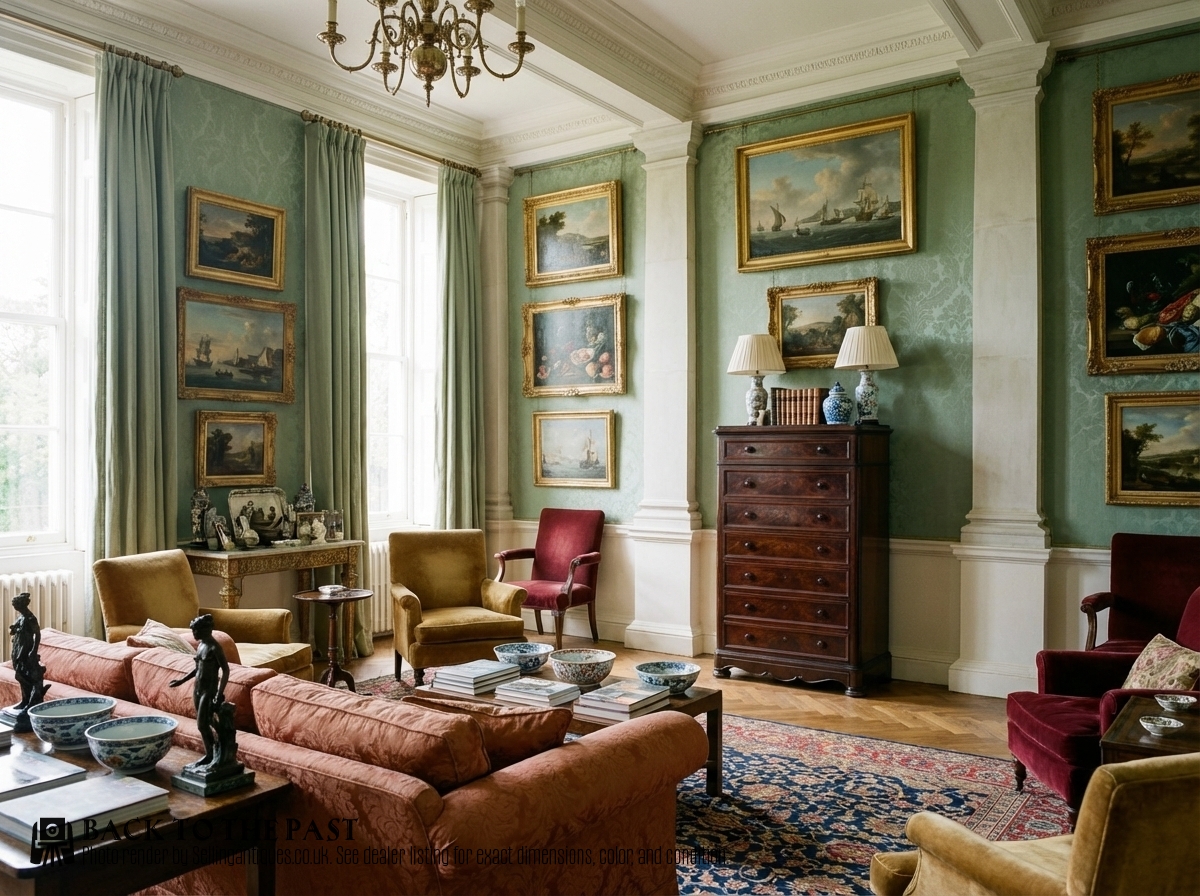
These tall chests suit bedrooms and dressing rooms where floor space is restricted but vertical capacity is needed. Their slender footprint allows them to fit comfortably between windows or in corners.
Ensure the room humidity remains stable to protect the timber carcase and any applied marble tops or gilt bronze mounts.
How do I identify a French empire semainier?
French empire pieces typically display architectural lines, symmetrical proportions, and classical restraint influenced by neoclassical design. They frequently utilise dark walnut or mahogany paired with cast brass or ormolu mounts.
Such furniture often dates from the nineteenth century or earlier, reflecting the formal tastes of the period.
What is the difference between a cabinet and a chest of drawers?
While a standard chest of drawers relies entirely on external drawer tiers for storage, certain semainier forms incorporate enclosed cabinet elements or specialised compartments. The distinction depends on whether the front is dominated solely by horizontal drawers.
Both variants maintain the characteristic tall, narrow silhouette associated with French daily-use furniture.