


Antique French Pottery Jars
These antique french pottery jars bring rustic provincial character into modern rooms, prized for their earthy glazes and honest utility.
Antique French Pottery Jars
When you search for antique french pottery jars, you encounter vessels that once served practical roles in rural households, from olive storage to food preservation. The selection centres heavily on nineteenth-century confit pots, walnut oil jars, and glazed terracotta vessels originating from provincial regions.
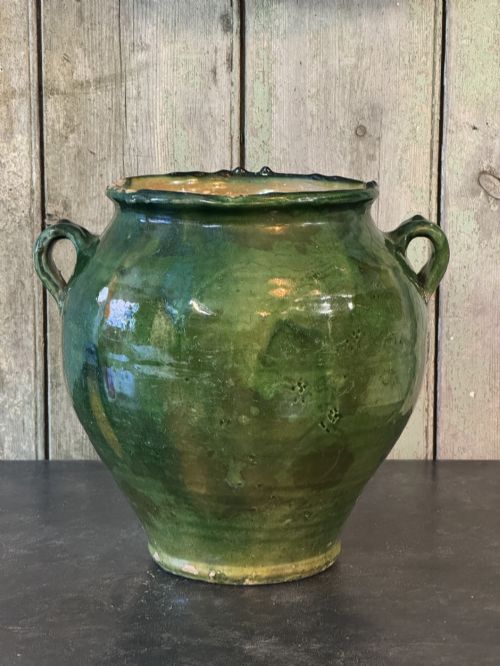
Makers shaped these utilitarian containers from earthenware and terracotta to hold liquids, oils, and provisions on French country properties. Today, buyers most frequently meet green glazed confit pots and rustic earthenware vessels that display the marks of heavy domestic use.
How they were made
Potters formed these pieces by hand using local earthenware and terracotta clays dug from regional French riverbeds. Artisans applied lead and tin glazes by hand to seal the porous clay bodies before firing them in wood-burning kilns.
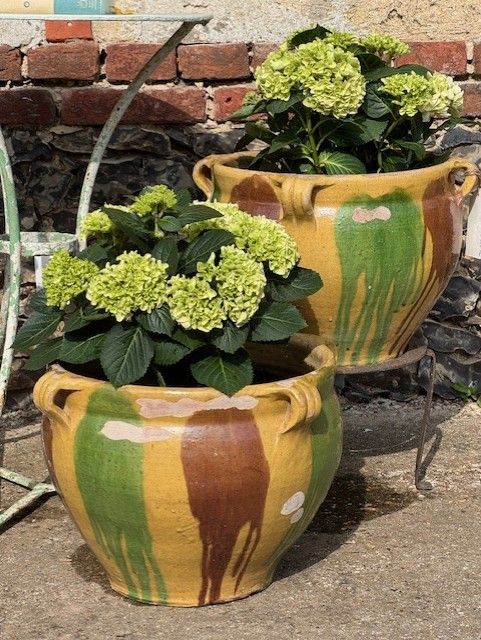
The drip-glazed surfaces and variable green or polychrome coatings reveal the direct influence of traditional regional techniques. Kiln placement and wood-firing temperatures created accidental colour shifts across the tin-glazed earthenware bodies.
Some nineteenth-century confit pots retain splashes of green glaze that ran down the side because the potter was in a hurry.
What varies in quality
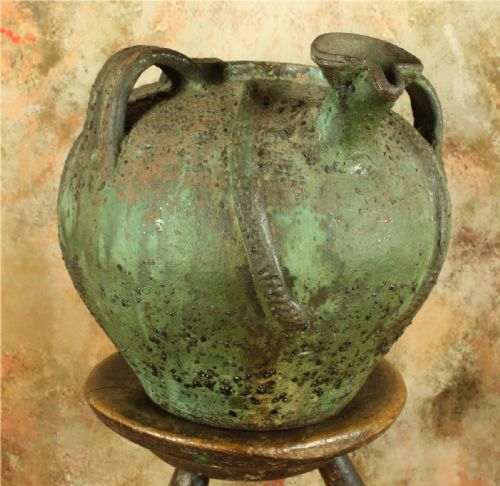
Quality rests on the depth of the glaze, the symmetry of the thrown clay, and the preservation of the original surface. Early pieces display richer surface texture and more complex tonal variations within the glaze.
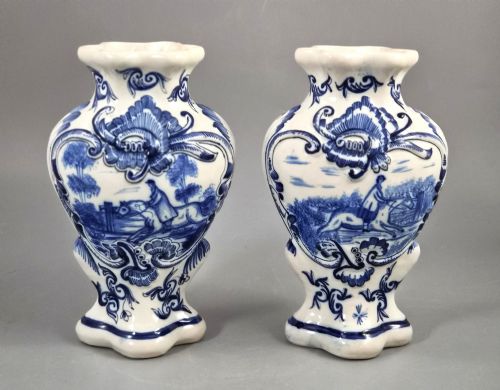
The distinction between ordinary utility containers and finer pieces lies in the crispness of painted details on faience examples and the stability of the terracotta body. Pieces with intact handles and clean potting lines command closer attention from collectors.
Fourmaintraux-Courquin·Limoges
The Antique French Pottery Jars Glossary
- Confit pot
- A traditional French earthenware jar featuring handles, used historically for preserving and storing meats or fats. These pots typically display a half-glazed body with an unglazed lower section.
- Tin-glazed earthenware
- Pottery covered with a white tin-oxide glaze that provides an opaque surface for painted decoration. This technique underpins much of the historical faience produced in French workshops.
- Terracotta
- Fired but unglazed or transparently glazed clay body possessing a characteristic brownish-red hue. It forms the structural foundation for many large olive and oil storage jars.
- Salt glaze
- A vitreous coating formed by throwing common salt into the kiln during high-temperature firing. This process creates a distinctive pebbled texture on utilitarian stoneware and vinegar barrels.
Antique French Pottery Jars: Frequently Asked Questions
What were antique french pottery jars used for?
Rural households utilised these vessels for storing cooking oil, preserving confit meats, and holding vinegar or water. Their robust construction suited daily agricultural labour and long-term pantry storage.
Over generations, these utilitarian objects transitioned from working kitchens into decorative interior settings, appreciated for their honest craftsmanship and regional forms.
How do I date an antique french pottery jar?
Dating relies on observing clay types, glaze characteristics, and the presence of hand-thrown potting marks. Eighteenth-century examples often show heavier potting and distinctive handle formations compared to later nineteenth-century pieces.
Makers' marks or painted signatures on faience items help narrow down the period of production. Confit pots from the nineteenth century display characteristic green or yellow lead glazes applied over local earthenware.
Are antique french pottery jars waterproof?
Most pieces feature internal glazes designed to hold oils, liquids, or preserves safely. However, hairline fractures or historical wear can affect the water-tight integrity of older earthenware.
Placing a protective liner inside unglazed or heavily aged vessels prevents moisture damage when using them to hold fresh flowers or plants.
How do I style antique french pottery jars at home?
These jars anchor rustic and traditional interiors when displayed on open shelving, tables, or kitchen floors. Their earthy green glazes and terracotta tones complement natural wood and stone surfaces.
Grouping jars of varying heights, such as pairing olive jars with smaller confit pots, creates a balanced display that highlights their individual forms.