

Antique French Mantel Vases
Antique French mantel vases bring architectural symmetry and ornate charm to a fireplace, functioning as decorative urns or paired garnitures.
Antique French Mantel Vases
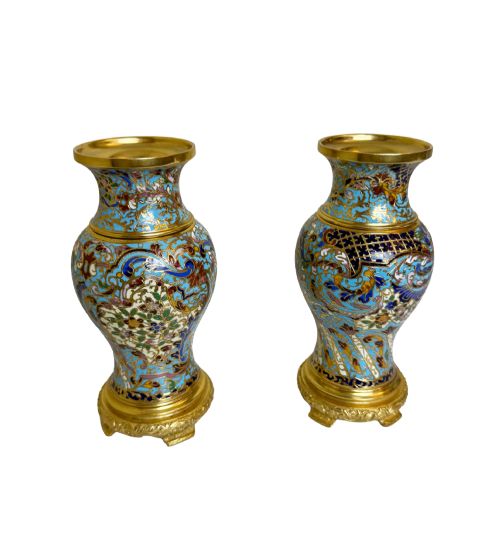
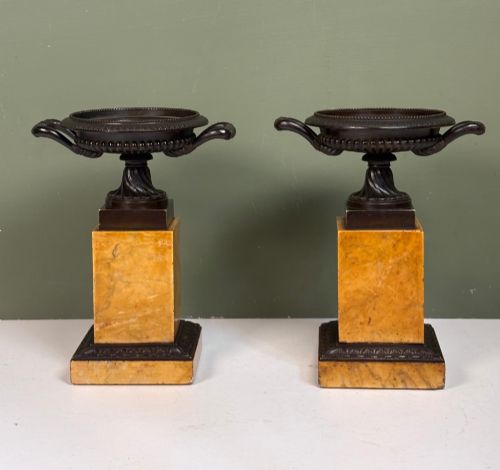
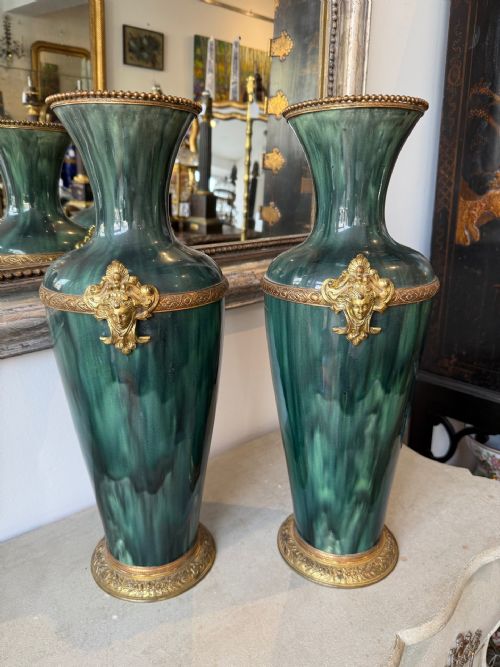
Antique french mantel vases encompass a variety of decorative urns, tazza vases, and clock garniture sets designed to sit upon a fireplace mantel. These pieces primarily date from the nineteenth century, ranging from earlier Empire styles to later Art Nouveau designs.
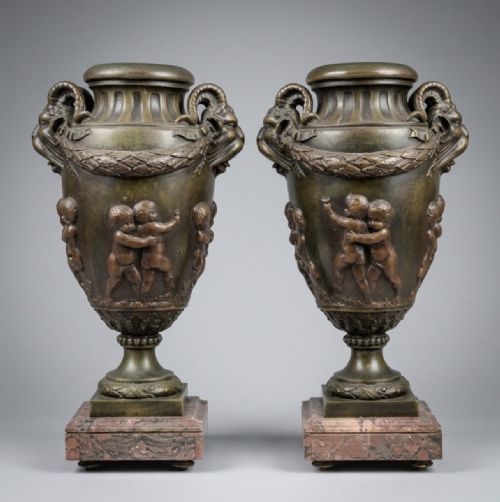
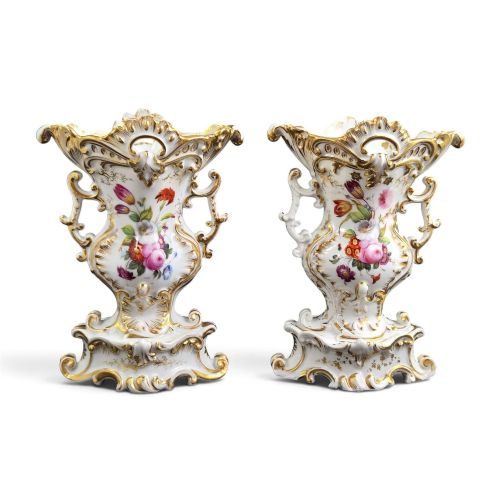
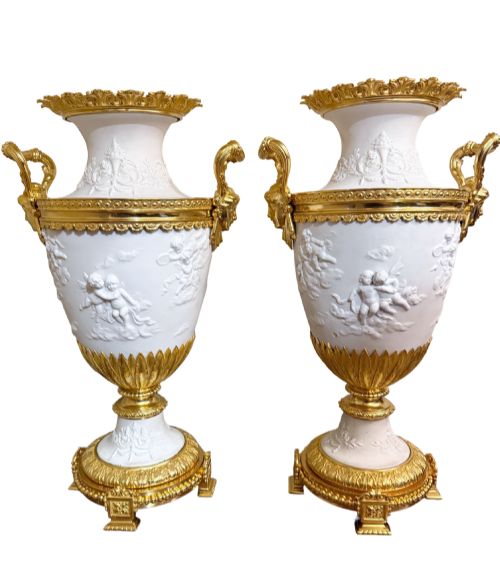
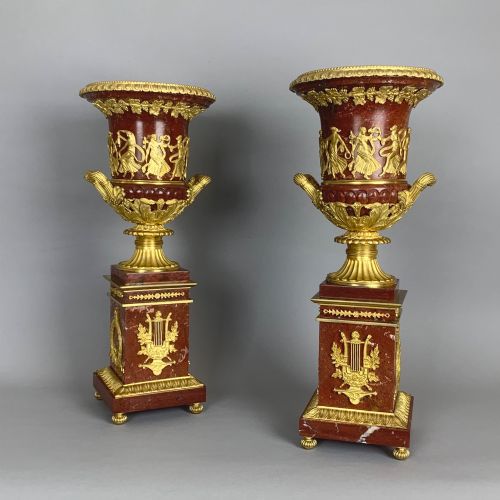
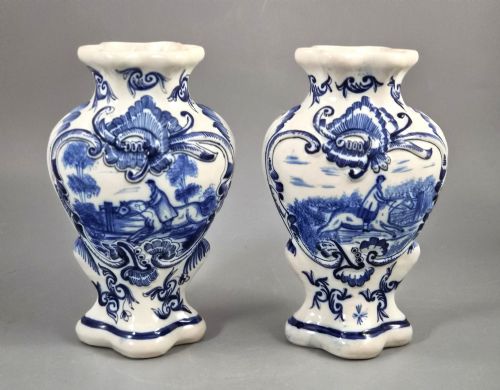
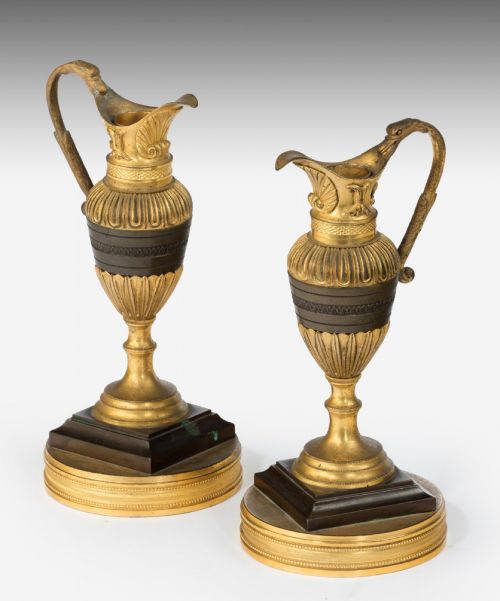
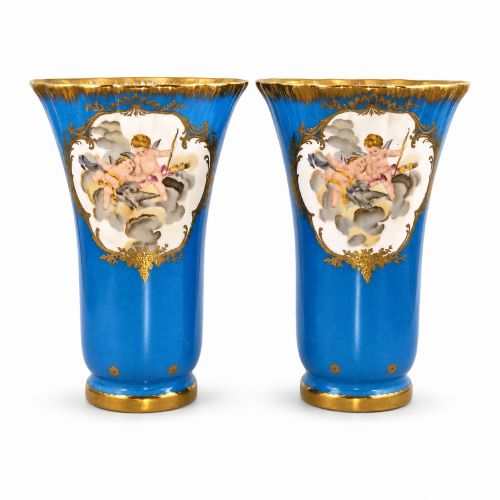
Buyers frequently encounter pairs of porcelain or bronze vessels decorated with hand-painted scenes, floral motifs, or classical figures. Many examples incorporate architectural elements such as stepped marble bases or gilt bronze mounts.
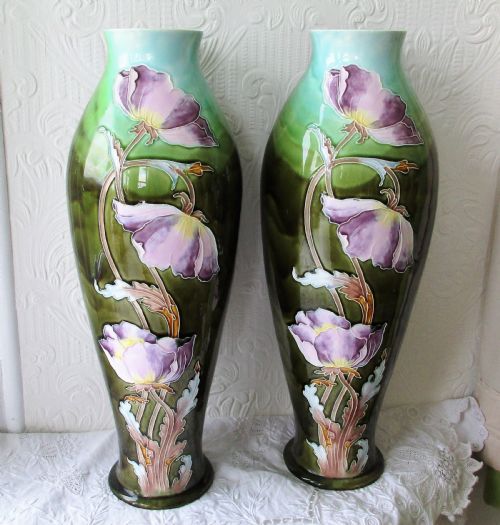
The selection includes specialised forms like Old Paris porcelain, faience earthenware from Desvres, and opaline glass table lustres. These items often served as centrepieces or flanked mantel clocks in formal nineteenth-century interiors.
Materials and construction methods
Makers utilised a combination of hard-paste porcelain, cast bronze, or spelter, frequently enhanced with ormolu, gilt bronze, or gold leaf. Stoneware and faience also appear, often finished with hand-painted enamel or raised floral decoration.
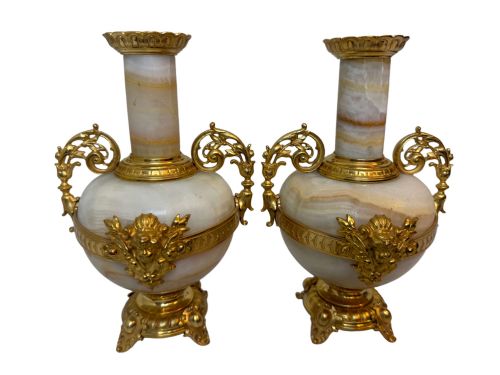
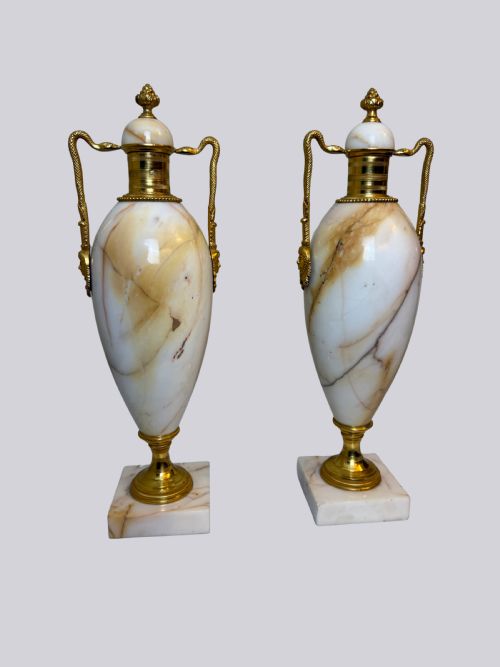
Foundational elements commonly relied on natural materials such as white onyx, green marble, or standard marble to provide weight and stability for the metal and ceramic bodies.
The listings feature diverse nineteenth-century materials, combining porcelain, gilt bronze, spelter, and marble across French Rococo and Neoclassical revival styles.
Distinguishing quality and craftsmanship
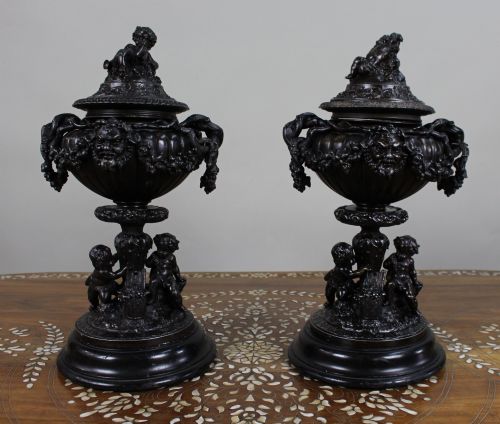
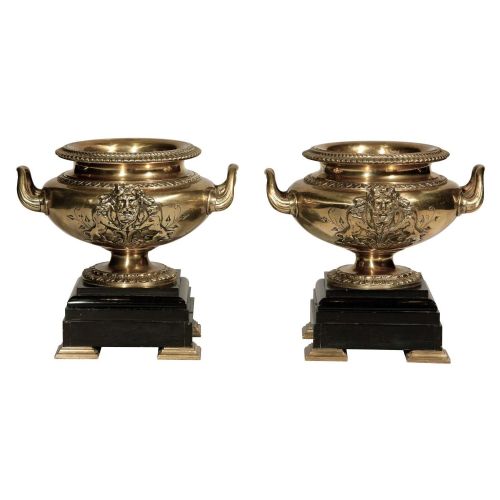
The refinement of the casting in the bronze or ormolu mounts separates standard production from superior work, particularly in the crispness of chased details like Bacchic masks and putti. Hand-painted ceramic elements show variation in the precision of floral brushwork and the vibrancy of enamel colours.
The integration of mixed media, such as fitted bronze handles on fine porcelain or well-turned marble plinths, dictates the overall architectural harmony of the piece.
Jacob Petit·Fourmaintraux Courquin·Samson Paris·Robert T Lallement·Daum Freres
The Antique French Mantel Vases Glossary
- Garniture set
- A coordinated group of three or more ornamental objects designed to be displayed together on a mantelpiece. This typically comprises a central clock flanked by matching vases or urns.
- Ormolu
- Finely ground metallic mercury and gold applied to bronze, creating a rich golden finish found on nineteenth-century mounts. The technique creates a durable decorative surface that complements porcelain and marble bodies.
- Campana urn
- A bell-shaped vessel with a flaring rim and a footed base, often styled after classical antiquity. These forms appear frequently in bronze and spelter across nineteenth-century French metalwork.
- Faience
- Tin-glazed earthenware produced in European potteries, notably at centres like Desvres. This ceramic body supports colourful hand-painted glazes beneath a bright surface finish.
- Cassolette
- A decorative vase or urn featuring a reversible lid that can function either as a closed vessel or a container for burning perfumes. Nineteenth-century examples often utilise green marble paired with ormolu mounts.
Antique French Mantel Vases: Frequently Asked Questions
What is a clock garniture set?
A clock garniture set consists of a central mantel clock accompanied by two matching vases or urns designed to create a balanced display.
These coordinated pieces were manufactured as a single decorative ensemble for nineteenth-century reception rooms.
How do I identify Old Paris porcelain?
Old Paris porcelain refers to the diverse ceramic wares produced by various independent workshops operating in and around Paris during the nineteenth century.
These pieces are typically characterised by bright hand-painted floral designs, gilt accents, and unmarked white porcelain bodies.
What is spelter and how does it differ from bronze?
Spelter is a zinc-based alloy that served as a more affordable, lighter alternative to bronze for casting decorative ornaments and urn bases.
While bronze offers greater strength and a deeper natural patina, spelter objects were frequently given a bronze-toned finish to mimic the heavier metal.
How were mantel vases used historically?
Mantel vases functioned primarily as decorative ornaments placed upon fireplace mantels to display floral arrangements or simply to showcase wealth and taste.
When paired with clocks or candelabra, they formed part of a balanced decorative scheme that anchored the formal interior fireplace.