
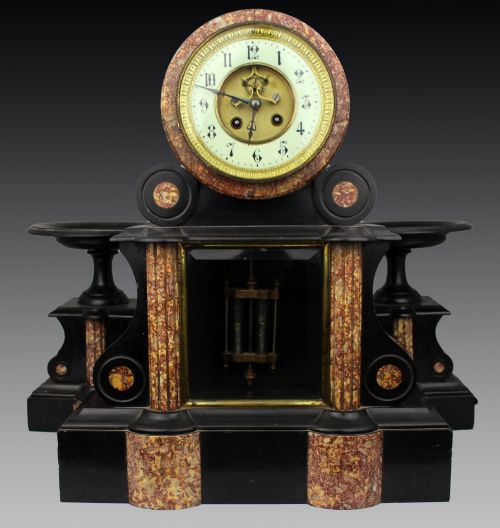
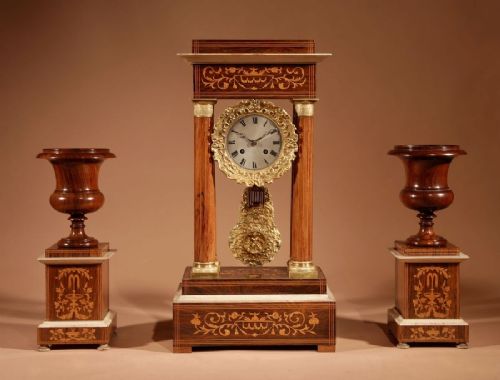
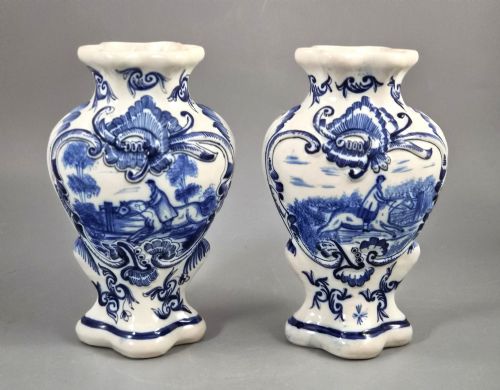
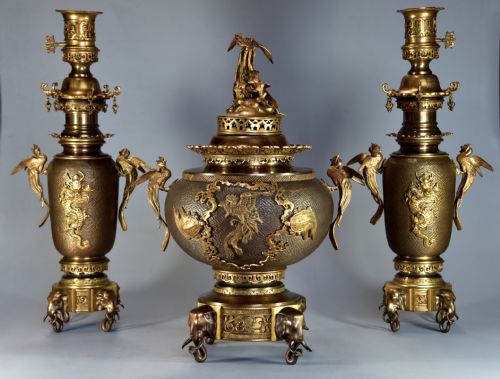
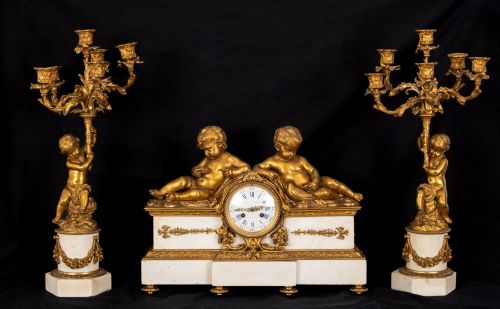
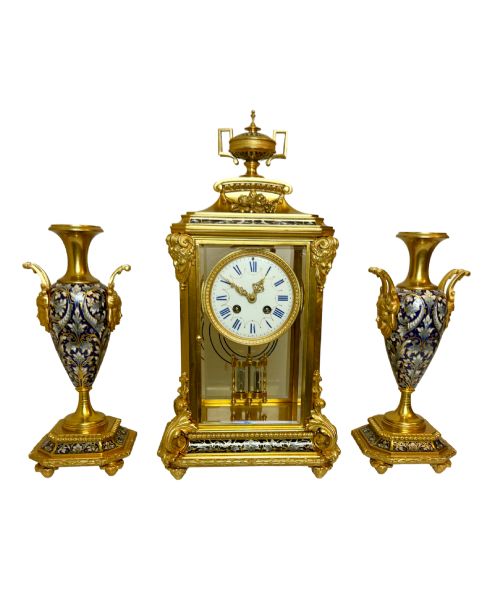
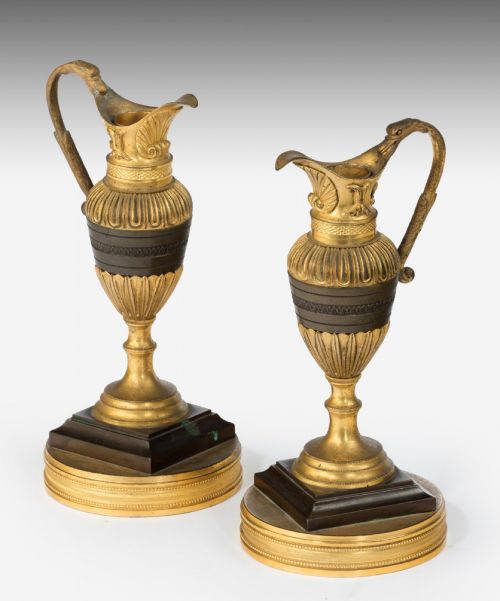
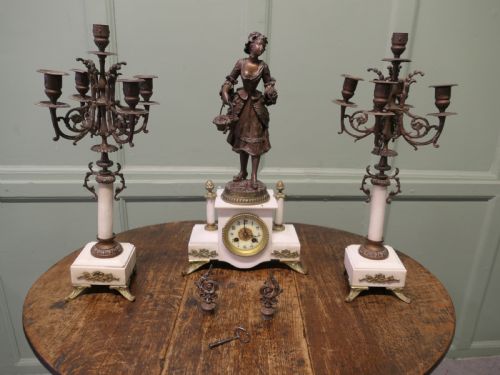

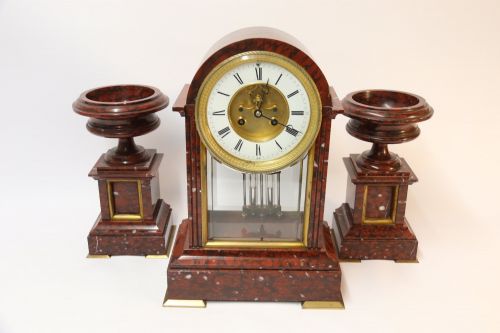
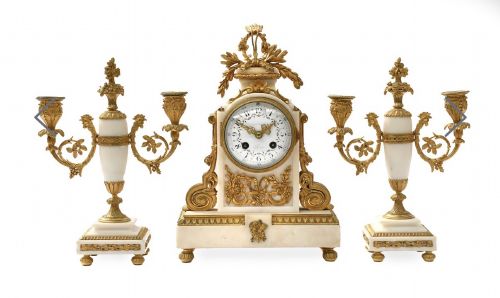

Antique French Mantel Set
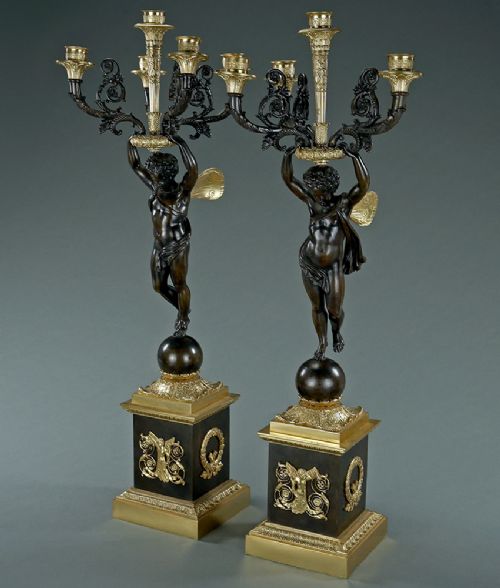
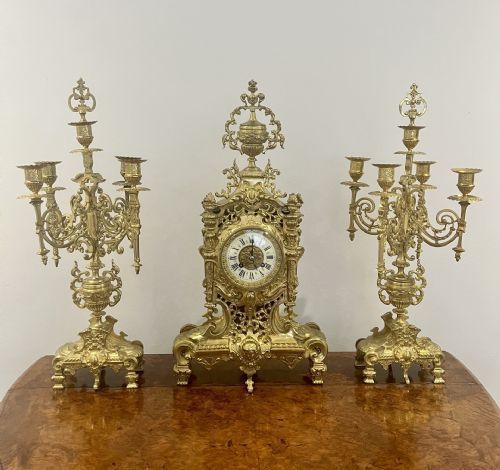
An antique french mantel set brings together a striking central clock and matching side pieces like urns, candelabras, or vases to anchor a room.
Antique French Mantel Set
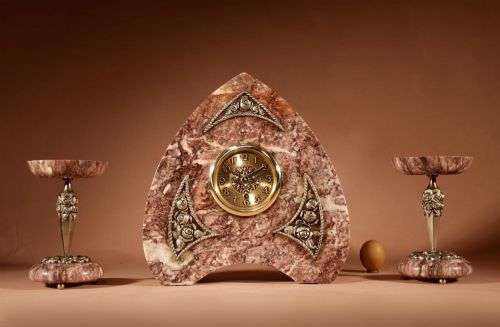
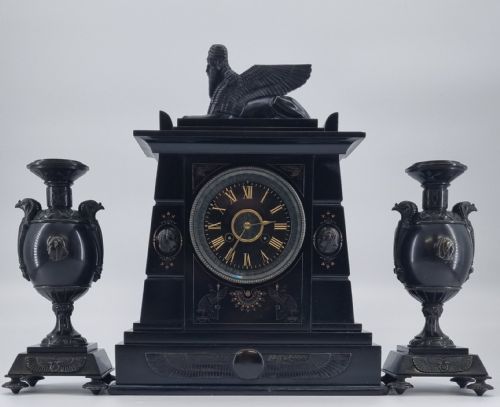
An antique french mantel set is a coordinated ensemble designed to sit harmoniously upon a fireplace mantel or console, featuring a central clock accompanied by matching side ornaments.
The most common configurations found here pair a substantial clock in marble, bronze, or ormolu with matching candelabra, urns, or vases following revival styles such as Louis XVI, Empire, and Art Deco.
Originating predominantly across the nineteenth and early twentieth centuries, these three-piece or multi-piece sets combine practical timekeeping with balanced decorative symmetry.
Materials and Construction
Maker workshops utilised dense stones such as black, white, and block marble alongside onyx as heavy foundational structures for both clocks and matching garniture pieces.
Decorative metal elements relied heavily on cast bronze finished with mercury gilding to produce ormolu, complemented by patinated bronze, brass, and gilt metal details.
Surface ornamentation often incorporated fired enamel dials, champleve enamel panels, hand-painted porcelain inserts, and glass domes to protect delicate components.
Current listings feature nineteenth-century and early twentieth-century examples spanning Louis XVI revival, Art Deco, and Neoclassical styles.
Assessing Quality
The distinction between ordinary and superior pieces rests upon the crispness of the bronze casting and the depth of the ormolu gilding rather than surface shine alone.
Master clockmakers and reputable bronze-founders integrated robust mechanical movements that matched the weight and ambition of the surrounding sculptural housings.
Cohesion across the garniture set determines overall merit, where matching proportions, uniform patination, and identical material stock indicate a unified creation.
Japy Freres·Samuel Marti·Henry Dasson·Fourmaintraux Courquin
The Antique French Mantel Set Glossary
- Garniture
- A set of ornamental objects designed to match and complement a central piece like a clock. These side pieces frequently take the form of urns, vases, or candelabras.
- Ormolu
- Finely ground high-carat gold applied to a bronze base using a mercury amalgamation technique. This historic process yields a durable, warm golden lustre.
- Champleve
- An enamelling technique where troughs or cells are hollowed out of a metal surface and filled with vitreous enamel before firing.
- Candelabra
- Branched candlesticks designed to hold multiple taper candles. In these sets, they balance the height and mass of the central clock.
- Portico clock
- A distinct clock style featuring a architectural case supported by four columns. They often appear as the centrepiece of elaborate garniture arrangements.
Antique French Mantel Set: Frequently Asked Questions
What is included in a clock garniture?
A standard garniture set consists of a central mantel clock accompanied by two matching side pieces, which are typically candelabras, vases, urns, or ewers.
These matching side pieces repeat the motifs, materials, and metals of the clock to create a balanced decorative display across a mantelpiece.
How do I style a mantel set?
Position the central clock in the exact middle of the mantelpiece to act as the primary visual anchor for the space.
Place the matching side pieces symmetrically on either side of the clock to maintain the classical balance intended by the maker.
How do I identify the period?
Examine the materials and design motifs, as neoclassical and empire sets favour strict symmetry and ormolu, while later nineteenth-century pieces embrace ornate Victorian brass and porcelain.
Art Deco sets from the twentieth century introduce streamlined geometric forms, contrasting block marbles, and stylised metalwork.
Were these sets made in matched pairs?
The central clock and its flanking side pieces were conceived and produced together by the same workshop or foundry to ensure stylistic harmony.
Using identical casting techniques, stone blocks, and gilt finishes guaranteed that the components formed a single integrated suite.