
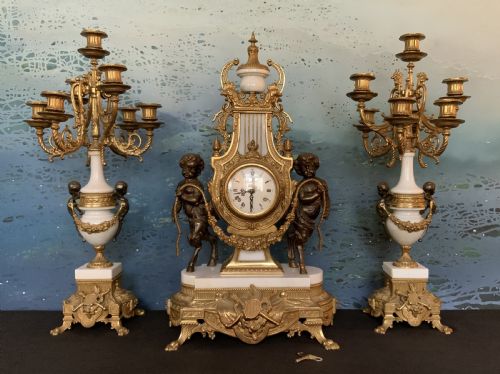


Gilt Bronze French Garniture
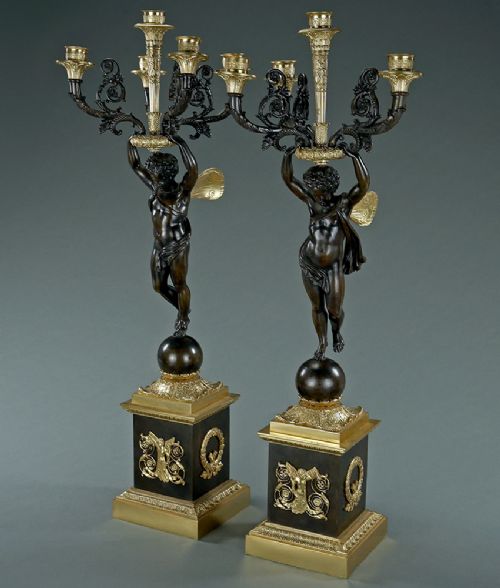
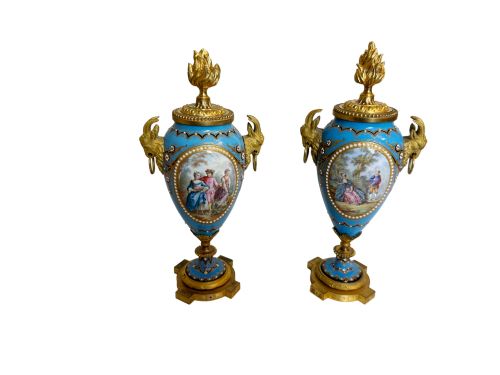
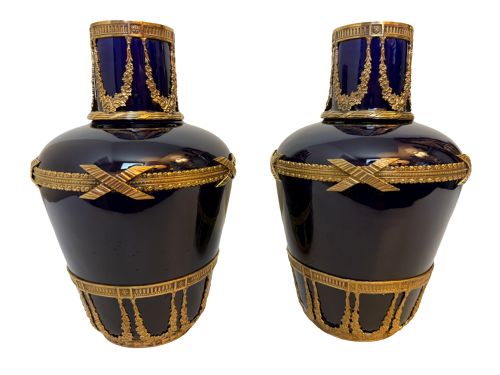
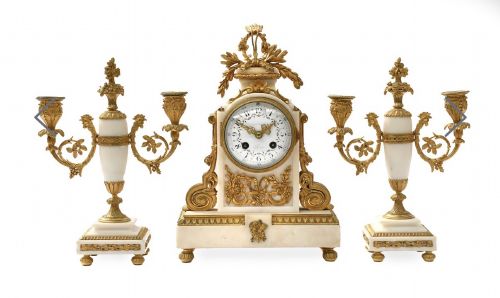
When you seek a gilt bronze french garniture, you encounter matched mantel sets of clocks, urns, and candelabra designed to unify a room.
Gilt Bronze French Garniture
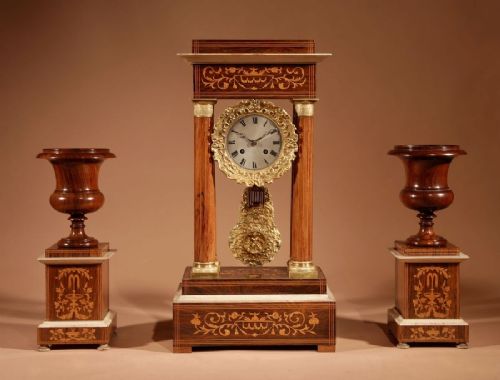
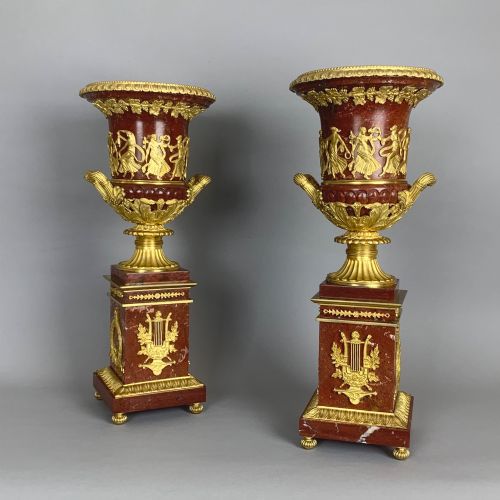
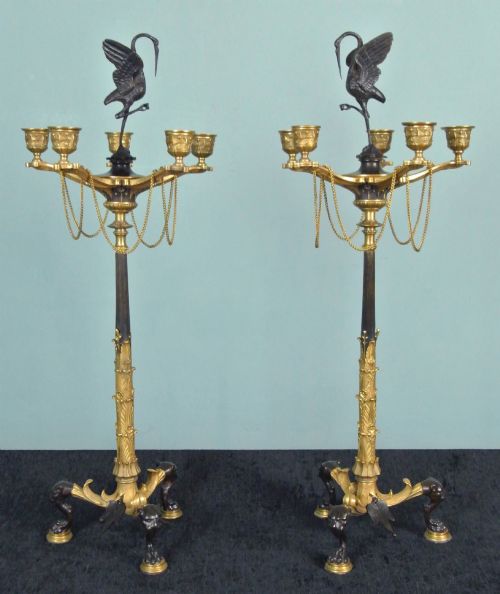
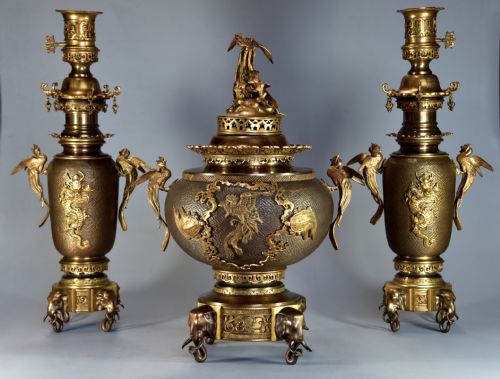
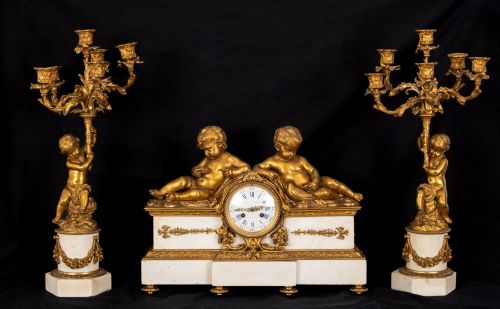
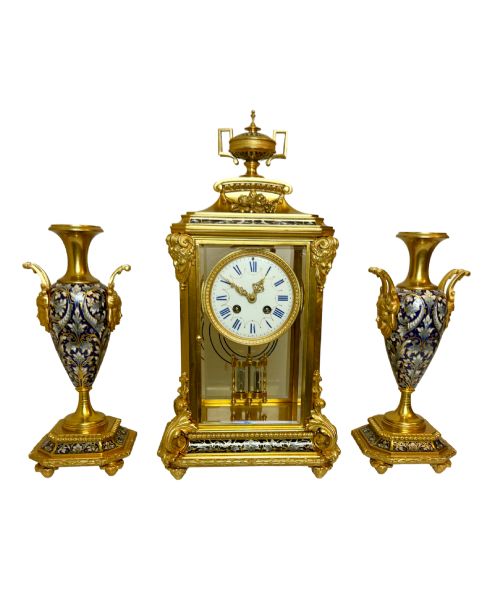
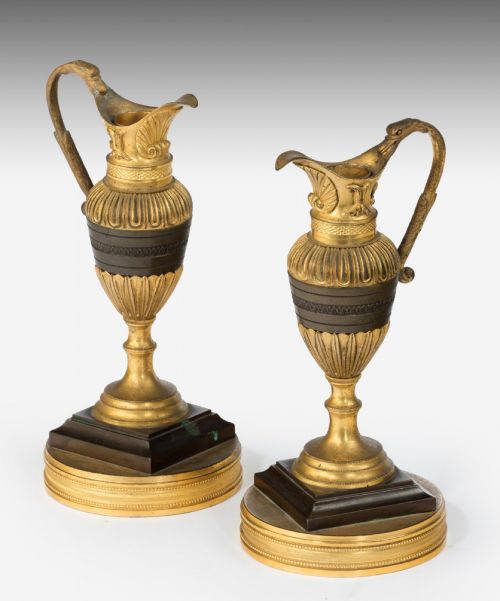
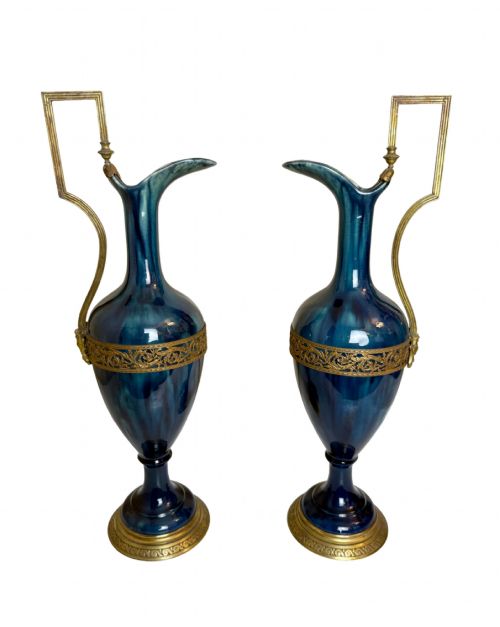
A gilt bronze french garniture comprises a central mantel clock accompanied by matching side pieces such as candelabra, urns, or cassolettes, forming a unified decorative set for a room. You will most commonly encounter 19th-century examples featuring combinations of cast metal and stone, produced during periods of revivalist enthusiasm.
The configurations vary from portico clock sets and lyre clocks flanked by matching vases to elaborate multi-light candelabra. These matched assemblies reflect the nineteenth-century preference for symmetrical arrangement on salon mantelpieces and console tables.
The core components bridge functional timekeeping with ornamental display, utilising matching motifs across every piece in the set. Surviving examples demonstrate how these suites were conceived as a single decorative statement rather than assembled piecemeal.
What varies in quality
Integration between the clock movements and their decorative cases also defines the tier of production. Finer sets use robust eight-day striking movements housed within heavy marble or onyx bodies that match the accompanying side urns in stone selection and mount quality.
The listings feature gilt bronze and ormolu combined with marble, onyx, porcelain, and glass across 19th-century French revival styles.
Barbedienne·Henry Dasson
The Gilt Bronze French Garniture Glossary
- Gilt bronze
- Metal cast and coated with a layer of gold, providing a bright decorative finish. This term is frequently used interchangeably with ormolu in nineteenth-century French pieces.
- Ormolu
- Finely ground high-carat gold amalgamated with mercury and applied to bronze through heat gilding. The process creates a durable, luminous golden surface characteristic of fine decorative objects.
- Cassolette
- A decorative vase featuring a reversible lid that transforms the piece from an urn into a candleholder or burner. These dual-design items often form the lateral elements of a garniture set.
- Garniture
- A set of matching ornamental objects designed for display together, typically comprising a clock flanked by two vases, urns, or candelabra. They were placed on mantelpieces or cabinets.
- Champlevé
- An enamelling technique where troughs or cells are hollowed out of the metal surface and filled with vitreous enamel powder before firing. The resulting coloured patterns sit flush with the metal partitions.
Gilt Bronze French Garniture: Frequently Asked Questions
What is a french garniture?
A french garniture is a matched set of decorative objects designed to be displayed together on a mantelpiece or console. It typically consists of a central clock accompanied by two matching side pieces such as candelabra, urns, or vases.
These suites were created to achieve visual symmetry in nineteenth-century interiors. The pieces share identical stylistic motifs, materials, and finishing techniques to present a unified composition.
How do you style a garniture set?
Styling a garniture set involves placing the central clock in the middle of a mantelpiece, sideboard, or table. The matching side pieces, such as candelabra or cassolettes, are positioned symmetrically on either side to frame the clock.
Because these sets are visually weighty, they require a stable surface with sufficient depth. They function best as the primary focal point of a room's architectural fireplace surround.
What periods do these pieces come from?
The listings span the nineteenth and early twentieth centuries, capturing various revival styles popular in France. You will find pieces from the mid-nineteenth century through the late Victorian era and into the early nineteen-hundreds.
These objects reflect historical revivals ranging from Louis XVI and French Empire aesthetics to Japonisme and Rococo influences. Each period brought specific material combinations, such as white marble, onyx, and polychrome porcelain.
Are the clock movements original?
Most surviving garniture clocks retain their period eight-day mechanical movements driven by springs or pendulums. These movements often require professional setting and occasional servicing to maintain accurate timekeeping.
Evaluating a set involves noting whether the clock mechanism matches the age and quality of the bronze case. The presence of winding keys and bell-striking components indicates a complete operating system.