


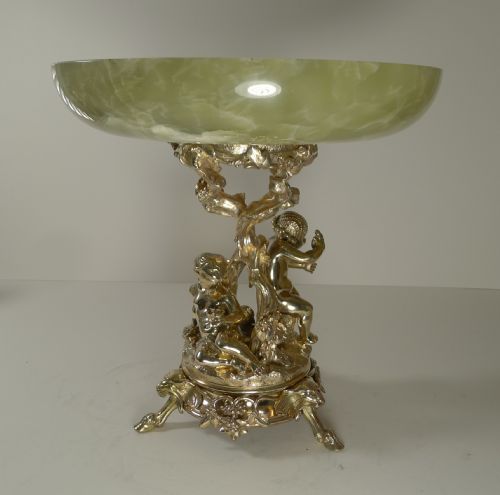


Ormolu Centrepiece Compote Bowl
An ormolu centrepiece compote bowl brings opulent nineteenth-century display to a dining table or console through gleaming gilt metal and decorative glass or porcelain.
Ormolu Centrepiece Compote Bowl
These decorative objects function as striking focal points for formal tables, taking the form of open bowls, tazzas, and comports raised on pedestals. When searching for an ormolu centrepiece compote bowl, you will primarily encounter nineteenth-century French designs alongside Regency and turn-of-the-century examples.
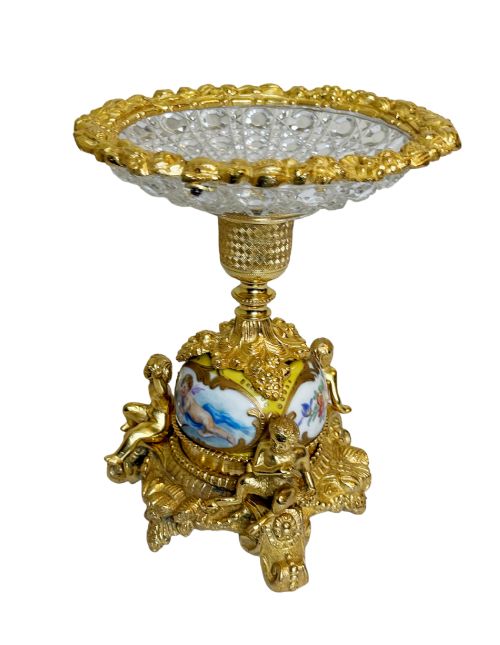
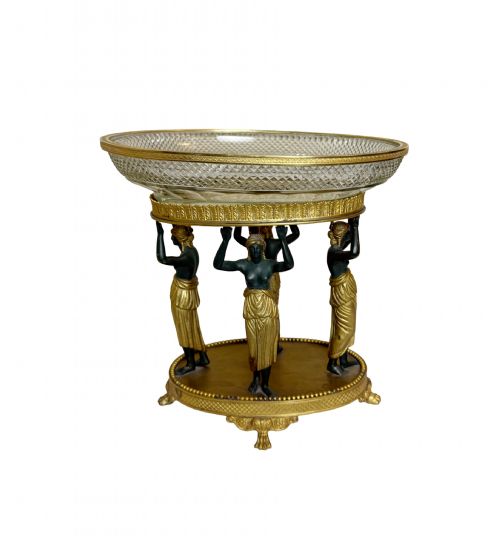
The objects span varied styles including French Rococo Revival, Empire, and Napoleon III, frequently incorporating figural supports such as cherubs or mermen. Materials range widely across the listings, combining cast metals with porcelain, enamel, onyx, marble, and cut crystal.
Pedestal bowls and tazzas serve both as standalone decorative works and as part of garniture sets paired with matching vases or urns. Their substantial presence reflects the grand entertaining habits of the nineteenth century, utilising elaborate mounts and pedestals to elevate the central vessel.
Materials and construction methods
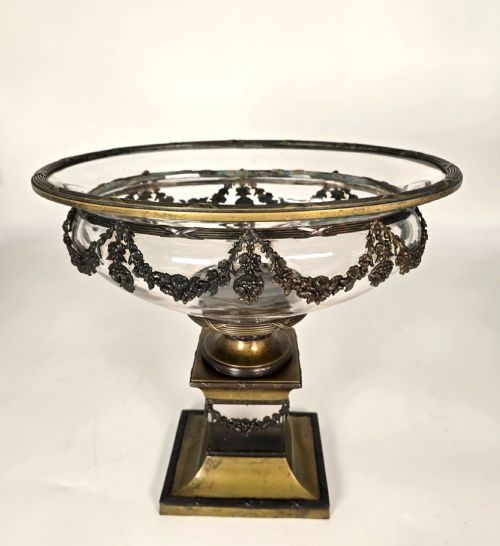
The construction of these pieces relies on the union of cast bronze, often gilded to create ormolu, with precious infills such as cut crystal, Bohemian glass, and Sevres style porcelain. Artisans employed detailed casting and chasing techniques to produce crisp mounts featuring classical motifs, cherubs, and scrolling foliage.
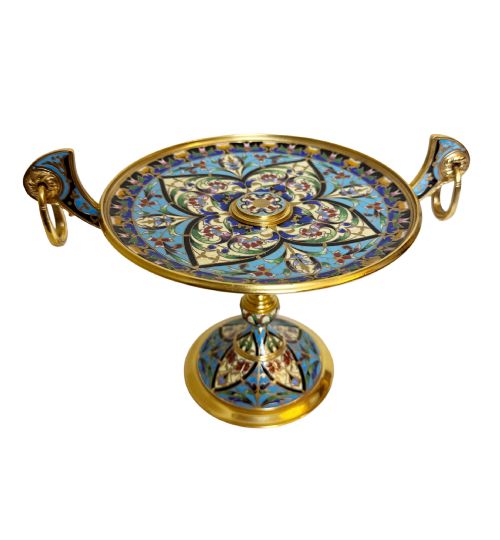
Stonework and minerals including green onyx, marble, malachite, and Blue John provide solid plinths and bodies that contrast with the lustrous gilt metal. Enamelling techniques like champlevé add vibrant colour to the bronze frames, securing glass or ceramic inserts with precise mechanical fittings.
Listings feature pieces spanning the Regency period through to nineteen hundred, utilising gilt bronze, Sevres style porcelain, and cut crystal.
Judging craftsmanship and design
Quality in these decorative vessels rests upon the crispness of the bronze casting and the depth of the gilding, where finer examples display sharp chisel work and sustained brilliance. The integration of materials dictates value, distinguishing pieces with hand-painted porcelain or flawless cut crystal from simpler glass alternatives.
The sophistication of the figural work and the weight of the supporting bronze structure elevate a piece, separating standard decorative items from important signed works. Material rarity, such as the inclusion of Blue John or malachite alongside multi-part garnitures, defines the upper tier of the range.
Christofle Paris·Samson Porcelain·Sevres
The Ormolu Centrepiece Compote Bowl Glossary
- Ormolu
- Gilded bronze, produced by applying a mercury-gilding amalgam or gold leaf to a cast bronze base. This technique creates a rich, durable golden surface characteristic of luxury objects from the eighteenth and nineteenth centuries.
- Tazza
- A shallow bowl or saucer mounted on a stem and foot, designed for display or serving. Originating in the Renaissance, the form enjoyed a major revival during the nineteenth century.
- Comport
- A pedestal dish used for holding fruit or sweetmeats at dessert. In nineteenth-century dining, these formed part of elaborate tablescapes alongside central bowls.
- Champlevé
- An enamelling technique where troughs or cells are hollowed out of a metal surface and filled with vitreous enamel powder before firing. The resulting coloured patterns sit flush with the surrounding metal borders.
- Garniture
- A set of three or more matching decorative objects, typically comprising a central vase or bowl flanked by two smaller pieces. These sets were manufactured to adorn mantelpieces and large furniture tops.
Ormolu Centrepiece Compote Bowl: Frequently Asked Questions
How do I style an ormolu centrepiece compote bowl?
Place the bowl centrally on a large dining table, mahogany sideboard, or decorative console to allow its gilded mounts and glass or porcelain body to catch the light.
Keep surrounding items minimal so the pedestal form and figural details remain the primary focus of the room.
How can I date my centrepiece bowl?
Examine the materials, casting quality, and stylistic revival cues, such as Napoleon III or French Empire motifs, which typically point to the nineteenth century.
Maker marks, where present, help narrow down the production era to specific decades between eighteen hundred and nineteen hundred.
Are these bowls suitable for serving food?
Most antique pieces featuring delicate gilt bronze mounts, champleve enamel, or porous stones are best reserved for dry display.
Frequent washing can damage the fragile mercury gilding and moisture may harm vulnerable elements like onyx or unglazed porcelain.