



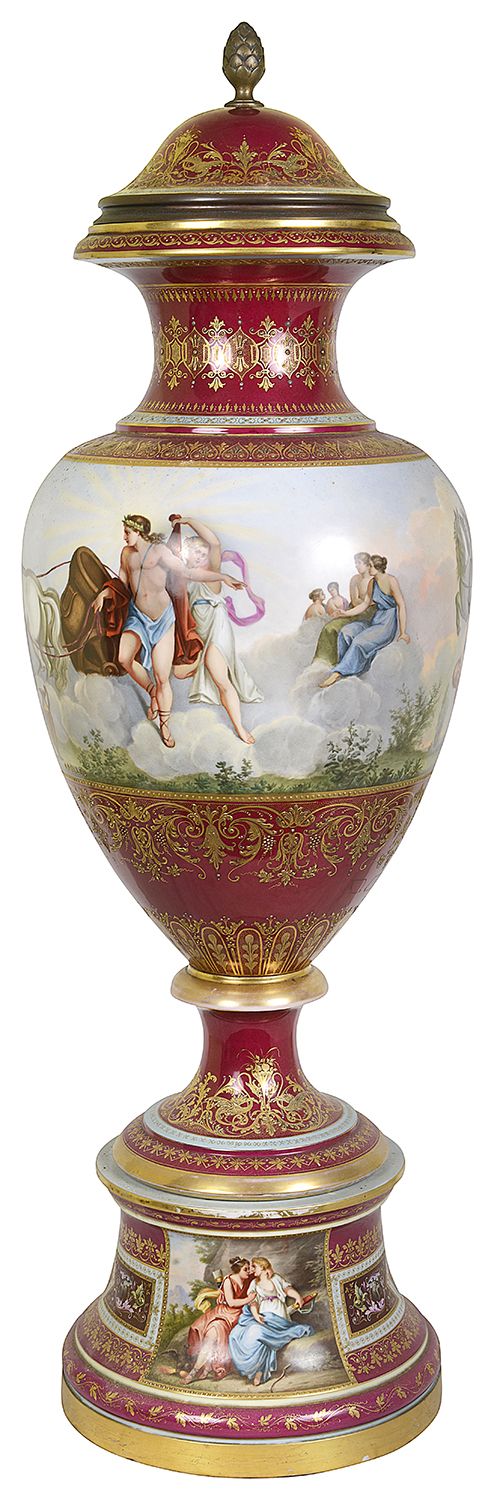


Gilded Porcelain Pedestal Urns
These gilded porcelain pedestal urns bring neoclassical and Victorian presence to a room, combining fine ceramics with rich surface gilding.
Gilded Porcelain Pedestal Urns
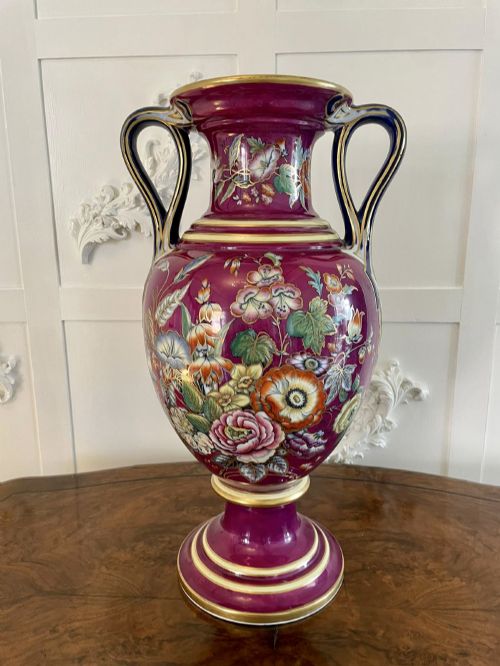
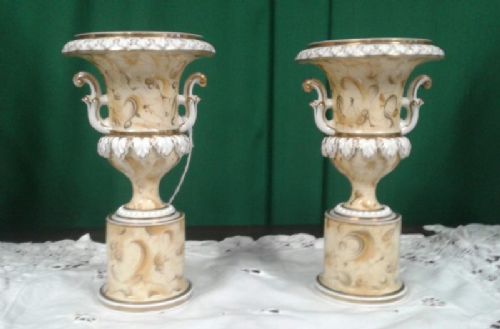
When you search for gilded porcelain pedestal urns, you encounter substantial decorative vessels designed to stand on bases or pedestals. These pieces draw heavily on neoclassical, Empire, and Victorian design traditions, often taking the form of campana vases, lidded urns, or garniture sets.
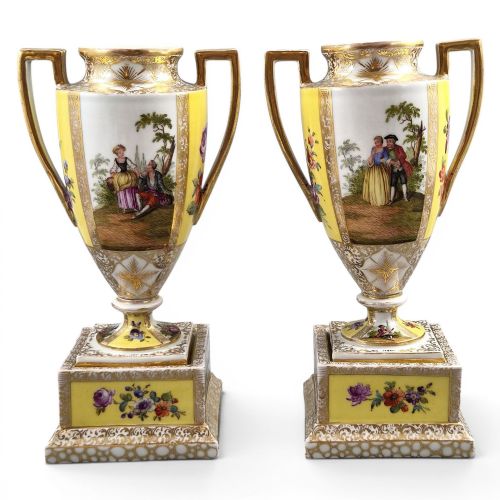
The versions you meet most frequently on this page originate from the nineteenth century, including notable works from English factories like Royal Worcester and continental houses such as Vienna and Paris porcelain makers. Forms range from twin-handled garden-style jardinières to tall lidded vessels decorated with painted scenes or delicate floral motifs.
Many items display classical influence through figural or animal supports, such as dolphin bases, whilst others lean towards French Rococo Revival styles with ornate scrolling handles. Whether acquired as isolated display pieces or matching pairs, these urns command visual attention through scale and surface detail.
How they were made
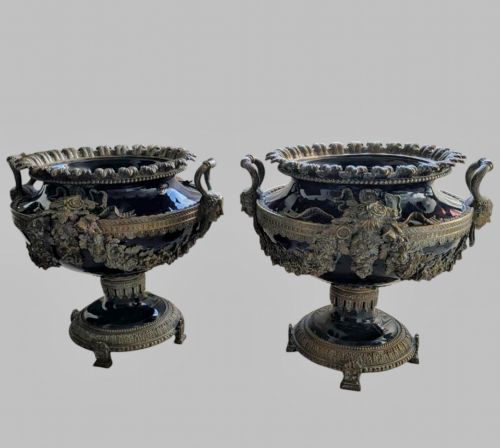
The foundation of these pieces rests on hard-paste porcelain or porcelaneous bodies, shaped into complex vessels like campana vases and lidded urns often incorporating distinct pedestal feet. Potters utilised skilled moulding and turning techniques to achieve balanced forms, sometimes adding specialised components such as ormolu mounts or twin handles.
Surface decoration combined hand-painted enamel scenes or botanical studies with extensive application of gold leaf, gilt, and gilding. Artisans fired the ceramic bases multiple times to set the enamel colours and secure the metallic lustre, frequently highlighting handles, rims, and classical reliefs with bright gold highlights.
Several Victorian pieces proudly depict hand-painted cock pheasants and storks, bringing eccentric feathered charm to classical urns.
What varies in quality
The standard of painting on the porcelain body sets the finest examples apart from simpler production ware, particularly where artists rendered detailed landscapes, birds, or classical figures by hand. Crisp definition in the moulded handles, feet, and relief work indicates a higher grade of manufacture from established factories.
The richness and preservation of the gilding further distinguish the range, with dense gold leaf and carefully chased gilt bronze or ormolu mounts retaining greater visual impact than thinner surface washes. Complete sets, matching pairs, and surviving covers significantly elevate the integrity of individual pieces.
Helena Wolfsohn Dresden·Royal Worcester·Hadley's Worcester·Doulton Burslem
The Gilded Porcelain Pedestal Urns Glossary
- Campana
- A bell-shaped vase form popular in classical antiquity and revived during the neoclassical and Victorian periods. These vessels typically feature a wide flared rim and stand on a short pedestal foot.
- Garniture
- A set of three or more ornamental vases or urns designed to be displayed together on a mantelpiece or sideboard. They often share a central larger urn flanked by matching smaller vessels.
- Ormolu
- Finely ground high-carat gold-mercury amalgam applied to a bronze object, known as gilt bronze. It provides a rich metallic mount for porcelain bodies, particularly in French Empire pieces.
- Pedestal
- An architectural base that elevates an urn or vase above the supporting surface. In ceramic pieces, this form is integrated directly into the lower body of the vessel.
- Porcelaneous
- A ceramic material that shares the hard, dense qualities of true porcelain but possesses a slightly different clay composition. It forms a durable body for large nineteenth-century display vessels.
Gilded Porcelain Pedestal Urns: Frequently Asked Questions
What is a pedestal urn?
A pedestal urn is a decorative vessel raised on a distinct base or foot, designed primarily for display rather than holding cut flowers. These pieces often feature handles and lids, drawing on classical forms.
In nineteenth-century interiors, such urns occupied prominent positions on mantelpieces, pedestals, or large pieces of furniture. Their height and elevated design gave them a monumental presence in a room.
How do I care for gilt porcelain?
Gilt porcelain requires gentle treatment to protect both the delicate enamel painting and the fragile gold leaf surfaces. Dust the piece regularly with a soft, dry brush and avoid chemical cleaning agents.
Water and harsh cloths can wear away the gilding over time, particularly on raised relief areas. Handle the urn by its main body rather than relying solely on decorative handles or lids.
Were these urns meant to hold water?
While manufactured from impervious ceramic materials, most nineteenth-century decorative urns served an ornamental rather than a practical purpose. Many were created as garniture sets or mantel ornaments.
Some forms, such as jardinières and pot pourri vessels, were designed to accommodate plants or dried scents, but interior moisture can occasionally affect older glazes and internal finishes.
How do I identify factory marks?
Factories stamped, painted, or impressed their specific logos, ciphers, and registration numbers directly onto the unglazed base of the porcelain. These marks often include specific date codes or pattern numbers.
Consulting standard ceramic reference guides helps match these symbols to particular makers, active decades, and decorating studios, though some Victorian pieces carry retailer marks instead.