
Antique French Benches
Antique french benches encompass a diverse group of seating forms from country refectories to gilt salons.
Antique French Benches
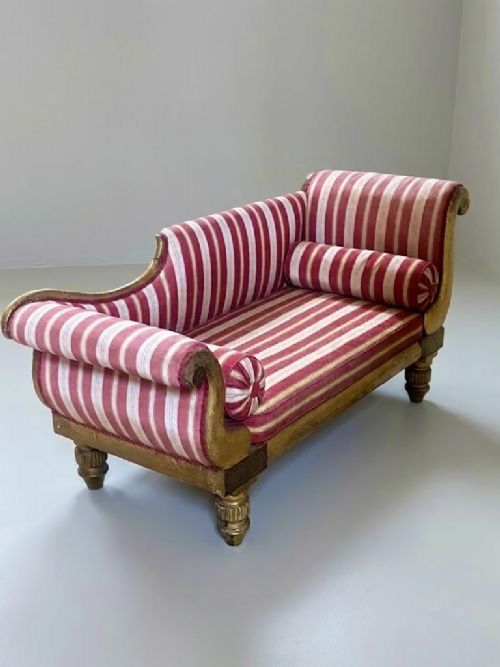
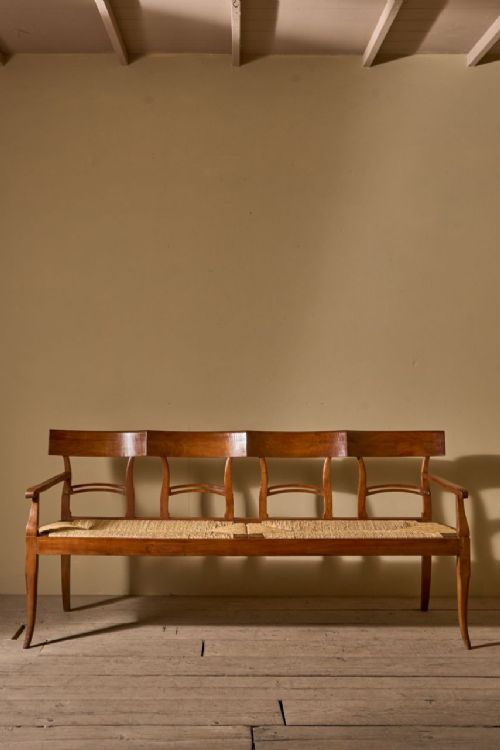
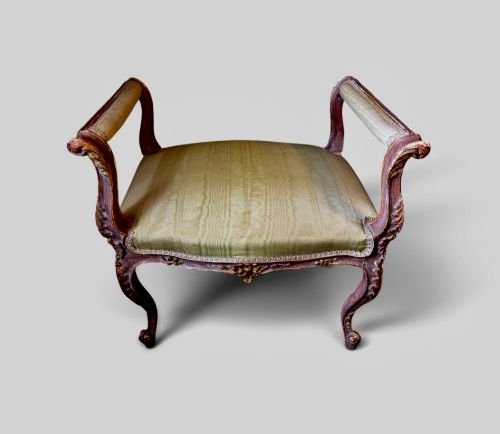
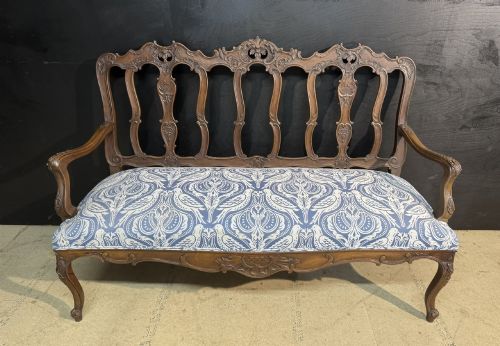
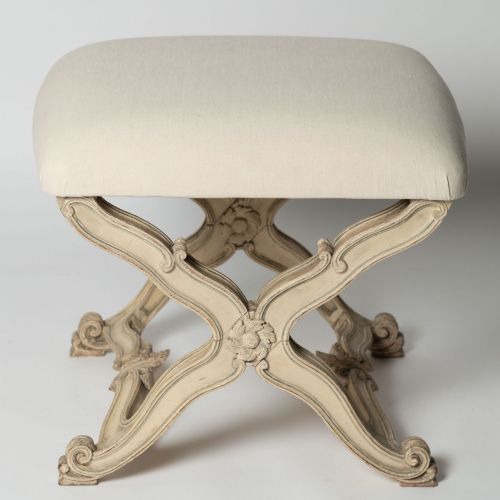
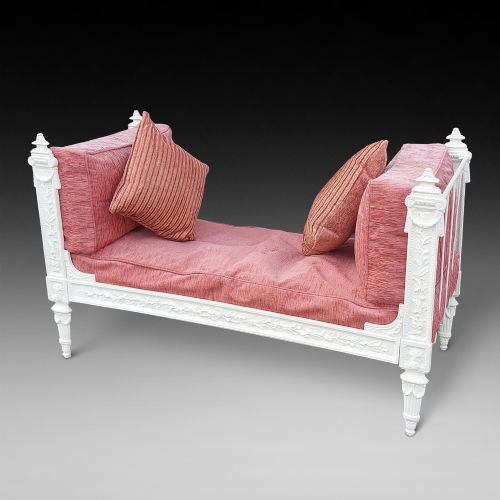
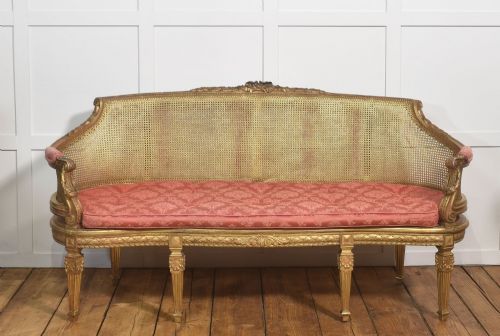
When you search for antique french benches, you encounter seating forms ranging from rustic country tables and hall benches to gilt salon daybeds and window stools. The selection spans distinct regional expressions and formal court revivals.
Provincial pieces often appear in elm, oak, cherrywood, or chestnut, shaped for farmhouse kitchens and refectories. Formal examples typically employ walnut, mahogany, or giltwood with classical ornamentation.
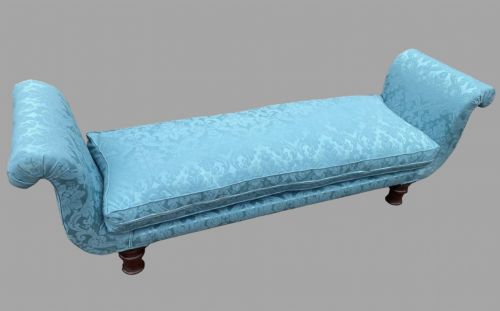
The category incorporates daybeds, banquettes, and window seats alongside traditional long benches. These pieces originate across the nineteenth and early twentieth centuries.
How they were made
Makers utilised timber construction combining regional hardwoods like walnut, oak, elm, and cherrywood for structural frames. Joinery relied on traditional pegging and mortise techniques.
Finishes incorporate hand-applied paint, ebonising, and parcel gilding alongside exposed natural wood surfaces. Seating surfaces feature woven rush, cane panels, or traditional upholstery with silk fabrics.
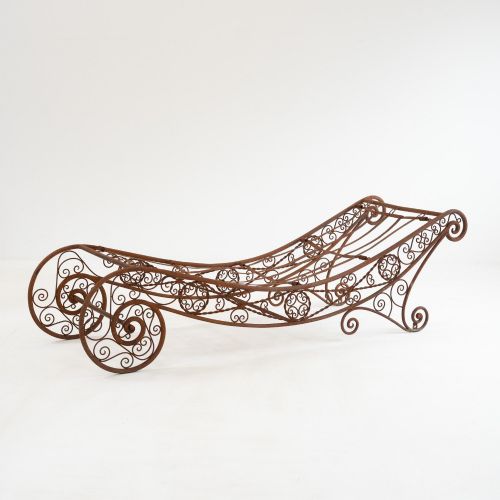
Outdoor iterations employ wrought iron, cast iron, and faux bois concrete or metal frameworks. These elements withstand garden environments while maintaining decorative form.
Milking stools offer miniature rustic charm with original paint finishes.
What varies in quality
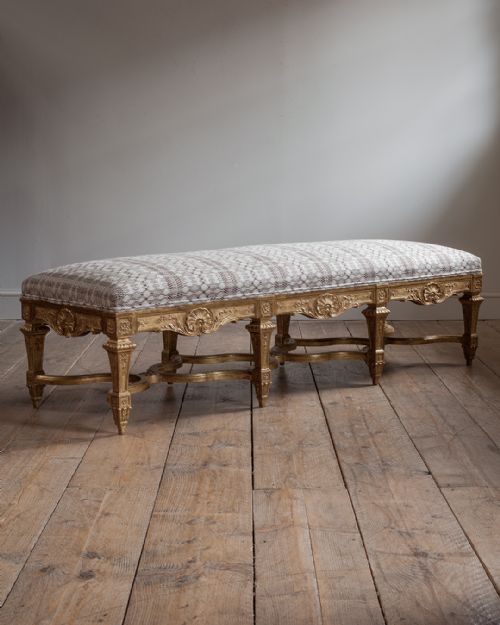
The caliber of carving and surface decoration distinguishes standard utility seating from high-style salon pieces. Crisp detailing on giltwood frames and retained original paint surfaces elevate the standing of a piece.
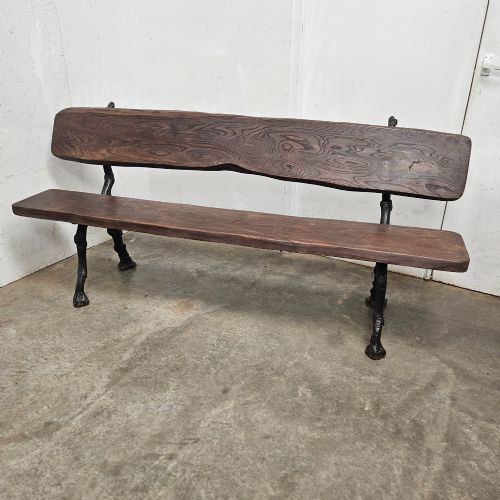
Timber selection and structural integrity govern the worth of provincial tables and hall benches. Dense fruitwoods and sound joinery indicate superior workshop production.
The Antique French Benches Glossary
- Canapé
- An upholstered sofa or settee, often featuring exposed carved wood frames in styles like Louis XV or Louis XVI. These seating forms served formal reception rooms.
- Banquette
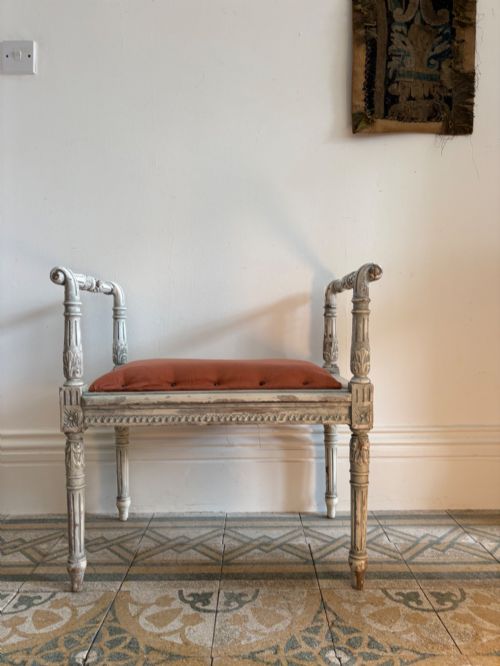
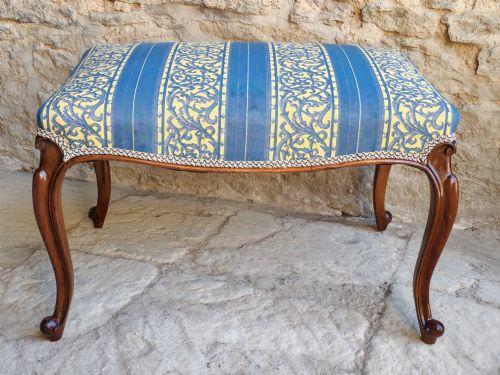
- A long upholstered bench or stool without a backrest, suited for hallways or foot-of-bed placement. They frequently display turned legs or giltwood carved details.
- Lit Bateau
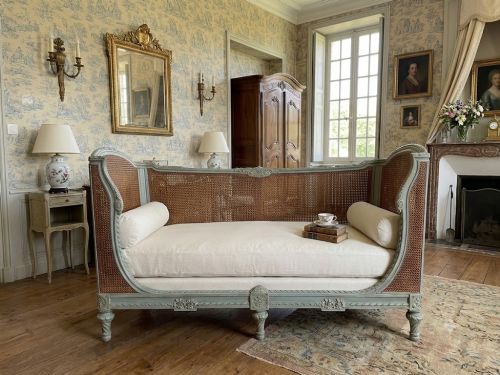
- A boat bed featuring scrolled head and foot boards of equal or near-equal height, operating as a daybed or couch. Walnut and painted frames appear in this configuration.
- Faux Bois
- A decorative technique mimicking wood grain using concrete, metal, or painted finishes. Garden benches and outdoor seats frequently utilise this method.
- Rush
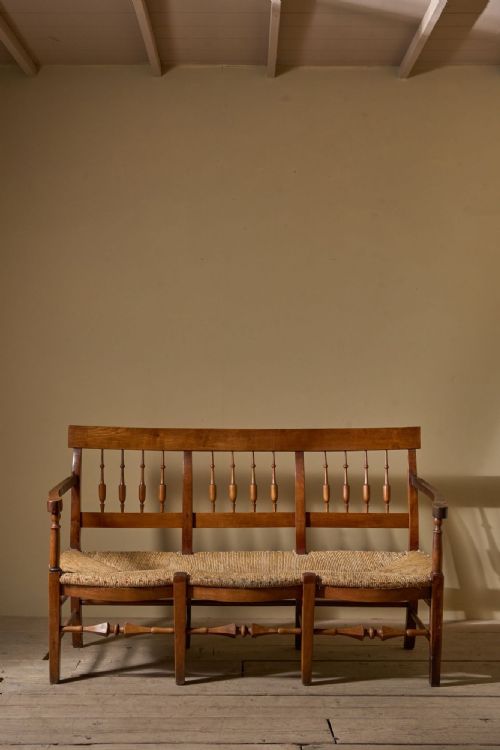
- Woven marsh plant stems utilised for chair and bench seat pads. Provincial country seating commonly employs this durable natural material.
Antique French Benches: Frequently Asked Questions
Where should I place an antique bench?
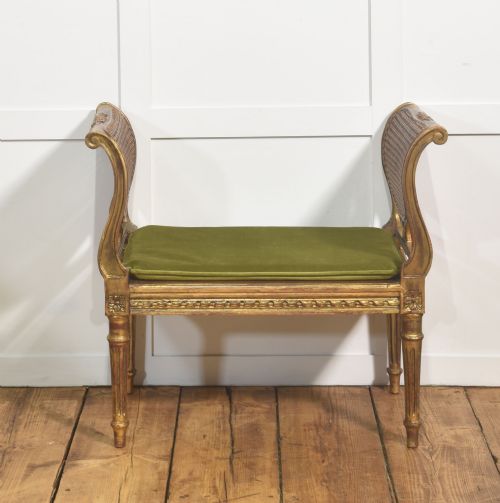
Hall benches and window seats suit narrow corridors and alcoves where deep seating obstructs movement. Smaller stools and banquettes fit bedrooms or living spaces as occasional seating.
Larger refectory benches match dining tables, while iron garden pieces operate outdoors or in conservatories.
How do I care for cane seating?
Cane panels require gentle dusting and occasional damp wiping to maintain moisture and prevent snapping. Avoid placing woven seats near direct heat sources or strong sunlight.
Weight distribution matters for older cane, so heavy daily usage without pads may stress the weave.
What is a window seat?
Window seats are low benches designed to fit beneath window ledges without blocking natural light. They typically feature upholstered tops or cane panels.
These pieces emerged in formal drawing rooms and salons during the eighteenth and nineteenth centuries.
How do I distinguish provincial from formal pieces?
Provincial pieces utilise regional timbers like elm, cherrywood, and oak with simpler structural lines. They reflect domestic country utility and practical construction.
Formal pieces employ giltwood, mahogany, and walnut with ornate carving, cabriole legs, and silk upholstery.