
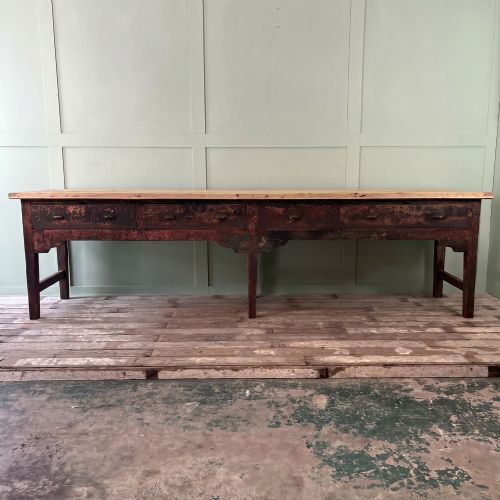
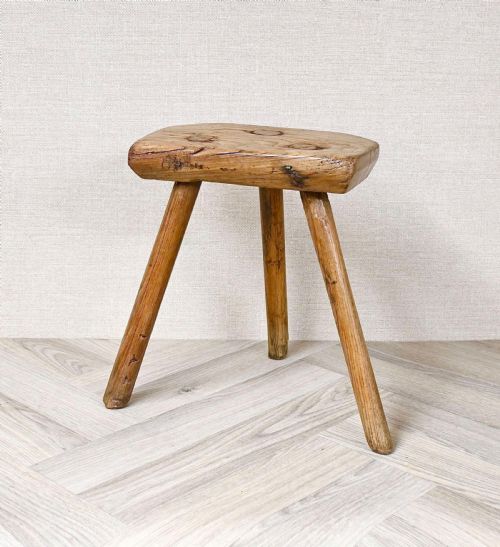
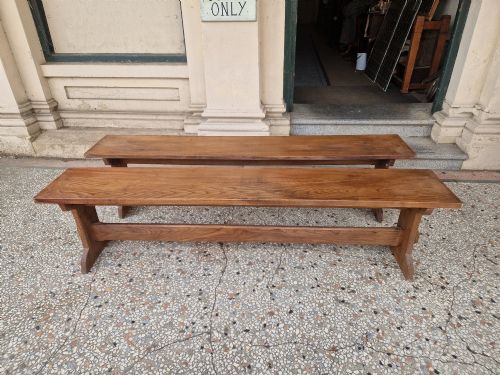


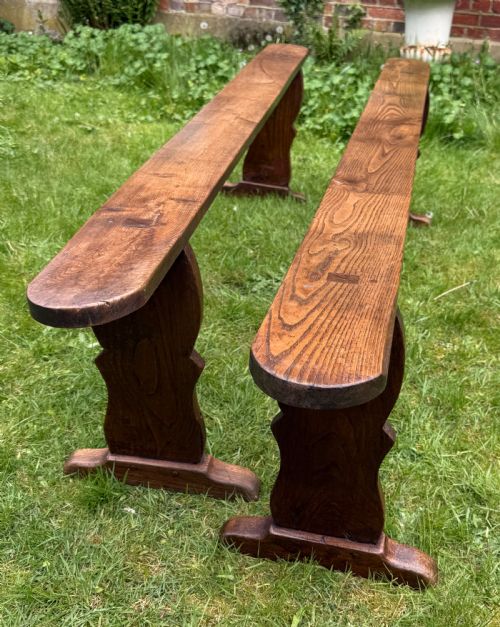
Antique Farmhouse Benches
Antique farmhouse benches bring honest utility to modern interiors, offering long seats shaped by decades of country life.
Antique Farmhouse Benches
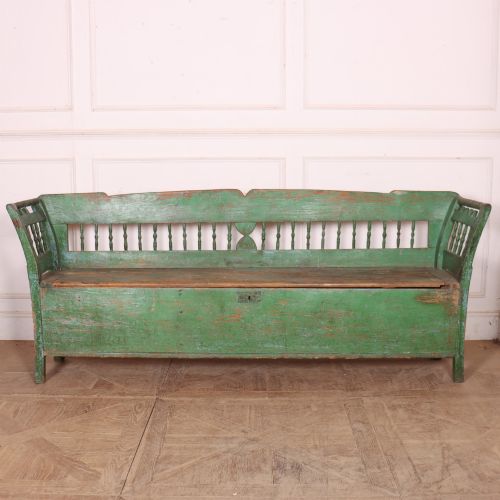
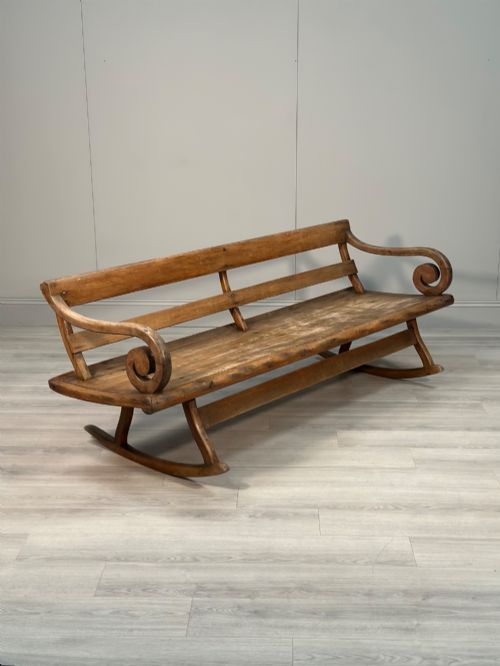
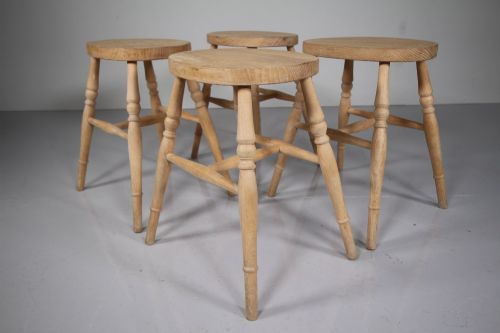
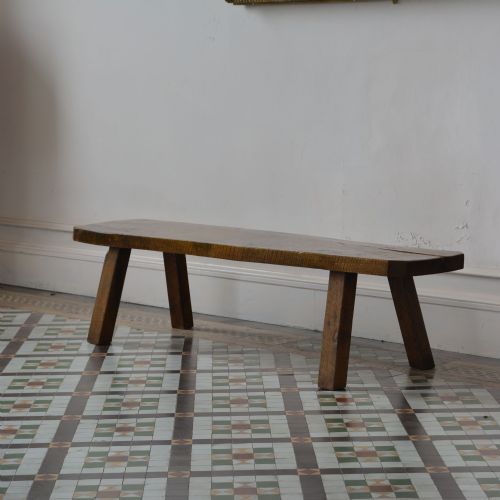
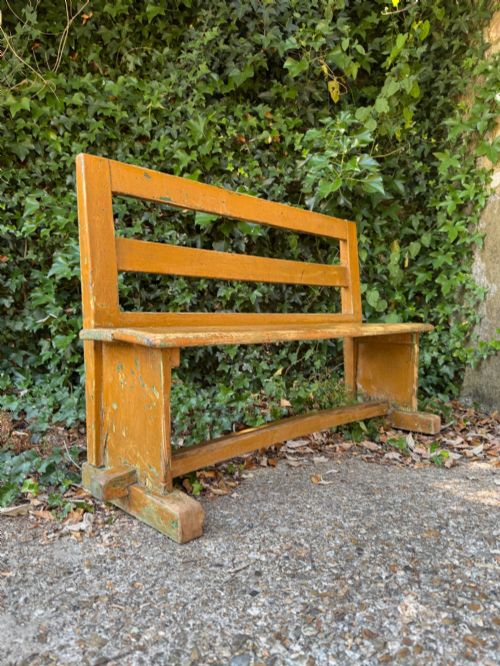
Antique farmhouse benches are long wooden seating pieces created for rural domestic spaces, workshops, and taverns across various regions. You will most frequently encounter pine examples from the nineteenth century, often built with simple plank tops and sturdy supports.
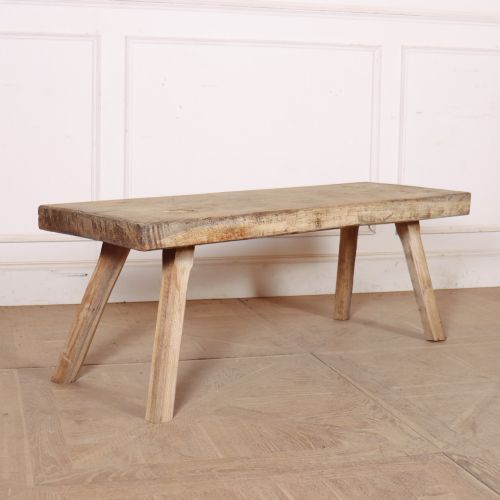
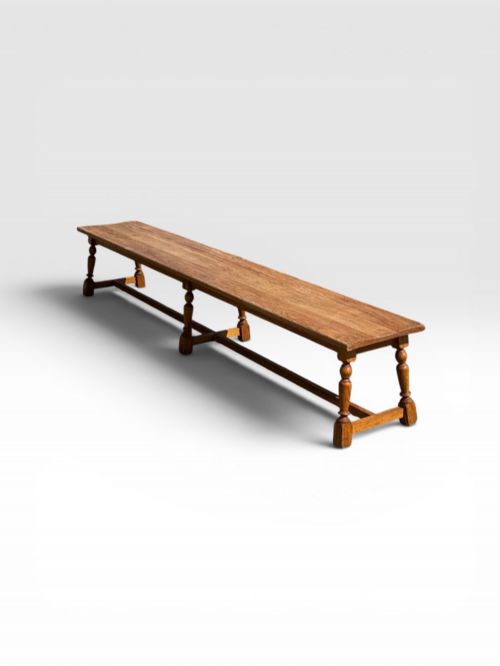
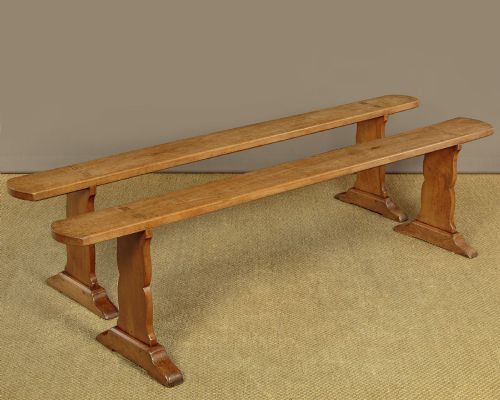
The selection includes specific regional variants such as oak pig benches, elm seating, and French fruitwood pairs alongside longer tavern and refectory styles. These forms were designed for communal dining or hallway use, reflecting the practical needs of past households.
Beyond standard seating, the listings encompass related forms like settles with high backs or arms, offering shelter from draughts in older properties. Each piece carries the physical marks of its original agricultural or domestic context.
How they were made
Makers utilised solid timbers readily available in local woodlands, relying heavily on pine, oak, elm, and cherrywood for structural integrity. Boards were joined using traditional carpentry methods, frequently featuring pegged mortise and tenon joints or simple scrubbed surfaces.
Many examples display natural timber finishes alongside remnants of early paint or bleached patination acquired through scrubbing and daily use. Scratch-built construction and vernacular adaptations show that regional joiners built these items directly for function rather than strict adherence to pattern books.
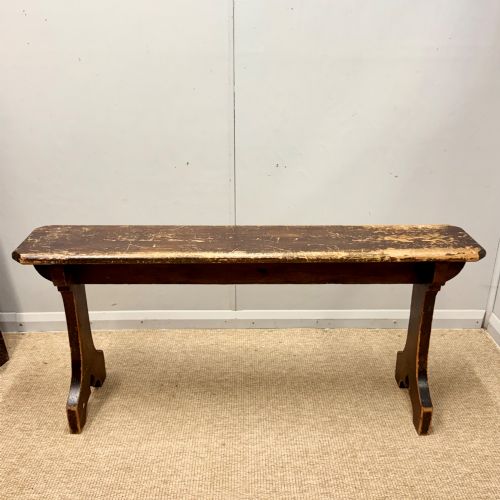
Several narrow benches retain the specific height once needed for kitchen butchery tasks rather than standard dining.
What varies in quality
Quality in these benches rests upon the integrity of the timber and the balance of proportions between the top and the base. Heavier, dense hardwoods like oak and elm command attention for their durability, whereas lighter pine examples depend on the thickness of the seat board.
The degree of original surface wear and uncompromised structural retention dictate the character of each piece. Untouched patination developed from generations of cleaning holds more appeal than heavily restored or sanded surfaces.
The Antique Farmhouse Benches Glossary
- Pig bench
- A low, narrow wooden bench historically utilised for agricultural preparation or butcher work. These pieces typically feature thick plank tops and sturdy splayed legs.
- Settle
- A wooden bench featuring a high solid back, enclosed arms, and often a storage box beneath the seat. They were designed to block cold draughts in farmhouse kitchens.
- Refectory bench
- An exceptionally long seating form designed to accompany large communal dining tables. They are frequently constructed from oak or elm.
- Scrubbed finish
- A surface texture achieved through repeated vigorous cleaning with water and sand over decades. This process strips the wood and leaves a pale, smooth grain.
- Trestle
- A structural support system where horizontal beams rest on vertical feet or angled frames. This design allows for maximum legroom along the length of a bench or table.
Antique Farmhouse Benches: Frequently Asked Questions
How were farmhouse benches originally used?
These benches served primarily as communal seating around dining tables in farmhouses, cottages, and tavern halls. Their long spans accommodated multiple people easily during meals and gatherings.
Beyond dining, specific variants like low pig benches supported domestic work, while high-backed settles provided comfortable seating near hearths.
What woods are most common?
Pine appears frequently in nineteenth-century examples, offering a lighter appearance and widespread availability across domestic workshops. Hardwoods such as oak and elm also feature prominently, chosen for their strength in daily service.
Less common regional timbers include cherrywood, sycamore, and walnut, depending on local woodland resources.
How do I care for an antique bench?
Protect the timber by keeping the piece away from direct heat sources and sudden temperature fluctuations. This prevents the old wood from drying out or splitting.
Apply a traditional beeswax polish occasionally to nourish the surface and maintain the natural patination built up over decades.
Can I use these benches outdoors?
Antique farmhouse benches are constructed for indoor domestic or agricultural environments and lack modern weatherproofing treatments. Moisture and frost will rapidly damage historic timber and weaken traditional joints.
Keep them inside where stable humidity preserves the integrity of the wood and the original surface finish.
What is a settle?
A settle is an enclosed wooden bench featuring a high back and solid arms designed to shield occupants from cold draughts. They often incorporate panelled construction and sometimes lift-up seats for storage.
These pieces were traditionally positioned close to farmhouse fireplaces to trap heat.