



Trestle Dining Benches
Trestle dining benches provide communal seating alongside long tables, drawing on centuries of vernacular design in timber.
Trestle Dining Benches
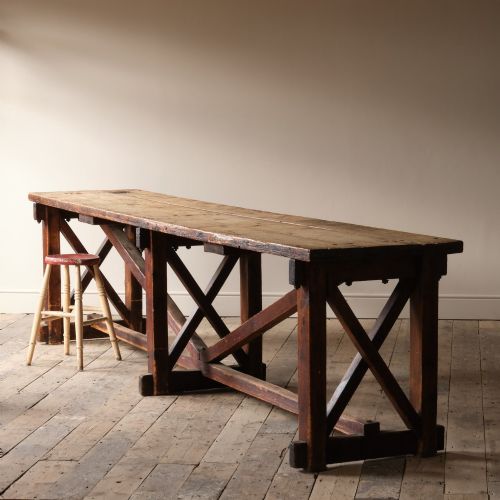
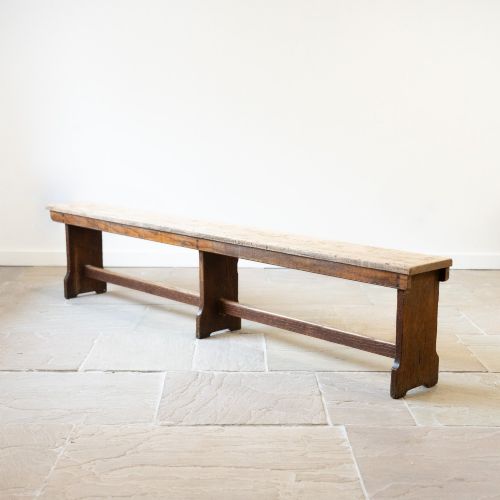
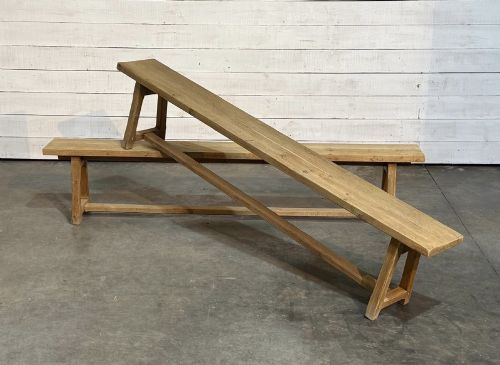
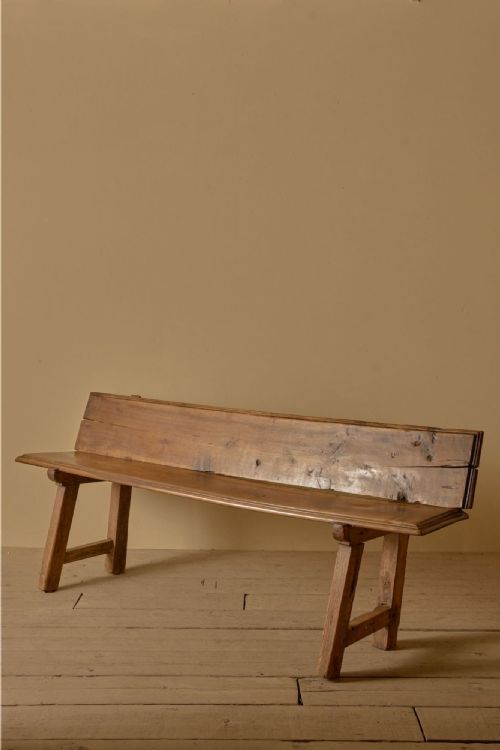
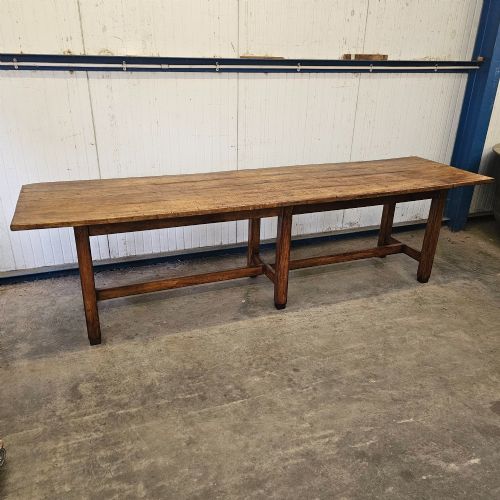
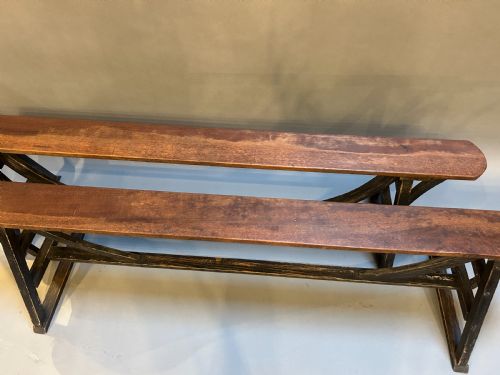
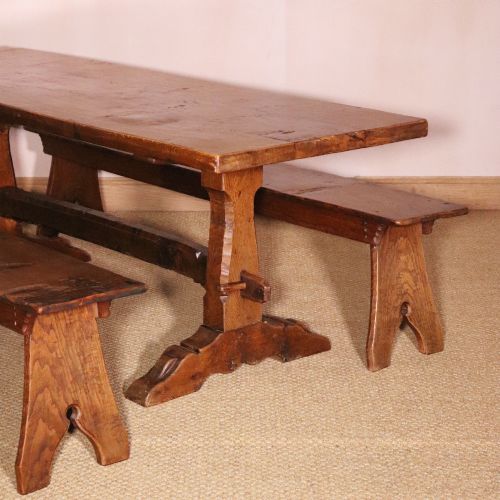
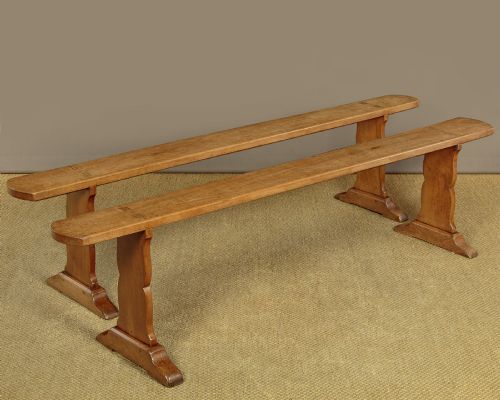
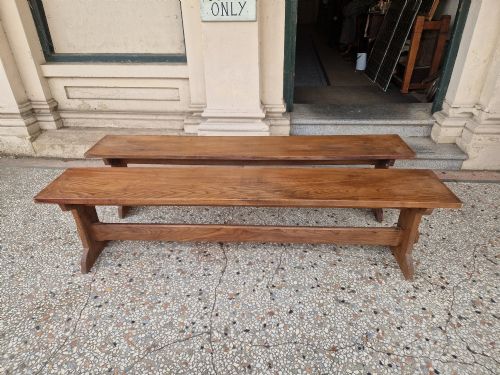
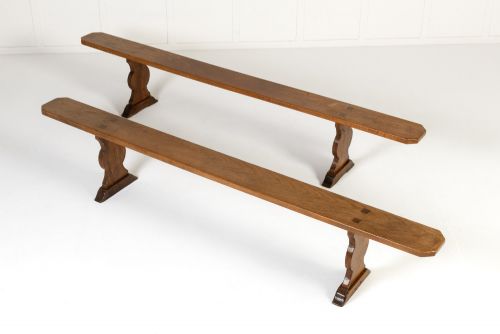
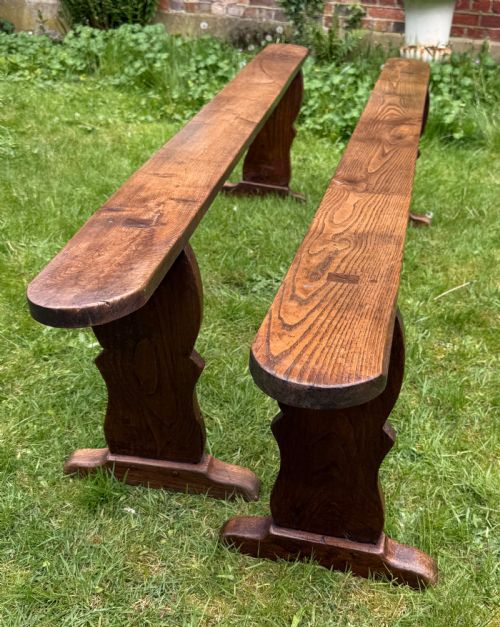
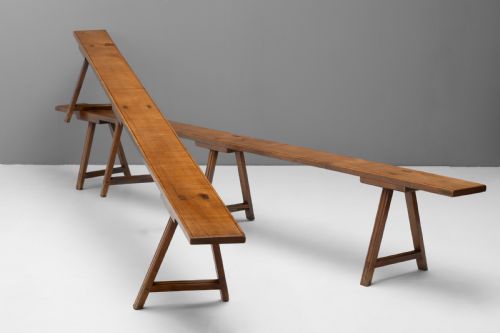
Trestle dining benches are linear seating forms designed to accompany long dining tables, utilising support uprights rather than four corner legs. They emerge across periods ranging from the eighteenth century through the Edwardian era and the early twentieth century.
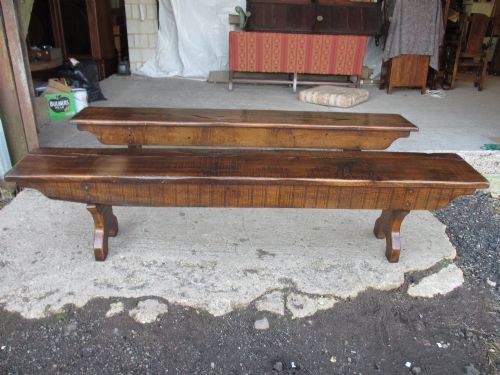
The versions most commonly met on this page are constructed from timbers such as oak, pine, and cherrywood, reflecting regional domestic and institutional uses. Examples appear in lengths reaching up to nine feet, often found as matched pairs or integrated sets alongside refectory and tavern tables.
How they were made
These pieces are built primarily from solid native hardwoods and softwoods including oak, elm, pine, and cherrywood, selected for structural resilience under heavy use. Joinery relies on traditional carpentry methods to fix the plank tops securely to stable trestle ends or shaped supports.
Surfaces frequently show the marks of historical scrubbing, plain wax finishing, or early painted treatments, preserving the direct utility of vernacular furniture manufacture.
Trestle Dining Benches Retail Price Guide 2026
Typical asking prices for trestle dining benches among the pieces listed under this phrase on Sellingantiques today, from the lower quarter to the upper quarter. They describe what is for sale here now, not the wider market.
Listings feature timbers including oak, pine, elm, cherrywood, sycamore, and hardwood across eighteenth, nineteenth, and early twentieth-century periods.
What varies in quality
The distinction between standard examples and exceptional pieces rests upon the integrity of the timber selection and the retention of original surface patination. Denser hardwoods such as old-growth oak or mature cherrywood yield superior weight and rigidity compared to lighter utility pieces.
Proportion and scale dictate the visual success of the piece, particularly in longer lengths where the balance between the thickness of the plank top and the form of the trestle supports determines the overall harmony.
The Trestle Dining Benches Glossary
- Refectory table
- A long dining table traditionally used in monastic or communal dining halls, frequently paired with matching long benches.
- Trestle ends
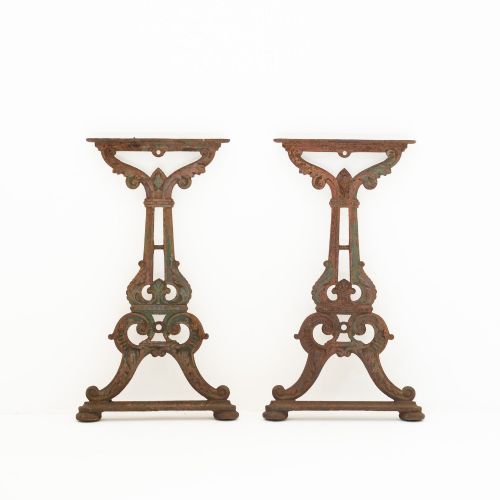
- Upright supports placed at either end of a table or bench, connected by a horizontal stretcher to provide stability without obstructing legroom.
- Plank top
- A surface constructed from wide boards of solid timber joined together lengthwise, commonly seen in early vernacular tables and seating.
- Patina
- The surface sheen and softened texture developed on timber over decades or centuries through handling, polishing, and natural ageing.
- Scrubbed finish
- A pale, weathered timber surface resulting from repeated washing with water and abrasive stone to remove grease and stains.
Trestle Dining Benches: Frequently Asked Questions
How do I choose the right length?
Consider the overall span of your dining table and ensure the bench leaves sufficient clearance when tucked underneath.
Longer examples require adequate floor space around the perimeter to allow comfortable access for diners.
Are these benches sturdy enough for daily use?
Solid timber construction using hardwoods like oak, elm, and cherrywood provides inherent structural strength.
Traditional joinery methods ensure these pieces tolerate regular weight without loosening over time.
Can I mix different wood types?
Historic dining arrangements frequently combined varied timbers such as pine, oak, and fruitwood within the same room.
Matching the scale and period character matters more for visual cohesion than achieving an exact wood species match.
How do I care for historic timber?
Maintain the surface by applying natural beeswax sparingly and buffing with a soft cloth to nourish the grain.
Avoid placing wooden furniture near direct heat sources or in environments with fluctuating humidity.