
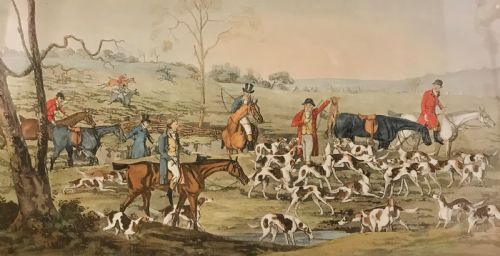


Antique Framed Hunt Prints
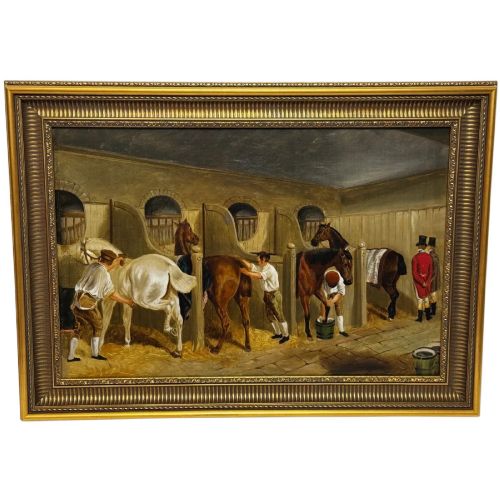
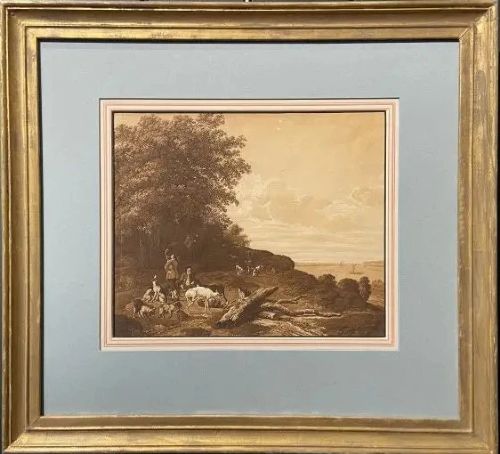
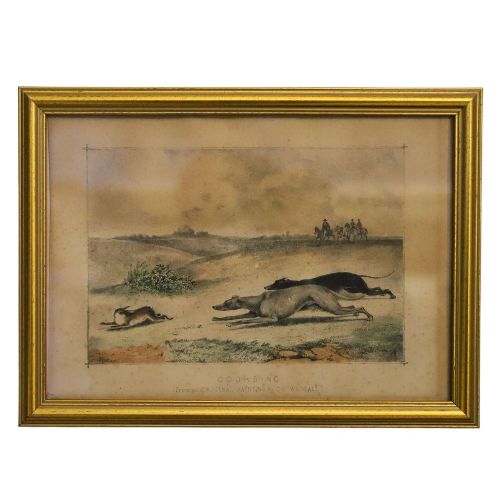
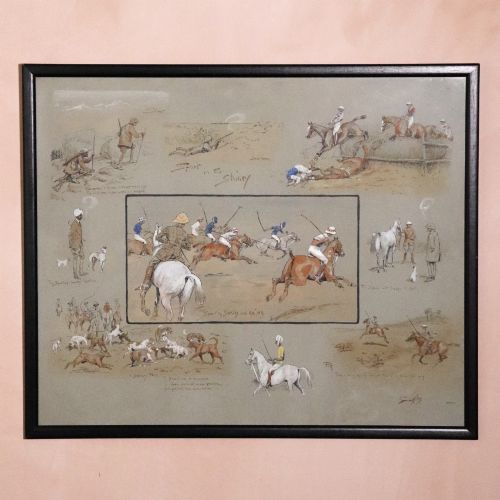
These antique framed hunt prints capture the speed and atmosphere of historical field sports within traditional wood and gilt frames.
Antique Framed Hunt Prints
When you search for antique framed hunt prints, you encounter works that record historical equestrian pursuits, hounds in the field, and shooting scenes across British sporting art. These pieces range from Georgian and Victorian hand-coloured engravings and lithographs to early twentieth-century prints.
The selection on this page includes individual framed artworks alongside sets depicting sequences of the chase, often preserved behind glass in period frames. The subjects span fox hunting, hare coursing, and point-to-point racing captured by notable artists and publishers.
Materials and production methods
The medium typically involves paper bearing engravings, lithographs, etchings, or watercolours, sometimes enhanced with hand-colouring in watercolour or ink. Many plates were published after works by prominent sporting painters and subsequently framed.
Framing materials rely heavily on wood, gilt wood, and gold leaf moulding to house the paper securely beneath glass, preserving the delicate pigments and ink lines from atmospheric degradation.
Periods represented stretch from the eighteenth century through the Victorian and Edwardian eras to the 1930s.
Distinctions in quality
Quality rests upon the clarity of the printed line and the precision of any hand-applied watercolour washes. Early impressions taken before the metal plates or lithographic stones experienced wear exhibit sharper detail and deeper contrast.
The integrity and originality of the surrounding frame also influence the piece, particularly where period gilt wood or gold leaf mouldings match the era of the artwork.
C H Weigall·Snaffles·Charles Faulkner·Herbert Dicksee·H Alken·Charles Hunt·Francis Calcroft Turner·J F Herring·Frank Algernon Stewart
The Antique Framed Hunt Prints Glossary
- Engraving
- A printmaking technique where an artist cuts an image into a metal plate using a sharp tool. The resulting lines hold ink to be transferred under pressure to paper.
- Lithography
- A planographic printing process based on the repulsion of oil and water. It allows artists to render tonal gradations that closely mimic original drawings and watercolours.
- Hand-coloured
- A finished monochrome print enhanced with watercolour applied by brush after printing. This technique adds colour to costume and landscape details.
- Sporting art
- A genre dedicated to depicting animals, field sports, equestrian events, and hunting scenes. It flourished in Britain during the eighteenth and nineteenth centuries.
Antique Framed Hunt Prints: Frequently Asked Questions
What periods do these prints cover?
The works span from the eighteenth century through the Victorian and Edwardian eras into the early twentieth century. This timeline reflects shifting techniques in printmaking and changing tastes in British sporting art.
Most pieces originate from the nineteenth and early twentieth centuries, capturing the height of traditional hunting culture through published engravings and original prints.
How should I display them at home?
Keep framed prints away from direct sunlight to prevent the paper from fading and the hand-applied watercolours from losing their vibrancy. Hanging them on interior walls with stable humidity protects both the paper and the wooden frames.
Grouping sets together, such as sequences of four hunting scenes, maintains the narrative structure intended by the original publisher or artist.
How do I identify a hand-coloured print?
Examine the colour application under magnification to look for the subtle brushstrokes and slight pooling of pigment characteristic of manual application. Printed colours appear as tiny dots or flat mechanical fills, whereas hand-applied watercolour sits visibly on top of the ink lines.
Publishers often produced both plain and hand-coloured editions of the same engraving.
Are the frames original to the pieces?
Many items retain their period wood or gilt wood frames, which show appropriate signs of age such as minor gilt loss or mellowed timber surfaces. Inspecting the backing and the joinery helps determine if the framing dates to the same era as the print.
Replacing lost glass with conservation-grade alternatives helps safeguard nineteenth-century paper against further degradation.