


Vintage Sporting Art Set
A vintage sporting art set brings the energy of the field and the track directly to the wall.
Vintage Sporting Art Set
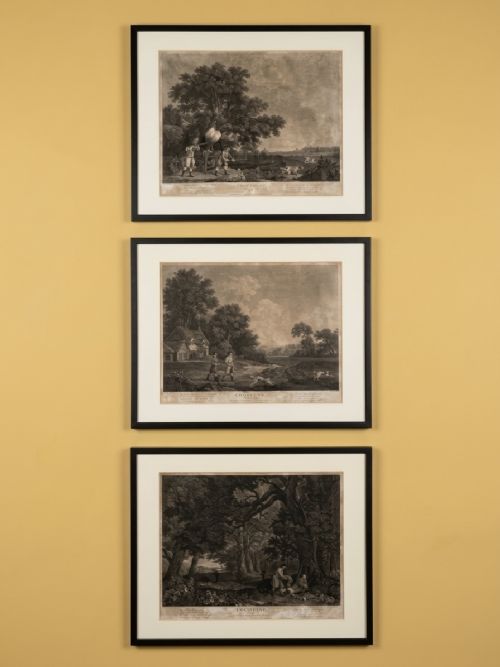
When you search for a vintage sporting art set, you are looking at framed prints, engravings, and paintings that capture historic athletic pursuits, horse racing, and hunting scenes. These collections most commonly arrive as sets of four, preserved behind glass in wooden frames made of oak.
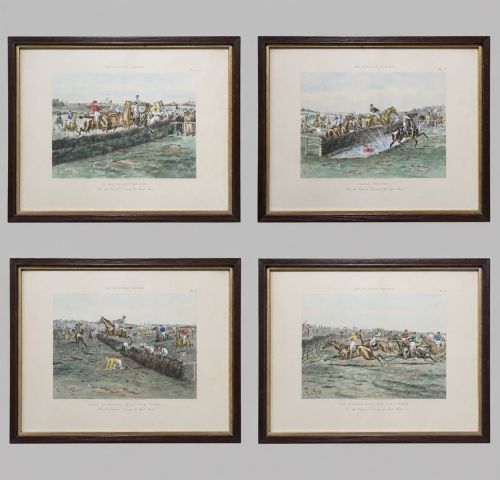
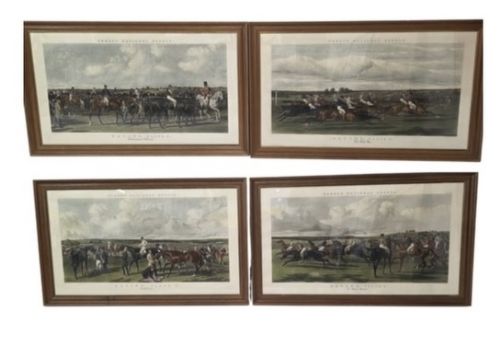
The pieces on this page span from the Victorian era into the mid-twentieth century, recording British sporting life through disciplined sequences. You will frequently encounter groupings dedicated to horse racing, fox hunting, and equestrian portraits from the nineteenth century.
Makers and artists whose works appear in these sets include recognised printmakers and painters such as Alken, Charles Hunt, Francis Calcroft Turner, and Charles Johnson Payne Snaffles. Each grouping offers a narrative sequence, whether through aquatints, hand-coloured engravings, or triptychs.
Materials and methods behind the art
The physical objects combine paper prints, ink, and watercolour with wooden framing materials like oak. Engravings and aquatints provide the linear framework, often enhanced with hand-applied colour.
Embossed details and delicate brushwork in gouache appear on select Victorian plates, while the framing utilises glass to protect the delicate paper surfaces from atmospheric moisture and handling.
One unexpected offering steps entirely away from horses to provide a French country pétanque set with nine solid pieces.
Separating the ordinary from the exceptional
Quality in these groupings rests upon the crispness of the original impression and the preservation of the paper against toning and foxing. Sets that retain their complete original sequence without stray replacements command greater attention.
The fidelity of the colour work and the strength of the signature, whether from an artist like Alken or a publisher of nineteenth-century engravings, dictate the standing of the piece within the tradition of British sporting art.
James Stroudley·George Finch Mason·Alken·Charles Johnson Payne Snaffles·Charles Hunt·Francis Calcroft Turner·J F Herring
The Vintage Sporting Art Set Glossary
- Aquatint
- An intaglio printmaking technique that produces areas of tone resembling watercolour washes. It was widely employed in nineteenth-century sporting prints to render atmospheric skies and rolling turf.
- Engraving
- A method of cutting a design into a metal plate with a sharp tool to hold ink. Engravings yield sharp, precise lines that define the figures of horses and riders in early sporting works.
- Gouache
- An opaque water-based paint featuring pigment bound in water-soluble gum. It provides solid, flat areas of colour in mixed-media sporting works.
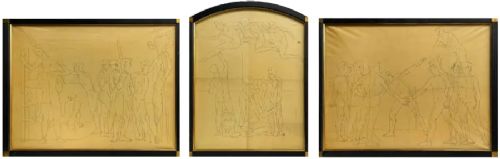
- Triptych
- A work of art divided into three sections or panels. James Stroudley utilises this format in his Olympic Games composition.
Vintage Sporting Art Set: Frequently Asked Questions
How many pieces are usually in a set?
The groupings on this page most frequently consist of four matching prints or engravings designed to be hung together as a sequence. You will also encounter pairs and occasional triptychs.
Completeness is a defining characteristic of these groupings, reflecting how nineteenth-century publishers issued sporting prints in uniform portfolios for country houses.
How do I date a Victorian sporting print?
Dating relies on the stylistic markers of the Victorian period, the costume of the riders, and any inscribed publication dates on the paper mount or lower margin. References to nineteenth-century printmakers provide a reliable chronological anchor.
Examine the framing materials and the paper substrate, as older rag papers exhibit distinct textures and ageing patterns compared to later reproductions.
Where should I hang a sporting art set?
These sets suit study walls, libraries, or hallways where their narrative sequences can be viewed in order at eye level. Avoid placing paper works in direct sunlight to prevent the watercolour and ink pigments from fading.
Pairing them with traditional interiors featuring wooden furniture and oak panelling echoes their historical domestic context.
What subjects are most common?
Horse racing, steeplechasing, and fox hunting dominate the nineteenth-century British offerings on this page. You will also find specialised depictions of jockeys and specific sporting events like the Olympic Games.
These themes reflect the Victorian enthusiasm for equestrian sports and field traditions.