


Vintage Equestrian Wall Decor
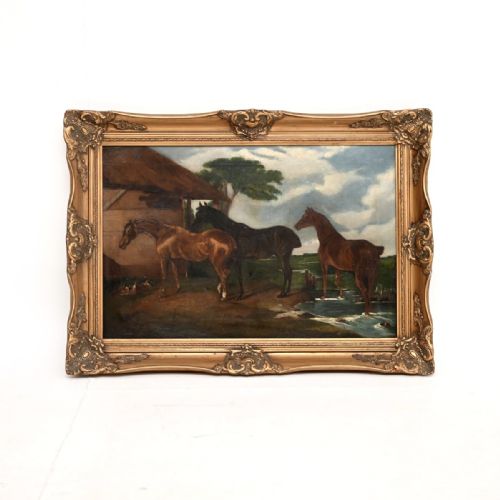
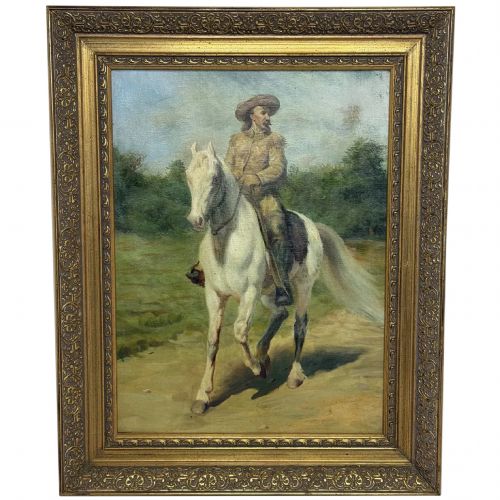
These vintage equestrian wall decor pieces bring the heritage of racing and hunting into a room through oil, pastel, and print.
Vintage Equestrian Wall Decor
Vintage equestrian wall decor encompasses framed artworks, oil paintings, and prints celebrating horses, racing, and hunting scenes. Buyers search this phrase to find characterful depictions of horses that anchor a traditional interior or gallery wall.
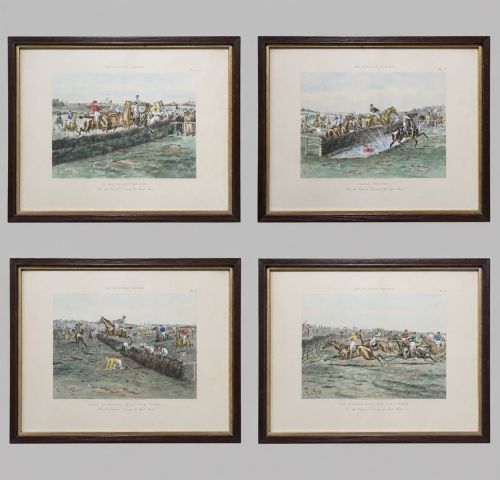
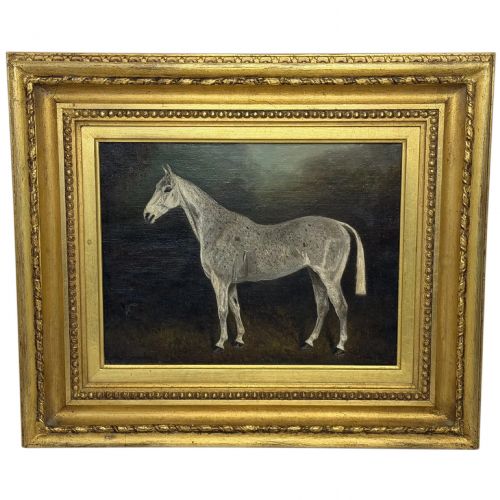
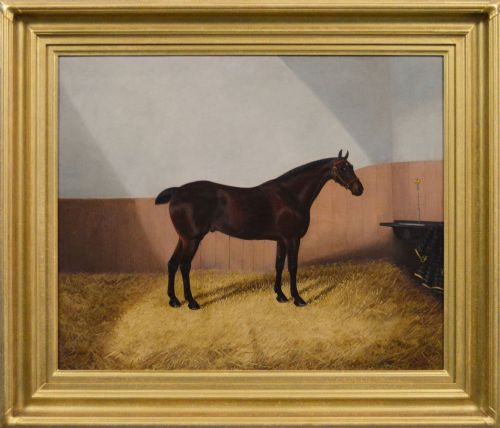
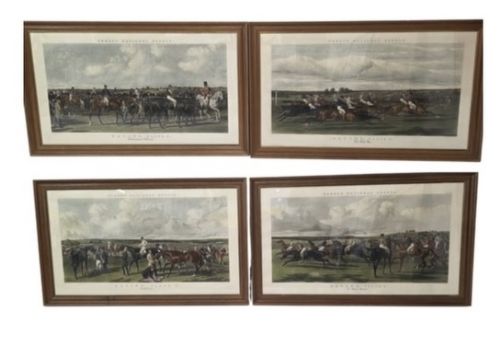
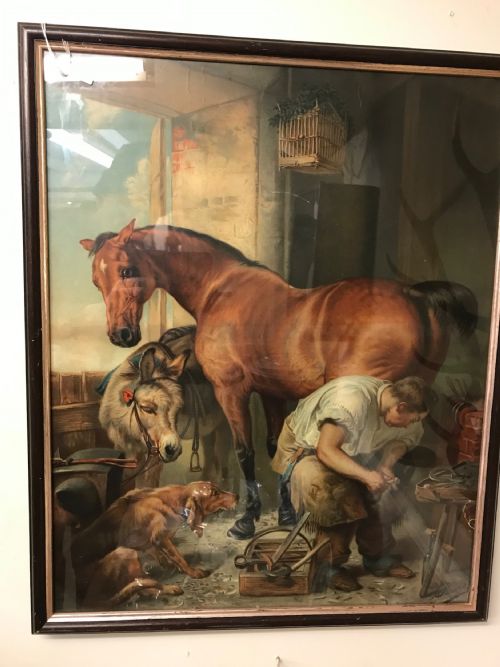
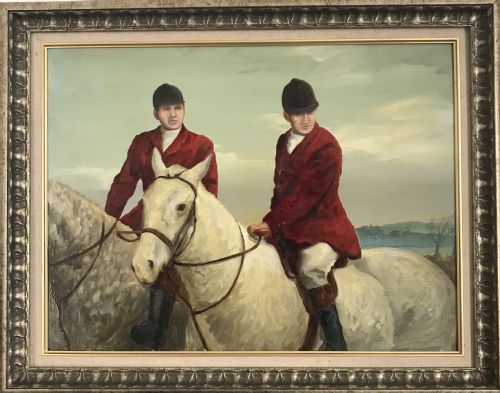
The selection ranges from nineteenth-century sporting art and Victorian racing portraits to mid-century pastels and chalk drawings. Oil paintings on canvas and panel sit alongside copper plate prints and framed aquatints.
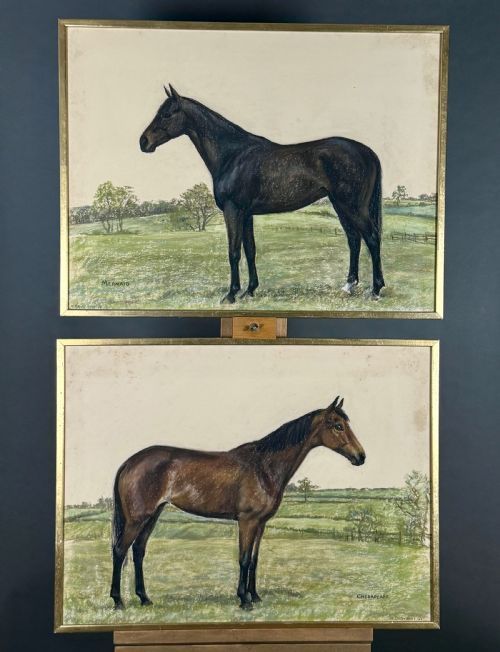
Pieces span eras from the Georgian period through to the mid-twentieth century, capturing subjects from stable portraits of bay horses to dynamic racecourse scenes.
How they were made
Works utilise oil paint on canvas or pine panels, capturing the musculature and coats of horses through layered brushwork. Paper supports accommodate delicate pastels, chalk drawings, and ink aquatints.
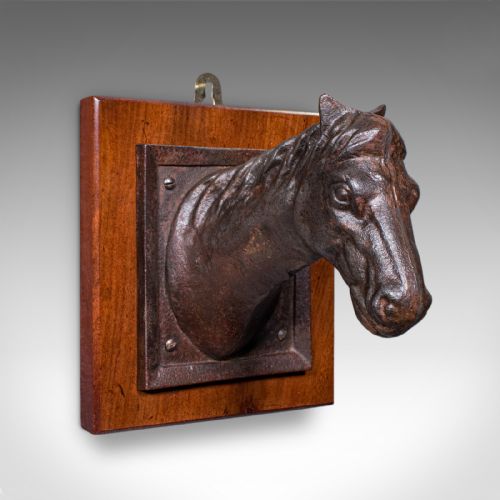
Framing materials include walnut and oak, often pairing with glass to protect works on paper. Metal elements such as brass and sheet metal appear in decorative wall mounts and sculptural silhouettes.
Several horses are immortalised by name in the titles, ensuring resilient mares like Creeping Molly and Grisette live on.
What varies in quality
Quality rests in the draughtsmanship of the animal form and the handling of light across coat and leather. Stronger works capture the specific anatomy and movement of the horse rather than relying on generic formulae.
The integrity of the original framing, the stability of canvas or paper supports, and the clarity of the ink or pigment dictate the distinction between ordinary decorative prints and accomplished sporting art.
George Finch Mason·Edwin Henry Landseer·Cecil Charles Windsor Aldin·John Frederick Herring Jnr·Basil Nightingale·William Williams·Abraham Cooper·Benjamin Cam Norton·Gabriel Dauchot·John Atkinson
The Vintage Equestrian Wall Decor Glossary
- Aquatint
- An intaglio printmaking technique that produces tonal areas resembling watercolours or washes. It allows printmakers to create subtle gradients in racing scenes.
- Eglomise
- The process of applying gold or silver leaf to the rear face of glass before engraving a design. It creates a reflective, mirrored surface often seen in reproduction prints.
- Grisette
- A term historically used in horse naming or coat descriptions, frequently denoting a grey mare. It appears in nineteenth-century sporting titles.
- Pastel
- A dry medium consisting of powdered pigment and a binder, pressed into stick form. Pastel studies offer a soft texture well suited to intimate animal portraits.
Vintage Equestrian Wall Decor: Frequently Asked Questions
How do I date an equestrian oil painting?
Examine the style of the horse's tack, the rider's clothing, and the preparation of the canvas or panel. Nineteenth-century works often use heavier stretchers and specific earth pigments.
Signatures, stretcher inscriptions, and framing styles provide additional clues to the decade of creation.
What is the difference between an aquatint and an engraving?
An engraving uses sharp tools to cut lines directly into a metal plate for crisp outlines. An aquatint creates tonal washes and shaded areas that mimic brush drawings.
Many sporting prints combine both techniques to define horse outlines and fill in shaded backgrounds.
How should I hang antique paper prints?
Keep works on paper away from direct sunlight to prevent fading of inks and discoloration of the paper support. Use UV-filtering glass and acid-free mounts during framing.
Maintain stable humidity levels in the room to protect the paper from warping over time.
Are mid-century equestrian pieces different from Victorian ones?
Mid-century works often introduce looser brushwork and bolder colour palettes influenced by European expressionism. Victorian pieces tend towards meticulous anatomical accuracy and traditional varnished finishes.
Both periods celebrate the horse but reflect the shifting artistic priorities of their respective eras.