

Traditional Horse Artwork
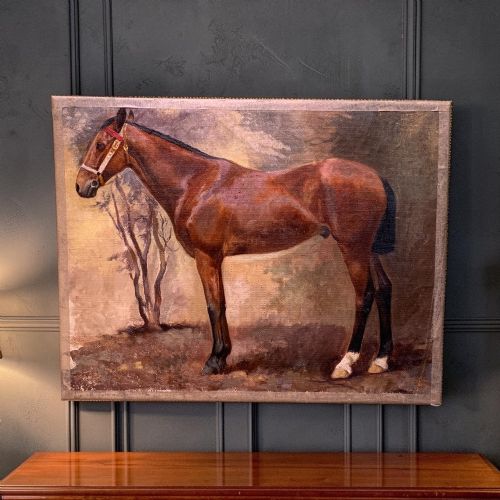
Traditional horse artwork captures the power and character of equine subjects through centuries of oil paintings, watercolours, and prints.
Traditional Horse Artwork
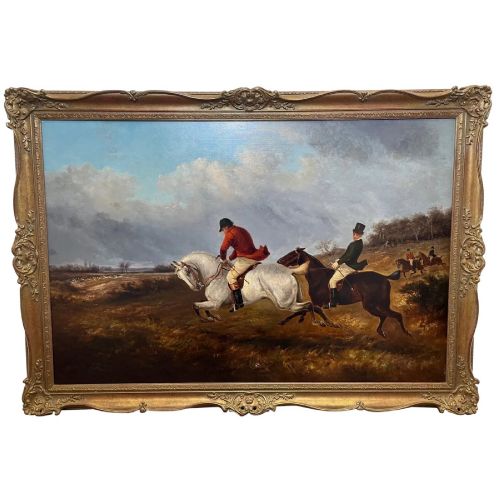
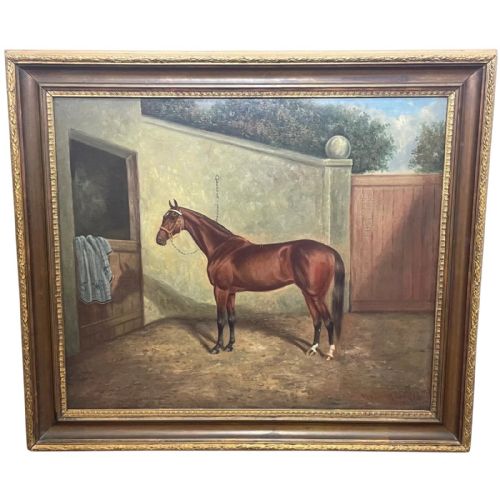
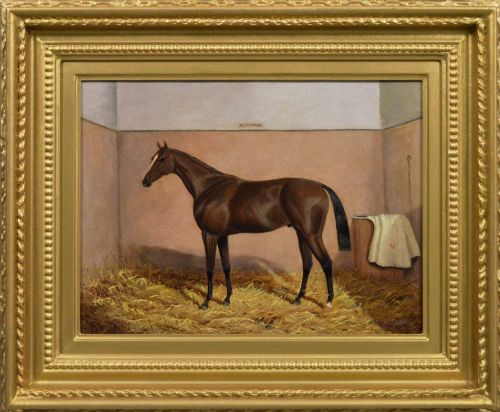
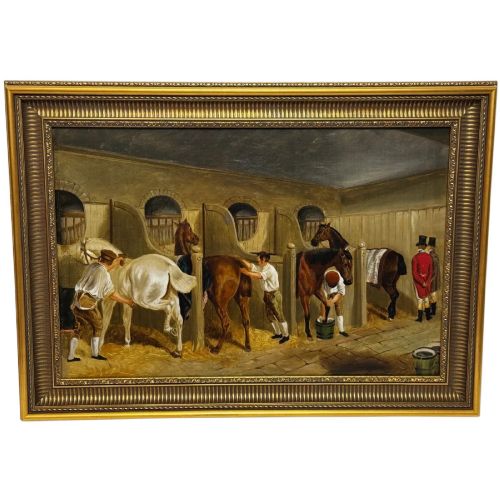
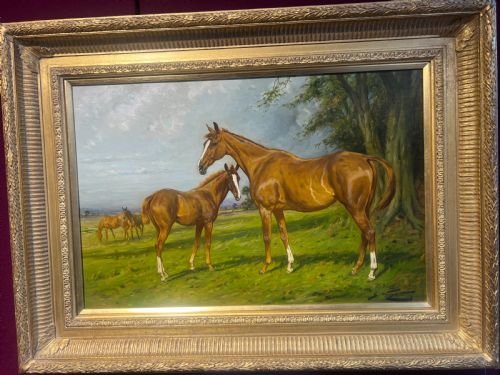
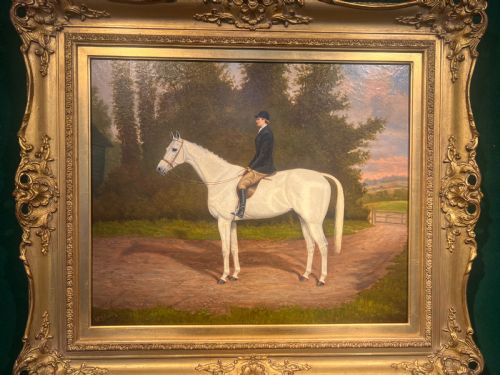
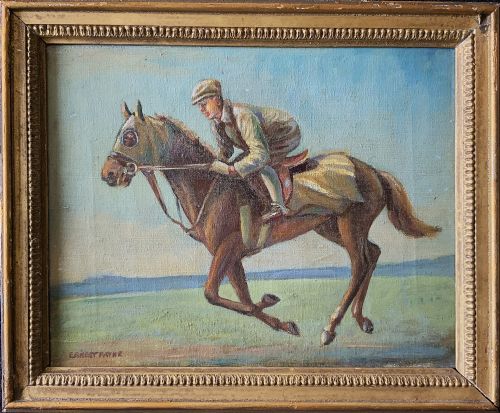
Traditional horse artwork encompasses oil paintings, watercolours, lithographs, and engravings produced primarily across the nineteenth and twentieth centuries. These pieces record rural working scenes, hunting meets, and celebrated racehorses within British realism and sporting art traditions.
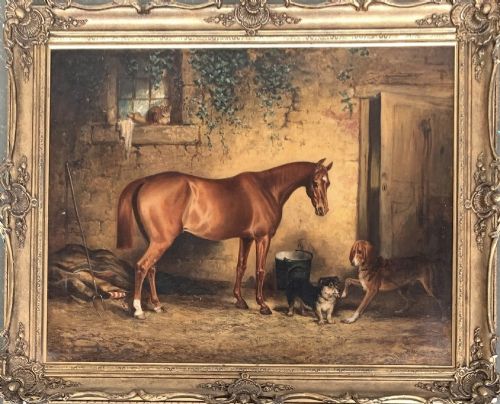
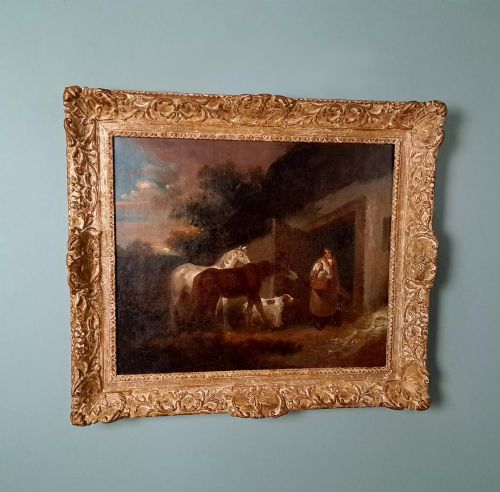
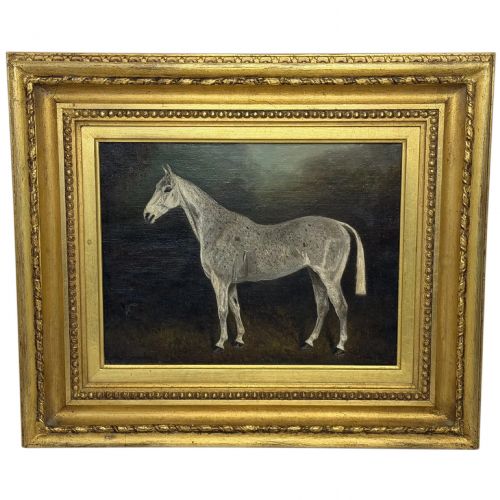
Collectors frequently encounter detailed equine portraits, coaching scenes, and farmyard studies framed in wood and gilt. The materials span canvas, panel, paper, and card, reflecting both formal portraiture and vernacular village life.
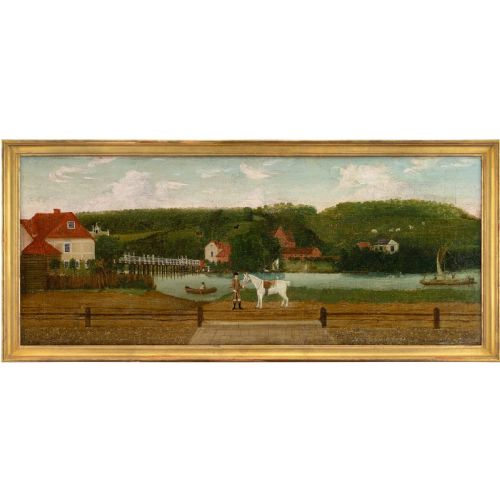
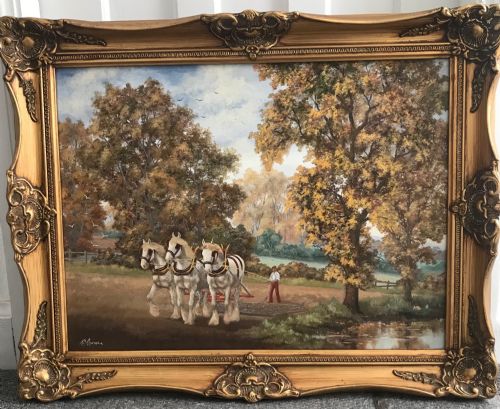
The selection ranges from Georgian compositions to mid-century depictions of shire horses and hunters. Works often feature specific named animals, winning racehorses, and expansive rural landscapes.
Materials and Techniques
Artists relied primarily on oil paint applied to canvas, board, or wood panel, building up rich layers of pigment to render the muscular form and glossy coat of the animal. Watercolours on paper and ink drawings capture lighter, more immediate studies of ponies and working horses.
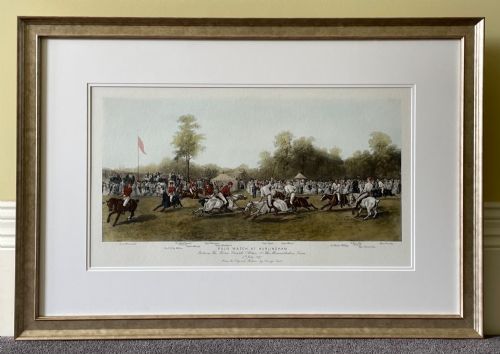
Framing forms an integral part of the presentation, utilising moulded wood and giltwood frames that complement the tonal depth of the paintings. Printmakers employed lithography and engraving techniques to reproduce popular sporting scenes for a wider audience.
Subject matter ranges widely from rural farmyard scenes with horses and ducks to precise portraits of Derby winners and mounted hunting groups.
Assessing Quality and Execution
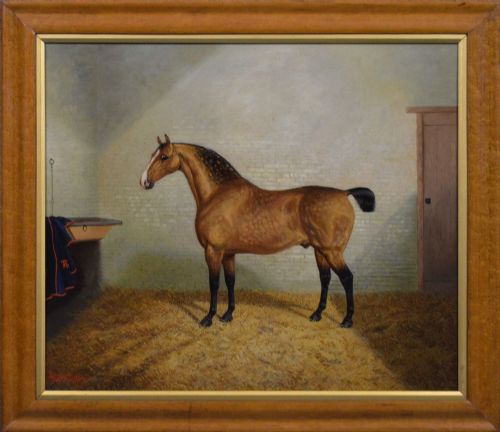
Anatomical precision and the accurate rendering of equine movement distinguish superior examples from standard decorative works. Master painters capture the tension in a muscle and the intelligent gleam of an eye with assured brushwork.
The prominence of the subject matter, such as documented racehorses or recognised hunt scenes by established artists, elevates the significance of a piece. Original frames matching the period of the artwork also contribute to the integrity of the object.
William Joseph Shayer Senior·Thomas Smythe·Albert Clark·Frederick Albert Clark·George Wright·John Alfred Wheeler·John Frederick Herring Snr·George Morland·Charles Walter Simpson·John Sanderson Wells
The Traditional Horse Artwork Glossary
- Lithograph
- A printmaking method based on the repulsion of oil and water on a limestone or metal plate. This technique allowed artists to produce detailed multi-colour reproductions of popular sporting subjects.
- Giltwood
- Wood carved and coated with gold leaf or a gold-coloured metallic finish. It provides a reflective, ornate border that enhances oil paintings from the Victorian and Edwardian periods.
- Aquatint
- A variant of etching that produces areas of tone rather than fine lines. It was frequently employed to create atmospheric prints of rural landscapes and sporting pursuits.
- Equestrian
- Pertaining to horses, horse riding, or the representation of horses in art. This category covers everything from agricultural ploughing teams to elite racehorses and mounted hunts.
- Grisette
- A term historically used in naming specific horses, such as grey mares. In titles, it identifies individual animal subjects within regional sporting art.
Traditional Horse Artwork: Frequently Asked Questions
How do I date an antique horse painting?
Examine the canvas preparation, stretcher frames, and stylistic markers such as rider attire and harness design. Artist signatures and biographical dates offer the most reliable chronological anchor.
Secondary clues include the type of framing material and any inscriptions or labels pasted to the reverse of the wood panel or stretcher.
What is the difference between a study and a portrait?
An equine portrait usually depicts a named animal, often a celebrated racehorse or hunter, posed specifically for the artist. These works emphasise individual conformation and pedigree.
A study captures a fleeting moment or a working animal in motion, such as a shire horse ploughing a field or ponies grazing on a moor.
How should I hang and light oil paintings?
Position oil paintings away from direct sunlight and steady humidity fluctuations to protect the canvas and paint layers. Stable interior walls prevent warping in wooden panels and gilt frames.
Use dedicated picture lights with low-heat LED bulbs to illuminate the canvas without causing fading or thermal damage to the oil pigments.
Are framed prints as valuable as original oils?
Original oil paintings on canvas or board represent unique handmade creations and generally command higher regard among collectors. Engravings and lithographs were produced in multiples, making them more accessible.
Period framing and hand-colouring can enhance the desirability of a print, though it remains fundamentally different in execution from a direct brush painting.