



Canvas Horse Racing Artwork
Canvas horse racing artwork brings the speed and colour of the turf straight onto the wall.
Canvas Horse Racing Artwork
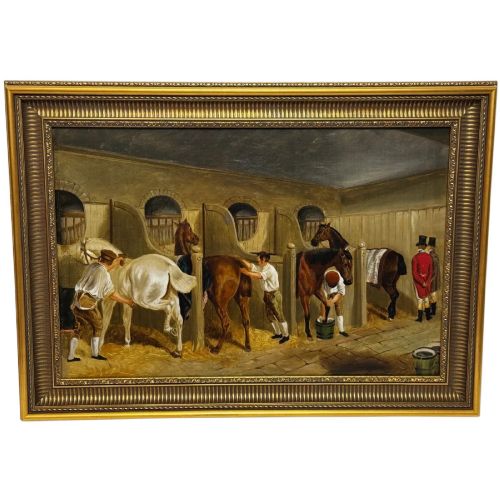
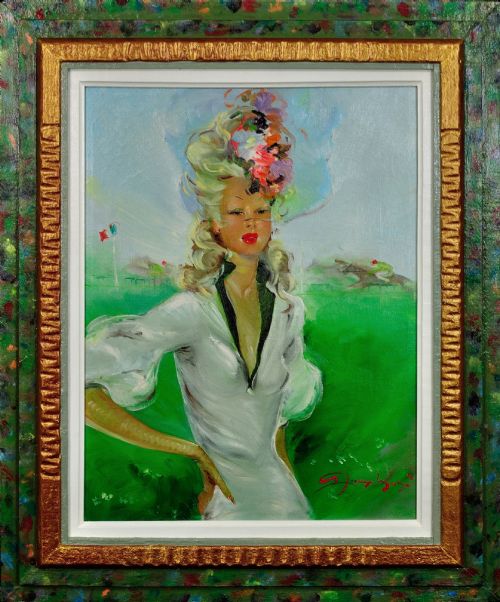
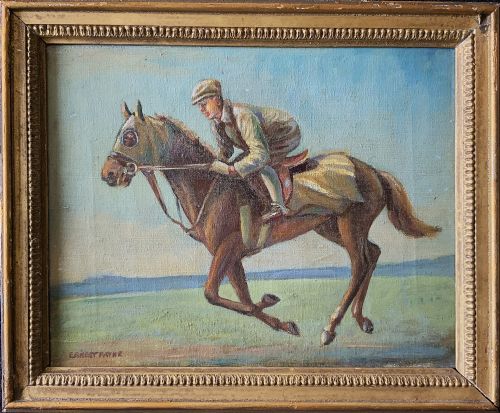
Canvas horse racing artwork encompasses oil paintings executed on canvas depicting racehorses, jockeys, and sporting scenes. These pieces capture significant moments from the turf, ranging from nineteenth century portraits of named horses to mid-century French expressions of race days.
Buyers encountering this selection will frequently meet Victorian sporting and equestrian pieces alongside twentieth century works. These items often feature framed oil paintings on canvas, sometimes housed within gilt wood surrounds.
The subjects extend from individual portraits of champions with their jockeys to dynamic scenes at the track such as Longchamp or Colombo. Such works reflect both English and continental traditions of sporting art.
Materials and methods
The primary foundation for these works is woven canvas stretched over wooden supports, providing the flexible ground necessary for oil paint. Artists applied layers of oil paint to build depth in the subjects, capturing the musculature of the horses and the sheen of silk racing colours.
Many of these paintings are completed with period frames constructed from wood and embellished with plaster mouldings, often finished in gilt. These surrounds complement the oil on canvas medium by adding weight and definition to the composition.
Canvas Horse Racing Artwork Retail Price Guide 2026
Typical asking prices for canvas horse racing artwork among the pieces listed under this phrase on Sellingantiques today, from the lower quarter to the upper quarter. They describe what is for sale here now, not the wider market.
Listings incorporate oil on canvas works spanning from the nineteenth century through to nineteen sixty, utilising wood and gilt framing.
Judging quality
Quality in these works rests upon the precision of the drawing and the sureness of the brushwork in rendering the horse and rider. A stronger piece captures the kinetic energy and accurate anatomy of the animal rather than relying on stiff convention.
The handling of the surrounding atmosphere and the condition of the original canvas and paint layer also define the standing of a piece. Finer examples maintain their original framing and surface stability without heavy restoration obscuring the artist's hand.
Ernest Payne·Gabriel Dauchot·Alfred Wheeler·John Parker Davis·Frank Giggs
The Canvas Horse Racing Artwork Glossary
- Oil on canvas
- A painting technique where pigmented oil paints are applied to a woven fabric stretched across a wooden frame. This combination allows for rich blending and varied surface textures.
- Gilt wood
- Timber frames or decorative elements coated with a thin layer of gold leaf or metallic gilt. This finish adds brightness and historical context to sporting pictures.
- Victorian sporting art
- Paintings created during the nineteenth century that record field sports, horse racing, and equestrian portraits. These works emphasise accurate detail and named subjects.
- French expressionism
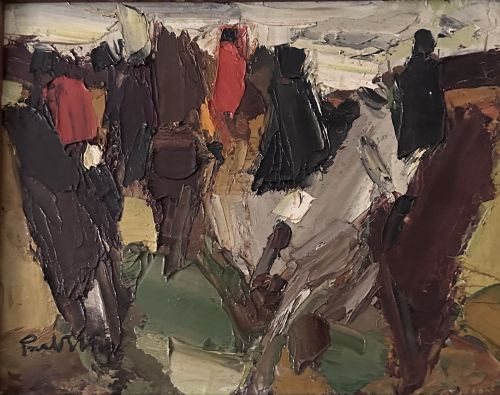
- A modernist style characterised by visible brushstrokes and emotive use of colour rather than strict realism. Works in this manner prioritize mood and movement over photographic precision.
Canvas Horse Racing Artwork: Frequently Asked Questions
How do I hang a heavy framed canvas?
Heavy oil paintings require secure fixings screwed directly into wall studs or heavy duty wall anchors suited to plaster. Using two hanging points distributes the weight evenly and keeps the frame straight.
Position the painting at eye level so the centre of the canvas sits roughly five feet from the floor. Ensure the location avoids direct sunlight to protect the oil paint from fading over time.
Are these paintings original works?
The pieces listed here are original hand-painted oil works on canvas rather than modern prints or reproductions. Each item represents a unique creation by the artist's hand.
Examining the surface closely reveals the raised texture of the brushstrokes and the weave of the canvas from the reverse. These physical traits confirm the hand-painted nature of the artwork.
What period do most of these artworks come from?
The selection spans from the Victorian era through the mid-twentieth century. Nineteenth century pieces often focus on named racehorses and detailed portraits, while later works adopt looser styles.
Stylistic shifts in clothing, framing, and brushwork help distinguish the nineteenth century pieces from 1950s or 1960s examples. Reviewing the listed dates provides the precise historical context for each individual painting.