


English Country Horse Picture
An english country horse picture brings rural tradition and equine character into a room through oil, watercolour and print.
English Country Horse Picture
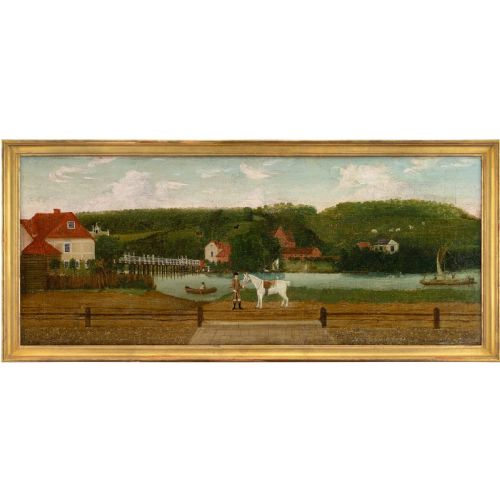
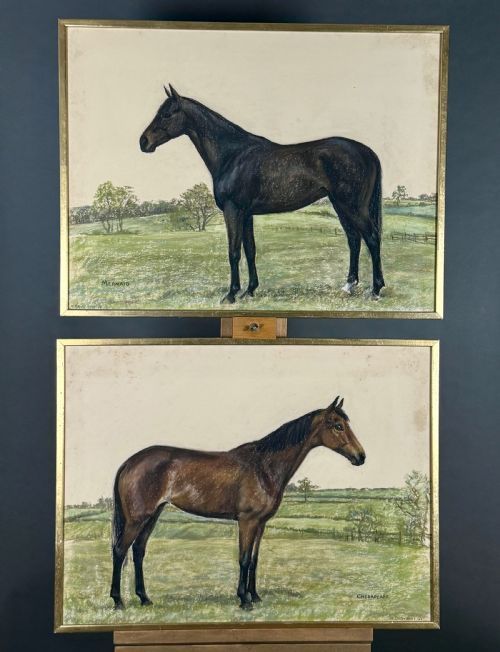
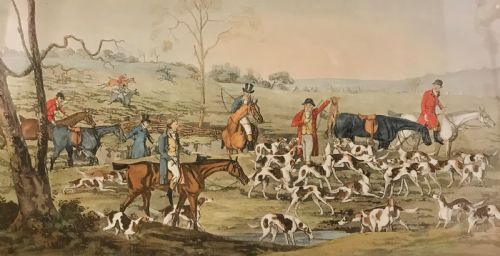
An english country horse picture captures rural scenes, hunting meets, and equine portraits from across the nineteenth and twentieth centuries. These works range from detailed oil paintings on canvas to delicate watercolours and pastel studies on paper.
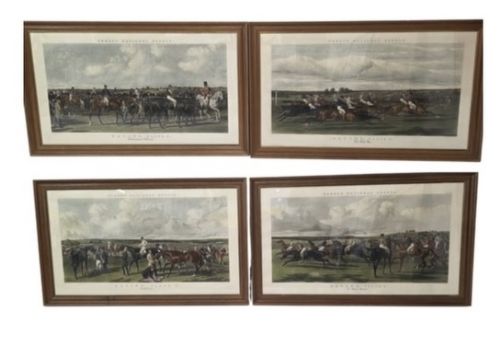
Buyers will encounter framed art depicting coaching scenes, farm work, and racing subjects produced by named artists and regional English schools. The selection spans Victorian sporting art, Edwardian compositions, and mid-century interpretations of country life.
Most pieces place the animal within a distinct landscape, whether standing before a country estate, working in a harvest field, or participating in a hunt. These varied forms reflect the deep integration of horses into British rural society.
Materials and methods
Artists relied primarily on oil on canvas and watercolour on paper, often housed in period frames of wood and giltwood with gold leaf detailing. Lithographs, hand-coloured engravings, and pastel studies also appear among the graphic works.
Pigments were applied to stretched canvas or heavy paper supports, capturing natural light and texture in outdoor settings. The physical construction incorporates traditional framing methods using glass to protect delicate watercolours and paper works.
The listings span watercolours, oils on canvas, and engravings from the nineteenth and twentieth centuries, capturing rural British life.
Assessing quality
Quality rests on the precision of the draughtsmanship in the animal's anatomy and the handling of the surrounding landscape. Stronger works demonstrate a secure grasp of equine movement and proportion combined with atmospheric depth in the scenery.
The distinction between standard works and superior examples also depends on the expressiveness of the brushwork and the originality of the composition. Well-preserved surfaces retain vibrant pigment without heavy restoration or extensive colour loss.
Charles Walter Simpson·Helena Maguire·Charles Faulkner·Clifton Tomson·Samuel Henry Alken·John Atkinson·George Goodwin Kilburne·John Vine of Colchester
The English Country Horse Picture Glossary
- Sporting art
- Depictions of rural pastimes, including horse racing, hunting, and coaching scenes. This genre forms a significant portion of nineteenth-century British painting.
- Watercolour
- A paint consisting of transparent pigment suspended in a water-based solution, frequently applied to paper in country landscapes. It requires a swift and confident hand to avoid muddying the tones.
- Giltwood
- Wood carved and covered with a thin layer of gold leaf or gold paint. It provides a traditional decorative border for oil paintings and watercolours.
- Lithograph
- A print made from a flat stone or metal plate on which an image is drawn with a greasy substance. The technique allowed for the mass production of detailed sporting prints in the nineteenth century.
- Equestrian study
- An artistic work focusing specifically on the form and character of horses. These studies often isolate the animal or depict it in motion.
English Country Horse Picture: Frequently Asked Questions
What periods do these pictures cover?
The available selection spans the nineteenth and twentieth centuries, incorporating Victorian, Edwardian, and mid-century works. These pieces reflect shifting artistic styles in British rural painting.
Earliest examples date from around eighteen hundred, while later twentieth-century watercolours and oils extend into the nineteen sixties.
How do I hang a watercolour safely?
Watercolour paintings on paper require protection from direct sunlight to prevent the fading of delicate pigments. Framing with conservation glass and an acid-free mount helps preserve the paper over time.
Position these works on interior walls away from direct heat sources and excessive moisture to maintain their condition.
What subjects feature in these artworks?
Common subjects include hunting meets, coaching scenes, farm work, and direct equine portraits in rural landscapes. Many compositions feature named horses alongside grooms, riders, or working carts.
Views extend from Devon landscapes and Yorkshire road scenes to steeplechase races and quiet country stables.
How are oil paintings on canvas constructed?
Oil paintings use pigments bound in a drying oil, applied directly to stretched woven canvas supported by a wooden stretcher frame. Many retain their original or period wooden frames, occasionally accented with gold leaf.
The canvas surface allows for rich layering of paint, capturing the texture of coats and landscapes.