


Framed Watercolour Equestrian Prints
Framed watercolour equestrian prints capture the vigour of historic racing and hunting scenes through delicate washes and hand-tinted line.
Framed Watercolour Equestrian Prints
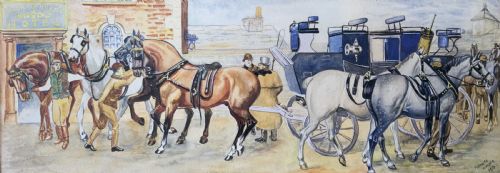
When you search for framed watercolour equestrian prints, you encounter original painted works rather than mass-produced mechanical reproductions. These pieces capture horses, hunting scenes, and racing subjects directly onto paper through fluid pigment applications.
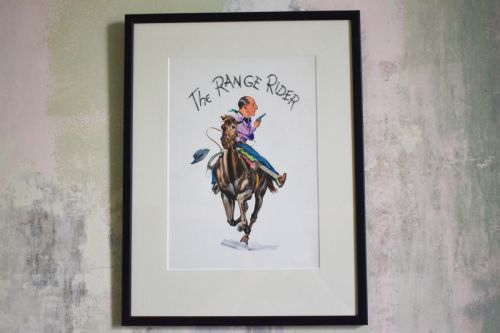
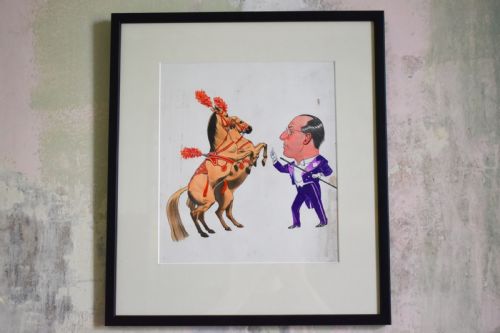
The selections available here span from the nineteenth century through the early twentieth century, encompassing Victorian sporting art, Edwardian illustration, and British impressionism. You will find single signed waterpaintings alongside framed sequences and sketches detailing coaching and coursing.
Subjects range from bustling racecourses and coaching inns to intimate character studies of horses and hounds. Each framed artwork preserves a specific moment of sporting history rendered by period artists.
How they were made
Artists applied watercolour pigments onto paper supports, often building up washes to create depth in the horses, riders, and landscapes. These works were subsequently mounted behind glass within traditional wooden surrounds such as oak frames or giltwood moulding.
The integration of ink outlines with transparent watercolor washes characterises many early twentieth-century illustrations and sporting sketches. Protective glass framing ensures the preservation of the delicate paper and water-soluble pigments against atmospheric moisture and handling.
Listings incorporate works created across several decades, spanning the nineteenth century through the 1930s.
What varies in quality
The distinction between standard examples and exceptional works lies in the immediacy of the brushwork and the clarity of the composition. Master practitioners capture the kinetic energy of galloping horses and the distinct expressions of riders with minimal, confident strokes.
Framing and presentation also separate pieces, with period oak frames and original giltwood mounts offering greater historical harmony than later replacements. The prominence of the artist's signature and the documented context of the scene elevate specific waterpaintings within the broader selection.
John Atkinson·Charles Johnson Payne Snaffles
The Framed Watercolour Equestrian Prints Glossary
- Watercolour
- A painting method in which the paints are made of pigments suspended in a water-based solution. This technique allows for translucent washes of colour on paper supports.
- Giltwood
- Wood that has been treated with gold leaf or a gold-coloured metallic finish. This material frequently appears on decorative period picture frames.
- Coursing
- The pursuit of hares or other game with greyhounds or lurchers by sight rather than scent. This traditional sporting pursuit forms the subject of several nineteenth-century works.
- Victorian Sporting Art
- Artwork produced during the nineteenth century focusing on equestrian subjects, hunting, and rural sports. These pieces reflect the prominent place of horses in the period's visual culture.
Framed Watercolour Equestrian Prints: Frequently Asked Questions
What subjects appear in these watercolours?
The available artworks depict horses, hounds, racing scenes, coaching inns, and hunting sequences. Subjects range from animated rural sketches to detailed character portraits created by period illustrators.
Many pieces document traditional British pastimes such as coursing and steeplechasing, offering direct visual records of early twentieth-century sporting life.
How should I hang these framed watercolours?
Because watercolours are sensitive to direct sunlight, select a wall away from harsh, continuous rays to prevent fading of the pigments on paper. Ensure the room maintains stable humidity levels to protect both the paper and the wooden frames.
Mount them at eye level to appreciate the fine brushwork and ink details up close. Traditional oak and giltwood frames complement studies of this era effectively.
Are these works original paintings?
The inventory consists of hand-painted watercolours rather than printed reproductions. Many feature signatures from period artists working within British sporting traditions.
Each piece displays the individual brush marks and tonal washes characteristic of unique works on paper. The framing typically incorporates protective glass to shield the delicate medium.
What periods do these artworks represent?
The pieces span from the nineteenth century through the early twentieth century, including Edwardian and mid-century modern examples. This timeline covers the height of traditional British sporting illustration.
Styles range from Victorian sporting art and British impressionism to early twentieth-century cartoon watercolours. Each era brings distinct aesthetic approaches to capturing equestrian movement.