
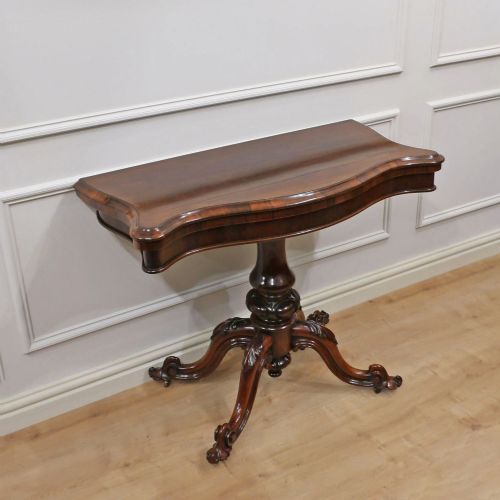
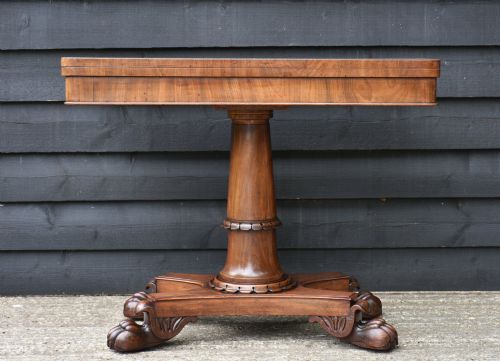
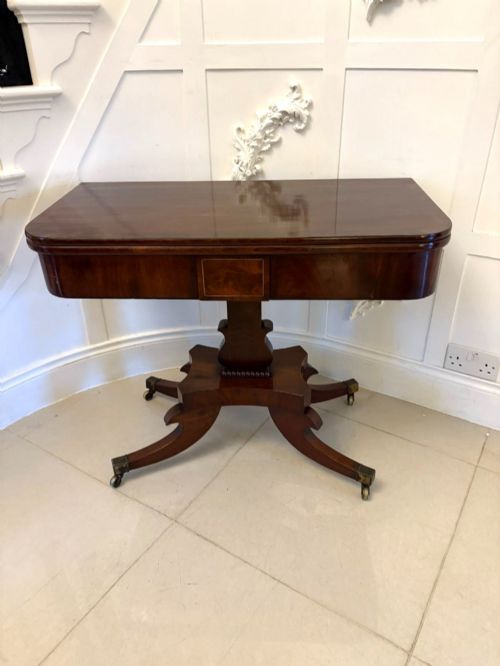
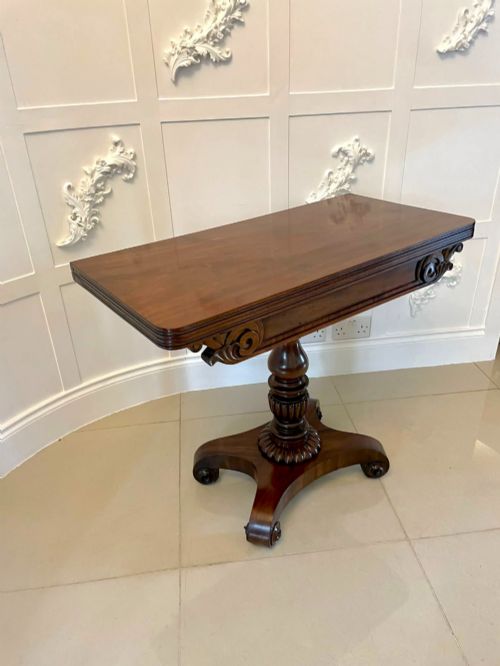
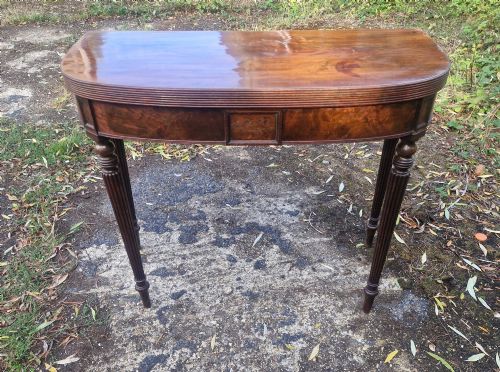
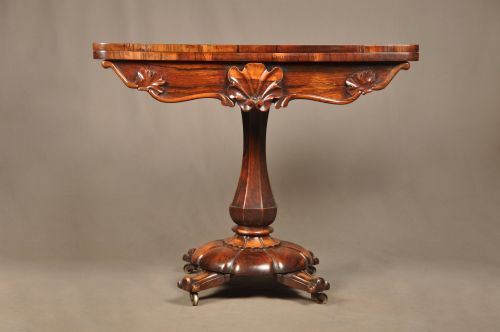
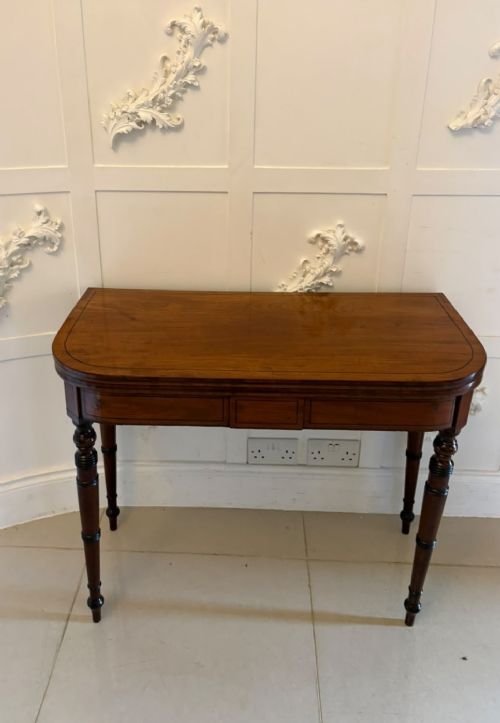
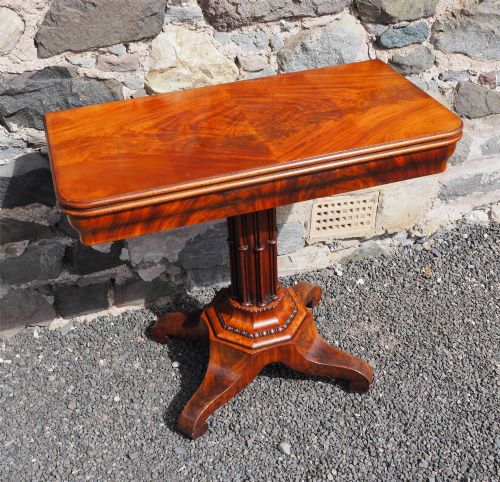
Antique Fold Top Console
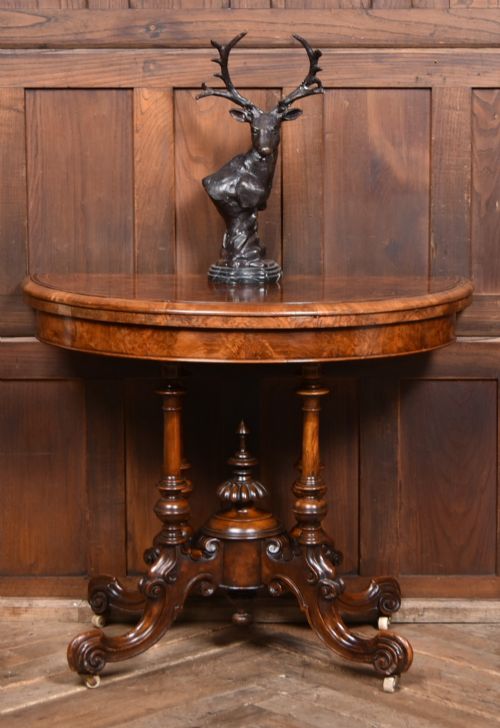
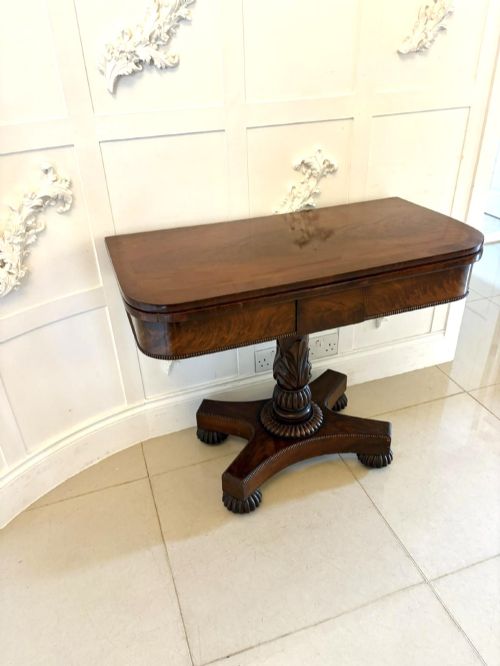
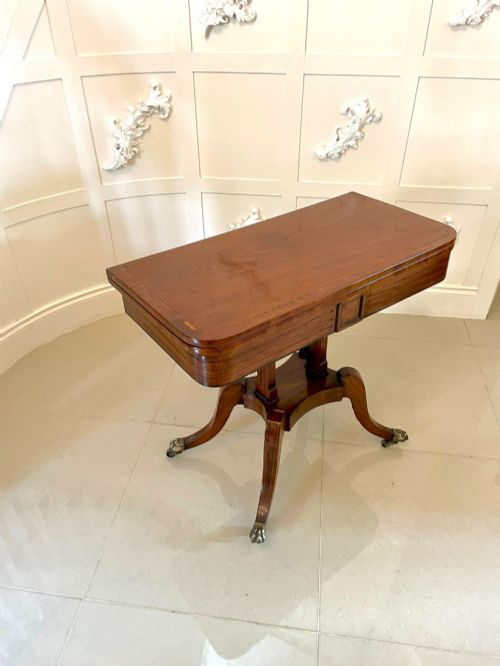
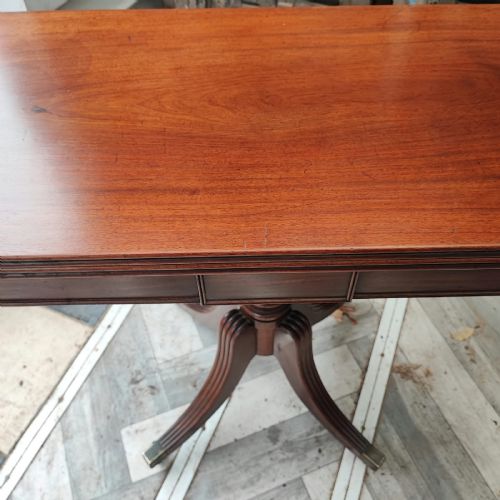
An antique fold top console serves multiple functions, transforming from a slim wall table into a card or tea surface.
Antique Fold Top Console
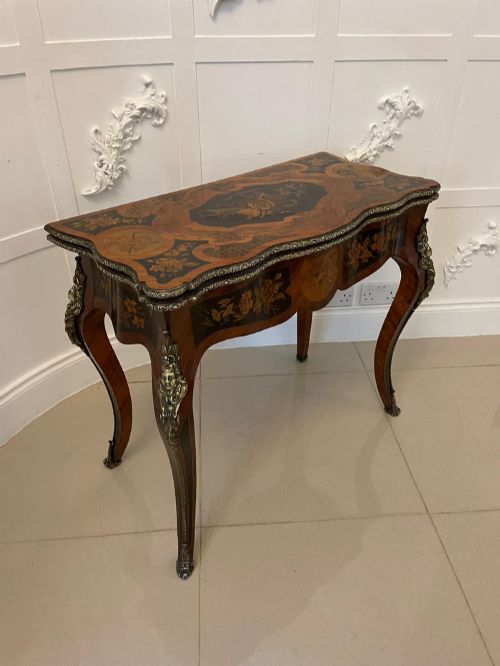
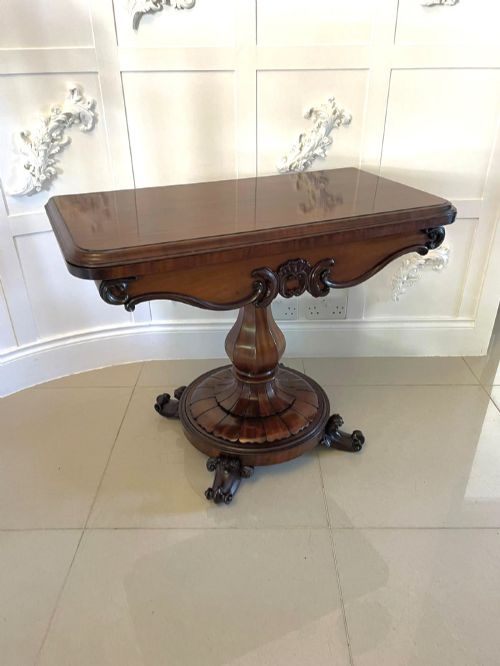
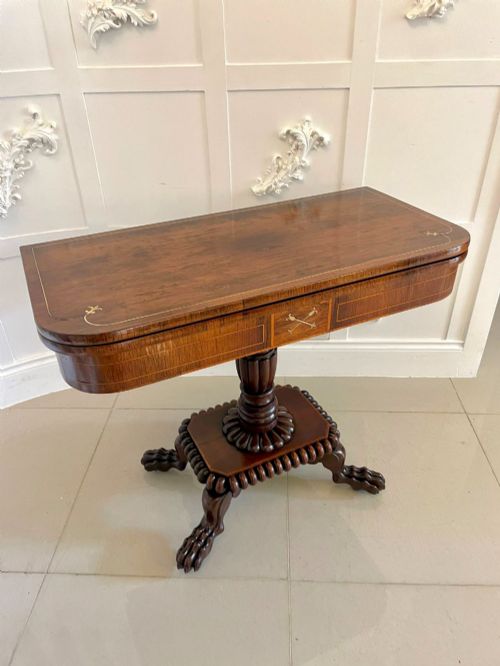
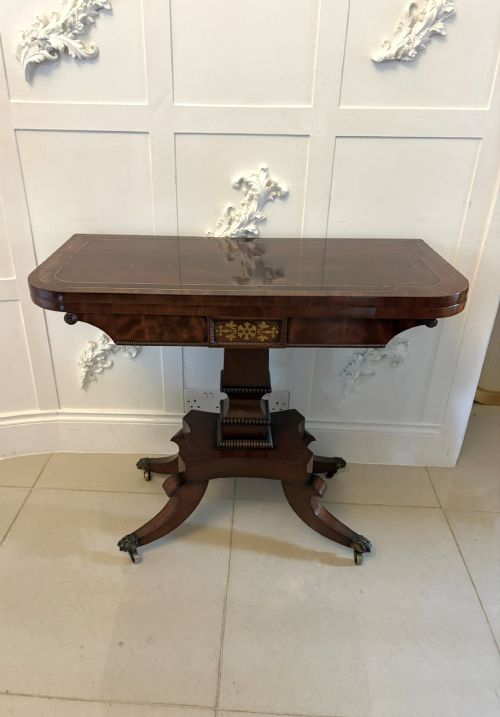
When searching for an antique fold top console, buyers encounter versatile furniture designed to stand against a wall until needed for hospitality or entertainment. These pieces span the Georgian, Regency, William IV, and Victorian eras, originating mainly as card tables, tea tables, and games tables that double in purpose.
The most common versions on this page are mahogany and rosewood examples from the Regency and Victorian periods, often featuring D-shaped or demi-lune tops. Walnut, burr walnut, and satinwood pieces also appear frequently, reflecting the shifting tastes in domestic interiors across the eighteenth and nineteenth centuries.
Materials and Construction
Cabinet makers utilised dense primary timbers such as mahogany, rosewood, and walnut, often selecting highly figured veneers for the main display surfaces. Crossbanding in contrasting woods like burr yew frames the primary panels, while delicate wood inlay and brass stringing define the borders.
Structural stability relies on pivoting or swinging rear legs that support the heavy folding leaf when opened. Ormolu mounts, carved sabre legs, and subtle brass details finish the construction, connecting the timber frames to the prevailing style of each decade.
Listings feature mahogany and rosewood predominantly, alongside walnut, satinwood, and amboyna across the Georgian and Victorian periods.
Craftsmanship and Proportion
The division between standard and superior pieces rests on the choice of timber and the precision of the cabinet work. Finer examples display carefully matched flame mahogany or rich rosewood grain that flows seamlessly across the fold when opened.
Proportion and execution of detail separate workshop standards, visible in the crispness of carved elements and the seamless integration of brass inlay. Superior tables maintain rigid stability in the folding mechanism without sagging at the hinge joints.
Gillows
The Antique Fold Top Console Glossary
- Fold top
- A hinged table surface that opens to double its area, revealing a hidden compartment or a green baize playing surface beneath. This mechanism allows the furniture to function as both a console and a game table.
- Crossbanding
- A decorative border of veneer laid with the grain running perpendicular to the main panel. This technique frames the top surface with a contrasting ribbon of wood.
- Demi-lune
- A half-moon shape characteristic of tables designed to sit flush against a wall. The straight edge faces the panelling while the curved front projects into the room.
- Ormolu
- Gilt bronze mounted onto furniture as decorative embellishment. Makers applied these cast metal details to enrich the corners and friezes of French-influenced pieces.
- Figured mahogany
- Timber selected for its swirling, three-dimensional grain pattern rather than straight lines. Cabinet makers prized this wood for the primary visual impact on table tops.
Antique Fold Top Console: Frequently Asked Questions
What is an antique fold top console?
An antique fold top console is a multifunctional table featuring a hinged top that opens to provide a larger surface for dining, tea, or card games. When closed, it sits compactly against a wall as a decorative side table.
These pieces were essential items in period drawing rooms, adapting quickly to the social demands of hosting guests throughout the Georgian and Victorian eras.
How do I date an antique console table?
Dating relies on observing the primary woods, leg styles, and construction techniques characteristic of specific eras. Regency tables often feature brass inlay and sabre legs, while Victorian examples frequently utilise burr walnut and heavier turned supports.
Examining the secondary woods inside the frame and the style of the hinges provides further evidence for the exact period of manufacture.
Can these tables be used daily?
These tables function well in modern homes as hallway consoles or occasional living room side tables. Opening the top requires care to protect the historical hinges and the supporting pivot leg.
Placing them away from direct heat sources and sunlight preserves the polished timber surfaces and prevents the veneers from warping over time.
What is the difference between a tea table and a card table?
Tea tables and card tables share similar folding mechanisms, but their internal surfaces differ based on their original purpose. Card tables often retain lined interiors designed for board games, whereas tea tables usually present polished wood across the entire opening leaf.
Many listings describe these pieces interchangeably because makers built them to serve multiple hosting functions within the home.