
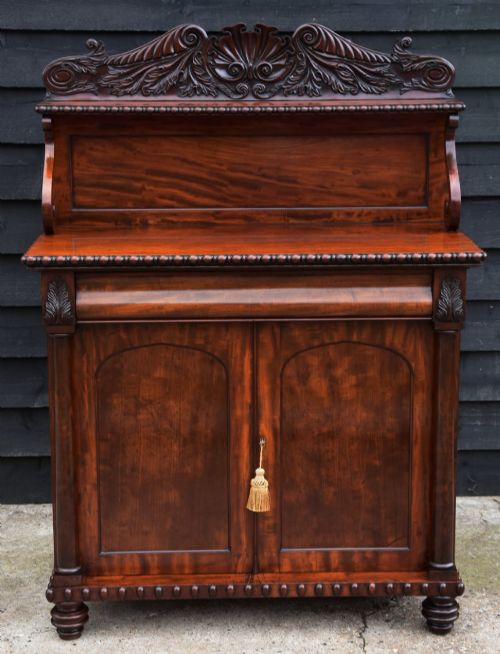
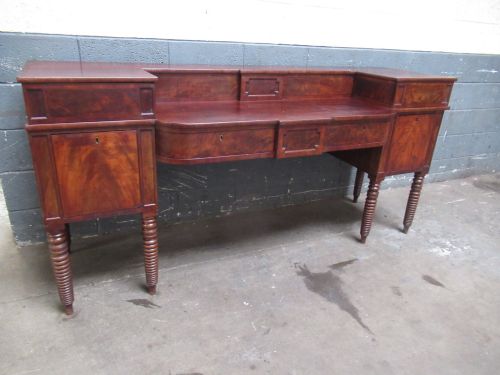
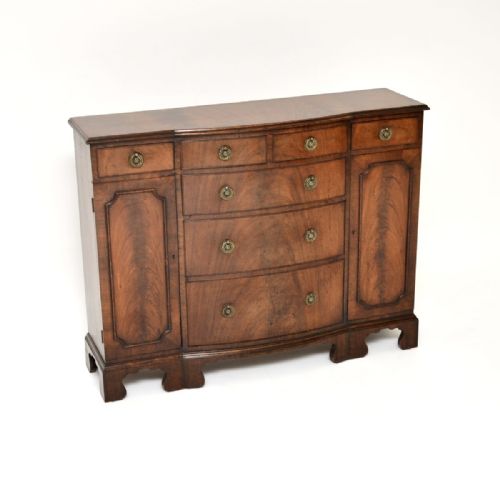
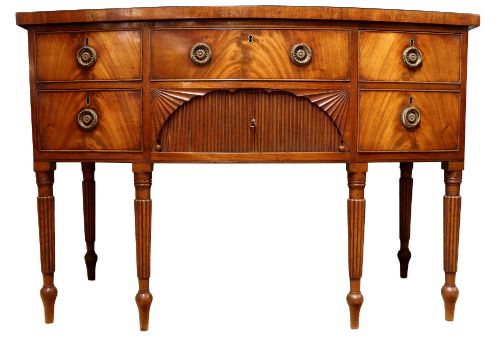
Antique Flame Mahogany Credenza
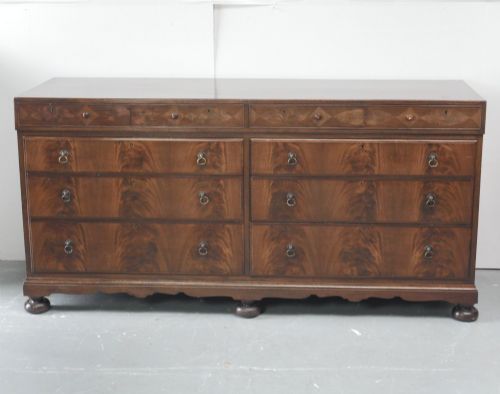
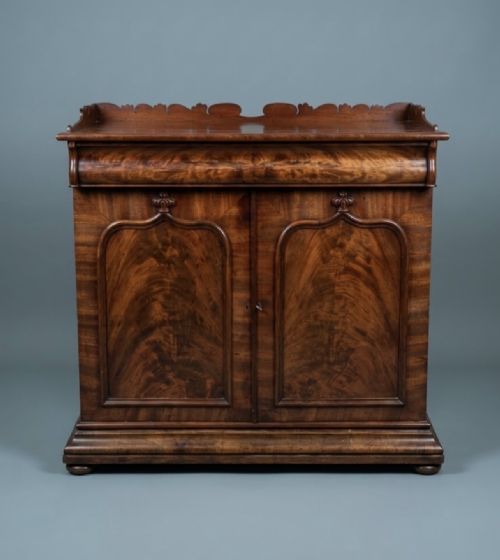
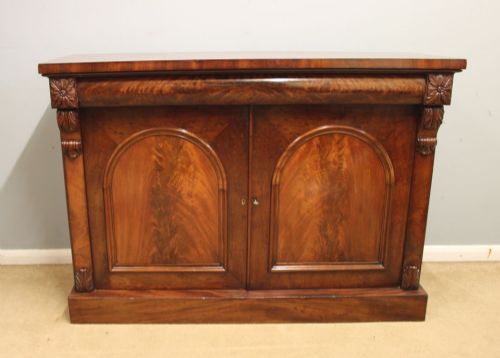
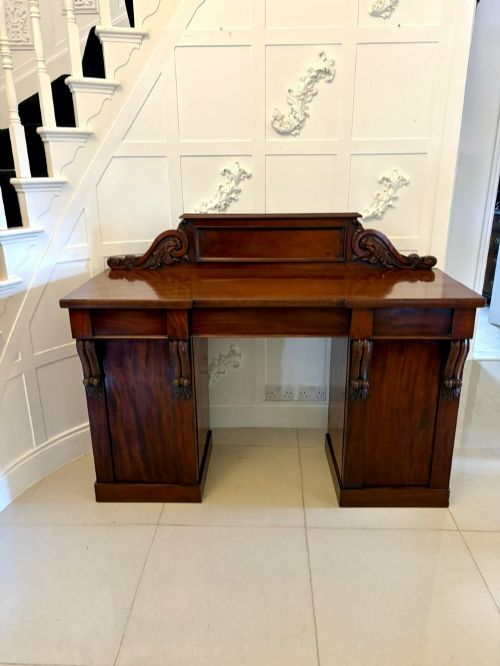
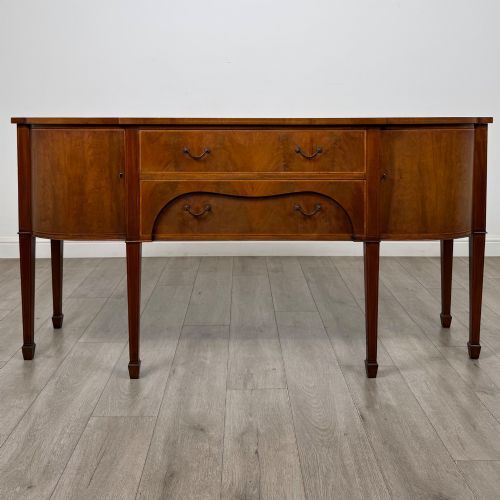
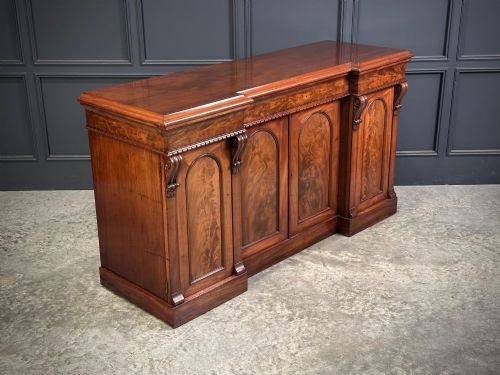
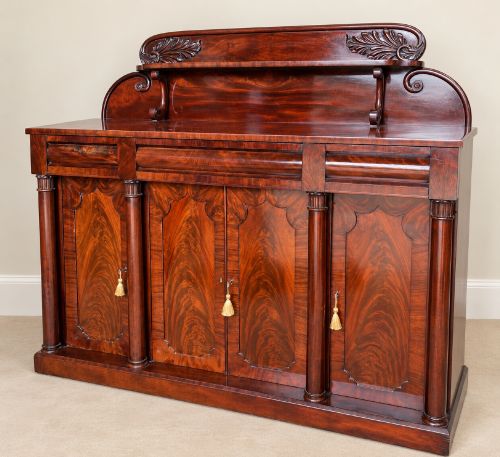
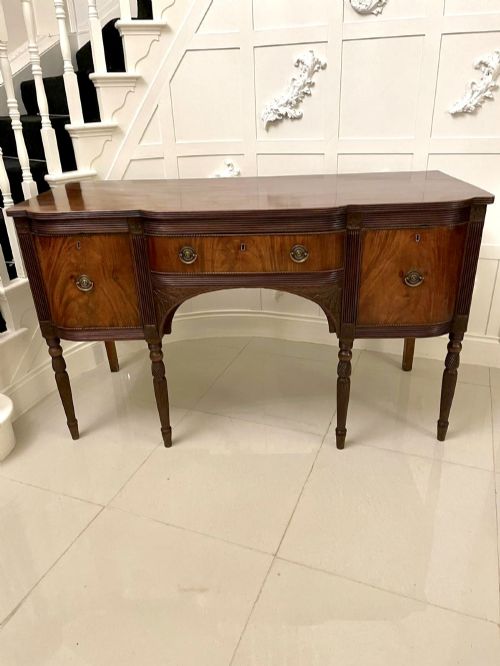
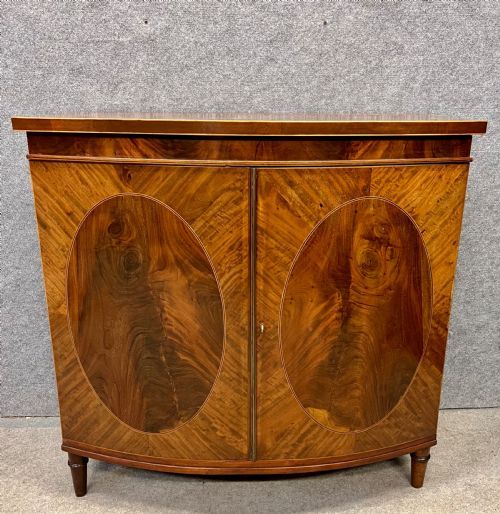
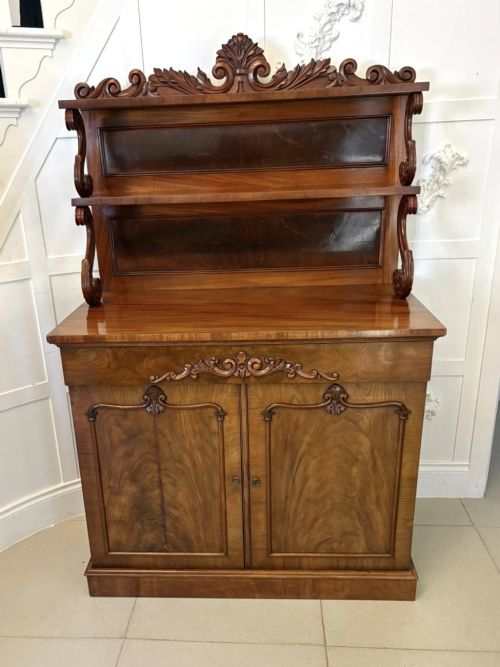
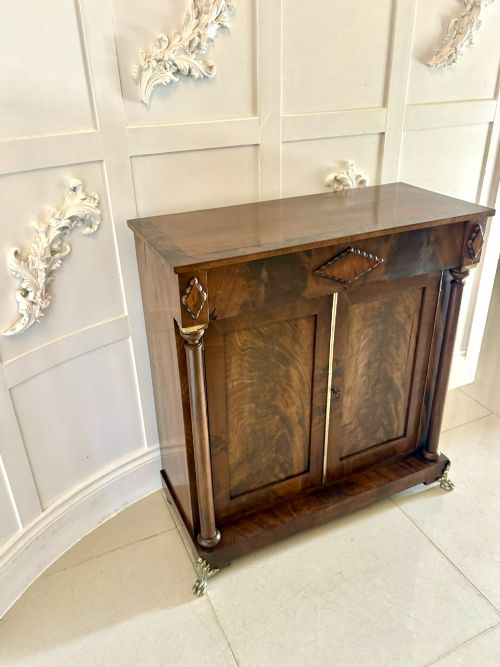
An antique flame mahogany credenza offers striking figured grain and deep reddish tones, bringing undeniable presence to a grand dining room or hallway.

What They Are
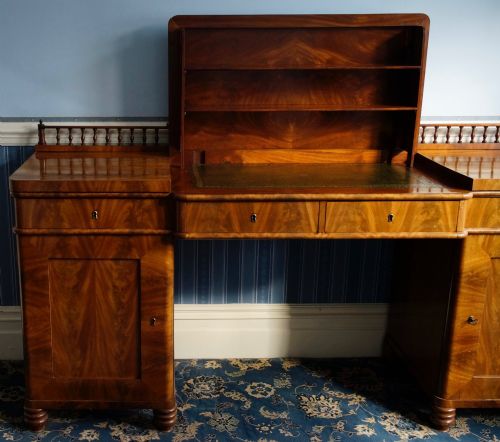
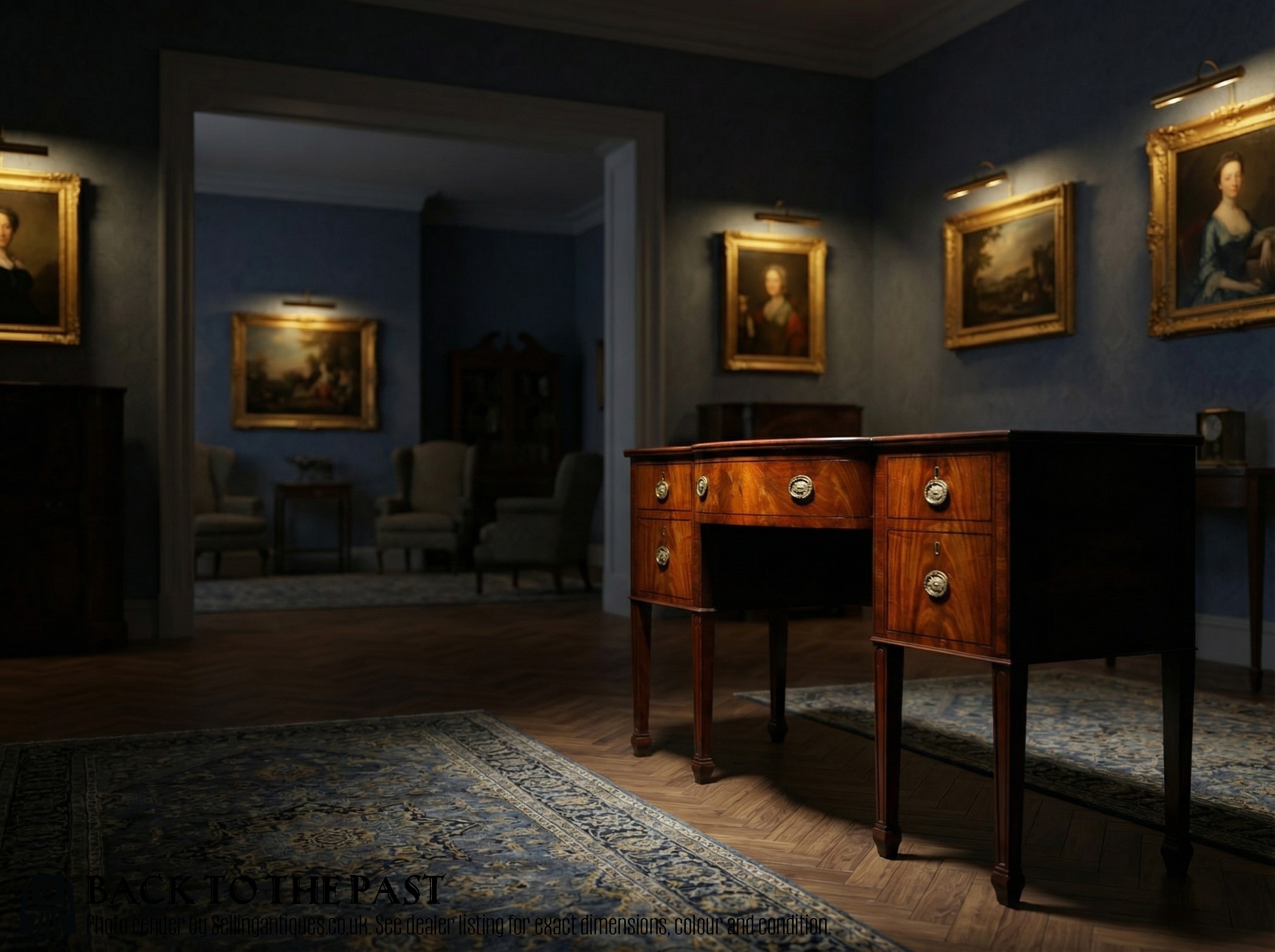
The antique flame mahogany credenza is a sophisticated form of storage furniture, appearing across the Regency, Georgian, and Victorian periods alongside related sideboard and chiffonier designs. These pieces often incorporate glazed doors or twin pedestals, serving both display and functional purposes within the home.
The selection ranges from early nineteenth-century chiffonier bookcases to twin pedestal sideboards and Napoleon III boulle credenzas dated around eighteen-sixty. Each example reflects the distinct aesthetic preferences of its era, from restrained Georgian proportions to more elaborate nineteenth-century styling.
How They Were Made
Cabinet makers utilised solid mahogany and applied richly figured flame mahogany veneers to exterior surfaces, creating dramatic patterns across doors and panels. Supplementary timbers and decorative details incorporated boxwood stringing and brass mounts to accent the cabinet work.
Glazed elements required precise joinery to house glass securely within wooden frames, while structural carcasses relied on traditional cabinet-making joints designed to support heavy timber tops and internal shelving.
Retail Price Guide 2026
Typical UK retail prices for flame mahogany credenza, calculated from the Sellingantiques database of over a million retail prices indexed since 2003. This retail price guide relies exclusively on Sellingantiques data; no external sources or auction records are used, so the figures do not describe the wider market.
The listings span the Georgian, Regency, and Victorian periods, incorporating materials such as flame mahogany, brass, glass, and boxwood.
What Varies in Quality
The grade of flame mahogany veneer dictates the visual impact of the piece, with symmetrical grain matching and deep chatoyancy marking out superior cabinet work. Lesser examples feature plain mahogany or less skillfully applied veneers that lack the lively figuring seen on finer pieces.
Refinement of proportion and the delicacy of brass hardware or boxwood inlay distinguish the output of accomplished workshops from standard commercial production. Construction methods, such as the thickness of secondary timbers and the integrity of the carcase, determine how well the piece survives centuries of use.
The Antique Flame Mahogany Credenza Glossary
- Flame mahogany
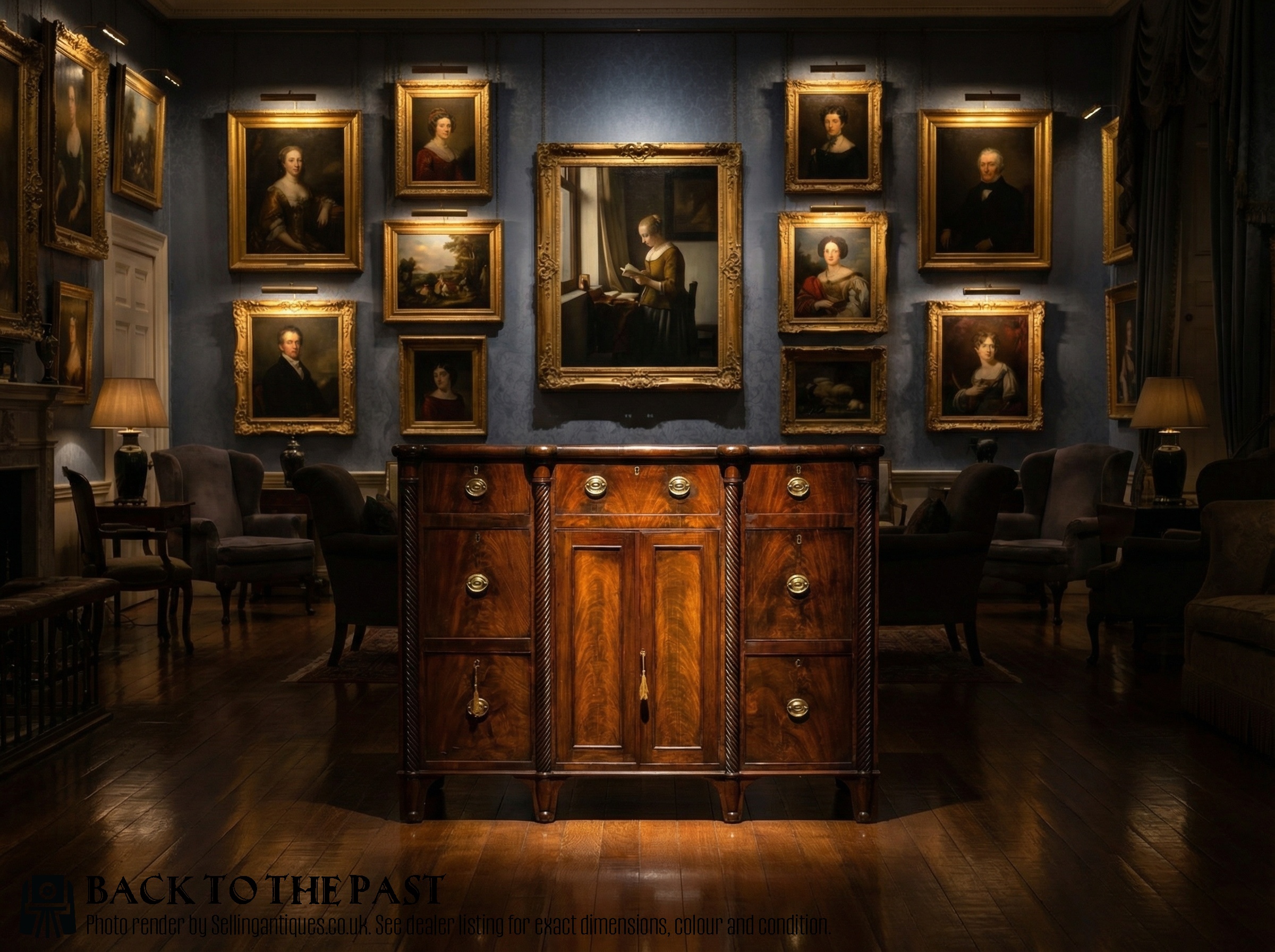
- A veneer cut from the fork of the mahogany tree where the branch meets the trunk, producing a rippling, flame-like grain pattern. This highly decorative wood was prized by nineteenth-century cabinet makers for principal display surfaces.
- Credenza
- A low cabinet or sideboard, frequently featuring glass-fronted doors for the display of china or books. The form evolved during the nineteenth century to become a central decorative item in formal reception rooms.
- Chiffonier
- A compact sideboard or cabinet equipped with shelving or a bookcase superstructure, common in nineteenth-century interiors. It provided practical storage in rooms where a full-sized sideboard proved too large.
- Boxwood
- A dense, pale yellow wood utilised for fine stringing, inlay, and contrasting borders on mahogany furniture. Its subtle colour highlights the darker tones of flame mahogany veneers.
- Twin pedestal
- A structural arrangement where the main cabinet body rests upon two separate columnar or enclosed pedestals. This configuration appears frequently on larger Regency sideboards.
Frequently Asked Questions
What is an antique flame mahogany credenza?
An antique flame mahogany credenza is a low nineteenth-century cabinet distinguished by highly figured wood veneers and rich reddish-brown tones. These pieces served as decorative storage units in formal rooms.
They combine utility with striking visual presence, often featuring glazed doors or brass mounts that reflect the stylistic preferences of the Regency and Victorian periods.
How do I style a credenza at home?
A credenza works well in a dining room, hallway, or living space as a focal point for displaying ceramics, lamps, or decorative objects. Its low profile allows artwork or mirrors to be hung comfortably above it.
Ensure the piece has adequate clearance from foot traffic and maintain stable room humidity to protect the nineteenth-century mahogany veneers from drying out.
What is the difference between a credenza and a sideboard?
While both provide dining or living room storage, a credenza is traditionally a lower, more enclosed cabinet often featuring glass doors for display. Sideboards frequently include a broader range of drawers and pedestal cupboards.
Terminology often overlaps in nineteenth-century furniture, with chiffoniers and sideboards sharing similar architectural roots depending on the maker and period.