
Antique Fire Surround Curb
An antique fire surround curb grounds a hearth with metalwork designed to keep burning fuel safely contained.
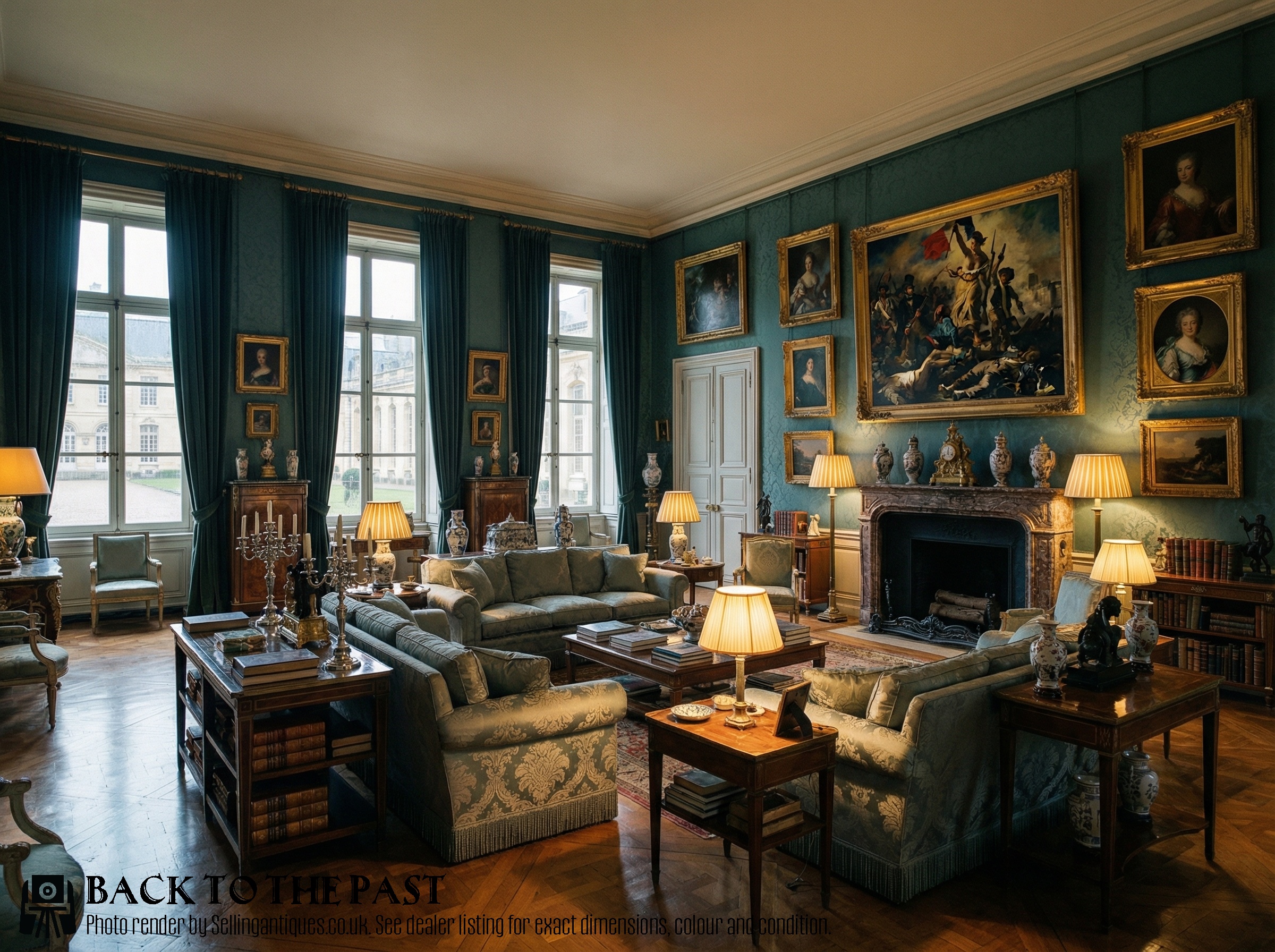
Antique Fire Surround Curb
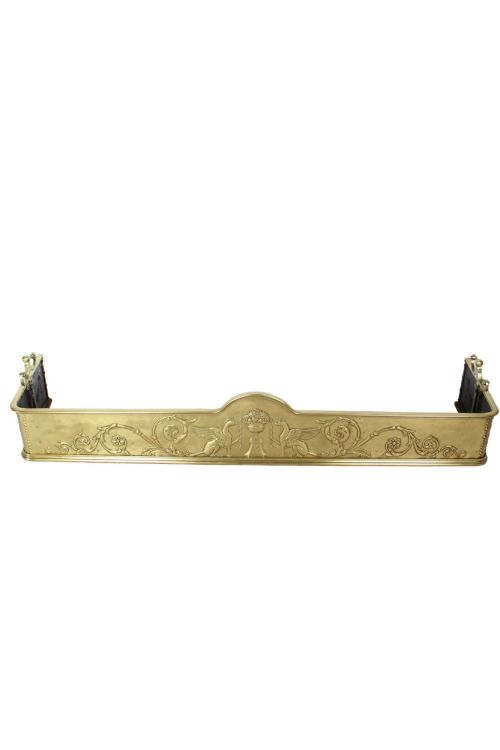
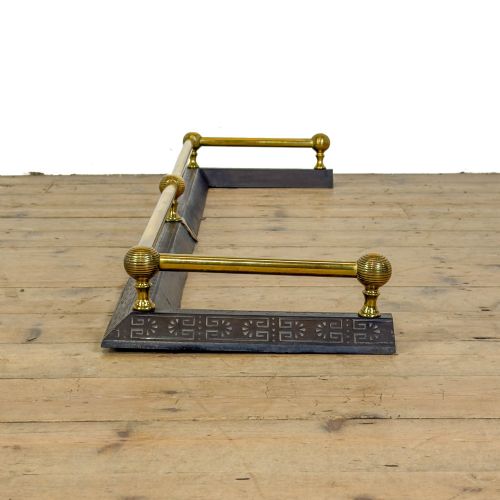
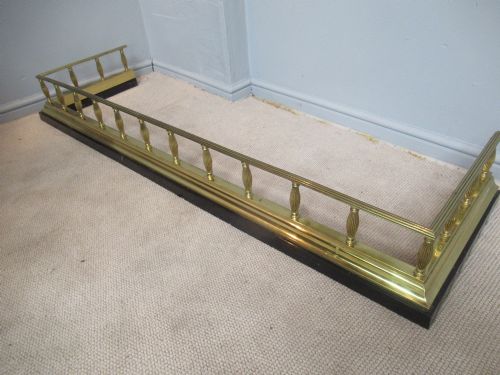
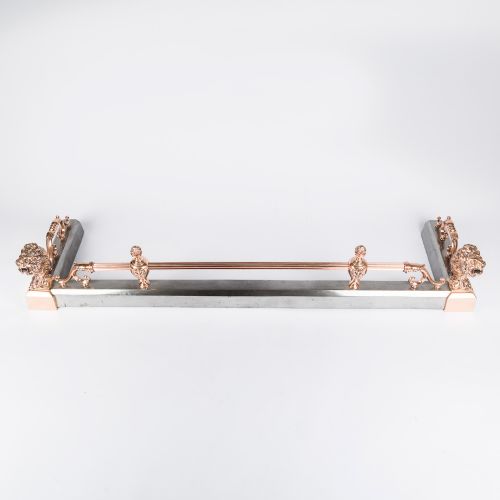
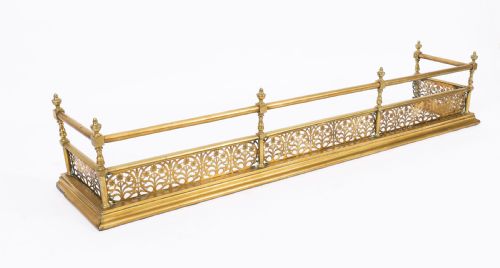
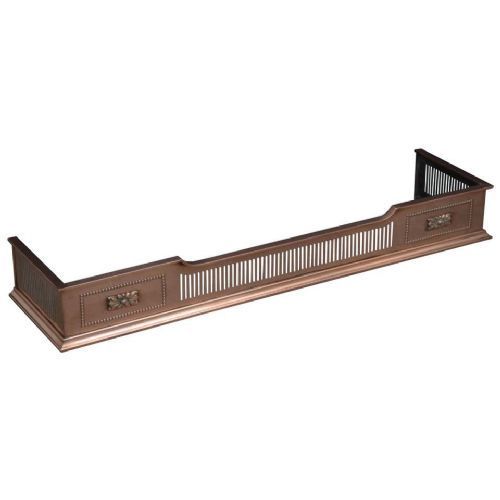
An antique fire surround curb frames the hearth, functioning as a physical barrier between the open fire and the room. Buyers typically encounter nineteenth century and Victorian brass, steel, and iron examples spanning straight lengths and club fender designs.
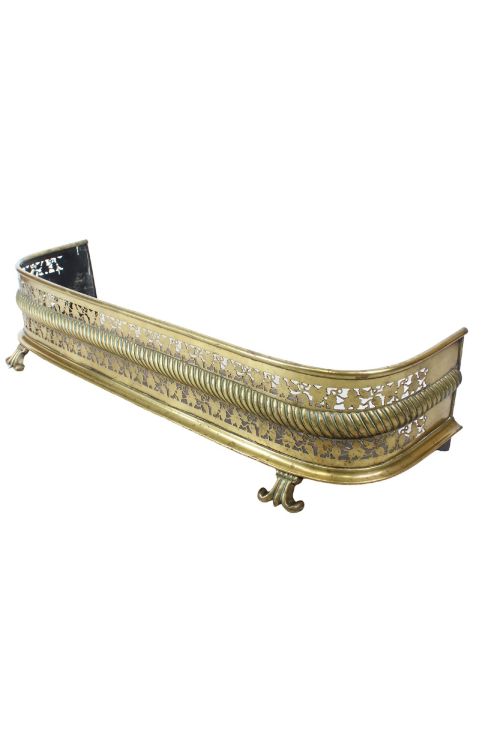
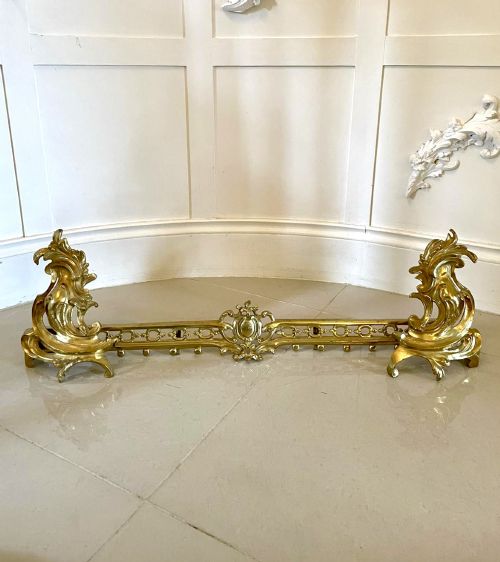
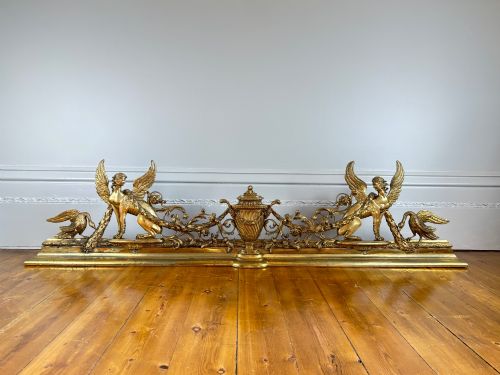
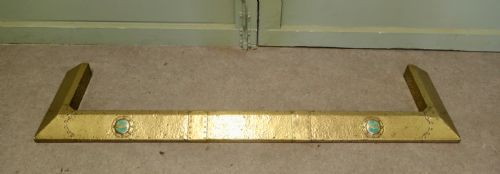
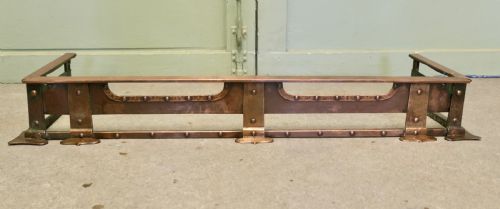
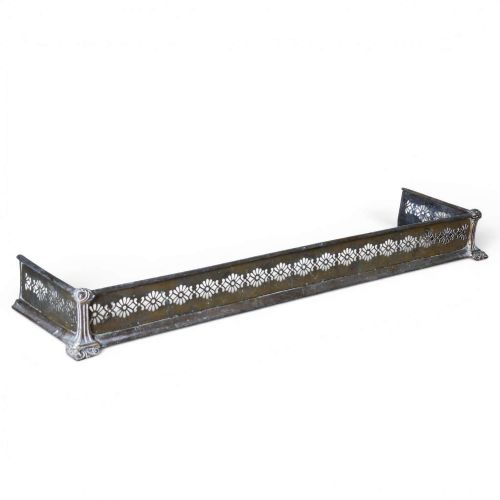
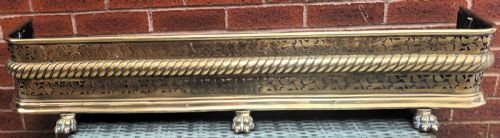
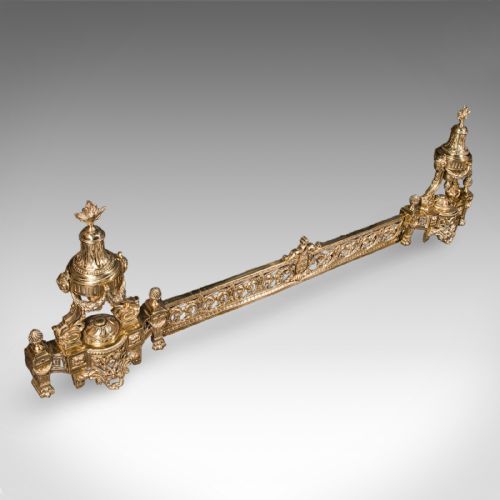
The selection ranges from simple pierced brass channels and adjustable frames to ornate Arts and Crafts copper pieces set with enamel cabochons. Georgian serpentine steel versions and French Rococo or Louis styles also appear across the selection.
Materials and Construction
Metalworking techniques dictate the construction, utilising cast iron, beaten copper, polished steel, and solid or gilded brass. Smiths pierced sheet brass, riveted copper plates, and forged iron frames to build rigid hearth boundaries.
Makers integrated decorative elements such as beaded decoration, flower pateri, and leather upholstery on club fenders. Bronze and cast iron provided structural weight, while brass and copper surfaces received patination and gilding.
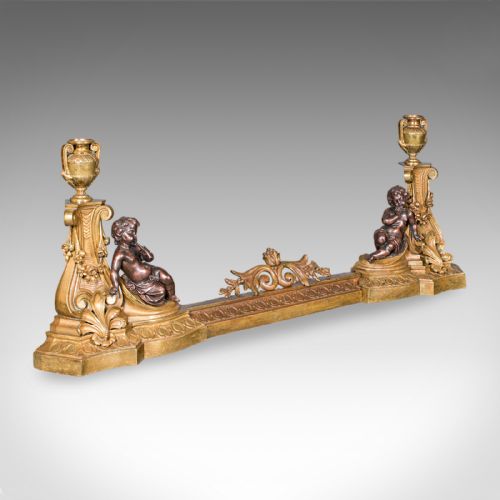
Gilt cherubs occasionally watch over the hearth on French bronze andirons.
Assessing Craftsmanship
Quality rests on the weight of the metal and the crispness of the detailing, separating heavy cast or forged pieces from lighter stamped sheet metal. Pierced brass work with sharp, clean apertures and robust corner joints indicates superior manufacture.
The treatment of auxiliary materials, such as tight leather seating on club fenders and secure riveting on Arts and Crafts copper, distinguishes standard production from finer workshop output.
E F Caldwell New York
The Antique Fire Surround Curb Glossary
- Fender
- A low metal guard placed around the hearth to keep embers from rolling onto the floor. These barriers vary from simple rails to upholstered club variants.
- Club fender
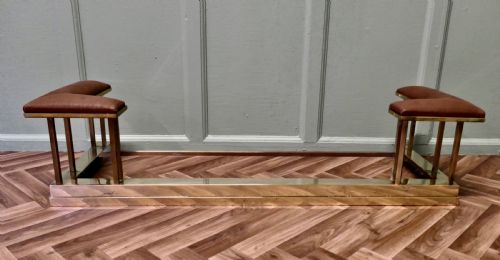
- A low, freestanding hearth guard featuring padded leather seats on either end. This form allows people to sit close to the fireplace.
- Kerb
- An alternative spelling for curb, denoting the metal boundary line of the fireplace hearth. It functions interchangeably with fender in period listings.
- Patera
- A circular ornamental bas-relief resembling a classical libation dish. Makers stamped or cast these motifs into brass and copper fender rails.
Antique Fire Surround Curb: Frequently Asked Questions
What is a club fender?
A club fender is a hearth guard built with integrated upholstered leather seats on the ends. It provided a traditional seating area close to the warmth of the fire.
These pieces combined metal frames of brass or oak with padded leather tops, making them a functional piece of fireside furniture.
How do I measure for a fire curb?
Measure the width and depth of your fireplace hearth to ensure the metal curb sits correctly outside the opening. Adjustable fenders offer flexibility if your dimensions fall between standard sizes.
Check the internal and external measurements carefully before selecting a rigid nineteenth century frame.
Are these curbs adjustable in length?
Many period examples feature sliding mechanisms that allow the frame to extend to fit different hearth widths. These extending models were popular in the nineteenth century for domestic versatility.
Fixed length curbs require exact matching to your fireplace surround dimensions.
What metals were used?
Makers utilised brass, cast iron, steel, copper, and bronze for hearth curbs. Pierced brass and beaten copper dominate the Victorian and Arts and Crafts selections.
Iron and steel provided structural strength, while bronze and gilt brass offered ornamental surface finishes.