

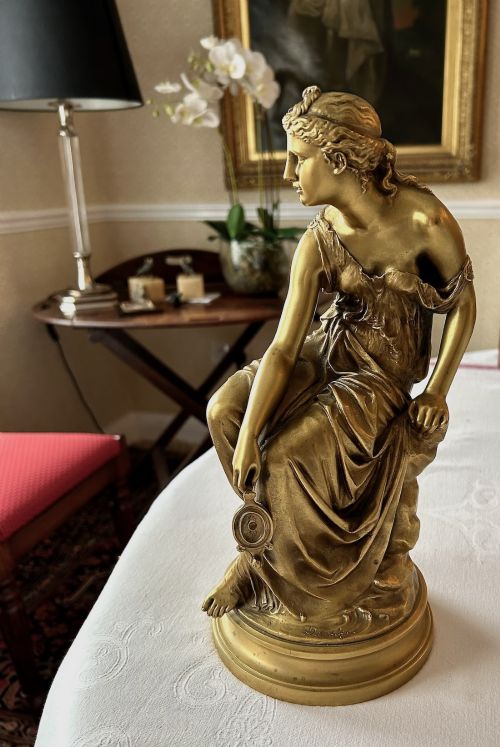


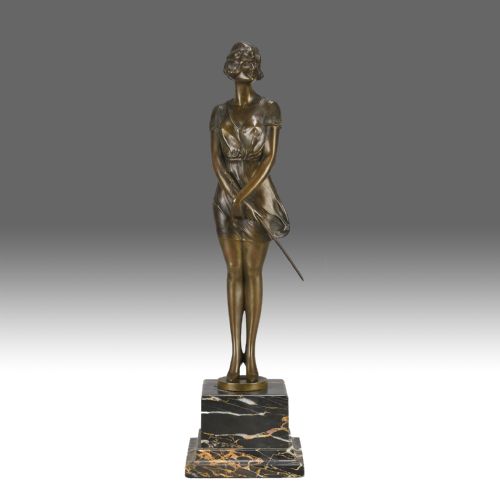

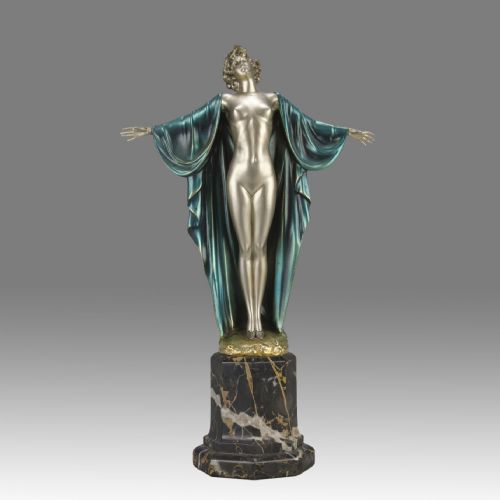

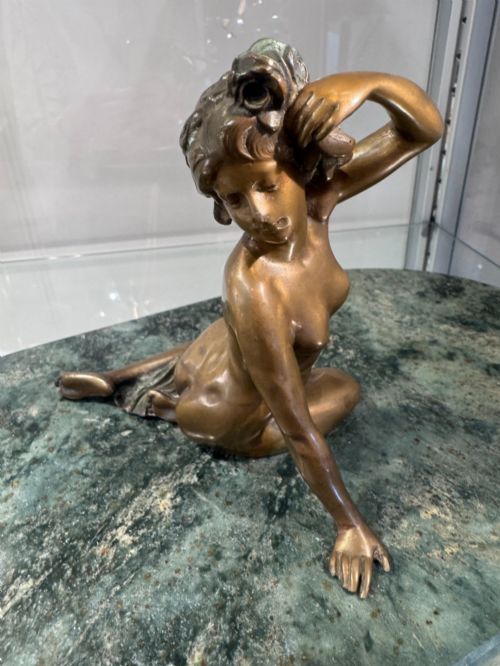



Antique Female Bronze
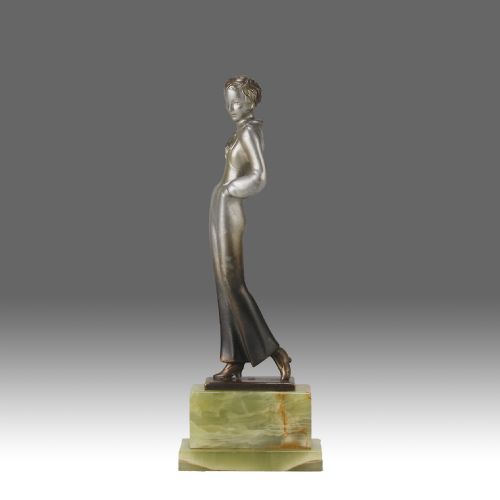
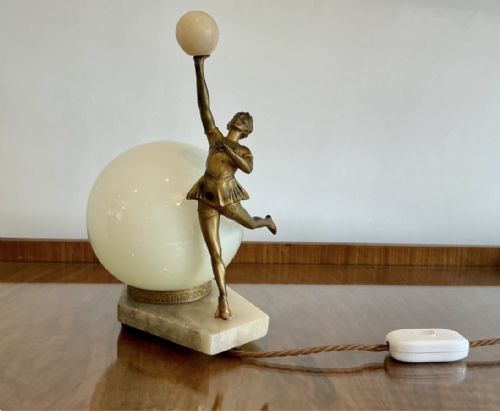
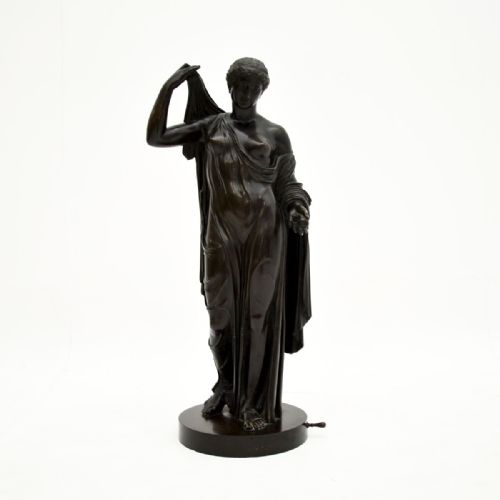
An antique female bronze captures the human form through enduring metal, ranging from classical drapery to modernist dancers.
Antique Female Bronze
When searching for antique female bronze, buyers encounter a diverse selection of sculptures, statuettes, and busts depicting women from various historical periods.
The most common versions on this page span the nineteenth century and the early twentieth century, taking the form of neoclassical maidens, Art Nouveau figures, and Art Deco dancers.
These works bridge decorative arts and classical sculpture, serving as mantel ornaments, table lamps, and cabinet pieces created by European foundries and individual artists.
Materials and methods
Foundries utilised the lost-wax casting technique or sand casting to capture intricate details in metal, often combining solid bronze with contrasting elements.
Many surfaces received patination through chemical treatments to achieve dark brown or green tones, while others were embellished with cold-painted polychrome finishes or gilt applications.
Sculptors frequently mounted their metal figures onto heavy bases made of marble, onyx, or slate to provide stability and visual contrast.
Dancers frozen mid-kick in cold-painted bronze share shelf space with austere neoclassical maidens and athletic whip girls.
Assessing quality
Quality reveals itself in the crispness of the casting and the sensitivity of the chaser's work in cleaning the metal after it left the mould.
Superior pieces display fluid anatomy, natural drapery folds, and meticulously applied patination or cold-painted details that remain vibrant over time.
The choice and finish of the supporting marble or onyx plinth, alongside a clear signature or foundry mark, distinguish standard commercial editions from masterworks.
Etienne-Henri Dumaige·Rudolf Küchler·Ferdinand Barbedienne·Bruno Zach·Pierre le Faguays·Ferdinand Preiss·Josef Lorenzl·August Moreau·Emmanuel Villanis·Affortunato Gory·Mathurin Moreau·Demetre Chiparus·Henri Godet·Jules Dalou·Georges Van Der Straeten·Edouard Drouot·Carrier-Belleuse·Olof Ahlberg
The Antique Female Bronze Glossary
- Patinated bronze
- Bronze that has been treated with chemical solutions to produce a specific surface colour, most commonly shades of brown, green, or black.
- Cold-painted bronze
- A method where paint is applied to the metal without heat firing, characteristic of Austrian workshops from the early twentieth century.
- Spelter
- An alloy of zinc and other metals often utilised as a less expensive alternative to bronze during the nineteenth and twentieth centuries.
- Lost-wax casting
- A historic method of metal casting where a molten metal is poured into a mould that has been created by melting away a wax model.
- Grand Tour
- The nineteenth-century tradition where wealthy travellers collected small-scale bronze copies of classical antiquities during their travels through Europe.
Antique Female Bronze: Frequently Asked Questions
How do I identify a cast bronze from spelter?
Bronze is heavier, colder to the touch, and rings with a clear tone when struck gently, whereas spelter feels lighter and more brittle.
Examining the underside or areas where the finish has worn can reveal the silvery-grey metal beneath a spelter figure.
What is cold-painted bronze?
Cold-painting involves applying natural pigments to a metal sculpture without subjecting the piece to kiln firing.
This technique allows for vivid coloration on dancers and figurative subjects, though the paint requires careful preservation away from moisture.
How should I clean my bronze sculpture?
Dust the surface regularly with a soft, dry brush to prevent the accumulation of dirt within the crevices of the casting.
Avoid using water, chemical polishes, or abrasive cloths, as these substances can strip the original patination from the metal.
Are marble bases original to the sculptures?
Many Art Deco and Art Nouveau figures were designed specifically to be mounted on cylindrical or stepped marble and onyx bases.
Original mounts typically show natural ageing, matching patination around the fixing points, and appropriate period construction.