

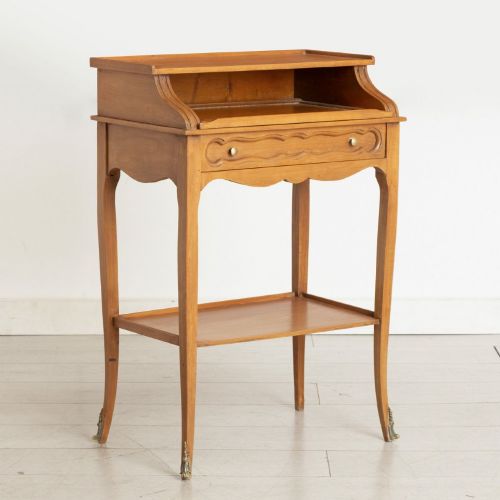


Antique Escritoire Table
An antique escritoire table brings fine writing surfaces and enclosed storage together in mahogany, rosewood and satinwood.
Antique Escritoire Table
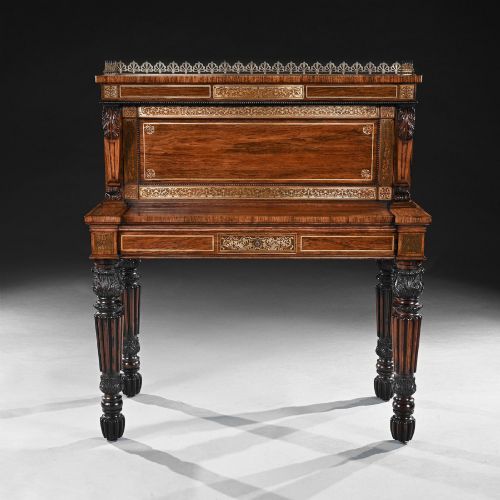
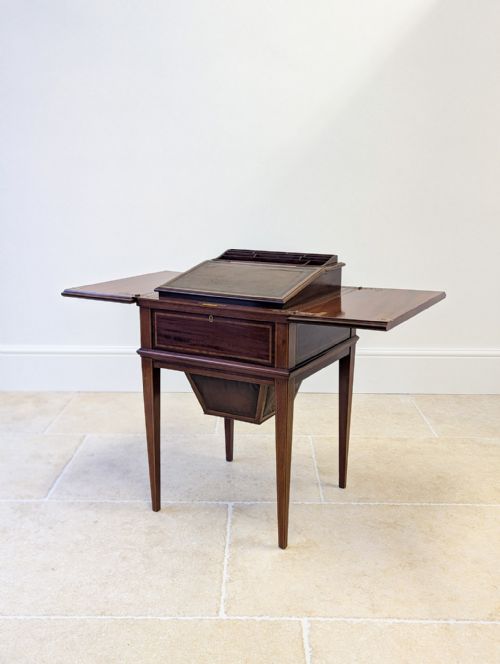
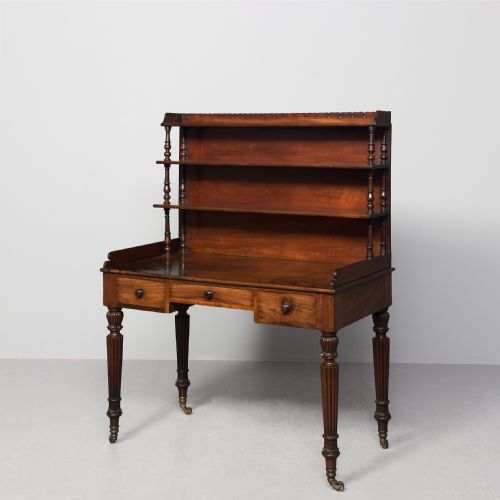
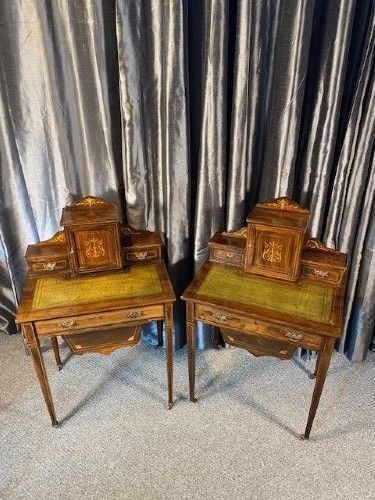
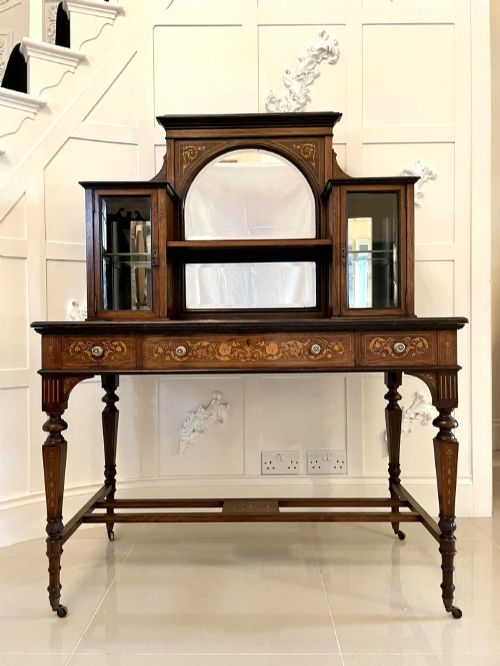
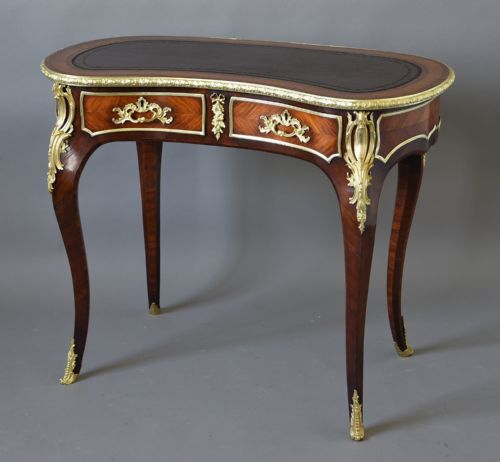
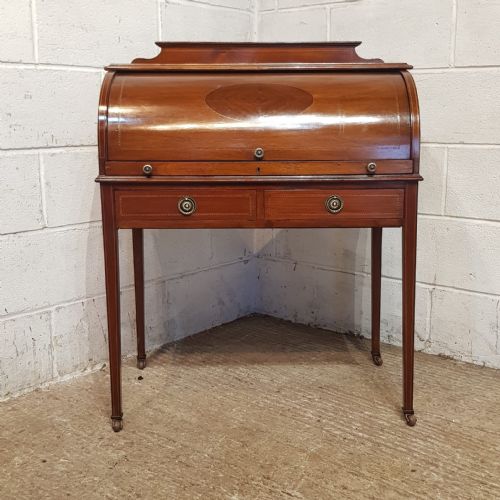
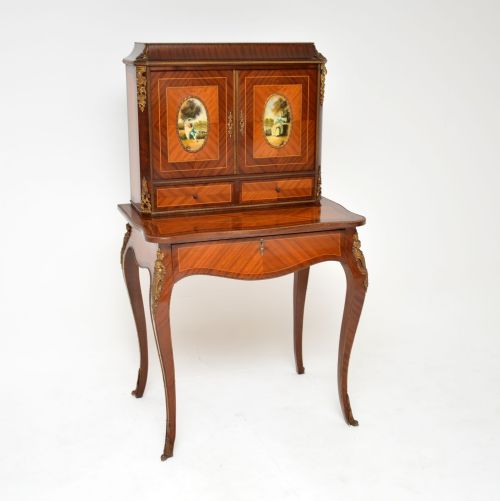
When searching for an antique escritoire table, buyers encounter compact writing desks, cylinder desks, and bonheur du jour forms designed for correspondence. These pieces span the nineteenth century into the Edwardian era, originating from English workshops and French ateliers. The selection here leans towards ladies writing tables, inlaid satinwood cabinets, and mahogany cylinder desks equipped with fitted interiors.
Makers and designers from Gillows to George Faulkner Armitage shaped these forms, alongside French pieces featuring ormolu mounts and marquetry. Regional variations include walnut Davenport desks, oak pieces by Edwards and Roberts, and Japanese hardwood writing tables. Buyers find everything from simple occasional writing desks to elaborate exhibition pieces with mirrored superstructures and revolving tabernacles.
Materials and construction
Cabinetmakers utilised dense timbers including mahogany, walnut, rosewood, kingwood, and satinwood, often enhanced with brass inlay, marquetry, and hand-painted details. French pieces incorporate ormolu mounts, bronze accents, and Vernis Martin panels. Structural integrity relied on precise joinery to support folding flaps, sliding cylinders, and revolving internal compartments.
Surfaces received leather writing inserts alongside delicate stringing and marquetry patterns. Secondary timbers provided stability for heavy carcases, while specialised mechanisms allowed for metamorphic writing surfaces and barrel fronts that operated smoothly.
Listings feature nineteenth-century and Edwardian pieces, incorporating mahogany, rosewood, satinwood, and walnut alongside brass, glass, and ormolu.
What separates the best pieces
Execution of internal fittings, drawer construction, and marquetry sets exceptional pieces apart from standard production. The crispness of brass ormolu mounts and the precision of inlaid stringing indicate the hand of skilled workshops such as Edwards and Roberts or documented makers.
Selection of timber figure, such as burr walnut, figured mahogany, and richly grained satinwood, defines visual impact. Superior examples maintain original hardware, working locks, and balanced proportions across complex forms like the Carlton house desk and the bonheur du jour.
Gillows Oxford Street Workshop·James Mein of Kelso·George Faulkner Armitage·Edwards and Roberts·Mathieu Befort
The Antique Escritoire Table Glossary
- Escritoire
- A writing cabinet or desk featuring a fall front or writing surface that conceals small drawers and compartments. These pieces range from tabletop cabinets to substantial standing desks.
- Bonheur du jour
- A light ladies writing desk featuring a small cabinet or set of shelves upon the upper surface. Originating in France, these pieces gained popularity during the eighteenth and nineteenth centuries.
- Cylinder desk
- A desk featuring a quarter-cylinder shutter that rolls back to reveal a sliding writing surface and pigeonholes. This mechanism protects the desk interior when closed.
- Ormolu
- Gilt bronze mounts applied to furniture, particularly French pieces of the nineteenth century. These decorative elements provide contrast against kingwood and mahogany carcases.
- Marquetry
- Decorative patterns formed by fitting together contrasting veneers of wood and other materials. Craftsmen used this technique on desk surfaces and cabinet doors.
Antique Escritoire Table: Frequently Asked Questions
How do I use an antique desk today?
These desks serve well as compact workstations for laptops, correspondence, or administrative tasks in a modern study or sitting room. Their fitted interiors and small drawers provide practical storage for stationery.
Care involves placing them away from direct heat sources and sunlight to protect polished wood surfaces and leather inserts from drying out.
What is a bonheur du jour?
A bonheur du jour is a small, elegant ladies writing desk featuring a tiered superstructure with shelves or pigeonholes above the writing surface. They emerged in France and became favoured in Victorian and Edwardian drawing rooms.
Their lighter proportions and decorative veneer work made them suitable for ornamental display as well as letter writing.
How do I identify French revival styles?
French revival writing desks are identified by Ormolu mounts, marquetry veneers, kidney-shaped tops, and curved cabriole supports reflecting Louis XV or Rococo aesthetics. Walnut, kingwood, and fruitwood are common timbers used in these pieces.
Makers often added decorative panels and bronze details to emulate eighteenth-century court furniture.