


Antique Entry Console Table
An antique entry console table grounds a hallway with architectural presence and practical surface space.
Antique Entry Console Table
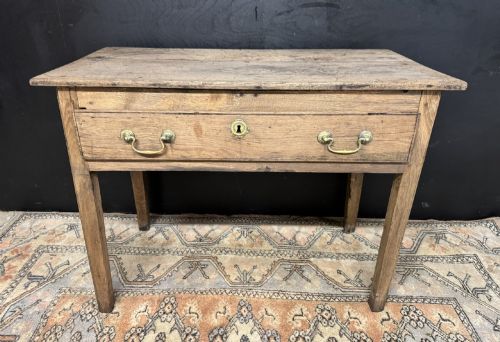
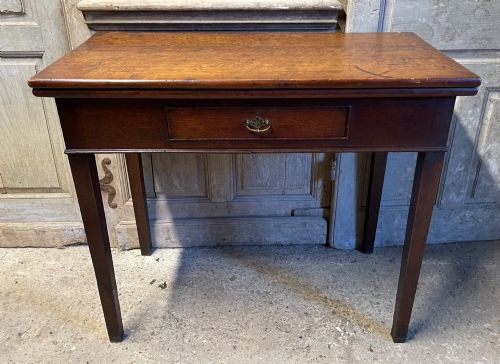
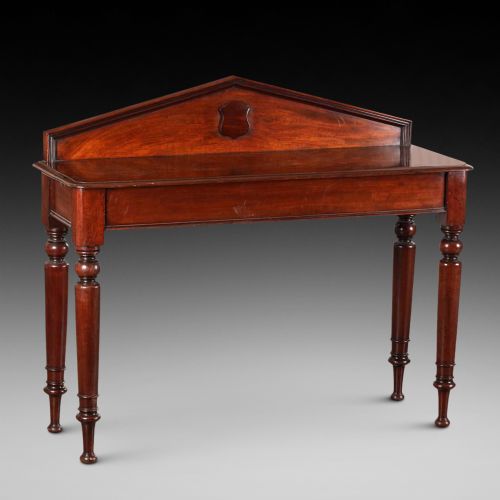
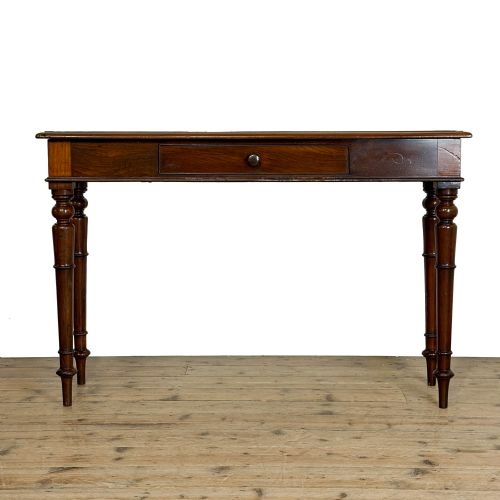
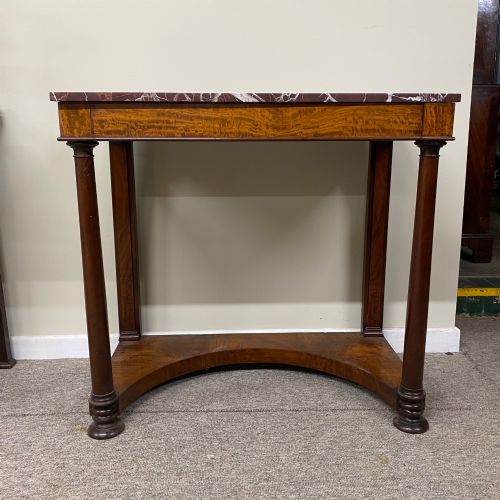
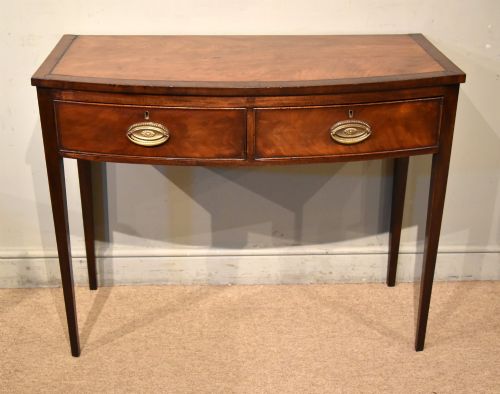
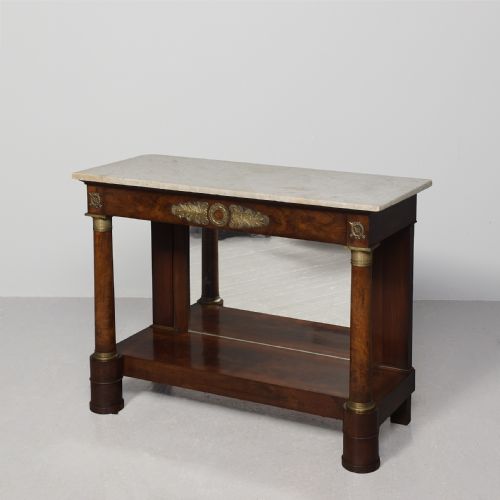
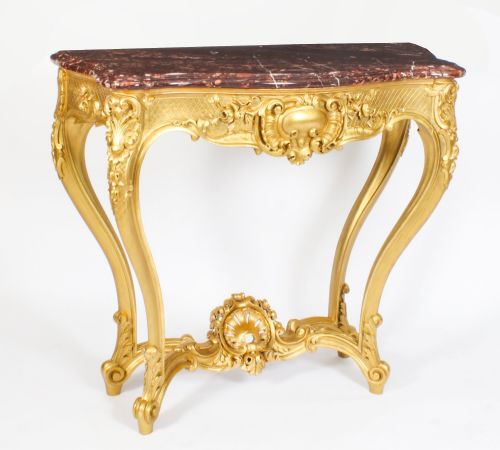
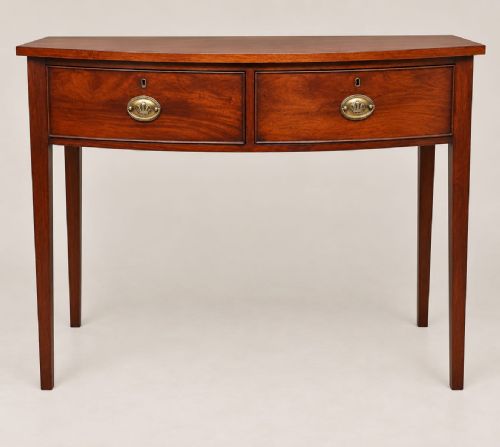
An antique entry console table serves as a functional and decorative focal point in a hallway, often taking the form of a console table, side table, or tea table. These pieces range in origin from Georgian and Victorian periods to the early twentieth century.
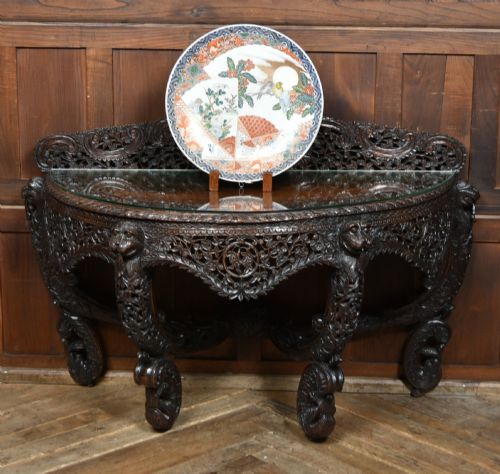
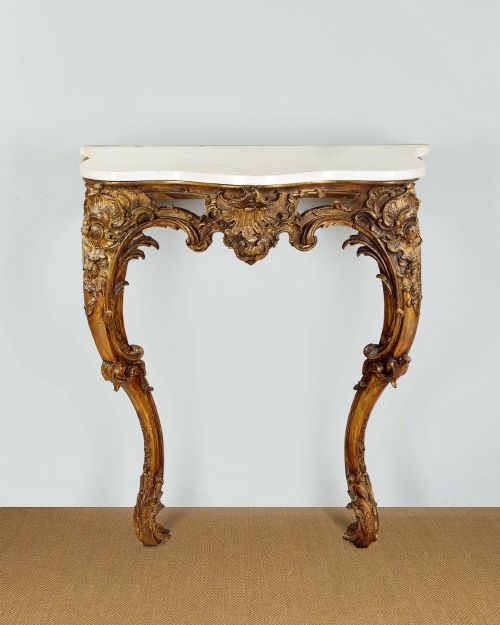
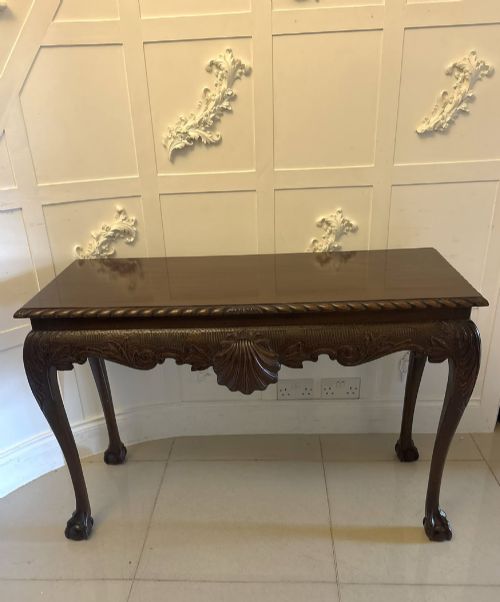
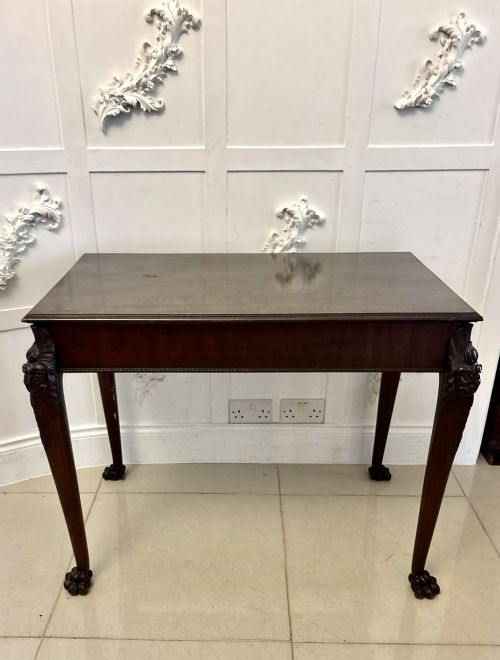
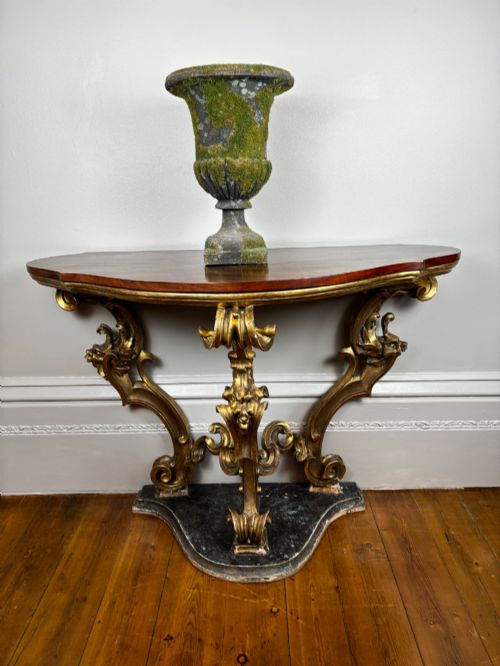
The selection here includes demilune shapes, serpentine fronts, and rectangular boards designed to stand flat against a wall or float as freestanding hall furniture. Buyers frequently encounter nineteenth century mahogany examples alongside lighter Edwardian oak and walnut versions.
Makers and workshops across Britain, France, and Italy adapted these forms for domestic interiors, producing variations from grand carved giltwood to restrained country house oak.
Materials and construction methods
Cabinetmakers relied heavily on figured mahogany, burr walnut, and oak for structural carcasses, often utilising solid timber alongside matched veneer panels. Surfaces frequently incorporated inset marble slabs, leather tops, or polished wood finishes.
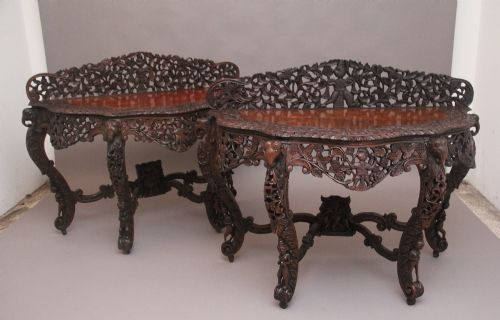
Decoration involved carving, parcel gilding, gesso work, and intricate marquetry inlays. Ironwork appears in specific continental pieces, while painted and gilt finishes characterise French and Italian designs.
Antique Entry Console Table Retail Price Guide 2026
Typical asking prices for entry console table among the pieces listed under this phrase on Sellingantiques today, from the lower quarter to the upper quarter. They describe what is for sale here now, not the wider market.
Italian and French influences appear frequently alongside British Georgian and Victorian craftsmanship, incorporating marble slabs and wrought iron.
Distinctions in craftsmanship and materials
Superior examples display exceptional timber selection, such as highly figured mahogany or burr walnut with rich natural grain patterns. The depth and precision of hand-carved details on frames, legs, and aprons separate standard production from masterwork pieces.
Originality of components dictates overall integrity, including matching marble tops, period gilding, and undisturbed structural joinery. Refinished surfaces or replaced secondary woods alter the historic character and desirability of a console.
Felix-Alfred Ternisien·Hille
The Antique Entry Console Table Glossary
- Demilune
- A half-moon shape popular for console tables designed to sit flush against a wall in narrow hallways. This curved profile softens the geometry of an entrance space.
- Giltwood
- Timber treated with gold leaf or gesso and gilding powder to create a brilliant decorative surface. It appears frequently on eighteenth and nineteenth-century Italian and French consoles.
- Marquetry
- The art of applying pieces of veneer to a structure to form decorative patterns and pictures. Dutch workshops utilised this technique extensively on walnut and mahogany carcasses.
- Serpentine
- A curved line that dips inward centrally and bows outward at the ends, creating an undulating front edge. This shape demands precise woodworking skill.
- Parcel Gilt
- A finish where portions of a wooden object are highlighted with gold leaf while the underlying wood grain remains visible elsewhere. It offers a restrained alternative to fully gilded surfaces.
Antique Entry Console Table: Frequently Asked Questions
Where should an antique console table be placed?
These tables find their natural home in hallways, entrance lobbies, and narrow reception rooms where floor space is limited. Their shallow depth allows them to sit against a wall without obstructing movement.
Pairing a console with a matching pier mirror or placing a lamp upon the surface creates a functional focal point upon entering a home.
How do I care for a marble top console?
Marble surfaces require simple wiping with a damp cloth and mild soap, avoiding acidic cleaning agents that etch the stone. Using coasters prevents liquid rings from forming on polished porous surfaces.
Wooden bases benefit from occasional waxing with traditional beeswax to nourish the timber grain and protect the finish from dryness.
Were console tables always made for hallways?
Many tables listed as console or side tables originally served multiple domestic purposes, including tea tables with foldover tops and serving tables in dining rooms. Their narrow proportions made them adaptable for circulation spaces over subsequent generations.
Wall-fixing brackets often supported console bases that lacked four fully weight-bearing legs, reflecting their original architectural installation.
How do I distinguish Georgian from Victorian consoles?
Georgian pieces generally exhibit refined proportions, understated classical carving, and lighter structural framing in mahogany or oak. They often date around the late eighteenth to early nineteenth century.
Victorian and later nineteenth-century examples tend toward heavier proportions, darker pitch pine or walnut timbers, and more exuberant revival styles including Gothic and French Rococo influences.