





Carved Paw Foot Console
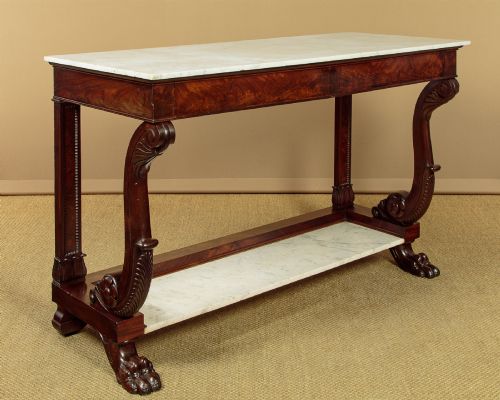
A carved paw foot console brings architectural presence and distinct animalistic support into a room.
Carved Paw Foot Console
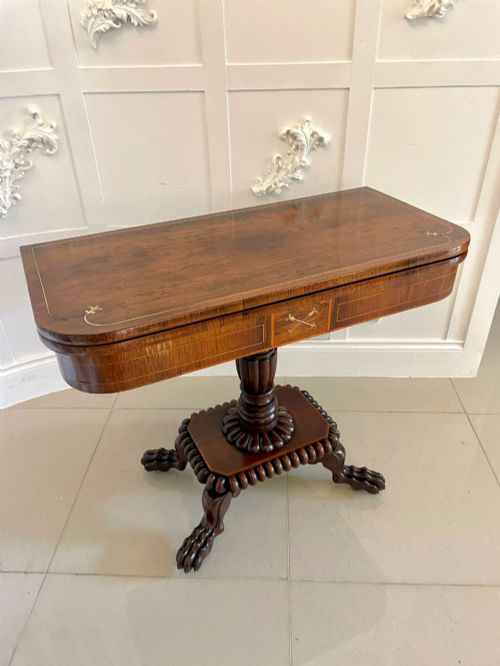
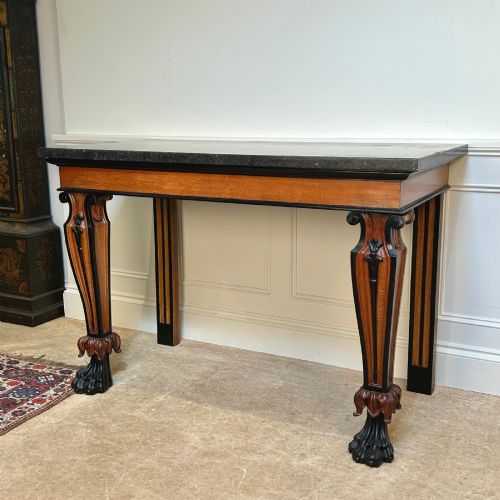
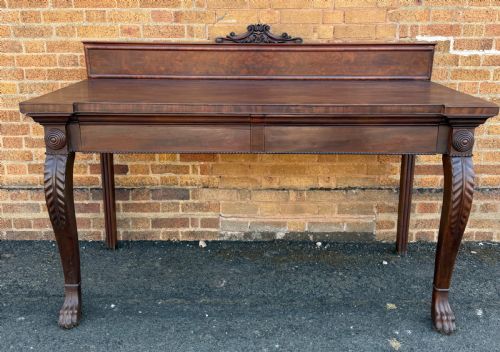
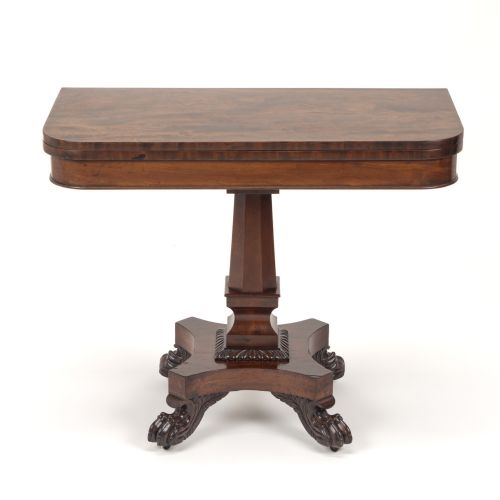
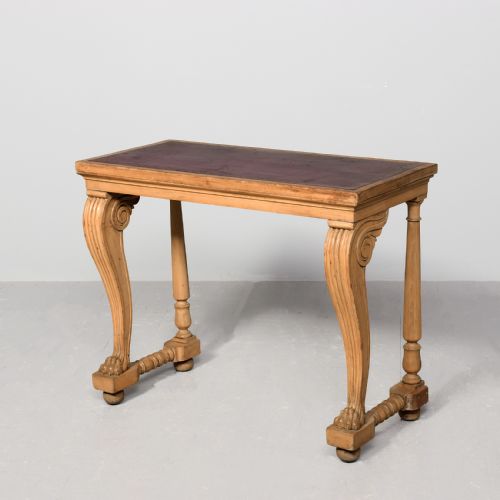
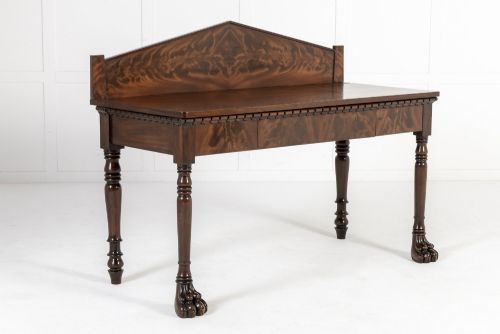
A carved paw foot console table typically appears in forms such as serving tables, card tables, and side tables dating from the Georgian, Regency, and nineteenth-century periods. These pieces combine substantial timber structures with carved animal foot supports, often reflecting Regency, William IV, or French Empire design influences.
Buyers browsing this selection will encounter mahogany, rosewood, and oak timbers alongside marble tops and brass inlay. The domestic role of these tables ranges from formal serving surfaces in country houses to compact card and tea tables designed for drawing rooms.
Materials and construction methods
Cabinet makers utilised dense hardwoods such as mahogany and rosewood, frequently applying flame mahogany veneer or pollard oak to create rich surface figures. Structural elements relied on solid timber framing, sometimes supplemented by parcel gilding and brass inlay to accentuate the classical lines.
Carved details, including the characteristic paw feet and occasional lion masks, required skilled hand-chiselling directly into the solid wood blocks. Marble tops, where present, were selected for their weight and grain, resting securely upon the heavy timber bases.
Carved Paw Foot Console Retail Price Guide 2026
Typical asking prices for carved paw foot console among the pieces listed under this phrase on Sellingantiques today, from the lower quarter to the upper quarter. They describe what is for sale here now, not the wider market.
Several tables appear alongside matching pier mirrors, ensuring the paws on the furniture can admire their reflections forever.
Distinguishing quality across pieces
The standard of a carved paw foot console depends heavily on the crispness and depth of the timber carving on the feet and legs. Finer examples display meticulous hand-tooling that gives definition to the claws and fur, whereas simpler pieces show softer, more generalised shaping.
Material selection and proportion also dictate overall excellence. Pieces employing highly figured timbers, cohesive brass inlay, and substantial marble tops demonstrate superior workshop execution compared to plainer domestic variations.
James Mein of Kelso·Jean-Joseph Chapuis·George Smith·Gillows·Whytock and Reid
The Carved Paw Foot Console Glossary
- Console table
- A table designed to stand against a wall, frequently secured to the structure or balanced on heavy front legs. These items often served display or serving functions in formal reception rooms.
- Flame mahogany veneer
- A thinly sliced sheet of mahogany showing a distinctive flame-like grain pattern, applied to a secondary wood foundation. Cabinet makers used this technique to create striking decorative surfaces on tabletops and friezes.
- Parcel gilt
- Partially gilded timber surfaces where gold leaf highlights specific carved details or mouldings. This technique creates contrast against dark woods like mahogany or rosewood.
- Pollard oak
- Timber taken from trees that were pollarded, resulting in a dense, knotted grain pattern. It provides a highly textured and decorative surface used in select Regency furniture.
- Frieze
- The horizontal section of a table situated directly beneath the top. This area often contains drawers or receives decorative veneers and brass mounts.
Carved Paw Foot Console: Frequently Asked Questions
Where should I place a console table?
These tables suit hallways, living rooms, and dining spaces where they can stand flush against a wall. Their decorative front legs and carved paw feet make them suitable as focal points beneath mirrors or artwork.
Ensure the depth of the table matches your available floor space, particularly in narrower corridors or busy walkways.
How do I care for mahogany and rosewood surfaces?
Maintain timber surfaces by dusting regularly with a soft, dry cloth and avoiding placement near direct heat sources or strong sunlight. Periodic application of appropriate furniture wax preserves the finish and protects the wood grain.
Keep marble tops clean using mild, non-abrasive cleaners to prevent staining from moisture or acidic spills.
What is the difference between a console and a serving table?
Console tables and serving tables share similar architectural forms and often overlap in nineteenth-century nomenclature. Serving tables typically provided robust surfaces for dining rooms, while console tables frequently functioned as decorative pier or side pieces.
Both variants regularly incorporate the carved paw feet characteristic of Regency and Georgian design.
How can I identify Regency period features?
Regency furniture often draws inspiration from classical antiquity, featuring bold proportions, dark timbers like rosewood and mahogany, and restrained brass inlay. Carved animal paw feet and lion masks are common decorative motifs from this era.
Construction details such as hand-cut dovetails and traditional timber fixings help confirm nineteenth-century origins.