

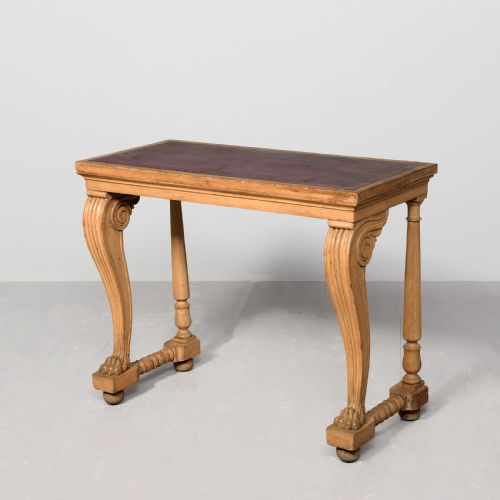
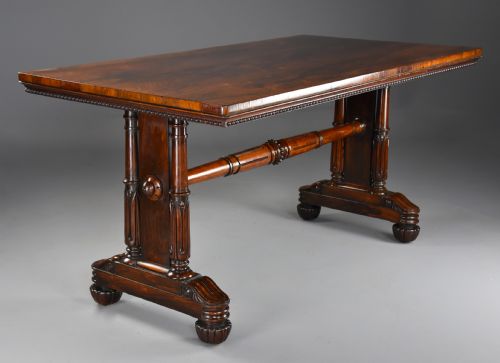
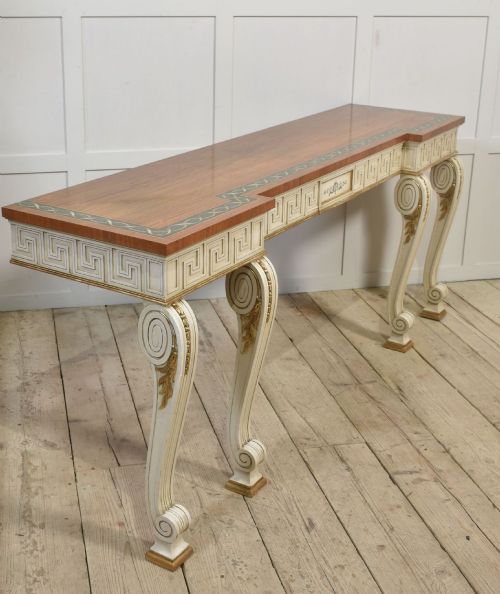
Regency Carved Hall Table
A regency carved hall table brings neoclassical balance and striking timber grain to an entrance, serving as a formal surface for letters and visitors.
Regency Carved Hall Table
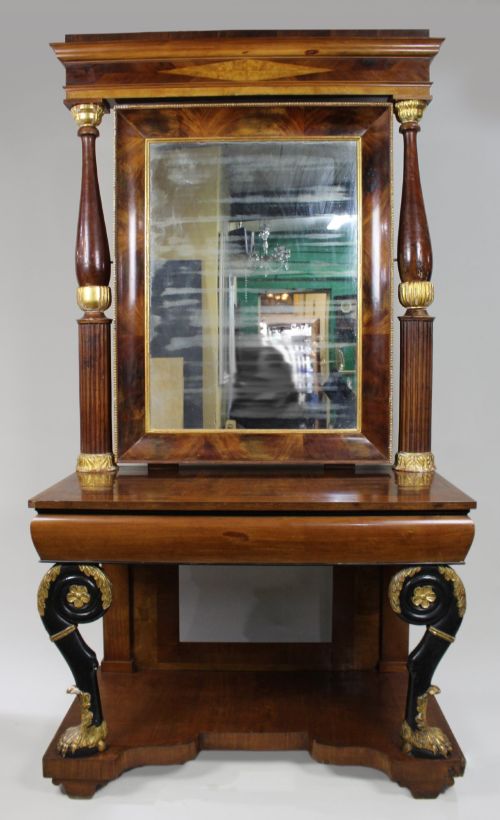
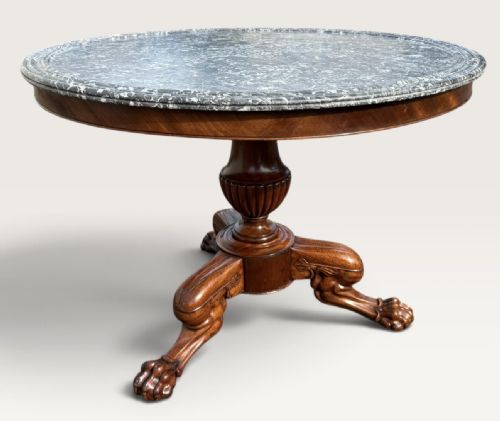
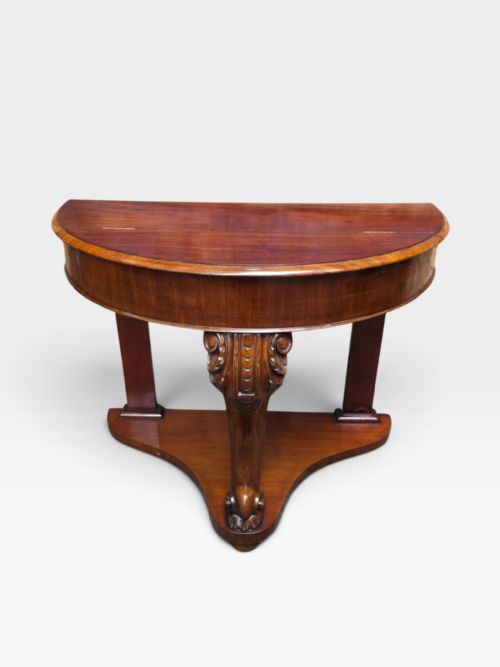
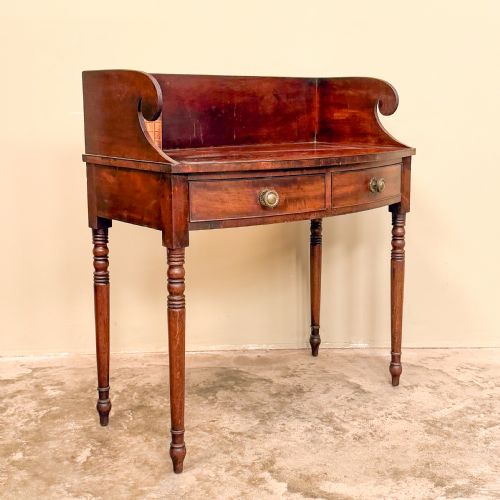
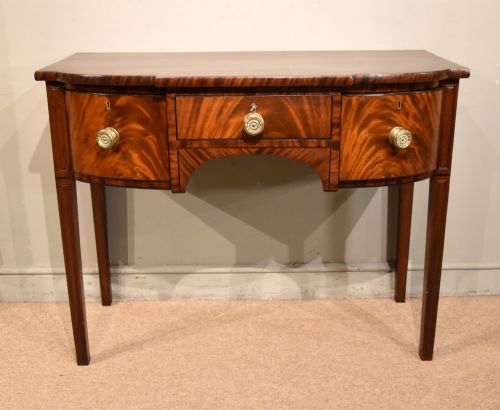
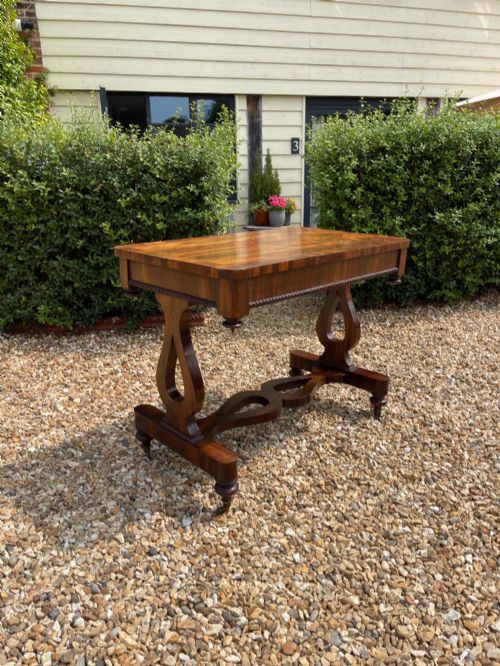
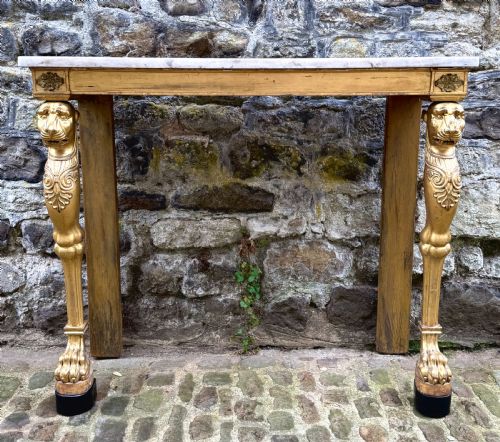
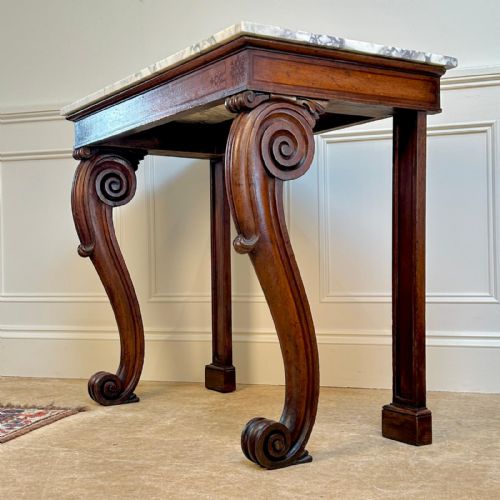
A regency carved hall table encompasses console tables, serving tables, and washstands originating predominantly from the nineteenth century. These forms sit flat against a wall or stand freely as centre tables, designed to anchor a grand hallway or reception space.
The materials and styles span Georgian, William IV, and Regency periods, utilising dark timbers and classical motifs. Buyers frequently encounter mahogany and rosewood examples, alongside oak, marble-topped variants, and parcel-gilt details.
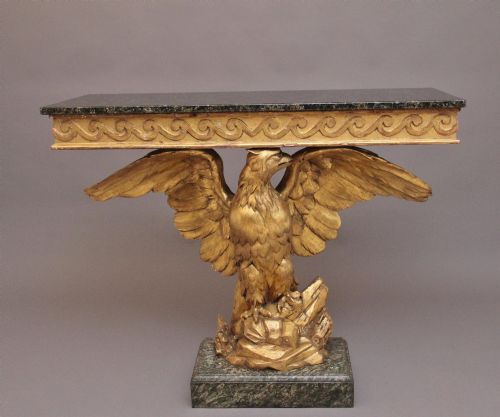
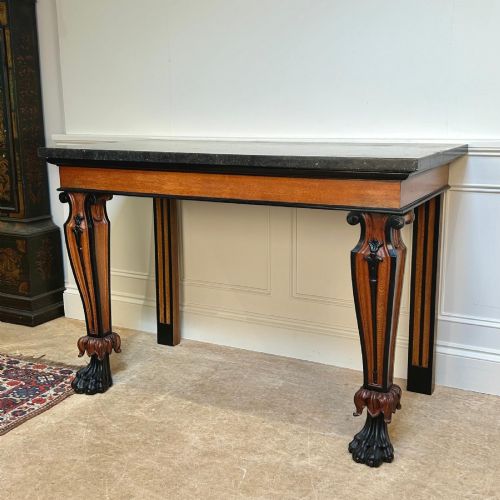
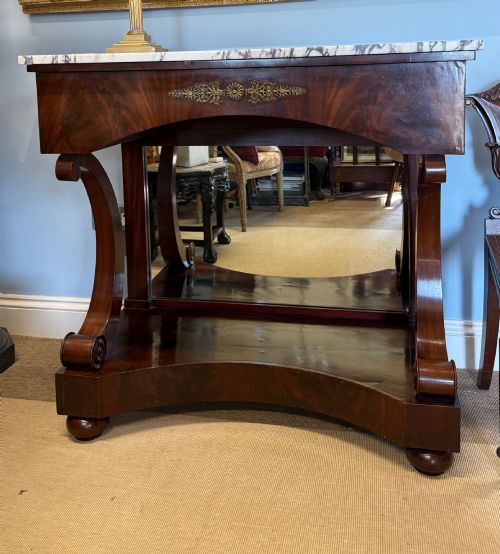
Makers and regional workshops produced diverse iterations, from country house oak pieces to sophisticated neo-classical designs with mirror backs. Console and serving tables dominate the selection, often featuring demi-lune shapes or rectangular marble slabs.
Materials and construction
Cabinetmakers relied on dense hardwoods such as mahogany, rosewood, and oak, frequently applying flame mahogany veneer to achieve rich surface movement. Timber selection determined the structural integrity and the depth of the polished finish.
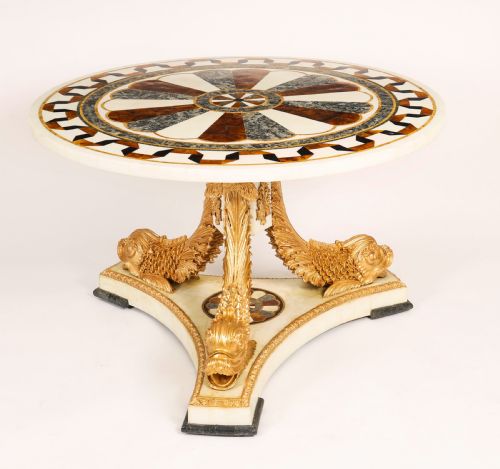
Giltwood, brass mounts, and parcel-gilt highlights were integrated to catch the light in formal entranceways. Marble tops, particularly white or Siena varieties, added weight and a cool, classical texture to console tables.
Carving techniques required skilled hand-chiselling on legs, friezes, and supports, incorporating dolphin motifs or classical scrolls. Joinery relied on traditional methods to support heavy marble slabs and solid timber tops.
Some console tables feature carved wooden dolphins plunging headfirst toward the floor, proving that nineteenth-century joiners enjoyed marine mischief.
Distinctions in craftsmanship
The refinement of the hand-carving defines the tier of a piece, distinguishing crisp, deep relief work from softer, shallower execution. Details like gilded mounts and parcel-gilt accents reveal the original workshop's investment in labour and materials.
The selection of timber grain, particularly matched flame mahogany veneer or figured rosewood, marks out superior examples. Secondary woods used in the carcase and the weight of the integrated marble slab further signal the standard of production.
James Mein of Kelso·Gillows
The Regency Carved Hall Table Glossary
- Console table
- A table designed to stand against a wall, frequently secured to it with brackets, acting as a decorative and functional surface.
- Parcel-gilt
- Partially gilded with gold leaf or gold paint, highlighting specific carved details such as mouldings or motifs against a dark timber ground.
- Demi-lune
- Half-moon shaped, describing tables with a semicircular front and a flat back designed to sit flush against a wall.
- Gueridon
- A small occasional table, often round and supported by a central column or tripod base, frequently topped with marble.
- Frieze
- The broad horizontal band running immediately beneath the top of a table, often decorated with carving or veneers.
Regency Carved Hall Table: Frequently Asked Questions
How do I tell Regency from William IV?
Regency pieces generally exhibit lighter, more restrained neoclassical lines with delicate proportions and refined reeding or brass inlay. William IV furniture, dating slightly later, tends to be heavier and bolder in scale.
William IV designs often feature robust scrolling supports, heavier rosewood or mahogany timbers, and more pronounced architectural elements. Looking at the weight of the carving and the overall mass helps separate the two periods.
Were these tables used in hallways?
Console and serving tables served as principal furnishings in entrance halls to receive guests and hold visiting cards, letters, or lamps. Their narrow profiles ensured they fitted against corridor walls without obstructing movement.
In larger country houses, robust oak and mahogany examples anchored substantial entrance spaces, matching the architectural scale of the interior.
How do I care for a marble top?
Marble tops require gentle cleaning with a soft cloth and warm water, avoiding acidic cleaners that can etch the polished stone surface. Using coasters and mats prevents moisture rings and staining on antique marble.
Treating the underlying timber base with appropriate wax preserves the wood without damaging the stone jointing or surrounding giltwork.