
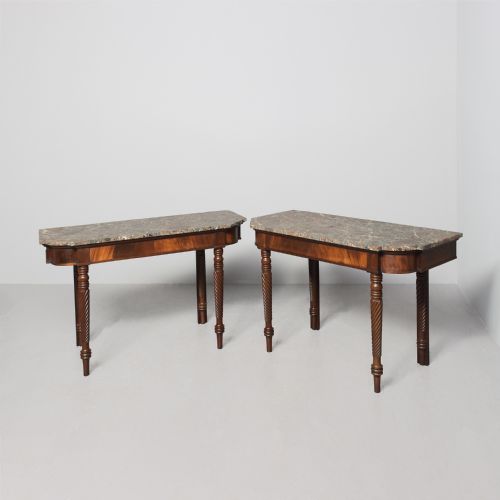
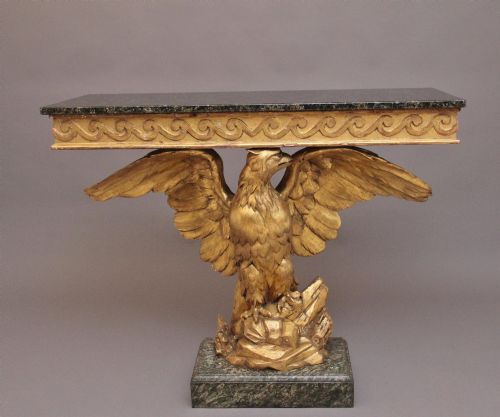
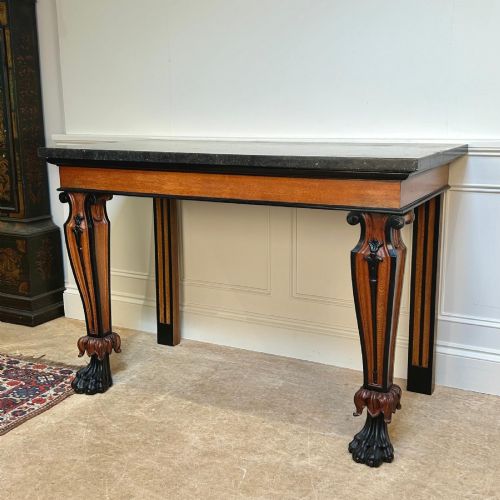
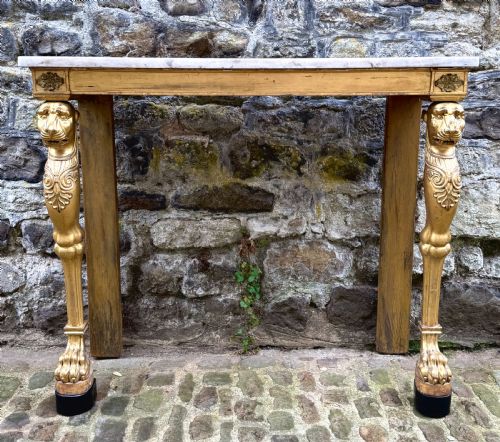

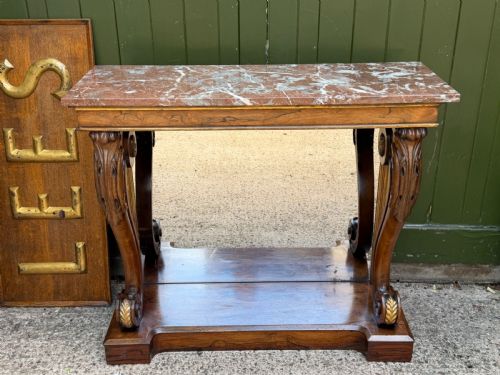
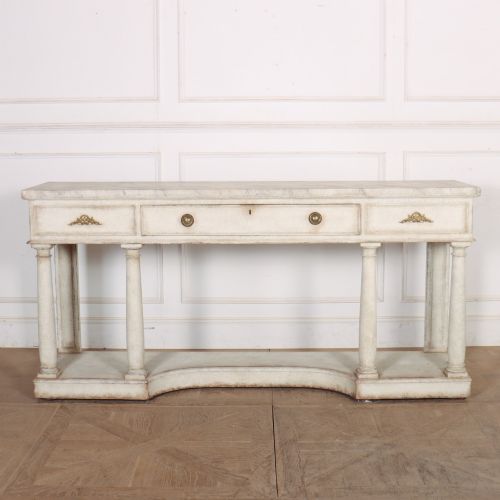


Regency Marble Top Console
A regency marble top console brings architectural weight and polished stone surfaces to a room, offering a functional pier table that anchors an interior wall.
Regency Marble Top Console
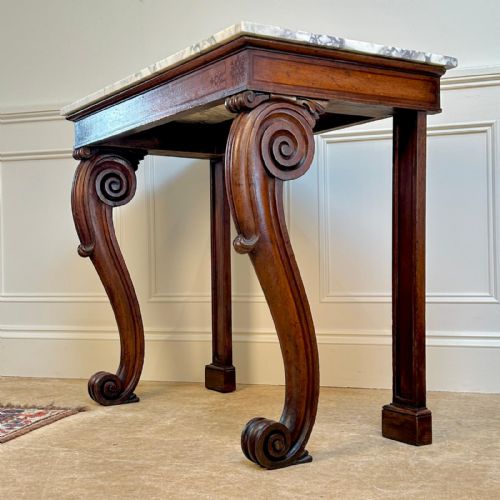
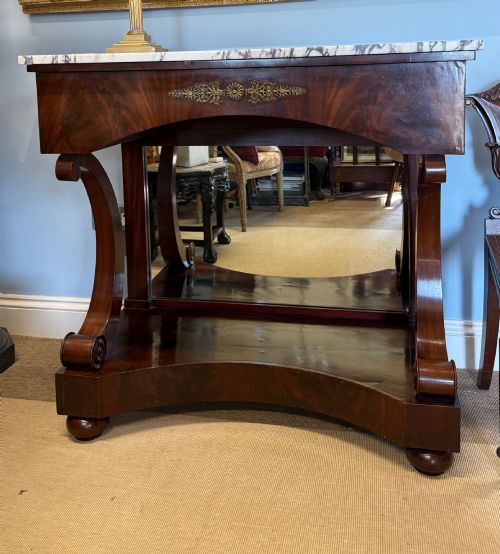
A regency marble top console combines heavy timber framing with a smooth stone surface, designed to stand flat against a wall in a hallway, parlour or drawing room. The examples found here span the nineteenth century and its later revivals, taking forms such as break-front pier tables, mirrored-back chiffoniers and carved side cabinets.
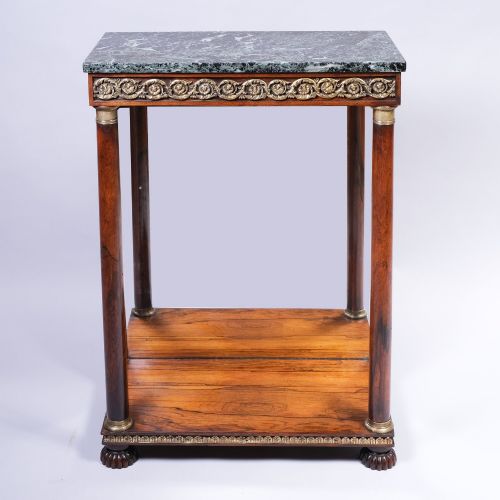
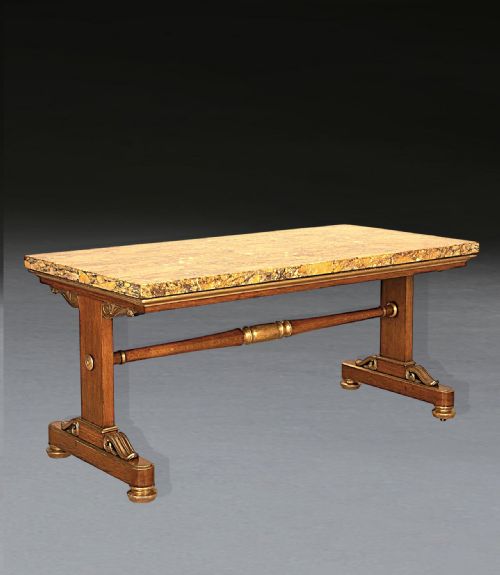
The versions met most frequently on this page rely on rich dark timbers like rosewood and mahogany, often paired with gilded accents or brass mounts. Pieces range from austere country house oak frames to grander urban expressions carrying figured marble slabs in white, dark or Siena tones.
How They Were Made
Cabinetmakers built the structural carcases using dense native and imported timbers, selecting figured mahogany and dark rosewood for exterior show-surfaces. These frames frequently incorporated carved gesso, parcel-gilt details and cast brass or ormolu mounts to catch the candlelight of period interiors.
Heavy marble slabs were cut, shaped and polished to fit precisely upon the timber bases, often resting unattached or secured with simple timber battens. Mirror glass was frequently integrated into the back-frames of sophisticated nineteenth-century pieces to reflect light and amplify the stone surface.
Some console tables include hidden mirrored backs designed to bounce light across dim Victorian hallways like unexpected pocket suns.
What Varies in Quality
Quality rests upon the selection of timber grains and the depth of the cabinetmaker's carving, moving from plain utilitarian pine or oak carcases up to finely figured solid rosewood and intricate giltwood enrichment. The choice and thickness of the marble slab dictate the visual gravity of the piece, with richly coloured mineral veining marking out more ambitious commissions.
Proportion and architectural coherence separate standard workshop production from masterwork design. Pieces featuring integrated mirror-backs, precise ormolu mounts and harmonious neoclassical lines demonstrate a superior level of design integration.
The Regency Marble Top Console Glossary
- Console table
- A table designed to stand against a wall, traditionally supported by front legs or wall brackets because the rear relied on the structure for stability.
- Breakfront
- A piece of furniture whose central section projects forward from the flanking sides, creating a rhythmic facade.
- Giltwood
- Timber that has been coated with a thin layer of gold leaf or gilt composition, frequently used on neoclassical and revival frames.
- Pier table
- A narrow side table designed specifically to fit against the wall space, or pier, situated between two windows.
Regency Marble Top Console: Frequently Asked Questions
Where did these tables stand?
These pieces were typically placed against flat wall spaces in entrance halls, formal parlours and drawing rooms. Their narrow profiles allowed them to occupy circulation areas without obstructing movement.
They often sat beneath wall mirrors or between tall windows, serving as display surfaces for decorative objects and lighting.
How do I care for the marble?
The stone surfaces require gentle cleaning with mild, non-acidic soap and water to preserve the historical polish. Avoid harsh chemical cleaners and abrasive scrubbing pads that can dull the mineral finish.
Using protective mats under beverage glasses prevents staining, particularly on porous white and coloured marble varieties.
Are these pieces structurally solid?
The heavy timber frames and substantial stone tops provide inherent stability, though wall attachment is often recommended for safety. Tables featuring mirror-backs or tall console proportions rely on sound joinery and balanced weight distribution.
Period pieces benefit from careful placement away from direct heat sources to prevent timber movement.
How do I distinguish revival periods?
Later nineteenth-century and early twentieth-century revivals often display machine-sawn timber elements and standardised hardware fittings compared to earlier workshop pieces. Stylistic markers like neoclassical motifs appear across both original nineteenth-century makes and subsequent revival iterations.
Examining internal construction timbers and secondary woods helps clarify the manufacturing era.