

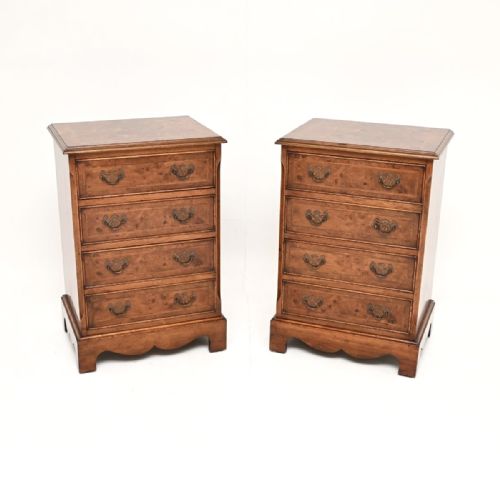
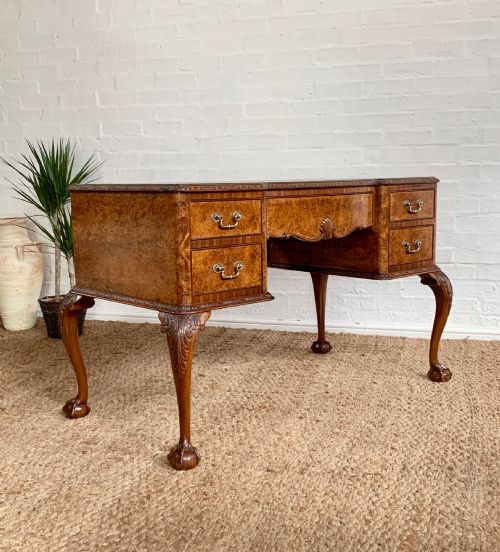

Georgian Burr Walnut Table
A georgian burr walnut table brings rich, swirling grain and understated form to a room, offering both practical surface space and centuries of character.
Georgian Burr Walnut Table
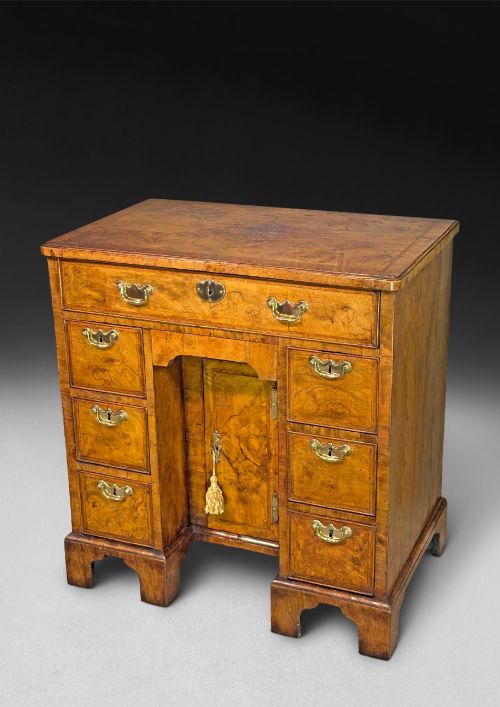
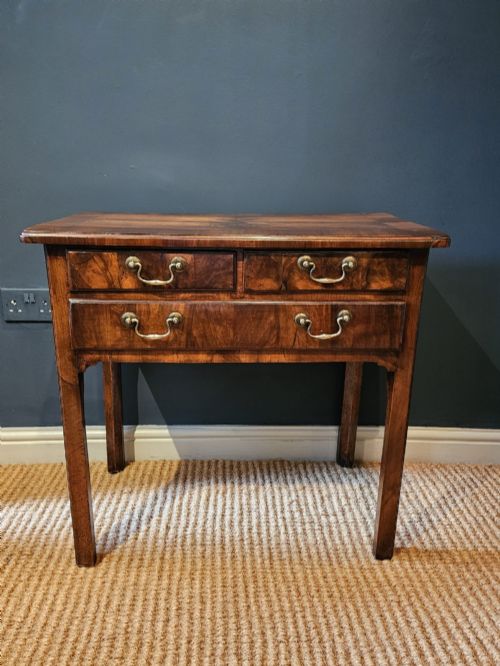
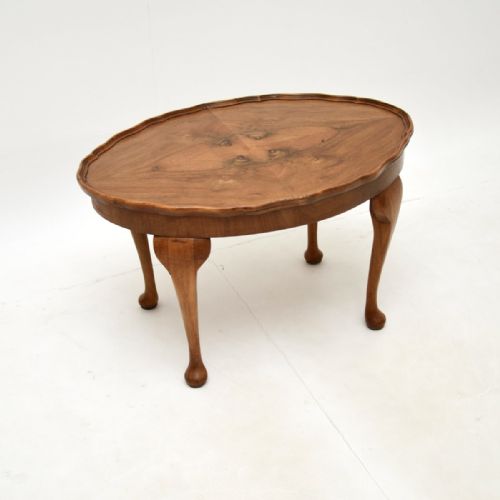
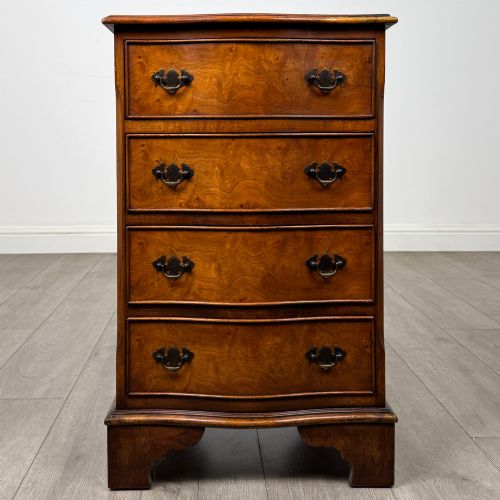
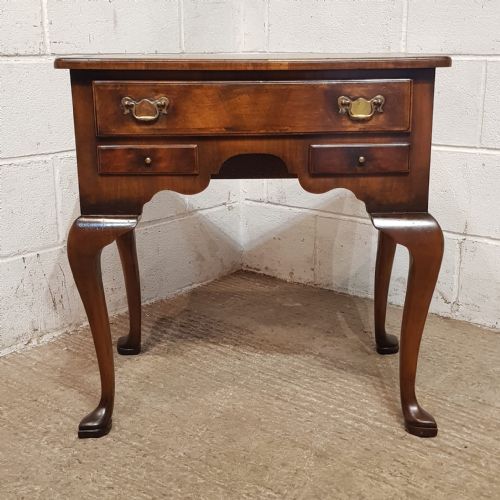
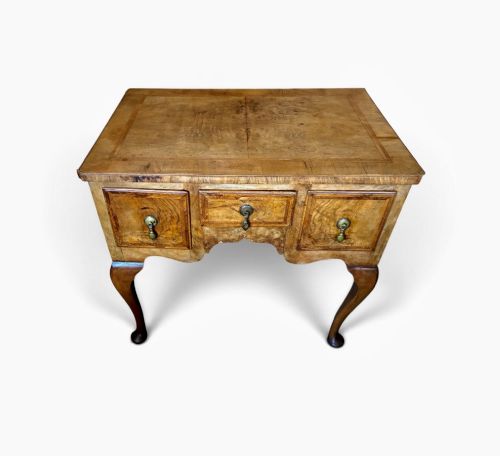
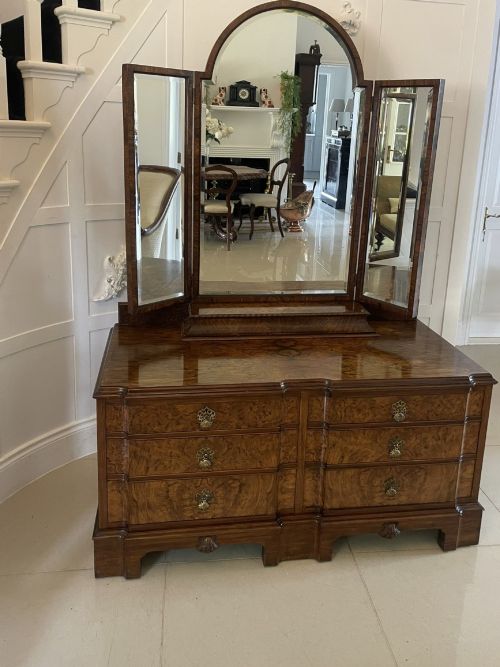
A georgian burr walnut table encompasses lowboys, side tables, console tables, coffee tables, and card tables rooted in eighteenth-century proportions. These pieces range from authentic period examples bearing eighteenth-century manufacture to later revivals produced across the twentieth century.
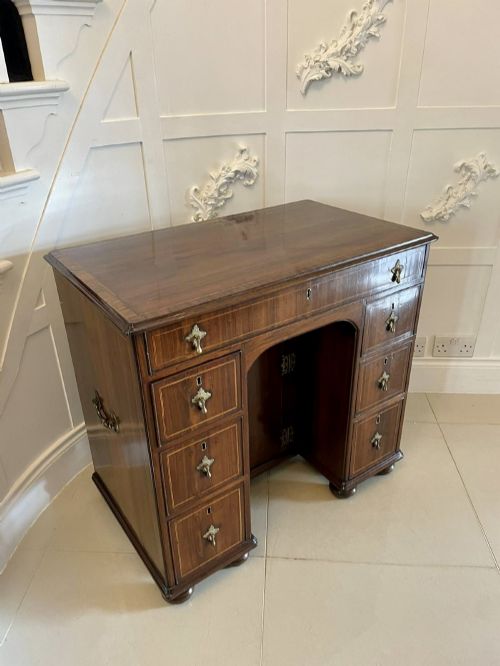
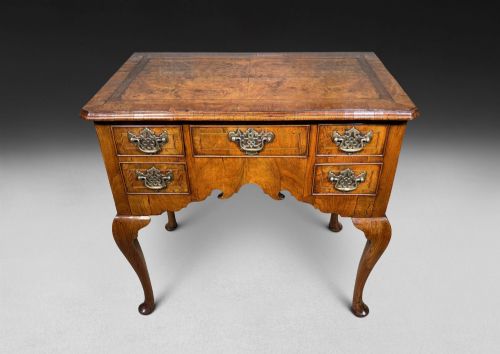
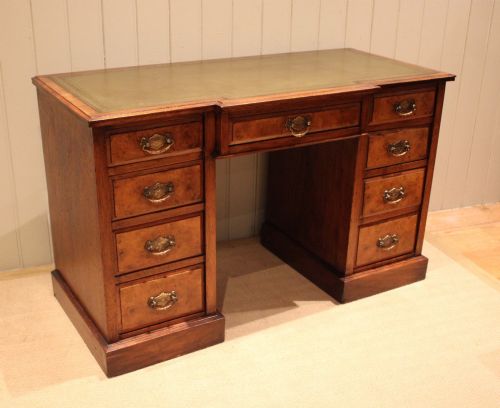
The lowboy is the form most frequently encountered in early periods, often featuring a kneehole configuration or modest drawers beneath a figured timber top. Side tables and card tables follow closely, showing the enduring appeal of walnut surfaces in formal and domestic settings alike.
Revival pieces from the twentieth century adopt the styles of George I, George II, and Queen Anne periods, matching the silhouettes of earlier centuries with the construction methods of their own time.
Materials and Technique
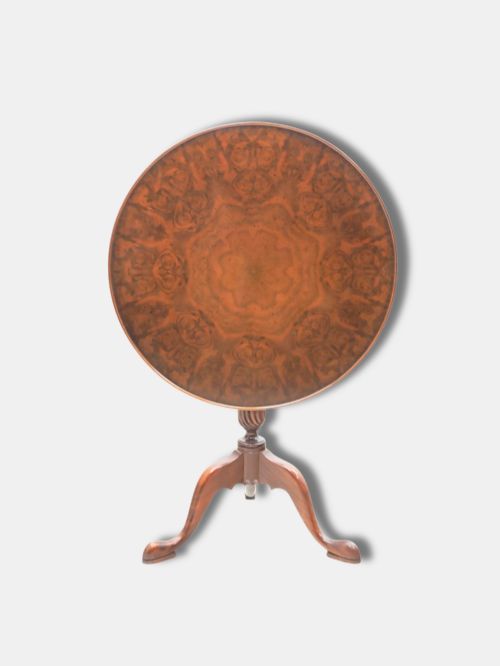
Makers utilised burr walnut veneer laid over secondary timbers such as oak, taking advantage of the intricate, knotted grain patterns found where branches met the trunk. This veneer required meticulous hand-sawing and precise alignment to create balanced geometric patterns across table tops and drawer fronts.
Solid walnut and figured walnut appeared alongside burr veneers for framing, legs, and mouldings, occasionally complemented by brass handles, escutcheons, and green leather writing surfaces.
Joinery relied on traditional techniques such as dovetailing for drawer construction and mortise and tenon joints for frames, ensuring stability without modern adhesives.
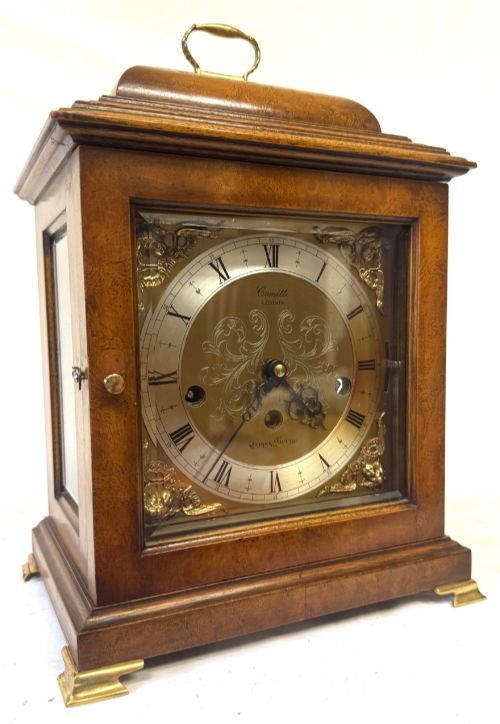
One clock hides a three-tune movement inside its burr walnut basket case.
Evaluating Craftsmanship
Quality rests in the selection and matching of the veneer, where top-tier examples display continuous, symmetrical grain patterns across the entire surface rather than patched sections. The richness of the natural timber figuring and the depth of the finish dictate the visual impact of the piece.
Construction integrity separates superior items from simpler productions, visible in the snugness of drawer joints, the weight of the brass hardware, and the crispness of carved details like cabriole legs or scallop shells.
Maples of London·Comitti Of London
The Georgian Burr Walnut Table Glossary
- Burr walnut
- A specialised wood veneer harvested from tree growths, prized for its swirling, highly figured grain patterns. It forms the defining visual characteristic of these tables.
- Lowboy
- A small pedestal table or dressing table fitted with one or more rows of drawers, standing on four relatively tall legs. This form dates back to the late seventeenth and early eighteenth centuries.
- Cabriole leg
- A furniture leg that curves outward in a convex arc and tapers inward in a concave arc, ending in a pad or claw foot. It is common in Queen Anne and early Georgian designs.
- Kneehole desk
- A writing table featuring a central recessed space for the legs, flanked by pedestals of small drawers. Early versions often incorporate a secret drawer or small cupboard within the recess.
- Pie crust
- A raised, carved decorative moulding around the edge of a circular table top, resembling the crust of a traditional pastry. This detail appears on select occasional and coffee tables.
Georgian Burr Walnut Table: Frequently Asked Questions
How do I spot a true period piece?
Examine the secondary timbers inside the drawers and beneath the top, as eighteenth-century makers relied on native woods like oak rather than modern composites.
Hand-cut dovetails, timber shrinkage patterns, and the absence of modern machine marks help differentiate original pieces from later revival items.
Where were lowboys used?
Lowboys served versatile roles in eighteenth-century homes, functioning as dressing tables, side tables, or compact writing desks in bedchambers and parlours.
Their modest footprint allowed them to fit into tight alcoves while providing convenient drawer storage.
How do I care for walnut veneer?
Keep walnut furniture away from direct sunlight and strong heat sources to prevent the delicate veneer from drying out or lifting from its core.
Apply a traditional beeswax polish occasionally to nourish the wood and maintain a soft, protective sheen without sealing the pores.